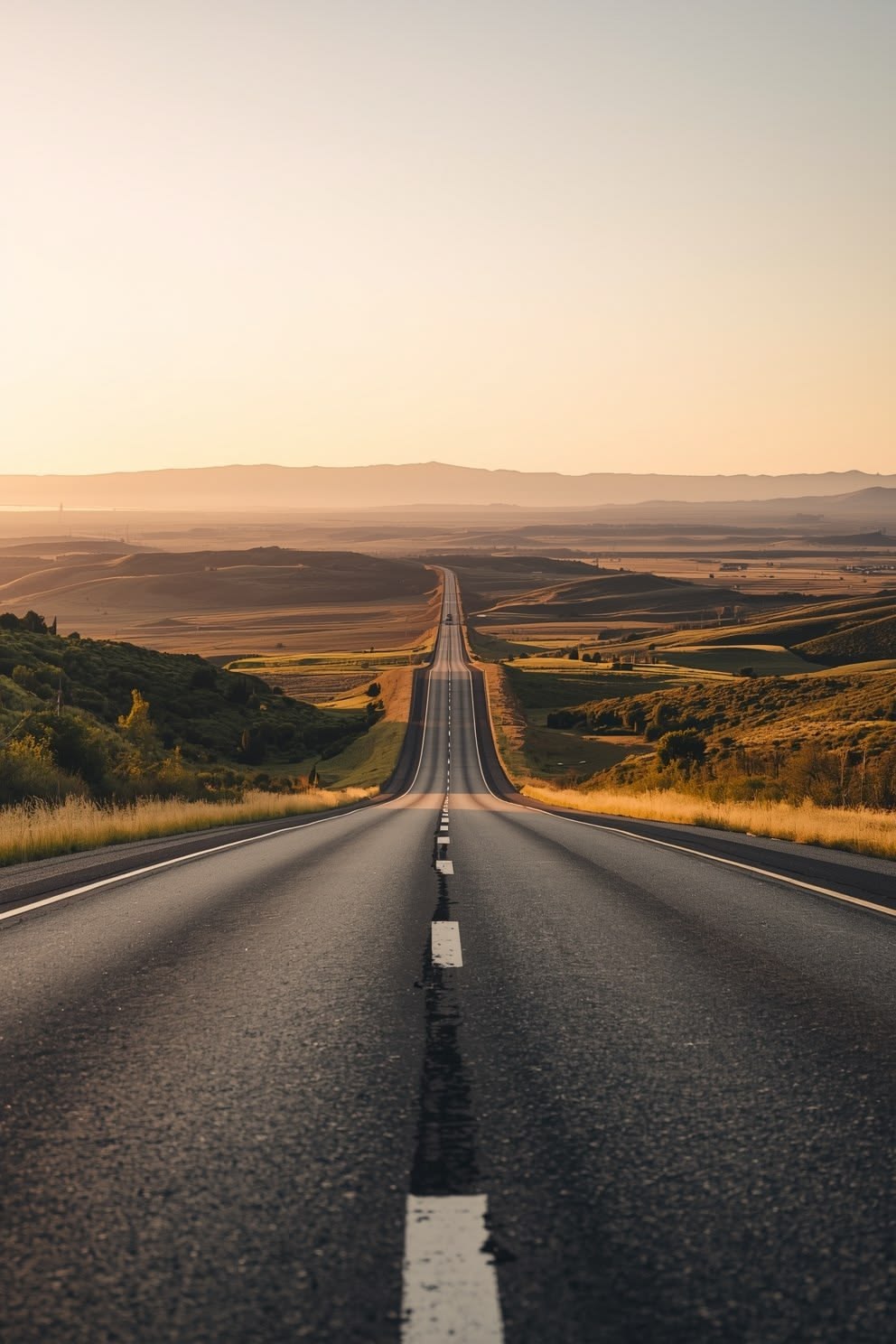
There’s this moment — and if you’ve ever driven through the American West at dusk, you know exactly what I mean — where the sky turns three colors at once and you realize your phone has been in the cupholder for two hours.
No notifications.

No noise.
Just the hum of the engine, the blur of red rock on either side, and this quiet, almost embarrassing feeling of being completely free.
I had that moment somewhere between Flagstaff and Sedona, windows down, radio on something twangy I’d never admit to listening to at home.
And honestly?
That one drive changed how I think about travel forever.
American road trips aren’t just vacations.
They’re a full reset.
The Route I Always Recommend First: Highway 1 Along the California Coast

If someone asks me where to start, I say Highway 1 every single time.
No hesitation.
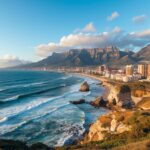
It runs along the California coastline and it is, without question, one of the most visually dramatic drives I’ve ever done.
You’ve got the Pacific on your left, cliffs that drop straight into the water, and little pull-offs where you can just stop and stare like a complete tourist — and not feel one bit embarrassed about it.
I did this drive over four days, starting just south of San Francisco and winding my way down toward Big Sur.
Big Sur, by the way, is the kind of place that makes you question every life decision that kept you indoors.
The fog rolls in low in the morning, covering the redwoods, and by noon the sun cuts through and everything turns gold.
It’s sort of unreal.
My personal tip: don’t rush it.
Pull over more than you think you need to.
The best spots on Highway 1 don’t have signs — you just feel them.
Skip the tourist maps and follow the cliff edge with your eyes.
You’ll know when to stop.
Why the Pacific Coast Highway Feels Different From Any Other Drive

Here’s what I didn’t expect about Highway 1 — it’s not just pretty.
It’s emotional.
Something about driving that close to the ocean, with no median, no guardrail in some spots, just you and a coastal cliff — it puts things in perspective fast.
I remember sitting on the hood of my truck at a pull-off somewhere north of Morro Bay, eating gas station almonds and watching pelicans fly in a straight line over the water.
And I thought: this is what people mean when they say “present moment.”
I wasn’t thinking about emails.
I wasn’t planning anything.
The PCH has this way of making everything else feel far away.
And that’s the whole point, isn’t it?
If you’re the kind of guy who runs hot — always thinking, always moving — this drive will slow you down in the best possible way.
It’s cozy, in a rugged kind of way.
It’s a stretch of road that feels like it belongs to you, even when there are other cars around.
That’s rare.
That’s worth going out of your way for.

Your Ultimate Caribbean Adventure Awaits!
Discover hidden coves, secret beaches, and the best rum punches in the islands. Your insider’s guide to Caribbean paradise.
Get Your Guide Now$15.99Route 66: The One That Feels Like America Showing Off

You can’t talk about American road trips without talking about Route 66.
You just can’t.
And I know, I know — it sounds like the obvious choice.
But obvious doesn’t mean overrated.
Route 66 runs from Chicago to Santa Monica and it’s sort of like driving through the entire history of this country, one diner and one neon sign at a time.
I did a stretch of it from Albuquerque to Flagstaff and it was incredible in ways I didn’t expect.
The towns along the way — Tucumcari, Gallup, Winslow — they feel frozen in a different era.
And there’s something genuinely moving about that.
These towns were built for the road.
They grew up around travelers.
And now you’re one of them, pulling into a parking lot that’s been there since before your parents were born.
My favorite stop was a tiny roadside shop in Tucumcari run by a guy who’d been there for decades.
He sold turquoise jewelry and old license plates and he talked to me for forty minutes about the history of the stretch of road I was about to drive.
Worth every minute.
The Unexpected Greatness of Driving Through the American South

I’ll be honest — the South wasn’t originally on my road trip radar.
And that was a mistake I’m glad I eventually corrected.
I drove from Nashville down through the Mississippi Delta and into New Orleans over about ten days, and it completely rewired my understanding of American culture.
The landscape changes slowly, which I love.
You go from rolling Tennessee hills to flat, wide Delta cotton fields, and then suddenly — New Orleans.
Which is unlike anything else in this country.
But it’s the in-between that got me.
There’s a stretch of highway through the Delta where the sky is so wide and so flat that it feels like you’re driving inside a painting.
The air smells different.
It’s heavier, warmer.
Old blues comes out of nowhere on the AM dial and you just… lean back.
If I had to pick one stretch of American road that felt the most cinematic, without any mountains or coastlines, it’d be the Mississippi Delta on a cloudy afternoon.
No contest.
Eat at every place that looks too small to be real.
The Rocky Mountain Road Through Colorado: Where the Air Actually Tastes Different

I’ve driven through Colorado twice now and both times I’ve thought the same thing: how is this a real place?
Trail Ridge Road in Rocky Mountain National Park is one of those drives that genuinely makes you feel like you’re in another dimension.
You climb so high that the treeline disappears.
You’re driving through tundra.
In the middle of the country.
It’s sort of surreal in the best way.
The air up there is crisp in a way that wakes you up immediately.
Like, coffee-level alertness, but from altitude and wind.
The views from the summit pull-offs are almost too big to process.
You stand there trying to take it all in and your brain sort of gives up and just decides to feel something instead.
If you’re doing a Colorado road trip, I’d recommend building in at least one full day just for this drive.
Don’t try to squeeze it in between other things.
It deserves its own space on your itinerary.
Also — and I say this from embarrassing personal experience — do not attempt this road if it looks like weather is coming.
I got stuck behind a surprise snow squall in late summer.
In shorts.
Learn from me.
Caribbean Paradise Unlocked
From pristine beaches to vibrant local culture, discover the Caribbean’s best-kept secrets with my comprehensive travel guide.
- 120+ Hidden Beach Secrets
- Local Cuisine Guide
- Budget Travel Tips
- Island Hopping Routes
Why I Think Slow Road Trips Beat Fast Ones Every Single Time

Here’s my unpopular opinion: too many guys treat road trips like a race.
Point A to point B, fastest route, minimal stops.
And they wonder why they feel exhausted at the end instead of recharged.
When I shifted to slow road trips — three hundred miles a day max, sometimes less — everything changed.
You start noticing things.
Small diners with hand-painted signs.
A lake you didn’t know existed.
A conversation with a stranger at a gas station that ends up being the best part of your whole trip.
Fast road trips blur.
Slow ones stick.
The stories you tell about a road trip are almost never about the destination.
They’re about the weird stretch of road at mile marker 47 where you pulled over because something looked interesting.
They’re about the thunderstorm you drove through at night with the windows cracked because the smell of rain on hot asphalt is one of the best things on earth.
Give yourself permission to go slow.
You’ll come home a different person — in the good way.
The Pacific Northwest Loop: My Personal Favorite of Everything I’ve Ever Driven

If I had to pick one road trip to do again tomorrow, no hesitation, it’s the Pacific Northwest loop.
Seattle down to Crater Lake, across to the Oregon Coast, then back up through the Columbia River Gorge.
It’s got everything.
Rainforest, volcanic lakes, coastal cliffs, river canyons.
And it feels cohesive, like one continuous story the landscape is telling you.
Crater Lake, specifically, broke me a little.
I’m not ashamed to admit that.
The blue of that water is not a color you’ve seen before.
It doesn’t look like a photograph does it justice — and photos of it are already stunning.
Standing at the rim and looking down into that impossibly blue caldera, surrounded by snow even in summer, was one of those rare travel moments where you feel small and expanded at the same time.
The Oregon Coast on the way back is quieter than California’s coastline.
More rugged.
Fewer people.
More space to breathe.
I stopped at every viewpoint.
I have forty-three nearly identical photos of ocean and cliff and I regret nothing.
The Overnight Driving Strategy That Changed My Whole Game

This one’s a little unconventional but hear me out.
On long stretches — think the flat parts of Texas or Nevada — I sometimes drive at night.
I know.
Most people say don’t do it.
And yes, you need to be safe, rested, alert.
But if you are?
Driving through the desert at two in the morning is an experience that belongs in a completely different category.
The temperature drops.
The stars come out in a way that’s just not visible during the day.
The road is empty.
The silence is total.
And something about darkness makes the drive feel more interior, more personal.
Like it’s just you and the road having a private conversation.
I’ve had some of my clearest thinking on those night drives.
Some of my best ideas.
A few things I needed to work through emotionally that somehow got cleaner out there in the dark.
My rule: never drive more than three to four hours at night without a solid sleep beforehand.
Pull over, power nap, keep going.
Truck stops at 3am are their own kind of community, too.
Everybody there is mid-journey.
Nobody’s pretending to be anywhere other than exactly where they are.
Your Ultimate Caribbean Adventure Awaits!
Discover hidden coves, secret beaches, and the best rum punches in the islands. Your insider’s guide to Caribbean paradise.
Get Your Guide Now$15.99What to Actually Eat on an American Road Trip (Not the List You’re Expecting)

Forget the chains.
I mean it.
Every time I’ve eaten at a chain restaurant on a road trip, I’ve regretted it.
Not because the food is terrible.
But because the experience is completely interchangeable.
You could be anywhere.
The best meals I’ve had on the road have all come from the same type of place: small, local, slightly rough around the edges, with a menu that has too many options and a waitress who calls you “hon.”
In Amarillo, Texas, I stopped at a diner that looked like it hadn’t been redecorated since the seventies.
Best chicken-fried steak I’ve ever had in my life.
In rural Oregon, a roadside seafood shack with picnic tables outside and fresh Dungeness crab that made me want to move there permanently.
My personal strategy: if there’s a parking lot full of trucks, go in.
If the menu is laminated and has photos, go in.
If the place smells like real cooking from the parking lot, run in.
Food on the road becomes part of the story.
It’s not just fuel.
Let it be an experience.
The Gear and Car Setup That Makes a Long Road Trip Actually Comfortable

I’m a little obsessed with optimizing the inside of a car for long drives.
Like, it’s become a small hobby at this point.
Here’s what I’ve landed on.
A quality seat cushion — specifically a lumbar support one — has saved my lower back on every trip over five hours.
Not glamorous, but absolutely necessary.
A windshield sunshade is underrated.
Keeps the car cooler at stops, protects the dash, and means you don’t burn yourself on the steering wheel pulling out of a sunny parking lot.
For entertainment, I alternate between music, podcasts, and audio books.
The trick is mixing them.
Pure music for open, cinematic stretches.
Podcasts for flat, boring highway.
Audio books for when you’re tired enough to need stimulation but not entertainment.
A travel pillow for passenger seat naps is non-negotiable if you’re driving with someone.
One person drives, one person rests — and you can cover serious ground that way without burning out.
And honestly, one of my best investments: a small portable speaker for camping spots or picnic stops.
Sitting outside your car at a viewpoint with good music playing is one of those simple pleasures that feels disproportionately great.
The Mindset That Makes or Breaks an American Road Trip

Here’s the thing nobody puts in the travel guides.
The mindset you bring matters more than the route.
I’ve had gorgeous drives ruined by being in a bad headspace.
And I’ve had completely unremarkable stretches of highway become weirdly memorable because I was open, curious, and not in a rush.
The American road is generous with what it offers.
But you have to be paying attention.
That means phones down more than you think.
It means being willing to get lost — like, intentionally choosing the road that isn’t on the map.
It means accepting that things will go sideways.
A flat tire in the middle of nowhere.
A wrong turn that adds two hours.
A motel that is not what the photos suggested.
Those are the stories you’ll tell for years.
Every single inconvenience on a road trip has the potential to become a great story, if you let it.
The best road trip I ever took involved a blown tire in rural New Mexico, a tow truck driver who had lived there his whole life, and a two-hour conversation about the land that I never would have had otherwise.
Stay curious.
Stay open.
The road will do the rest.