Let me be real with you for a second.
The northern lights aren’t just a pretty photo op.
They’re one of those rare travel experiences that genuinely resets something in your brain.
You stop thinking about emails.
You stop thinking about deadlines.
You’re just… there.
I think what makes them so powerful is the combination of darkness, silence, and then this explosion of color that has zero business being that beautiful.
It doesn’t feel real.
And that’s sort of the whole point.
Every place I’m going to mention in this post gave me a slightly different version of that feeling.
Some were more dramatic.
Some were more intimate.
But all of them were worth every frozen finger and every delayed flight.
If you’re on the fence about whether this trip is “worth it” — trust me, it is.
Pack the extra socks.
Go.
Tromsø, Norway — The Northern Lights Capital for a Reason

Okay, I’ll start with the obvious one.
Tromsø is kind of the poster child for northern lights travel, and honestly?
It deserves the hype.
When I was there, I didn’t even have to go far outside the city to see them.
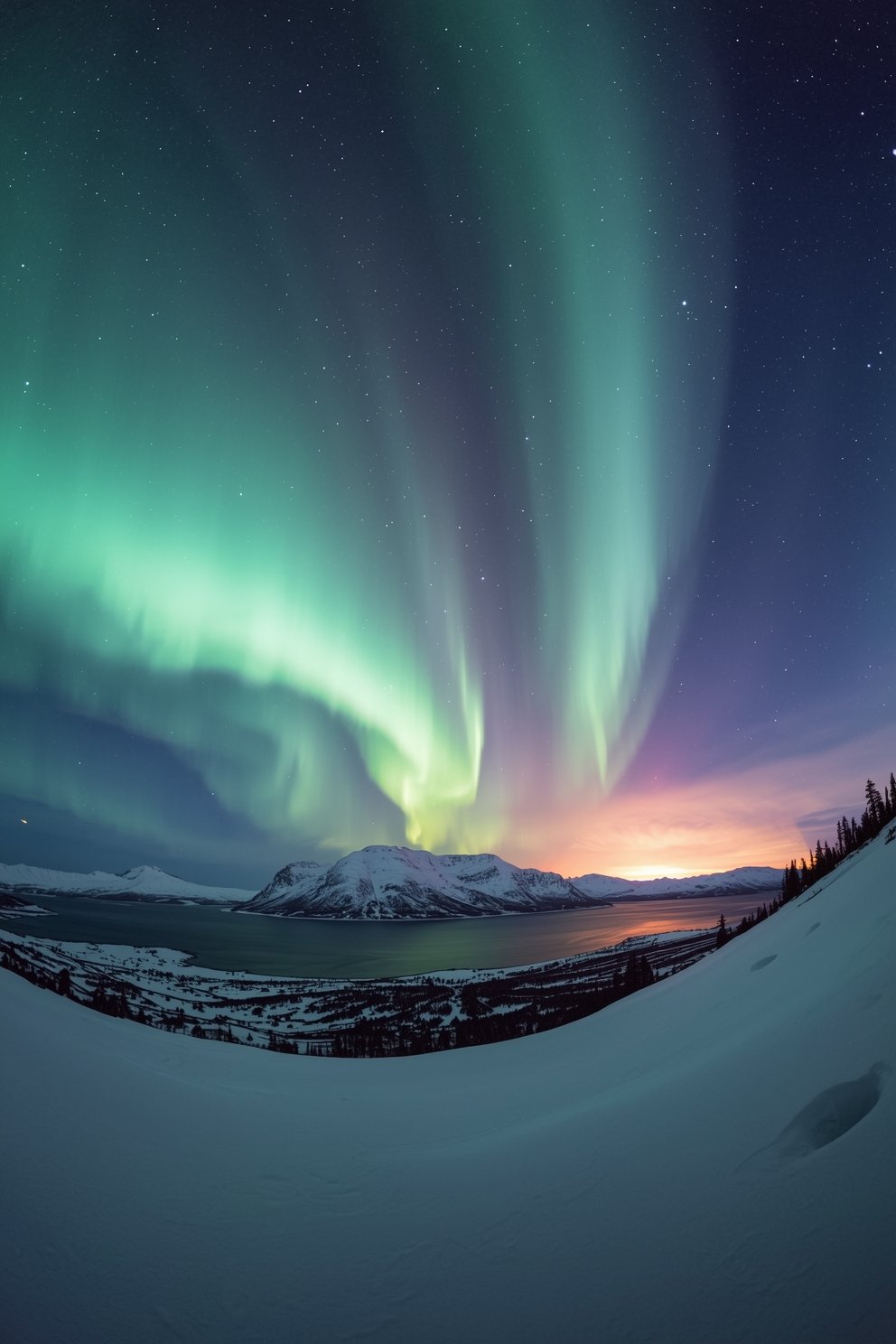
I was standing on a dock, coffee in hand, watching green ribbons ripple across the water’s reflection.
The geography here is just perfect — it sits right in the auroral oval, which is the sweet spot for activity.
What I love about Tromsø specifically is that it gives you options.
You can book a guided snowmobile chase into the wilderness.
You can hop on a fjord cruise and watch from the water.
Or you can literally just walk outside your hotel and look up.
The season runs from around September through March, and the darker the night, the better your chances.
My personal tip?
Stay a minimum of four nights.
The weather up there is moody and unpredictable, and you don’t want to bank everything on one clear sky.
Give yourself time.
Abisko, Sweden — The Spot Serious Aurora Chasers Don’t Shut Up About

If Tromsø is the famous one, Abisko is the one the serious aurora chasers talk about in hushed, reverent tones.
And I get it now.
Abisko sits inside a microclimate created by the surrounding mountains that shields it from cloud cover way more often than anywhere else in the region.
That means clearer skies.
More consistent views.
The Aurora Sky Station up on the mountain is something else entirely.
You take a gondola up, you’re above the clouds, and the lights just… perform.
It felt like being in a snow globe that someone had decided to electrify with color.
The village itself is tiny, which I actually loved.
There’s no noise.
No city glow bleeding into the sky.
Just darkness, cold air, and the aurora doing its thing.
If I had to pick just one place to take someone seeing the lights for the first time, it might actually be Abisko.
It’s that reliable.
My hack here?
Download a geomagnetic activity app before you go and set alerts for KP-index spikes.
It changed everything for me.
Your Ultimate Caribbean Adventure Awaits!
Discover hidden coves, secret beaches, and the best rum punches in the islands. Your insider’s guide to Caribbean paradise.
Get Your Guide Now$15.99Reykjavik, Iceland — Not Just a Starting Point

Most people treat Reykjavik as a layover city on their way to a northern lights tour.
And I used to think that too.
Then I actually spent time there and realized — this city itself is a northern lights destination.
The infrastructure for aurora chasing in Iceland is just next level.
Guides know the landscape, they know the cloud patterns, and they will literally drive you hours in any direction to find a clear sky.
The landscape adds something to the experience that Norway and Sweden don’t always offer.
Black lava fields.
Frozen waterfalls.
Geothermal steam drifting across the ground while the sky goes green above you.
It’s dramatic in a way that feels almost cinematic.
I saw the lights from a beach called Reynisfjara once — black sand, roaring waves, green sky — and I genuinely had no words.
Iceland can be pricey, I won’t lie to you.
But there are ways to do it on a tighter budget if you rent a camper van and chase the sky yourself.
Some of my best aurora moments there were completely spontaneous roadside pulls.
Fairbanks, Alaska — The American Option That Doesn’t Get Enough Credit

I know people always default to Scandinavia for this.
But Fairbanks, Alaska is seriously underrated, and as an American, I feel like it’s my duty to put some respect on it.
Fairbanks sits right under the auroral oval, just like Tromsø.
It’s dark, it’s cold, and the sky can absolutely go off up there.
What makes Fairbanks special is the experience around it.
You can dog sled during the day.
You can do ice fishing.
You can stay in a glass-roofed cabin — yes, those exist in Alaska — and watch the lights from inside a warm bed.
I stayed at one of those cabins once and it genuinely felt surreal.
Waking up at 1 a.m.
to green light flooding the room.
The season here is long — roughly late August through April — which gives you more scheduling flexibility than some European destinations.
Flights from the lower 48 are also usually more affordable than trans-Atlantic.
So if budget is a factor, Fairbanks should be your first call.
Don’t sleep on it.
Yukon, Canada — Wild, Raw, and Completely Underestimated

The Yukon is where I felt the most genuinely remote.
Like, properly off-the-grid, I-could-disappear-into-this-wilderness remote.
And somehow the northern lights hit differently when you’re standing somewhere that vast.
Whitehorse is the main base, and it’s a cool little city with a surprisingly good food scene for how far north it sits.
But the real magic happens when you get out of town.
There are wilderness lodges scattered through the Yukon that are specifically designed around aurora viewing.
Some have heated tipis.
Some have hot tubs positioned so you’re soaking while staring up at the sky.
I mean.
Come on.
The Yukon also has one of the longest aurora seasons in North America, so your window for catching the lights is generous.
What I love about this destination is the combination of indigenous culture, frontier history, and genuine wilderness.
It’s not just an aurora trip.
It’s a whole experience.
If you’re the kind of traveler who wants more than just the photo, the Yukon delivers on every level.
Caribbean Paradise Unlocked
From pristine beaches to vibrant local culture, discover the Caribbean’s best-kept secrets with my comprehensive travel guide.
- 120+ Hidden Beach Secrets
- Local Cuisine Guide
- Budget Travel Tips
- Island Hopping Routes
Finnish Lapland — Reindeer, Snow Villages, and Absolute Magic

Finnish Lapland might be the most aesthetically overwhelming place I’ve ever been.
There’s snow on everything.
Like, on the trees, on the rooftops, on the reindeer that just casually walk past you on the road.
It’s a lot.
Rovaniemi is the main hub, and it has that kind of fairy-tale quality that feels almost too good to be real.
The northern lights there have this particular quality — maybe it’s the landscape reflecting all that white snow — that makes them feel extra vibrant.
Even a relatively low-activity night can look spectacular against all that white.
You can stay in glass igloos here, which are exactly as incredible as they sound.
Warm interior, transparent roof, and you’re lying in bed watching the sky shift colors above you.
I booked one on a whim once and genuinely considered not going home.
Finnish Lapland is also great for combining with other winter activities.
Snowshoeing, reindeer sleigh rides, ice fishing.
It’s immersive in a way that makes the whole trip feel like more than just aurora-chasing.
What Time of Year Actually Gives You the Best Chance

This is the question I get more than any other.
And I’ll give you a real answer instead of a vague one.
The auroral season is roughly September through March in most of these destinations.
But the absolute sweet spot — based on my experience — is late September to early October and then again in late February to mid-March.
Here’s why.
In autumn, you get the equinox effect, which actually boosts geomagnetic activity.
More activity means more visible auroras, even at lower latitudes.
In late winter, you’re getting longer nights again after the short-day period of deep winter, and the weather often stabilizes a bit.
The dead of winter — December, January — is tempting because of the long darkness, but cloud cover is often at its worst.
My personal pick is September in Norway or Iceland.
The landscape still has color, the nights are getting dark fast, and I’ve had some of my most vivid aurora sightings during that window.
Go flexible.
Go for at least a week.
And watch the forecast obsessively.
How to Actually Photograph the Northern Lights (Without Going Crazy)

I’m not a professional photographer.
I will say that upfront.
But after way too many blurry, underexposed aurora shots, I figured out a system that actually works.
You need a tripod.
Non-negotiable.
Handheld shots in that low light are just not going to happen.
Set your camera to manual mode, ISO somewhere between 1600 and 3200, aperture as wide as it goes (f/1.8 to f/2.8 is ideal), and shutter speed around 10 to 20 seconds.
That’s your starting point.
Adjust from there based on how bright the display is.
For phone shooters — modern smartphones actually handle this surprisingly well if you use night mode or a dedicated long-exposure app.
But here’s my real tip.
Spend the first 15 minutes just looking.
Not shooting.
Just being there.
I’ve talked to so many people who spent an entire aurora display staring at their phone screen trying to get the shot and barely experienced the moment.
Get a few good frames, then put the phone down and just look up.
That memory will outlast any photo.
Your Ultimate Caribbean Adventure Awaits!
Discover hidden coves, secret beaches, and the best rum punches in the islands. Your insider’s guide to Caribbean paradise.
Get Your Guide Now$15.99What to Pack for a Northern Lights Trip (My Honest List)

I’ve packed wrong for this trip more times than I’d like to admit.
Cold-weather travel has a learning curve, and standing outside in sub-zero temperatures watching the sky for hours is a specific kind of cold that your regular winter coat is not prepared for.
Base layers are everything.
Merino wool, not cotton.
Cotton holds moisture and will make you miserable.
Merino regulates temperature and doesn’t stink after a day of wearing it, which matters when you’re traveling remote.
Hand warmers.
Bring more than you think you need.
Stuff them in your gloves, your boots, your jacket pockets.
Thermal socks — two pairs, layered.
A balaclava or face gaiter.
Your face will thank you.
Insulated, waterproof boots rated to at least -20°F.
Do not cheap out on boots.
A headlamp with a red-light mode so you can see without killing your night vision.
And honestly?
A flask of something warm.
Whiskey, hot cocoa, whatever you’re into.
Standing in the cold waiting for the lights is much better with something warm in your hands.
Trust me on that one.
Solo vs. Guided Tour — Which One Is Actually Better

I’ve done both, and I have strong opinions.
If it’s your first northern lights trip, do a guided tour at least for your first night.
Here’s why.
The guides know the skies in a way that takes years to develop.
They’re watching the weather patterns, the cloud cover, the geomagnetic forecasts, and they will drive hours in any direction to find you a clear window.
I went out with a guide in Tromsø once who drove us 90 minutes east, straight through a cloud bank, to a valley that was completely clear.
We saw the lights for three hours.
If I’d been on my own, I would’ve stood outside my hotel for 20 minutes and given up.
That said, once you’ve got a few trips under your belt, solo chasing is its own kind of adventure.
You go where you want.
You stay as long as you want.
You pull over on a random road because the sky looks interesting.
Some of my most unexpected aurora moments happened when I was completely alone with no plan.
Both have value.
Start guided, then go rogue.
The Feeling You Don’t Expect — And Why It Changes You

I’ve been trying to put this into words for years.
There’s something that happens to you under a northern lights display that isn’t just about visual beauty.
It’s quieter than that.
It’s the feeling of being very small in the best possible way.
Standing in the dark, in some remote corner of the world, watching something ancient and enormous happen above you — it recalibrates your sense of scale.
Your problems feel smaller.
Your life feels bigger.
I know that sounds like something off a motivational poster, but I mean it genuinely.
Every person I’ve ever watched the lights with — strangers, old friends, solo travelers I just met — they all go quiet.
And then they usually smile.
And sometimes they cry a little.
And nobody thinks that’s weird.
Because the lights do something to you.
They remind you that the world is genuinely, staggeringly beautiful.
And that sometimes the best thing you can do is just show up, look up, and let yourself be in it.
That’s the whole trip, honestly.
That’s what you’re really going for.