Manatees live all over Florida, along both coasts and up its rivers and springs.
True enough, but that won’t help you plan a day.
What helps is one number.
When the water drops below about 68°F, manatees have to get to warm water, so an animal that’s spread across the whole state piles into a short list of springs and power plant canals.
So here’s the short version.
Go from about mid-November through March, and go to one of those warm spots.
Go in July and, outside the places that keep them in care, you’re mostly counting on luck.
Where in Florida do manatees live?

It depends on the month, and that’s the part most lists skip.
Outside winter they’re scattered, widely dispersed for most of the year across rivers and bays, canals and estuaries, and all along the coast.
Some don’t even stay in Florida, heading up the East Coast into Georgia and the Carolinas, and a few make it to Massachusetts.
On the Gulf side they get to coastal Louisiana, and once in a while Texas.
Then it gets cold, and they come back to the warm water.
The 2021-2022 survey put Florida’s manatees at 8,350 to 11,730, so in January a lot of big animals are sharing very little real estate.
Pick your spot by what you want out of the day:
| You want | Go to | When and cost |
|---|---|---|
| Free, near Tampa | Tampa Electric’s Manatee Viewing Center, Apollo Beach | Nov. 1 to April 15, free |
| Free, South Florida | Manatee Lagoon, West Palm Beach | Nov. 15 to March 31 is its season, free |
| A huge winter count | Blue Spring State Park, Orange City | Mid-November to March, $6 a vehicle, reservation required |
| A manatee in any month | Homosassa Springs Wildlife State Park | All year, $13 an adult |
| To get in the water | Crystal River and Kings Bay | Nov. 15 to March 31 for the crowds, with a permitted tour or your own boat |
| A guided paddle | Spring Bayou, Tarpon Springs | November to March, tours from $59 |
Want to start from your own town?
Our where to see manatees tool sorts the state’s viewing list by distance and month.
Why 68 degrees decides where you’ll find them

A 1,000-pound animal looks like it should shrug off a cold snap.
It can’t.
They’ve got relatively little body fat and a low metabolism for a marine mammal, and they can’t take long exposure to water below 68°F.
Florida offers them two kinds of heat.
Springs are the natural one, holding around 72°F all year.
Turns out an estimated 60% of the manatee population depends on industrial warm water, which mostly means power plants.
Many of those plants may be retired in the coming years, and losing them could mean more cold-stress deaths.
Here’s where visitors get fooled.
It’s the water temperature that counts, not the air.
A warm January afternoon proves nothing, even in the part of Florida with the best weather.
Flip it around and it works the other way too: when the water drops below 68°F, you’re likely to see plenty of manatees.
So before you drive, check the water and not the calendar.
You can check the webcams at Blue Spring and Homosassa, plus Blue Spring sighting updates after the morning “roll call”.
The Blue Spring cameras run November through March and Homosassa’s all year, though Homosassa’s residents have been out of camera view for maintenance.
Choosing a coast for a winter trip?
Here’s which side of Florida is warmer in February.
The free decks beside the power plants

If it’s cold out and this is your first time, start here.
You don’t need a boat or a tour, and two of these three cost nothing.
Everyone pictures a turquoise spring.
I’d still take a free deck next to a smokestack.
Tampa Electric’s Manatee Viewing Center is at the Big Bend Power Station in Apollo Beach.
The discharge canal is a state and federal manatee sanctuary, and you can see hundreds of manatees there.
It’s open daily from November 1 to April 15, 10 a.m. to 5 p.m., with the trails closing at 4.
Parking and admission are free.
It’s shut for Thanksgiving and Christmas, also for Easter, and it closes at 3 p.m. on Christmas Eve.
There’s also a touch tank of cownose rays, the only animals on this page you’re allowed to touch.
Manatee Lagoon in West Palm Beach is the East Coast version, an observation deck over the warm water by the Riviera Beach Next Generation Clean Energy Center.
That’s a long name for a power plant.
It’s open 9 a.m. to 4 p.m., daily from November 15 to March 31, and closed Mondays the rest of the year.
Admission and parking are free, and there’s a live Manatee Cam on its site.
Lee County Manatee Park in Fort Myers isn’t free, but it’s close, at $2 an hour or $5 a day to park.
Its warm water comes from the Florida Power & Light plant across the street.
The timing’s strict, though.
The best stretch runs from late December through February, and manatees aren’t there from April to early December.
Show up in November and that’s on you.

🗼 I Wrote a Book About My Japan Travel Catastrophes!
Before I landed in Tokyo, I thought I was the “Final Boss” of international travel. Spoiler alert: I WASN’T. 😅
🚅 I boarded the wrong Shinkansen and ended up in THE WRONG CITY. I confused locals with my “expert” bowing that was more awkward than accurate. I accidentally stumbled into a high-stakes Kendo practice thinking it was a tourist show. Sound like something you’d do?
“Things I Wish I Knew Before Going to Japan” is your shortcut to avoiding ALL my cringe-worthy mistakes. ✨ Inside, you’ll find practical, LIFE-SAVING tips on etiquette, transport, money, and hidden gems that will save you time, money, and a whole lot of confusion.
The springs: Blue Spring, Homosassa and Crystal River

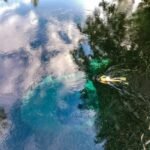
This is the clear-water photo everyone’s after, and it’s also where you’ll run into the most rules.
Blue Spring State Park
The park’s numbers are hard to argue with.
Researchers tracked 14 manatees here in 1970, and the record is 729, set in 2023.
From mid-November to March, hundreds crowd the spring run in Orange City to get out of the cold.
Two things catch people out.
Since July 15, 2026, every day-use visitor needs a reservation, so get it booked before you leave.
Even then, expect a line to get in, and the park can hit capacity and close for several hours.
The second one is swimming.
Swimming season runs April 1 to November 14, so in manatee season you’re watching from the observation decks.
Entry’s $6 a vehicle, and the park’s open 8 a.m. to sunset every day.
If you’re filling out a day around Orange City, here are Florida’s best orange groves.
If you actually came to swim, read how Blue Spring stacks up against Ginnie Springs and come back in the warm months.
Homosassa Springs Wildlife State Park
This is the safe bet.
The park keeps resident manatees all year, and its Underwater Observatory lets you watch them from below the surface.
In winter, wild manatees can reach the headwaters too.
Leave the swimsuit in the car.
Swimming isn’t on the park’s list of experiences, so if you’d rather be in the water with the manatees, here’s where to swim near Homosassa Springs instead.
Be clear on what you’re buying, though.
It’s a wildlife park, more zoo than wild encounter.
The neighbors include black bears and Florida panthers plus a red wolf (all park residents), so you can leave the bear spray at home.
It’s open 9 a.m. to 5:30 p.m., and ticket counters close at 4:45.
Adults pay $13 and kids 6 to 12 pay $5 (5 and under are free).
The shuttle boat has been out since February 4, 2026 because of low water, so look for a notice on the park’s page before you plan around it.
Crystal River and Three Sisters Springs
Crystal River National Wildlife Refuge, about an hour north of Tampa, is the only refuge created specifically to protect the Florida manatee.
Crystal River and Kings Bay are the only area in Florida where swimmers are monitored around manatees.
If you’re set on getting in the water with one, this is where I’d do it, and honestly I wouldn’t try it anywhere else.
The refuge’s manatee season runs November 15 to March 31.
During those months its seven sanctuaries are closed to all water activity, and Three Sisters Springs is closed to it from sunset to sunrise.
Kayaks and other paddle craft can only go inside Three Sisters from April 1 to November 14.
The refuge has no water-access facilities of its own and doesn’t run tours, so you’ll need your own boat, a city or private ramp, or a business with a refuge permit.
The boardwalk is the best way to protect manatees at Three Sisters, so start there.
The city’s Three Sisters Springs Center runs the land side, with shuttle service plus walk-in or bike-in entry.
Our Crystal River vs. Homosassa guide covers tickets and which town makes the better base.
Kings Bay is fed by a lot of natural springs, more than 70 of them.
If you’d rather paddle

A kayak gets you away from the decks, but nobody’s promising you a manatee.
Tarpon Springs
Manatees visit the freshwater Spring Bayou from November through May, near Craig and Coburn parks, and parking’s limited in that historic district.
Get Up and Go Kayaking runs a two-hour clear-kayak tour to the bayou from November to March, from $59 with a limit of 10 paddlers.
Sightings aren’t guaranteed.
Weeki Wachee River
The kayak outfitter here sees manatees on this river all year, often daily, with more from November 15 to March 31.
It’s not on the state’s viewing list, though, and wildlife’s a hope, never a promise.
Tours start at $49.50, or $74 in manatee season.
Merritt Island National Wildlife Refuge
This one’s a deck, not a paddle, but it’s on the water.
The refuge has an accessible Manatee Observation Deck on Haulover Canal.
It doesn’t come with a season, so treat it as a try-your-luck stop on a Space Coast day.
NASA acquired this land in 1962 for the space program, and the unused parts have been a wildlife refuge since 1963.
That’s why NASA can still restrict access during launch operations.
There’s an entrance fee, and the refuge’s $10-a-vehicle pass covers Black Point Wildlife Drive and Bio Lab Road, plus three boat ramps.
The deck isn’t named on the pass, so keep $10 handy.
If you’re staying around there, here’s what lives in the Banana River.
Wherever you launch, stay two kayak lengths from any manatee, and never chase one or get between a mother and calf.
Bringing a boat?
Stick to the posted speed zones, and we’ve got a guide to South Florida’s best boat ramps.
Polarized sunglasses are a good idea too, since they cut the glare and help you see below the surface.
They’re worth the space in your carry-on even if you’re only on a deck.
What you’ll actually see

Keep your expectations in check.
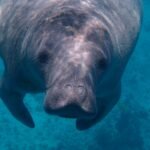
A lot of the time, you’re looking at a snout, often the only part that comes out of the water.
Active manatees surface every three to five minutes, resting ones can stay down for 20, and they rest 2 to 12 hours a day.
So you might drive two hours to watch a gray shape not do much.
I’d go anyway, but you should know that going in.
They are big, at least.
Adults usually run 9 to 10 feet and around 1,000 pounds, and they can graze up to eight hours a day, eating up to 10% of their body weight.
They can hit 15 mph in short bursts.
They aren’t herd animals, either.
Apart from mothers and calves they don’t need to travel together, though they’re semi-social and do socialize when they meet.
On the water, look for a swirl or a flat spot on the surface, or a snout, back, tail or flipper breaking it.
Can you see manatees in the summer?

Yes, but change the plan.
In the off-season the winter crowds break up, and Blue Spring’s run goes back to swimmers.
Your surest bet is a place that keeps them.
From April through October your best chance is a rehabilitation facility, and Homosassa’s resident manatees don’t go anywhere.
ZooTampa and The Bishop museum in Bradenton care for them too.
For wild ones, you may see them by boat or canoe on the Wakulla and St. Marks rivers in summer, and they turn up near Lovers Key from April to November.
Crystal River’s the same as everywhere else: in warm weather they spread out, and seeing one may take some travel and luck.
FAQs

What beach has manatees in Florida?
None that I’d plan a trip around.
Apollo Beach and Riviera Beach sound like beaches, but they’re towns, and the manatees are in warm water by the power plants.
Manatee Public Beach in Holmes Beach comes up because of the name.
It opened in 1952 as Manatee County Public Beach, so it’s named for the county (which is named for the animal), and it isn’t a known place to see them.
It’s a public beach, so you won’t have to puzzle out deeded beach access, and if clear water is the real goal, that’s a different trip.
The closest thing to a beach answer is those summer sightings near Lovers Key.
Is it rare to see a manatee in Florida?
Not in the right place and month.
Hundreds gather at spots like Tampa Electric’s canal in winter.
Pick a random stretch of coast in July and it’s a different story.
They’re also still listed as federally Threatened, so a good sighting isn’t nothing.
Is it OK to touch a manatee?
No. Look, but don’t touch, and don’t feed them or give them water either.
Florida’s law doesn’t actually use the word touch.
It makes it unlawful to “annoy, molest, harass, or disturb” a manatee, and harassment means any activity that alters the animal’s natural behavior.
In Kings Bay the federal rule gets specific: no touching a resting or feeding manatee, and no giving one anything to eat or drink.
It can mean up to a $500 fine or 60 days in jail, or both, under state law, and up to $50,000 or a year, or both, under federal law.
There’s a practical reason too.
Manatees that get used to people can lose their natural fear of boats and humans, which may make them more likely to get hurt.
Sources checked November 2026: Florida Fish and Wildlife Conservation Commission, US Fish and Wildlife Service, Florida State Parks, Lee County, Tampa Electric, Florida Power & Light, Save the Manatee Club, Get Up and Go Kayaking and Florida’s manatee statute.