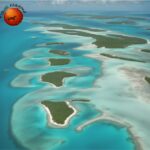
Short answer: The closest islands are Florida’s own.
The Florida Keys begin about 15 miles south of Miami and run out to Key West, and you can drive there with no passport.
The closest island in another country is Bimini, in the Bahamas, about 50 miles due east of Miami.
Below are 15 islands near Florida, nearest first, with the miles from Miami, whether you need a passport and the State Department’s advisory level for each one.
I rewrote this page in October 2026.
The old version called Puerto Rico an independent nation as well as a U.S. territory.
It’s a territory, not a nation, and Puerto Ricans have been U.S. citizens since 1917.
It said Key West is closer to Cuba than to mainland Florida.
That holds only if you measure to Miami, because the mainland’s southern tip at Flamingo is nearer.
It put a sea turtle farm on Little Cayman (the turtle farm is on Grand Cayman), and it gave Bimini a fishing nickname that belongs to Islamorada.
So I checked every fact again, measured every distance myself and cut what I couldn’t back up.
10+ Top Islands Close to Florida
Here are 15 islands you can reach from Florida, nearest first.
Each distance is a straight line from downtown Miami to the island’s main town.
I worked it out from the coordinates Wikipedia lists for each place and rounded it to the nearest 5 miles.
So it’s the shortest trip you could possibly make, not a flight path or a ferry route.
The passport column is about getting home.
Since 2007, U.S. citizens have needed a passport to fly back into the United States from elsewhere in the Americas.
The advisory column is the State Department’s level for each country as of October 2026.
Level 1 means “exercise normal precautions,” Level 2 means “exercise increased caution,” and Level 4 means “do not travel.”
The U.S. islands have no advisory, because they’re home.
| Island (measured to) | Miles from Miami | Passport to fly home? | State Department advisory |
|---|---|---|---|
| The Florida Keys (Key Largo) | 45 mi | No, it’s Florida | None (U.S.) |
| Bimini, the Bahamas (Alice Town) | 55 mi | Yes | Level 2 |
| Key West | 130 mi | No, it’s Florida | None (U.S.) |
| The Bahamas (Nassau) | 185 mi | Yes | Level 2 |
| Dry Tortugas | 185 mi | No, it’s Florida | None (U.S.) |
| Cuba (Havana) | 225 mi | Yes | Level 2 |
| Grand Cayman (George Town) | 455 mi | Yes | Level 1 |
| Jamaica (Montego Bay) | 525 mi | Yes | Level 2 |
| Turks and Caicos (Providenciales) | 570 mi | Yes | Level 2 |
| Puerto Rico (San Juan) | 1,035 mi | No, it’s a U.S. territory | None (U.S.) |
| Saint Kitts (Basseterre) | 1,265 mi | Yes | Level 1 |
| Antigua (St. John’s) | 1,320 mi | Yes | Level 1 |
| Dominica (Roseau) | 1,415 mi | Yes | Level 1 |
| Saint Vincent (Kingstown) | 1,510 mi | Yes | Level 1 |
| Barbados (Bridgetown) | 1,600 mi | Yes | Level 1 |
Want flight and boat times as well?
Our page on the Caribbean islands closest to Florida estimates both.
And for more on the islands off Florida’s coast, browse our Florida islands and Caribbean guides.
Key West – The Conch Republic
Key West is the southernmost city in the contiguous United States, about 130 miles southwest of Miami.
It sits at the end of the Overseas Highway, a 113-mile road that carries US 1 through the Florida Keys, so you can drive there.
The nickname is a joke with a real date on it.
In 1982 the Border Patrol set up a roadblock on US 1.
On April 23 of that year, Mayor Dennis Wardlow and the city council declared Key West independent in protest.
Locals were called Conchs, so the new micronation took the name Conch Republic.
The roadblock came down soon afterward.
Ernest Hemingway and his wife Pauline Pfeiffer lived in their Key West house from 1931 to 1939, and it’s now the most popular tourist attraction in Key West.
Cats still roam the grounds, and about half of them are polydactyl, with extra toes.
At dusk, walk to Mallory Square for the Sunset Celebration.
It begins two hours before sunset every day of the year, with street performers and food carts.
Then wander Duval Street, the main drag, which runs from the Gulf of Mexico to the Atlantic.
And since you’re here, find a slice of key lime pie.
The Bahamas – An Island Nation
The Bahamas is a country of some 700 islands and more than 2,000 cays, and only about 30 of them are inhabited.
It lies in the Atlantic, east of the Florida Keys and southeast of Florida.
Nassau, the capital, is on New Providence, about 185 miles from Miami.
The corner most people come for is Exuma, a district of over 365 islands and cays.
Its famous swimming pigs live on Pig Beach, on Big Major Cay, where no people live.
Nobody can say for sure how the pigs got there.
Nearby, Thunderball Grotto, a few hundred yards off Staniel Cay, is where scenes from the James Bond film Thunderball were shot.
Many of Exuma’s beaches and offshore reefs are protected in a national land and sea park.
You’ll need a passport.
The State Department rates the Bahamas Level 2 because of crime, and it notes that violent crime can occur anywhere in the country, so read the advisory before you go.
Cuba – The Pearl of the Caribbean
Cuba is the largest island in the Caribbean, 780 miles long.
Havana, the capital, is about 225 miles from Miami, and the southern part of Key West is just 93 miles from Cuba.
Old Havana has been on UNESCO’s World Heritage List since 1982, for its Baroque and neoclassical buildings and its fortifications.
Hemingway knew the island well, too.
He moved to Cuba in 1939, after his Key West years.
Here’s the catch for Americans.
Federal law requires anyone under U.S. jurisdiction to get a license for travel-related transactions in Cuba, and transactions related solely to tourist travel are not licensable.
So a plain beach vacation, booked as one, isn’t an option for most U.S. travelers.
The State Department rates Cuba Level 2.
The Florida Keys – A Tropical Wonderland
The Keys begin about 15 miles south of Miami and curve south-southwest, then west, to Key West and on to the uninhabited Dry Tortugas.
Key Largo, the first big key, is about 45 miles from downtown Miami in a straight line.
You don’t need a passport.
You just drive the Overseas Highway.
The high point of that drive is the Seven Mile Bridge, which links Knight’s Key in Marathon to Little Duck Key.
Despite the name, the newer bridge is 6.79 miles long.
Next to it is the old bridge.
Its 2.2-mile stretch out to Pigeon Key stayed open to cars for years so people could reach the key, until it closed to motorized traffic in 2008, the bridge’s Wikipedia article says.
You can walk that stretch or bike it, or take the shuttle bus.
Under the water is the largest coral reef chain in the United States.
John Pennekamp Coral Reef State Park, on Key Largo, was the first underwater park in the country.
One of its most famous sights is the Christ of the Abyss, an 8½-foot statue that stands in nearly 25 feet of water.
Farther down the chain, Islamorada is informally known as the “Sportfishing Capital of the World.”
Bimini, The Bahamas – Hemingway’s Hideaway
Bimini is the westernmost district of the Bahamas, a chain of islands about 50 miles due east of Miami.
It’s the closest point in the Bahamas to the mainland United States.
North Bimini is only about 7 miles long and 700 feet wide.
Hemingway lived here from 1935 to 1937, staying at the Compleat Angler Hotel.
He came for the fishing in the Gulf Stream, which rushes north past the Bahamas.
A 500-pound blue marlin caught off Bimini allegedly inspired The Old Man and the Sea and Islands in the Stream.
The hotel burned down in 2006, and the Hemingway photos on its walls were lost with it.
You can fly in, since Bimini’s airports take international flights from the US.
Or ride Baleària’s high-speed passenger ferry from Port Everglades in Fort Lauderdale.
Either way, bring a passport (a passport card also works for the trip home by sea).
The advisory is the Bahamas’ Level 2.
Puerto Rico – The Enchanted Island
Puerto Rico is popularly known in Spanish as La Isla del Encanto, “the island of enchantment.”
It isn’t a separate country.
It’s a self-governing, unincorporated territory of the United States, and Puerto Ricans have been U.S. citizens since 1917.
So if you’re a U.S. citizen, you don’t need a passport to fly there from Florida, even though San Juan is about 1,035 miles from Miami.
Start in Old San Juan, the oldest settlement in Puerto Rico.
La Fortaleza and the city walls, with the El Morro and San Cristóbal castles, have been on UNESCO’s World Heritage List since 1983.
La Fortaleza is also the oldest executive residence in the Western Hemisphere.
Then get out of town.
El Yunque is the only tropical rainforest in the U.S. National Forest System.
And on the small island of Culebra, Flamenco Beach ranked third best beach in the world in TripAdvisor’s 2013 Travelers’ Choice awards.
For more ideas, see what not to miss in Puerto Rico.
Grand Cayman – A Diver’s Paradise
Grand Cayman is the largest of the three Cayman Islands, a British Overseas Territory south of Cuba.
It’s about 22 miles long, and George Town, the capital, is about 455 miles from Miami.
The two smaller islands, Cayman Brac and Little Cayman, lie about 75 miles to the east-northeast.
Seven Mile Beach is the famous one, though a generous measurement puts it at just over 6.3 miles.
The island’s signature trip is Stingray City, a set of shallow sandbars in the North Sound where southern stingrays gather.
You can pet them while standing in about 3 feet of water.
The Cayman Turtle Farm is on Grand Cayman, in the West Bay district.
It raises green sea turtles for their meat and to release into the wild.
You’ll need a passport, and the advisory is Level 1.
Our guide to things to do in the Cayman Islands has more.
Dry Tortugas – Remote Beauty
Dry Tortugas National Park is about 68 miles west of Key West in the Gulf of Mexico, and you can only get there by seaplane or boat.
It’s a quiet park: it averaged about 63,000 visitors a year from 2008 to 2017.
Most visitors head for Fort Jefferson on Garden Key, the largest brick masonry structure in the Americas, built from over 16 million bricks.
After the Civil War it held Samuel Mudd and three other men convicted of conspiracy in Abraham Lincoln’s assassination.
You can stay the night, but camping is limited to eight primitive campsites at the Garden Key campground, so plan ahead.
Bush Key, next door, is closed to visitors from February to September to protect nesting seabirds.
It’s all Florida, so there’s no passport to show.
Jamaica – The Land of Reggae
Jamaica is the third-largest island in the Caribbean, after Cuba and Hispaniola, and it lies about 90 miles south of Cuba.
Montego Bay, on the north coast, is about 525 miles from Miami.
Kingston, the capital, is on the south coast.
Reggae began here in the late 1960s, growing out of ska and rocksteady.
In 2018 UNESCO added the reggae music of Jamaica to its list of the Intangible Cultural Heritage of Humanity.
In Kingston you can visit the Bob Marley Museum at 56 Hope Road, which was his home.
Near Ocho Rios, Dunn’s River Falls drops about 180 feet over terraces that look like giant stairs, and you can climb them.
Plan on 1 to 1.5 hours, often in a hand-holding chain behind a guide.
You’ll need a passport, and the State Department rates Jamaica Level 2.
See what to do in Jamaica for more.
The Turks and Caicos – A Hidden Gem
The Turks and Caicos Islands are a British Overseas Territory in the Atlantic, about 99 miles north of Hispaniola.
Providenciales, the most populated island, is about 570 miles from Miami.
The capital, Cockburn Town, is on Grand Turk, and the main currency is the US dollar.
“Hidden gem” is a stretch these days.
The islands had a record year in 2024, with over 2 million visitors.
Grace Bay, on Providenciales, is where Club Med opened the island’s first beachfront hotel in 1984.
You’ll need a passport, and the advisory is Level 2.
If you’re wondering how to fill the days, read whether there’s a lot to do on Turks and Caicos.
Saint Kitts and Nevis – Twin Treasures
Saint Kitts and Nevis is the smallest sovereign state in the Western Hemisphere, in both area and population, with roughly 48,000 people on two islands.
Basseterre, the capital and the main port for cruise ships, is on Saint Kitts, about 1,265 miles from Miami.
On Saint Kitts, Brimstone Hill Fortress National Park has been a UNESCO World Heritage Site since 1999.
You reach the citadel by a steep walk up ramps and steps from the main parking area.
On Nevis, Nevis Peak is a potentially active volcano, 3,232 feet high.
You’ll need a passport, and the advisory is Level 1.
Dominica – The Nature Isle
Dominica isn’t the Dominican Republic, which is a different country.
It’s nicknamed the “Nature Island of the Caribbean.”
It’s largely covered by rainforest and has 365 rivers.
Its capital, Roseau, is about 1,415 miles from Miami.
The big hike is to the Boiling Lake, a flooded fumarole in Morne Trois Pitons National Park, which became a World Heritage Site in 1997.
It’s the second-largest hot lake in the world, and the hike takes about six hours.
For something longer, the Waitukubuli National Trail runs 115 miles in 14 segments, from Scott’s Head in the south to Cabrits National Park in the north.
It’s the longest hiking trail in the Caribbean, and you’ll need a paid trail pass.
You’ll need a passport, and the advisory is Level 1.
Barbados – The Gem of the Caribbean
Barbados is the easternmost island in the Lesser Antilles, out in the Atlantic east of the other West Indies islands.
Bridgetown, the capital, is about 1,600 miles from Miami, which makes it the farthest island on this list.
“Historic Bridgetown and its Garrison” was listed as a UNESCO World Heritage Site in 2011.
If you’re there in summer, Crop Over is the big festival.
It begins in June and runs until the first Monday in August, when it ends with the Grand Kadooment.
Barbados lies outside the main development region for Atlantic tropical cyclones, so it’s often spared the worst effects of the region’s storms.
You’ll need a passport, and the advisory is Level 1.
Saint Vincent and the Grenadines – Island Hopping
Saint Vincent and the Grenadines is made up of 32 islands and cays.
Most of the land is Saint Vincent itself, where the capital, Kingstown, sits about 1,510 miles from Miami.
The Grenadines string south toward Grenada.
The biggest inhabited ones are Bequia and Mustique, plus Canouan and Union Island.
La Soufrière, the volcano that tops Saint Vincent at 4,052 feet, last erupted in April 2021.
When it’s quiet, a hiking trail climbs through rainforest to the crater rim, so check the volcano’s status before you plan that hike.
Farther south, the Tobago Cays are five small islands in a marine park with a 1,400-acre lagoon and Horseshoe Reef.
Its seagrass beds are feeding grounds for green turtles.
Mustique is a private island owned by the Mustique Company, which its homeowners own, and many of its roughly 120 villas are let through the company.
You’ll need a passport, and the advisory is Level 1.
Antigua & Barbuda – Beach Bliss
Antigua is reputed to have 365 beaches, one for every day of the year.
Its largest city, St. John’s, is about 1,320 miles from Miami.
At English Harbour, Nelson’s Dockyard is the only continuously working Georgian-era dockyard in the world, and it’s part of a UNESCO World Heritage Site.
It’s named for Horatio Nelson, who was the senior naval officer of the Leeward Islands from 1784 to 1787.
Barbuda, about 30 miles north of Antigua, is one of the most sparsely populated islands in the Caribbean.
Codrington Lagoon has the largest magnificent frigatebird colony in the world, on tiny Man of War Island.
Hurricane Irma destroyed more than 90 percent of Barbuda’s buildings in September 2017, so check what’s open before you book.
You’ll need a passport, and the advisory is Level 1.
But What is the Closest Vacation Island to Florida?
If you count Florida’s own islands, it’s the Keys.
They start about 15 miles south of Miami, Key Largo is about 45 miles from downtown in a straight line, and the Overseas Highway takes you from Key Largo all the way to Key West.
One correction here.
The old version of this page said Key West is closer to Cuba than to mainland Florida.
Key West is closer to Havana than to Miami (about 106 miles against 130), which may be where that line came from.
But the mainland is nearer still.
Flamingo, at the southern tip of the Florida peninsula, is about 67 miles from Key West in a straight line, while Cuba is 93 miles from the southern part of Key West.
If you want an island in another country, it’s Bimini, about 50 miles due east of Miami.
And if you searched for islands south of Florida, start with the Keys, which the Overseas Highway runs through from Key Largo south to Key West.
The southern part of Key West is 93 miles from Cuba, and the Cayman Islands and Jamaica both lie south of Cuba.
Your Ultimate Caribbean Adventure Awaits!
Discover hidden coves, secret beaches, and the best rum punches in the islands. Your insider’s guide to Caribbean paradise.
Get Your Guide Now$15.99FAQs
When is the best time to visit these islands?
The Atlantic hurricane season runs from June 1 to November 30, when storms are most likely to form.
December to May falls outside that season.
If you travel in the off-season anyway, keep your plans flexible in case a storm comes through.
Do I need a passport to visit these nearby islands?
For the Keys and Key West, the Dry Tortugas or Puerto Rico, no. They’re part of the United States, and travel between the U.S. and its territories is exempt from the passport rule.
For every other island on this list, yes: U.S. citizens need a passport to fly back into the United States from elsewhere in the Americas.
Coming home by sea, a U.S. passport card or an enhanced driver’s license also works.
On a cruise that leaves from and returns to the same U.S. port, a government photo ID plus a U.S. birth certificate is enough to get back in.
That’s what the U.S. asks when you return, and the island you visit may ask for more, so check its entry rules too.
Our passport checker can sort out your exact trip.
Which island is the best for snorkeling?
It depends on your trip, but three spots on this list stand out.
John Pennekamp on Key Largo was the first underwater park in the U.S., and you can drive to it.
At Stingray City on Grand Cayman, you stand in about 3 feet of water with southern stingrays.
And in the Tobago Cays, green turtles feed in the seagrass of a protected lagoon.
What’s the approximate cost for a vacation to these islands?
There’s no honest single number.
The biggest swing is getting there.
The Keys and Key West need only a car, while the islands at the bottom of the table are more than 1,000 miles away and may mean a layover.
Price your flights first, then the room, and add the ferry or seaplane for places like Bimini or the Dry Tortugas.
Are these islands family-friendly?
Many are.
The Florida islands are the easiest with kids, since there’s no passport to get and no long flight.
Before you book anything farther away, read the State Department’s advisory for that country.
On this list, the Cayman Islands and Saint Kitts and Nevis are Level 1, as are Dominica and Barbados, Saint Vincent and the Grenadines, and Antigua and Barbuda.
Related read: The Caribbean Travel Guide — Instant PDF + Kindle download. Secure checkout by Stripe