Florida?
The free hurricane risk calculator counts the storms that passed near your destination on your travel dates, season by season.
I’d been there as a kid — theme parks, crowded beaches, sunburned shoulders — and I figured I’d seen what the state had to offer.
Then a buddy of mine, someone who never steers me wrong, said: “Jeff, you haven’t seen Florida.
You’ve seen the postcard version.”
So I rented a beat-up truck, mapped out a loose route along the lesser-known coastline, and just… drove.
What I found shook me in the best way.
Quiet fishing towns with no traffic lights.
Beaches with actual sand dollars still on them.
Waterfront spots where the only sound was pelicans and the occasional boat engine cutting through calm water.
This is the Florida I wish someone had told me about sooner.
St. George Island — The One Most People Drive Right Past

I pulled onto St.
George Island on a Tuesday afternoon and felt like I’d accidentally discovered someone’s private paradise.
There’s a bridge that connects it to the mainland, and you almost feel like the island is daring you to cross it.
Most people don’t bother.
That’s their loss.
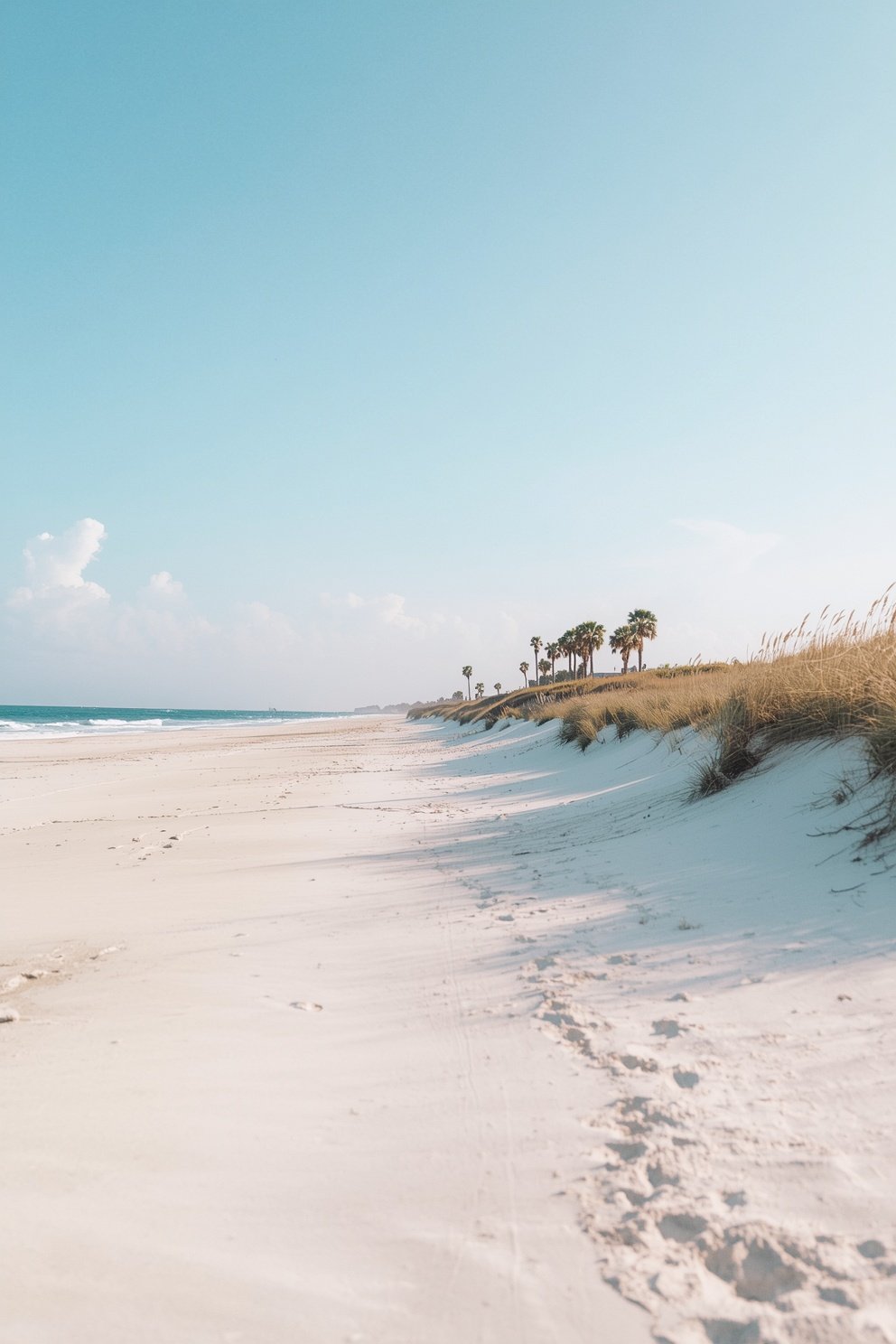
The beach here is wide, white, and almost offensively beautiful — like someone turned up the brightness on everything.
The sand is fine and sugar-soft, and the Gulf water is this ridiculous shade of emerald green that doesn’t look real until your feet are actually in it.
There are no high-rise hotels here.
No neon signs.
No chain restaurants fighting for your attention.
Just beach houses, a few casual local spots to eat, and miles of undisturbed shoreline inside Dr.
Julian G.
Bruce State Park.
I walked almost four miles without seeing another person.
Four miles.
That kind of solitude on a Florida beach in peak season feels like a cheat code.
If you’re the kind of traveler who needs a beach bar and a DJ to have fun, this probably isn’t your place.
But if you want to actually feel the ocean — and I mean really sit with it — St.
George Island delivers something I haven’t found anywhere else in the state.
Apalachicola — Small Town, Big Soul

Apalachicola is the kind of place that makes you want to move there by the time you finish your first cup of coffee.
It’s a tiny historic town on the Florida Panhandle, and it’s best known for its oysters — which, yes, are absolutely worth the trip on their own.
But the town itself is what got me.
Old brick buildings.
Spanish moss hanging off ancient trees.
Front porches with actual rocking chairs on them.
It feels like the Florida coast did fifty years ago, before everything got paved over and turned into a resort.
I wandered the downtown streets for a full afternoon, popped into a few antique shops, and somehow ended up talking to a local fisherman for about an hour about the history of the bay.
That’s the thing about Apalachicola — people there actually want to talk to you.
The food scene is low-key incredible.
Fresh seafood, unpretentious preparations, reasonable prices.
I had a bowl of she-crab soup that I still think about sometimes when I’m somewhere cold and miserable.
It’s the kind of soup that feels like a warm hand on your shoulder.
If you can swing a night or two here, do it.
The pace of this town has a way of quietly recalibrating you.
Your Ultimate Caribbean Adventure Awaits!
Discover hidden coves, secret beaches, and the best rum punches in the islands. Your insider’s guide to Caribbean paradise.
Get Your Guide Now$15.99Cedar Key — Where Time Actually Slows Down

There’s only one road into Cedar Key.
One road in, one road out — and that, I think, tells you everything you need to know about the vibe.
Cedar Key is a collection of small islands connected by causeways, sitting about fifty miles southwest of Gainesville on the Gulf Coast.
It is not fancy.
It is not polished.
And that’s exactly why I love it.
The town sits on a grid of old wooden buildings, waterfront docks, and art galleries that punch way above the town’s weight class.
The sunsets here are legitimately some of the best I’ve seen in my life, and I’ve chased sunsets from Big Sur to the Outer Banks.
Something about the low horizon, the still water, and the fishing boats silhouetted against orange sky just does something to you.
Clam farming is actually a big industry here, and the local restaurants serve fresh clams prepared in about fifteen different ways.
I had steamed clams with garlic butter at a place right on the water, watching pelicans land on the dock, and thought: this is it, man.
This is the whole point of traveling.
Cedar Key has no chain hotels, no theme parks, no urgency.
It rewards the kind of traveler who knows how to just… be somewhere.
Flagler Beach — My Kind of Low-Key Paradise

Flagler Beach is sandwiched between Daytona and St.
Augustine, and somehow both of those bigger cities have stolen all the attention.
Which means Flagler Beach sits there, quietly perfect, completely underrated.
It’s a small beach town with a laid-back surfer energy that feels genuinely authentic rather than manufactured.
A1A runs right through it — that legendary coastal highway — and you can walk from your rental to the beach in about ninety seconds.
The pier here is a classic.
Fishermen, families, the occasional pelican stealing someone’s bait — it’s a whole scene, and it’s free to walk.
I grabbed fish tacos from a local spot and ate them on a bench watching the Atlantic do its thing.
The waves here are actually decent for surfing, which you don’t always get on Florida’s east coast.
And the town has this great mix of old beach cottages and newer vacation homes that somehow coexist without feeling weird.
There’s a stretch of Flagler Beach that’s part of a state park, and the dunes there are tall and wild and full of sea oats blowing in the breeze.
I did a morning run on that stretch at sunrise and felt like the entire east coast was mine.
If I had a long weekend and wanted to decompress without overthinking it, Flagler Beach is where I’d go first.
Amelia Island — Old Florida With Actual Sophistication

Amelia Island is Florida’s northernmost barrier island, tucked right up near the Georgia border — and it has a very different energy from the rest of the state.
It feels older, somehow.
Quieter.
More confident.
The historic downtown of Fernandina Beach is one of the most charming main streets I’ve walked in the entire Southeast.
Victorian architecture, independent restaurants, local boutiques, craft cocktail bars — the whole thing is walkable and completely unpretentious.
The island also has some wild history.
Eight different flags have flown over Amelia Island over the centuries, which gives the whole place this layered, storytelling quality that you can actually feel when you walk around.
The beaches on the Atlantic side are wide and beautiful — you can actually drive on parts of them, which still feels like a weird superpower.
I spent a morning at Fort Clinch State Park, which has a Civil War-era fort you can tour and beach access that’s genuinely stunning.
Then I had dinner at a waterfront restaurant on the Intracoastal side and watched the sun drop behind the marshes while a great blue heron stood completely still in the shallows.
It was one of those travel moments you don’t manufacture.
It just happens.
And when it does, you remember why you left home in the first place.
Caribbean Paradise Unlocked
From pristine beaches to vibrant local culture, discover the Caribbean’s best-kept secrets with my comprehensive travel guide.
- 120+ Hidden Beach Secrets
- Local Cuisine Guide
- Budget Travel Tips
- Island Hopping Routes
Anna Maria Island — The Anti-Tourist Tourist Spot

Anna Maria Island is only seven miles long.
Seven miles, and somehow it packs in some of the most genuinely charming Gulf Coast beach life I’ve ever experienced.
It sits just north of Sarasota, connected by a bridge, and the moment you cross it you feel the shift.
No traffic lights on the island.
Golf carts outnumber cars.
The speed limit is twenty-five everywhere.
The beaches here — Bean Point and Coquina Beach especially — are the kind that make you stop walking just to take a full breath and take it all in.
The Gulf water is calm and clear and warm even in the cooler months, and the shells on the shoreline are genuinely impressive.
I found a sand dollar on my second morning here, and I know that sounds like a small thing, but it felt weirdly meaningful.
Like the island approved of me or something.
The Pine Avenue area in the north village is worth an entire afternoon — local coffee shops, vintage shops, restaurants with actual personality.
Nothing here is a chain.
That alone feels like a victory.
One thing I’ll say: Anna Maria Island is not a secret anymore.
It’s gotten popular, and it gets crowded, especially on weekends.
But if you can go midweek or in the shoulder season, it still delivers that rare Florida feeling of beauty without the chaos.
Caladesi Island — You Have To Earn This One

Caladesi Island is routinely ranked as one of the best beaches in the entire country.
And it’s only accessible by ferry or private boat.
That’s not a bug.
That’s the feature.
The ferry runs from Honeymoon Island State Park, and the ride takes about twenty minutes across St.
Joseph Sound.
I did it on a quiet weekday and felt like I was being delivered somewhere genuinely off the map.
The beach on Caladesi is pristine in a way that almost doesn’t make sense.
The sand is so white and fine it almost squeaks under your feet.
The Gulf is shallow and impossibly clear — you can wade out a hundred feet and still see the bottom.
Because it’s only accessible by boat, the crowds stay light.
The people you do see there are the ones who made an effort, which tends to filter out the noise in a good way.
There’s a nature trail through the interior of the island — mangroves, ospreys, the occasional raccoon who has absolutely no fear of humans.
I hiked it after a long morning on the beach and felt genuinely restored.
My honest tip: go early, bring a cooler, and plan to stay all day.
You’ll feel ridiculous leaving before you absolutely have to.
Crystal River — Swim With Manatees (For Real)

I’ll be honest — I had low expectations for Crystal River.
It sounded like a gimmick.
“Come swim with manatees!” feels like something off a bad tourist brochure.
But here’s the thing: it’s completely real, it’s wild, and it will probably crack your top five travel experiences if you give it a chance.
Crystal River is on the Nature Coast, about ninety minutes north of Tampa, and the town itself is small and unpretentious.
The Kings Bay area is where the manatees congregate, especially in cooler months when they seek out the warm spring water.
You can go out with a guided tour — I’d recommend going with a small group rather than a big commercial operation — and actually snorkel alongside them.
They are enormous.
Peaceful.
Completely unbothered by your presence, which is somehow both humbling and hilarious.
I had a manatee swim directly under me and then surface right next to my face, looked me in the eye for about two seconds, and kept moving.
I floated there for a good minute afterward just processing what had happened.
Even outside of the manatee season, Crystal River has great kayaking, diving, and scalloping.
The whole area feels like Florida the way Florida was before it became Florida.
Raw, quiet, alive.
Your Ultimate Caribbean Adventure Awaits!
Discover hidden coves, secret beaches, and the best rum punches in the islands. Your insider’s guide to Caribbean paradise.
Get Your Guide Now$15.99Steinhatchee — For The Fisherman Soul In All Of Us

Not everyone needs a manicured beach.
Some of us need a dock, a rod, a cold drink, and absolutely nothing on the schedule.
Steinhatchee is for those people.
This tiny fishing village sits on the Nature Coast, right where the Steinhatchee River meets the Gulf of Mexico, and it is proudly, unapologetically a fishing town.
Scalloping season here — roughly mid-summer through early fall — draws serious fans from all over the state.
You wade out into the shallow Gulf grass flats with a mesh bag and a snorkel and literally pick scallops up off the bottom.
It sounds too simple to be that fun.
It is absolutely that fun.
I went out with a local guide on a beat-up flat-bottomed boat, and we came back with enough scallops to feed a small crowd.
That night, I cooked them in butter with garlic at my rental and ate them watching the river go dark.
That meal will stay with me longer than most five-star restaurant experiences I’ve had.
The accommodations here are basic, the nightlife is minimal, and the only traffic jam you’ll encounter is a slow-moving mullet school in the river.
If you need your trip to do something — to check boxes, to feel productive — Steinhatchee might frustrate you.
But if you’re ready to just exist somewhere beautiful and simple, this place is medicine.
The Food Scene Nobody Talks About

Florida’s seaside food culture is quietly one of the best in the country, and I feel like nobody gives it the credit it deserves.
Yes, the theme park towns have their issues.
But once you get out onto the actual coast, the food gets real fast.
Fresh grouper sandwiches at roadside shacks that have been serving the same recipe for forty years.
Stone crab claws — which are a religious experience if you’ve never had them — available at waterfront spots all down the southwest coast.
Apalachicola oysters raw on the half shell, which taste like the Gulf itself distilled into one briny, perfect bite.
Cedar Key clams steamed or in pasta or in chowder, all pulled from the waters you can literally see from your table.
I have a personal rule when I’m on the Florida coast: I don’t eat anything that isn’t seafood.
It feels disrespectful to the geography to order a burger when there’s fresh mahi within fifty feet of where you’re sitting.
My tip is to always ask the locals where they eat — not where they send tourists.
That gap is usually where the best food lives.
And avoid anywhere with a TV screen mounted outside showing a sports highlight reel on loop.
That’s not a rule.
That’s just experience talking.
How To Pack For A Florida Coast Road Trip

I’ve done this trip a few ways, and packing light genuinely makes it better.
The Florida Gulf and Nature Coast are casual in the best sense — you don’t need much, and the simpler your setup, the freer you feel.
Here’s what I always bring: a good pair of water shoes (those Gulf grass flats are scratchy on bare feet), a quality dry bag for the kayak and snorkel days, reef-safe sunscreen in bulk quantities, a lightweight packable cooler, and one nice shirt for wherever I end up having dinner.
I skip the big suitcase entirely.
A duffel or a midsize backpack forces you to edit, and editing makes you feel less like you’re hauling your whole life and more like you’re actually traveling.
Binoculars are underrated on this kind of trip — the bird life on the Nature Coast is staggering.
Roseate spoonbills, ospreys, great blue herons, anhingas drying their wings on a dock post.
If you take even a casual interest in birds, you’ll thank yourself for bringing them.
One thing I wish someone had told me earlier: don’t overschedule this route.
The best moments I’ve had on Florida’s coast were the ones that happened because I took a random turn down a shell-road toward the water and just… stayed.
Leave gaps.
That’s where the real trip lives.
Caribbean Paradise Unlocked
From pristine beaches to vibrant local culture, discover the Caribbean’s best-kept secrets with my comprehensive travel guide.
- 120+ Hidden Beach Secrets
- Local Cuisine Guide
- Budget Travel Tips
- Island Hopping Routes
The Feeling That Keeps Pulling Me Back

There’s a specific quality of light on the Gulf Coast in the late afternoon that I can’t fully describe to anyone who hasn’t seen it.
It’s golden but soft.
It hits the water in a way that makes everything look slightly unreal — like someone turned the saturation up just a little bit past what you’d expect.
I’ve chased that light on road trips across a lot of this country.
And Florida, specifically the quieter, less-trafficked parts of it, serves it up consistently and without drama.
These towns aren’t trying to impress you.
They’re not performing for Instagram.
Apalachicola doesn’t care if you show up or not.
Steinhatchee will be fine without your approval.
Cedar Key has been doing its thing for over a hundred and fifty years and will keep doing it long after we’re gone.
And somehow that indifference is what makes them magnetic.
I keep coming back to Florida’s coast because it offers something that’s harder and harder to find in this overscheduled, over-filtered world.
A place that just is.
Bring a cooler, keep your plans loose, and point the truck toward a bridge you’ve never crossed before.
That’s where it starts.