I did not expect to fall this hard.
I landed at Sabiha Gökçen late at night, exhausted, a little skeptical, kind of just going through the motions of another trip.
Then the cab crossed the Bosphorus bridge, and the city just… opened up in front of me.
Minarets lit gold against a dark sky.
A fog sitting low over the water like the city was keeping a secret.
That mix of old and electric-new hitting you all at once.
I remember thinking — I have no idea what this place is going to do to me.
And Istanbul, man.
It did a lot.
This is my honest, modern guide for anyone ready to actually feel this city — not just check off the tourist boxes.
Getting Your Bearings (Istanbul Is Big, Don’t Panic)

First thing to know: Istanbul is not one city.
It is sort of like three or four cities stacked on top of each other, split by water, connected by bridges and ferries and a whole lot of controlled chaos.
The European side is where most travelers spend their time, and honestly, you could stay there the whole trip and never run out of things to do.
But the Asian side — Kadıköy especially — that is where the locals actually live, eat, and breathe.
If I had one piece of advice for a first-timer, it would be this: do not try to see everything.
Pick two or three neighborhoods.
Go deep into them.
Walk until you are lost.
Then walk some more.
The city rewards curiosity in a way that very few places do.
And the good news is, getting around is genuinely easy once you grab an Istanbulkart — it is the city’s transit card and it works on ferries, metros, trams, and buses.
Get it the second you land.
It will save you a ridiculous amount of friction every single day.
Where to Stay If You Want to Feel the Modern Pulse

Skip the big chain hotel near the airport.
I know it is tempting.
Easy, familiar, comfortable.
But you will miss everything that makes Istanbul actually feel like Istanbul.
My personal pick for first-timers is Karaköy.
It sits right on the water, it is walkable to the old city, and it has this cool, gritty-meets-polished energy that I am completely obsessed with.
Boutique hotels here are usually converted old buildings — think exposed stone walls, rooftop terraces, light pouring in through tall wooden-framed windows.
If you want something a little more buzzy and social, Beyoğlu is your spot.
It is the neighborhood that never really sleeps, full of rooftop bars and art galleries and tiny restaurants with no sign out front.
For a slower, more residential vibe — and honestly one of the most underrated experiences in the city — look at hotels and Airbnbs in Moda or Kadıköy on the Asian side.
You will wake up to the sound of seagulls, grab breakfast at a local bakery, and feel like you actually live there.
That feeling is kind of priceless.
The Food Scene Goes Way Beyond Kebabs

I love a good kebab.
I will not pretend I do not.
But Istanbul’s food scene in its modern form is something else entirely, and I think most travel guides do not do it justice.
The breakfast culture alone is worth the flight.
A traditional Turkish breakfast — called kahvaltı — is this sprawling, abundant, almost meditative spread of cheeses, olives, jams, eggs, fresh tomatoes, cucumbers, honey, and warm bread.
When I sat down to my first one in a little place in Karaköy, I did not move for almost two hours.
I did not want to.
Beyond breakfast, the Karaköy and Galata area has an incredible modern dining scene.
Small plates, natural wine bars, chefs doing wildly creative things with traditional Turkish ingredients.
And then there is the street food.
Simit — the sesame-crusted bread ring you will see everywhere — is one of the best things I have ever eaten at seven in the morning walking along the Bosphorus.
Go to the Kadıköy food market on the Asian side if you can.
It is loud and colorful and a little overwhelming in the best possible way.
Eat everything someone hands you.
🗼 I Wrote a Book About My Japan Travel Catastrophes!
Before I landed in Tokyo, I thought I was the “Final Boss” of international travel. Spoiler alert: I WASN’T. 😅
🚅 I boarded the wrong Shinkansen and ended up in THE WRONG CITY. I confused locals with my “expert” bowing that was more awkward than accurate. I accidentally stumbled into a high-stakes Kendo practice thinking it was a tourist show. Sound like something you’d do?
“Things I Wish I Knew Before Going to Japan” is your shortcut to avoiding ALL my cringe-worthy mistakes. ✨ Inside, you’ll find practical, LIFE-SAVING tips on etiquette, transport, money, and hidden gems that will save you time, money, and a whole lot of confusion.
Istanbul’s Coffee Culture Is Having a Real Moment

Okay, so Turkey is historically a tea country.
Çay — the small, tulip-shaped glass of strong black tea — is everywhere, offered constantly, and genuinely delicious.
But the specialty coffee scene in Istanbul right now?
Absolutely thriving.
Neighborhoods like Cihangir, Karaköy, and Moda are packed with independent cafés doing serious third-wave coffee work.
I found one spot tucked into a side street in Cihangir with exposed brick walls, vinyl records playing softly, and a barista who spent three minutes explaining the origin of my single-origin pour-over.
It felt like something you would find in Portland or Brooklyn — except it was layered on top of a city that is literally thousands of years old.
That contrast is kind of Istanbul’s whole thing.
And yes — do try a traditional Turkish coffee at least once.
It is thick, strong, and served with a small piece of Turkish delight on the side.
Sip it slowly.
Let the grounds settle.
There is a whole ritual to it that feels worth honoring.
The Grand Bazaar vs. The New Shopping Scene

Everyone goes to the Grand Bazaar.
And you should, sort of — but go in with the right expectations.
It is chaotic, loud, and heavily geared toward tourists at this point.
But there are still genuinely beautiful things inside if you slow down and look past the tchotchkes.
Hand-painted ceramics.
Real Turkish rugs (know what you are looking at before you buy).
Copper goods, spices, lanterns that look like they belong in a fairy tale.
Negotiate everything.
That is not rude — it is the culture, and shopkeepers expect it.
Now, if you want modern, local shopping — head to Nişantaşı.
It is Istanbul’s answer to a chic shopping district.
Turkish designers, international boutiques, and beautiful streets lined with old apartment buildings.
I spent an afternoon there just walking and window-shopping and drinking coffee and it was honestly one of my favorite parts of the whole trip.
Istiklal Avenue in Beyoğlu is another one — long pedestrian street, packed with life, bookstores, music shops, and that incredible background noise of a city fully alive.
The Bosphorus: Do Not Just Look at It, Get On It

Every photo of Istanbul features the Bosphorus.
You know the shot — the water, the mosques, the skyline.
But there is a difference between looking at it from a rooftop and actually getting on it.
Take a public ferry.
Not a tourist cruise.
The public Şehir Hatları ferries are cheap, run constantly, and are full of actual Istanbulites commuting, eating simit, staring at their phones.
It is one of the most quietly beautiful commutes in the world.
The one from Eminönü to Kadıköy takes about 25 minutes and crosses the strait between Europe and Asia.
You can say you crossed between two continents on a $1 ferry.
Which is pretty wild when you think about it.
If you want a longer experience, the Bosphorus cruise up toward the Black Sea and back is genuinely stunning.
Early morning is the best time — the light is soft, the water is calm, and the city looks almost dreamlike.
I sat on the upper deck with a tea in hand and felt completely, entirely present.
That does not happen to me often on trips.
Hagia Sophia and Sultanahmet: How to Do It Without the Overwhelm

The old city — Sultanahmet — is where you will find the Hagia Sophia, the Blue Mosque, Topkapı Palace, and the Basilica Cistern.
These are genuinely world-class, awe-inspiring places.
And they are also genuinely crowded, especially midday.
My honest tip: go early.
Like, embarrassingly early.
I was at the Hagia Sophia right when it opened one morning and had entire sections essentially to myself.
The light comes in through those high windows and hits the gold mosaics in a way that kind of stops your breath.
It is one of the most beautiful interiors I have ever stood in.
The Basilica Cistern is underrated and worth every minute.
It is this enormous underground Roman cistern — massive columns rising out of still, dark water, atmospheric lighting, and a sort of mysterious quiet that feels completely separate from the city above.
After you do the historical sites, walk the edges of Sultanahmet away from the main tourist drag.
Little tea houses, old men playing backgammon, cats (so many cats) lounging on ancient walls.
That is where the neighborhood actually breathes.
The Art Scene Nobody Talks About Enough

Istanbul has a real, serious, contemporary art scene.
And I feel like it is one of the most underreported things about the city.
İstanbul Modern is the flagship — a sleek, beautifully designed museum right on the Bosphorus waterfront in Karaköy.
The collection is strong, the building itself is a joy to be in, and the restaurant inside has one of the best views in the city.
Beyond that, the Galata and Karaköy neighborhoods are full of small independent galleries.
Just walking the streets you will stumble into shows, open studios, and installations tucked into old warehouses.
There is also a thriving street art scene — especially in Cihangir and along the back streets of Beyoğlu.
Murals that are political, funny, beautiful, sometimes all three at once.
If you are into design specifically, look out for pop-up markets and design fairs happening around the city — they tend to appear on weekends and feature local makers, ceramicists, and textile artists doing really interesting work.
Istanbul’s creative community is young, hungry, and genuinely talented.
Spending even half a day tapping into that energy will shift how you see the whole city.
Getting Around Like You Actually Live There

The Istanbulkart is your best friend — I already mentioned it, but I will say it again because it really does change everything.
Top it up with a bit of credit when you land and just tap your way around the city.
The tram line T1 runs through most of the major tourist spots on the European side — from Kabataş down through Karaköy, across Galata Bridge, through the old city, and out toward the airport junction.
Honestly useful.
For neighborhoods not on the tram line, the metro system is clean, fast, and easy to navigate even if you do not speak Turkish.
And then there are the ferries, which I already told you to use constantly.
Taxis exist and are sometimes useful, but rideshare apps like BiTaksi or Uber operate in the city and are generally more reliable for avoiding the “scenic route” problem.
Traffic in Istanbul is genuinely intense.
Plan accordingly.
Walking is almost always the best choice within a neighborhood.
The city is hilly in places — especially around Cihangir and Beyoğlu — but those hills come with views that make the climb completely worth it.
🗼 I Wrote a Book About My Japan Travel Catastrophes!
Before I landed in Tokyo, I thought I was the “Final Boss” of international travel. Spoiler alert: I WASN’T. 😅
🚅 I boarded the wrong Shinkansen and ended up in THE WRONG CITY. I confused locals with my “expert” bowing that was more awkward than accurate. I accidentally stumbled into a high-stakes Kendo practice thinking it was a tourist show. Sound like something you’d do?
“Things I Wish I Knew Before Going to Japan” is your shortcut to avoiding ALL my cringe-worthy mistakes. ✨ Inside, you’ll find practical, LIFE-SAVING tips on etiquette, transport, money, and hidden gems that will save you time, money, and a whole lot of confusion.
What to Pack and What to Know Before You Go

A few things I wish someone had told me before I landed.
Dress in layers.
The weather shifts and neighborhoods vary wildly in terms of how much sun or wind you get, especially near the water.
Comfortable walking shoes are non-negotiable.
The streets in much of Istanbul are cobblestone, uneven, and relentless.
I wore the wrong shoes on day one and paid for it.
If you plan to visit mosques — and you should — carry a scarf or light layer for covering your shoulders.
Women will need to cover their hair inside.
It is respectful, it takes five seconds, and the mosques are worth it.
Cash is still useful in smaller restaurants, markets, and local spots.
Most major places accept cards, but having Turkish lira on hand saves friction.
Learn five words in Turkish.
Merhaba (hello), teşekkürler (thank you), lütfen (please), güzel (beautiful), and çok güzel (very beautiful).
Use them constantly.
People light up when a visitor makes even the smallest effort.
The hospitality in Istanbul is real and it is warm and it will catch you off guard in the best possible way.
The Small Stuff That Made the Biggest Difference

The trip-within-a-trip moments.
That is what I keep coming back to when I think about Istanbul.
The tiny tea house with plastic chairs set out on a crumbling wall overlooking the Golden Horn, where an old man silently handed me a glass of çay and we just sat there watching boats.
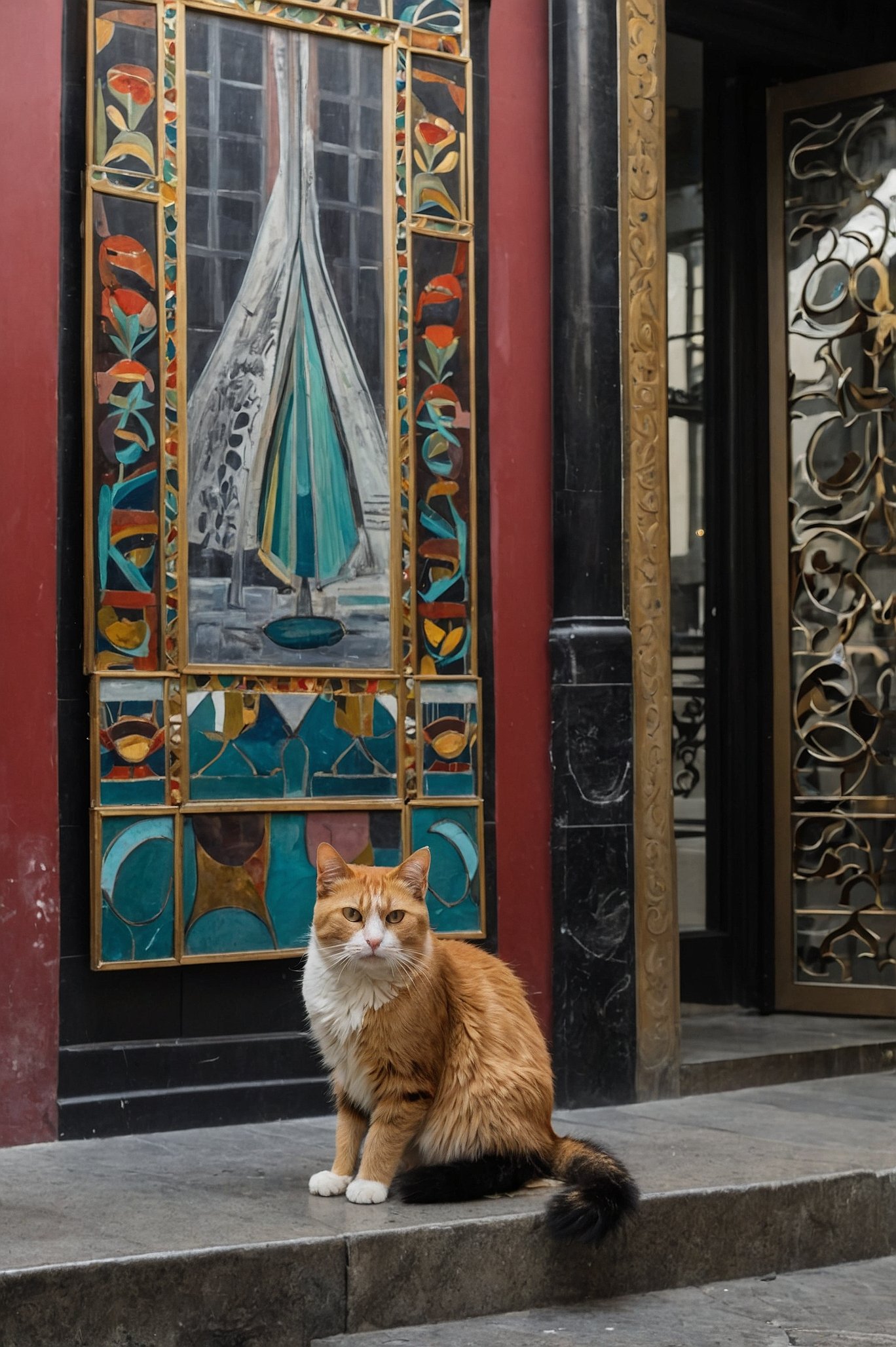
The bookstore in Cihangir that had a cat sleeping directly on a stack of novels and did not seem to think this was remarkable at all.
The moment I realized the ferry I was on was passing between two continents and everyone else on board was just playing Candy Crush.
Istanbul rewards the slow traveler.
The one who turns off the navigation and just walks.
The one who sits in a café for an hour longer than they planned because the light coming through the window is doing something magical.
If I had any final thought — and I want to be careful not to wrap this up too neatly — it would just be this:
Go with less of a plan than you think you need.
Let the city find you a little.
It will.
It always does.