
I had Venice on the itinerary, Florence after that, and honestly, I figured Padua was just a train stop in between.
But then a local on the platform told me, “Stay one night.
Just one.”

I stayed four.
There’s something about this city that sneaks up on you.
It’s not loud about it.
It doesn’t flash you with gondolas or tourist menus with photos.
It just pulls you in — with its covered walkways, its ancient squares, its students spilling out of the world’s oldest university like it’s any normal Tuesday.
And I remember standing in the middle of Prato della Valle at sunset, thinking: how is this place not on everyone’s list?
It should be.
Here’s everything I’d tell a friend heading there.
Start Your Morning at Caffè Pedrocchi — No, Seriously, Don’t Skip It

I walked into Caffè Pedrocchi not really knowing what it was.
I just followed the crowd, smelled the espresso, and went in.
Turned out I had stumbled into one of the most historically loaded coffee houses in all of Italy.
This place has been open almost without interruption since the 1800s.
And I don’t mean that in a dusty, museum-vibes kind of way.
I mean it in a “this room has seen revolutions, artists, writers, and probably more arguments about politics than I can count” kind of way.
The architecture alone is worth the stop — neoclassical columns, deep green and white interiors, marble floors that echo when you walk.
Order a cappuccino.
Sit down.
Don’t rush it.
If I’m being honest, this was the moment Padua clicked for me.
There’s something about sipping coffee in a place that has that much history soaked into its walls.
It doesn’t feel pretentious.
It feels earned.
The staff is warm, the pastries are good, and the pace is exactly what a morning in Italy should feel like.
Go early, before the tour groups roll in.
That quiet first hour is yours.
Walk the Portici — The Covered Arcades That Change Everything

Padua has more covered walkways — called portici — than almost any other city in Italy.
And I didn’t fully appreciate that until it started raining on day two.
Everyone around me just… kept walking.
No scrambling for umbrellas.
No ducking into doorways.
Just a slow, easy stroll under these ancient stone arches that stretch for kilometers across the city.
It’s sort of magical, honestly.
The portici aren’t just practical — they’re the social spine of the city.
Locals chat under them.
Students eat lunch under them.
Old men read newspapers under them.
And as a visitor, you get to slip right into that rhythm without feeling like an outsider.
My favorite stretch is along Via Roma and into the university district.
The light filters through in this warm, diffused way that makes everything look a little cinematic.
If I had to pick one thing that made Padua feel different from other Italian cities, it would be this.
It slows you down in the best possible way.
Wear comfortable shoes and just wander.
You don’t need a map for this one.
Let the arches lead you.

Your Ultimate Caribbean Adventure Awaits!
Discover hidden coves, secret beaches, and the best rum punches in the islands. Your insider’s guide to Caribbean paradise.
Get Your Guide Now$15.99Stand Inside the Scrovegni Chapel — It Will Rewire Your Brain a Little

I’m not usually the guy who gets emotional in a museum.
But the Scrovegni Chapel kind of broke that streak.
This small, unassuming brick building contains what many art historians consider one of the greatest achievements in Western art — Giotto’s frescoes, painted in the early 1300s.
Every inch of the interior is covered.
Floor to ceiling.
Wall to wall.
The blues are so vivid they almost hurt to look at.
The figures have this weight and emotion that feels shockingly modern for something that old.
And you only get about 15 minutes inside.
Which sounds frustrating, but actually works in your favor.
Because you focus.
You can’t wander aimlessly.
You just stand there and take it in.
Book your ticket in advance — this is not optional.
They cap the visitors strictly to protect the frescoes.
Show up without a reservation and you’re not getting in.
But if you do get in?
It’s one of those quiet, slightly overwhelming moments that you’ll reference for years.
I kept thinking about it over dinner that night.
And the next morning.
Worth every minute of the planning.
Lose Yourself in Prato della Valle — The Biggest Square You’ve Never Heard Of

Prato della Valle is the largest square in Italy.
And I genuinely could not believe I had never heard of it before I arrived.
It’s enormous.
A giant elliptical open space ringed by a canal, lined with 78 statues of famous Paduans, and absolutely filled with life at any hour of the day.
On the weekend morning I was there, it looked like the whole city had decided to show up.
Cyclists.
Dog walkers.
Kids on scooters.
Couples on benches.
A couple of guys playing guitar near the canal.
There’s no real agenda here.
That’s the whole point.
You grab something to eat from one of the nearby places, find a spot near the water, and just exist for a while.
If there’s a market on — and there often is — even better.
Local vendors, vintage goods, produce, handmade stuff.
I bought a small leather notebook from a guy who had clearly been selling there for decades.
We didn’t share much language.
But we managed.
That’s sort of the Padua vibe in general.
Warm, unhurried, genuinely welcoming.
Go at golden hour if you can.
The statues cast long shadows across the grass and the whole thing looks like a painting.
Eat at a Local Osteria — Not a Tourist Trattoria, an Actual Osteria

This is the part where I get a little preachy, so bear with me.
But you will not find it at the places with laminated menus and photos of pasta.
You have to go a little deeper.
Look for the word osteria.
Look for places without English translations on the board outside.
Look for places where the daily specials are handwritten on a chalkboard and nobody explains them to you because they assume you’ll figure it out.
When I found mine — a tiny room with maybe eight tables near the university quarter — I had no idea what I was ordering.
The waiter suggested something.
I said yes.
It was a braised duck ragu over fresh pasta that I still think about.
Paduan cuisine leans hearty and rich.
Bigoli in salsa.
Baccalà alla vicentina.
Risotto with local sausage.
It’s not flashy.
It doesn’t need to be.
Ask the server what they’d eat.
That question alone usually unlocks something special.
And don’t rush the meal.
Order wine.
Sit with it.
This isn’t a city that rewards people who eat fast.
Caribbean Paradise Unlocked
From pristine beaches to vibrant local culture, discover the Caribbean’s best-kept secrets with my comprehensive travel guide.
- 120+ Hidden Beach Secrets
- Local Cuisine Guide
- Budget Travel Tips
- Island Hopping Routes
Explore the University of Padua — The Oldest in the World

Galileo taught here.
William Harvey figured out blood circulation in these halls.
And students still walk through the same courtyards, more or less, that they did when this university opened back in the 1200s.
That layering of time is something I find endlessly fascinating.
The main building — the Palazzo del Bo — does guided tours, and I’d genuinely recommend it.
You’ll see the original anatomical theater, built in 1594, where medical students would watch dissections in stacked wooden tiers that spiral upward like a tiny wooden colosseum.
It’s small.
It’s dim.
And it’s one of the most fascinating rooms I’ve stood in.
You get a real sense of how desperately people wanted to understand the human body.
The risk they took doing it — dissection was controversial, sometimes illegal.
And they built a secret theater to do it anyway.
That’s the kind of story that makes history feel alive.
the university district around the palazzo is also just a great area to walk.
Young energy.
Good coffee spots.
Cheap, excellent sandwiches.
The kind of neighborhood that reminds you why college towns feel like their own separate universe.
Take a Day Trip to the Euganean Hills — If You Need to Breathe

On day three, I needed to slow down a little.
Not because Padua was overwhelming — it wasn’t — but because I wanted to see what the countryside around it looked like.
The Euganean Hills are about 30 minutes southwest of the city.
Volcanic in origin, covered in vineyards and olive groves, dotted with little medieval villages perched on the hilltops.
I rented a car for the day and just drove.
No real agenda.
I stopped in Arquà Petrarca, a tiny village where the poet Petrarch spent his last years.
It’s almost absurdly picturesque.
Stone streets, roses climbing the walls, a medieval church at the top of the hill.
There are also thermal spas in the area — the towns of Abano Terme and Montegrotto Terme are basically built around them.
If that’s your thing, book ahead.
They’re legit.
Mineral-rich thermal water, full spa experiences, very European in the best way.
But even if you skip the spa, the drive alone is worth it.
Roll the windows down.
Stop when something looks interesting.
That’s the whole plan.
Sometimes the best travel days have the least structure.
Find the Botanical Garden — One of the Oldest in the World

I almost skipped the Orto Botanico.
It wasn’t high on my original list.
But I passed the entrance on a slow afternoon walk and figured, why not.
Turns out, it’s one of the oldest university botanical gardens in the world, established in the 1500s as a place to grow medicinal herbs for the university’s medical students.
And it’s genuinely beautiful.
Not manicured-to-perfection beautiful.
More like layered, slightly wild, full-of-surprises beautiful.
There’s a palm tree in a glass enclosure that Goethe apparently wrote about.
The plant is still alive.
And yes, that detail is completely insane.
The garden has been expanded over the centuries, and now includes sections on biodiversity, rare species, and climate — but it never loses that old, slightly eccentric academic energy.
It’s a calm spot in the middle of a city that’s otherwise pretty lively.
If you go in the afternoon, especially on a weekday, you might nearly have it to yourself.
I sat on a bench for about 20 minutes doing absolutely nothing.
No photos.
No notes.
Just listening to birds and feeling grateful I’d wandered in.
Sometimes that’s the whole travel experience right there.
Your Ultimate Caribbean Adventure Awaits!
Discover hidden coves, secret beaches, and the best rum punches in the islands. Your insider’s guide to Caribbean paradise.
Get Your Guide Now$15.99Hit the Piazza delle Erbe and Piazza della Frutta — The Market Squares

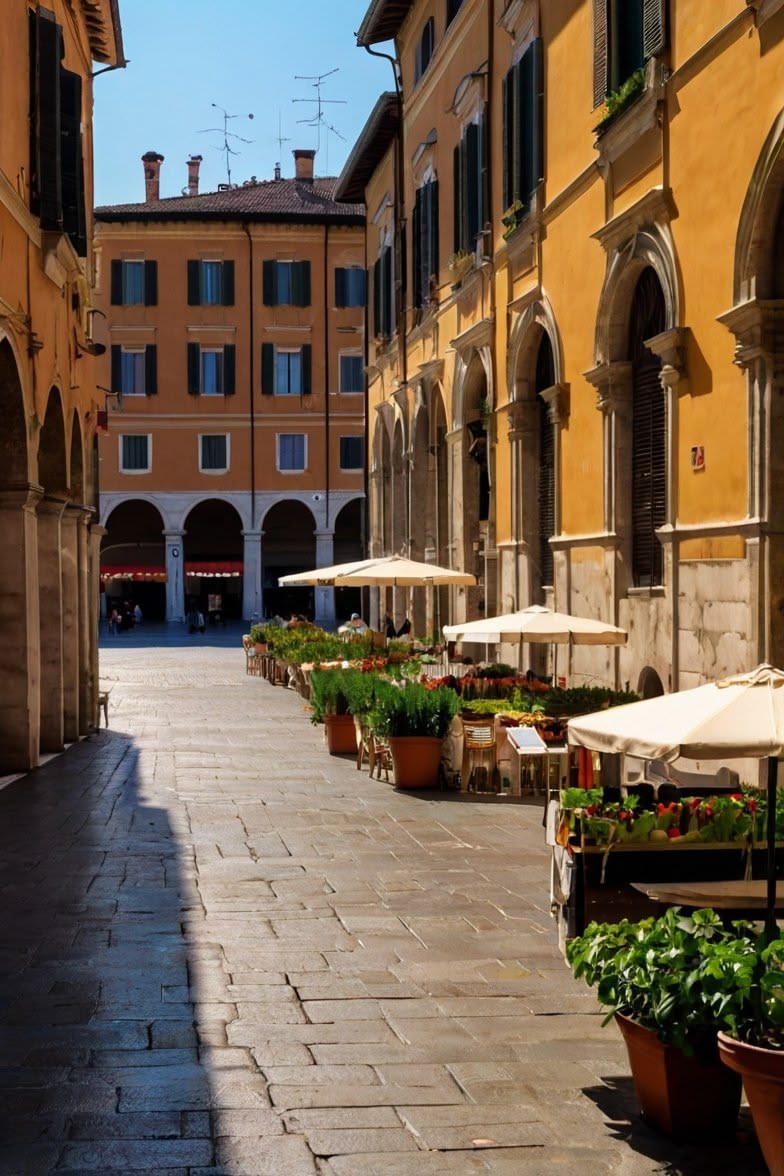
Right in the historic center, separated by the massive Palazzo della Ragione building, sit two of Padua’s main market squares.
Piazza delle Erbe on one side.
Piazza della Frutta on the other.
And they are exactly what they sound like — open-air markets, spilling over with produce, cheese, meats, flowers, and people going about their actual lives.
These aren’t tourist markets.
These are the markets where people shop.
I love that distinction.
There’s something grounding about wandering through a market where the goal isn’t to sell you a souvenir, but to sell you dinner ingredients.
I picked up local cheese, a couple of peaches that were so ripe they were almost embarrassing, and a small jar of honey from a vendor who clearly made it herself.
The Palazzo della Ragione that separates the two squares is also worth going inside.
It houses one of the largest unsupported medieval halls in Europe — a single, enormous room with a vaulted wooden ceiling and astrological frescoes covering the walls.
The scale of it hits you fast.
Go on a market morning.
Grab something to snack on.
Find a ledge or a step.
Watch the whole thing unfold around you.
Know When to Go — And Why Shoulder Season Is the Answer

I went in early October and it was, without question, the right call.
The summer crowds had thinned out.
The temperatures had dropped to that perfect range where you want a light jacket in the morning but feel great by noon.
The light was incredible — that warm, low autumn light that makes Italian cities look like they were designed specifically for photography.
And everything was easier.
Tables were available.
The Scrovegni Chapel slot I wanted was actually bookable.
The streets felt like a city, not a theme park.
Padua doesn’t get as packed as Venice or Florence even in peak season.
But shoulder season — late September through early November, or April into May — really is the sweet spot.
You get the city closer to how locals actually experience it.
If you go in summer, I’d still say go.
Just book ahead for the big stuff.
Show up early to the popular spots.
And stay at least three nights.
One night is not enough.
Two is better.
Three or four and you’ll actually start to settle in.
And settling in is kind of the whole point of a city like this.
It rewards slowness.
It rewards wandering.
It rewards you for not having the whole day planned out.
A Few Practical Things I Wish I’d Known Sooner

Padua is very walkable.
The historic center is compact enough that you can get almost everywhere on foot once you’re in it.
That said, the train station is a bit of a walk from the main squares, so factor that in when you first arrive with luggage.
Cash still matters here more than in big cities.
A few of the smaller osterie and market vendors don’t do cards, or prefer not to.
Keep some euros on you.
The city is a university town, which means student discounts exist for a lot of museums and attractions.
Always ask, even if you’re not a student.
You’d be surprised what they’ll offer.
If you’re coming from Venice — which is only about 30 minutes by regional train — this is honestly a perfect day trip, or better yet, a base for a couple nights.
Accommodation is significantly cheaper than Venice.
The food is better.
And you can still do Venice as a half-day without the overnight price tag.
One more thing: don’t sleep on the aperitivo scene.
Starting around 6pm, bars across the city put out snacks with your drink — olives, chips, little bites.
It’s not a full meal.
But it’s enough.
And sitting with a spritz as the city shifts into evening mode?
That right there might be the best thing about Padua.