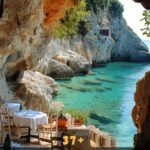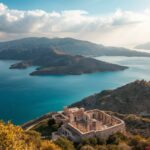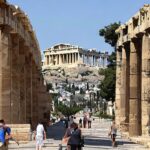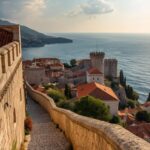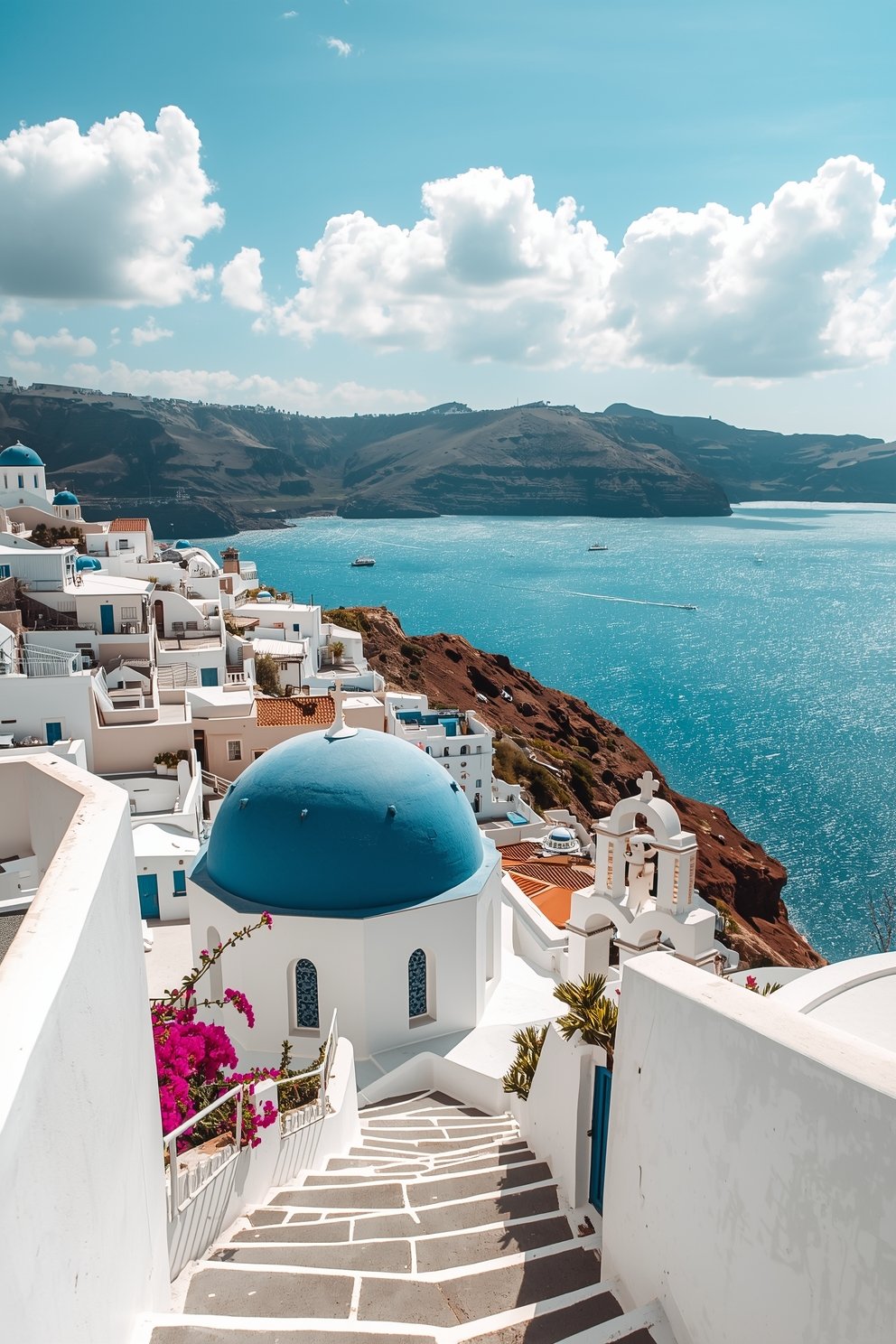
Once I was sitting on a white-washed step somewhere in Santorini, holding a cold Mythos beer, watching the sun melt into the caldera like it was putting on a show just for me.
No phone.
No plan.
Just that golden light hitting the water and this ridiculous feeling that I had somehow stumbled into the best decision of my life.
Greece does that to you.
It grabs you by the collar, slows you all the way down, and makes you wonder why you ever rushed through anything.
But here’s the thing nobody tells you before you go — Greece isn’t one experience.
It’s like twenty different trips stacked on top of each other, each island with its own personality, its own vibe, its own reason to stay longer than you planned.
So let me walk you through my personal favorites.
Santorini: The One That Lives Up to the Hype (Mostly)

Yeah, I know.
Everyone talks about Santorini.
And honestly?
There’s a reason.
When I first walked into Oia at sunrise — before the cruise ship crowds rolled in — it felt almost unreal.
The blue domes, the white walls, the way the light bounces off everything like the whole island is glowing from the inside.
It’s breathtaking in a way that photos can’t really capture.
But I’ll be straight with you: Santorini is crowded, and it knows it’s beautiful, which makes it a little expensive.
If I had to do it again, I’d skip July and August completely.
Go in late May or early October, and you’ll get all the magic with about half the chaos.
Stay in Imerovigli instead of Oia if you want caldera views without paying the absolute peak premium.
It’s quieter, it’s just as stunning, and the walk into Oia takes maybe 30 minutes.
Also — rent a scooter and get to the black sand beach at Perissa early.
Like, embarrassingly early.
It’s worth every groggy minute.
Mykonos: Party Island or Something More?

Here’s my honest take on Mykonos.
If you want to party until the sun comes back up, drinks in hand, music thumping — this is your island.
And that version of Mykonos?
Actually pretty incredible.
But if you think that’s all it is, you’re missing the good stuff.
When I wandered into Little Venice on a quiet Tuesday morning, coffee in hand, watching the waves literally lap under the restaurant terraces, I thought — okay, this is something special.
The windmills at golden hour are genuinely one of the coolest things I’ve seen in all of Greece.
And the food in the smaller tavernas tucked away from the waterfront?
Unreal.
I had a grilled octopus that I still think about.
My tip: stay on the quieter north side of the island if you want to sleep before noon.
Mykonos rewards the people who look a little harder.
It’s not just a party — it’s a pretty, chaotic, delicious, wildly fun island that happens to also throw a great party.
Crete: The Island That Feels Like a Whole Country

Crete is different.
It’s massive.
It’s complex.
It has mountains and gorges and ancient ruins and some of the best food in all of Greece.
I spent ten days in Crete and still felt like I only scratched the surface.
The western side — around Chania — is where I’d start if you’re going for the first time.
The old Venetian harbor is gorgeous, the streets of the old town are this beautiful maze of color and texture, and the seafood is fresh in a way that makes you rethink every fish dish you’ve eaten before.
But don’t sleep on the interior of the island.
Driving through the White Mountains felt like being in a completely different country — quiet villages, olive groves, goats on the road.
The Samaria Gorge hike is kind of a must-do if your knees are up for it.
Sixteen kilometers.
Worth every step.
Crete also has some of the best beaches I’ve ever been to — Balos Lagoon especially, which looks like someone copy-pasted the Caribbean into Greece.
🗼 I Wrote a Book About My Japan Travel Catastrophes!
Before I landed in Tokyo, I thought I was the “Final Boss” of international travel. Spoiler alert: I WASN’T. 😅
🚅 I boarded the wrong Shinkansen and ended up in THE WRONG CITY. I confused locals with my “expert” bowing that was more awkward than accurate. I accidentally stumbled into a high-stakes Kendo practice thinking it was a tourist show. Sound like something you’d do?
“Things I Wish I Knew Before Going to Japan” is your shortcut to avoiding ALL my cringe-worthy mistakes. ✨ Inside, you’ll find practical, LIFE-SAVING tips on etiquette, transport, money, and hidden gems that will save you time, money, and a whole lot of confusion.
Rhodes: History and Beach in One Perfectly Balanced Package

Rhodes was one that genuinely surprised me.
I wasn’t expecting to love it as much as I did.
The medieval old town of Rhodes City is a UNESCO World Heritage Site, and walking through those old stone streets feels like stepping into a completely different era.
The walls are thick, the alleyways are narrow, and around every corner there’s something old and beautiful and slightly crumbling in the most photogenic way.
But then you drive twenty minutes south, and suddenly you’re at Lindos.
And Lindos is something else entirely.
The white village climbing up toward the ancient acropolis, the crystal-clear bay below — it’s one of those views that genuinely stops you mid-sentence.
I’d recommend staying in Lindos for at least two nights.
Wake up early, climb to the acropolis before the tour groups arrive, and you’ll have that view mostly to yourself.
Rhodes also has a solid food scene, especially around the old town area.
Order the local wine.
Don’t argue with me on this.
Corfu: The Green Island That Feels Almost Italian

Corfu has this quality that’s hard to describe.
It feels distinctly Greek, but also a little Italian, a little British — it’s got this layered history that shows up in the architecture, the food, and even the way people talk to you.
The old town of Corfu is stunning — narrow streets, Venetian-style buildings, olive trees everywhere.
It’s lush and green in a way that most Greek islands aren’t, and that alone makes it feel really different.
I loved driving the north part of the island most.
The road toward Paleokastritsa is winding and kind of terrifying, but then you come over a hill and the bay opens up in front of you — turquoise water, dramatic cliffs, little boats bobbing around — and it’s completely worth the white-knuckle drive.
Corfu is also really good for families.
It’s calmer than Mykonos, has a wide range of accommodation options, and the beaches on the east coast are gentle and sheltered.
If you’re going with kids or want something a little more low-key, Corfu should be high on your list.
Zakynthos: For the Turtle Beach You’ve Seen on Every Travel Account

Yes, Navagio Beach is real.
Yes, it looks exactly like the photos.
No, that doesn’t make it any less incredible when you’re actually there, floating in that impossibly blue water, staring up at those white limestone cliffs with the rusted shipwreck sitting in the sand.
Zakynthos — or Zante, if you’re British — is one of those islands that almost feels like cheating because it’s just so visually dramatic.
I took a boat tour around the island and saw the sea caves, watched the light filter through the turquoise water, and honestly felt like I was in some kind of nature documentary.
The loggerhead sea turtles nest here too, which is such a cool thing to know.
Laganas Bay is a protected area, and in the right season, you can sometimes spot them from the shore.
One thing I’ll say — the south part of Zakynthos near Laganas gets pretty rowdy in summer.
If that’s not your scene, stay up north near Alykes.
Quieter beaches, more local tavernas, and about half the noise.
Naxos: The Under-Rated One I Tell Everyone About First

If someone tells me they’ve never been to Greece and asks where to start, I say Naxos.
Every single time.
It’s big enough to explore for a week, varied enough that you don’t get bored, and still feels genuinely local in a way that some of the more famous islands have kind of lost.
The old town — called the Chora — is this wonderful rabbit warren of narrow alleys, marble paths, little bakeries, and a hilltop Venetian castle that looks out over the whole island.
I spent a full afternoon just wandering up there with no particular direction and stumbled into some of the best loukoumades I’ve ever eaten.
The beaches on the west coast are long, sandy, and spectacular.
Agios Prokopios especially — it’s consistently ranked one of the best beaches in Greece, and honestly?
Fair.
But what I love most about Naxos is that you can Rent a car and drive inland, through mountain villages where they still make local cheese and kitron liqueur, and it feels like discovering a completely different island within the island.
Paros: The Cool, Collected Middle Child of the Cyclades

Paros sort of doesn’t need to try.
It’s just… easy.
Beautiful.
Breezy.
The kind of place where you show up and immediately stop checking your phone.
The main village of Naoussa has this really stylish energy — whitewashed walls, a pretty fishing harbor, great restaurants, and a kind of effortless coolness that doesn’t feel forced.
I loved it there.
The beaches are excellent too — Kolymbithres is one of the most unique I’ve seen in Greece, with these wild granite rock formations that create little sheltered coves you can swim in.
Paros is also a big windsurfing destination, which gives it this athletic, outdoorsy edge that pairs nicely with the more laid-back café culture.
It’s not as dramatic as Santorini.
It’s not as loud as Mykonos.
And that’s exactly why I think it might be the most livable island in the Cyclades.
If I were ever going to disappear to Greece for a month and just… exist, I think I’d do it from Paros.
Rent a little place, learn where the locals eat, and do absolutely nothing impressive.
Milos: The Volcanic Wildcard That Blew My Mind

I almost didn’t go to Milos.
It wasn’t on my original itinerary, and a guy I met on a ferry basically shamed me into adding it.
Best accidental travel decision I’ve ever made.
Milos is volcanic, which means the landscape is unlike anything else in Greece.
Weird colored rock formations, dramatic sea caves, beaches that come in red and orange and white depending on where you are.
Sarakiniko Beach looks like you’re on the moon — these smooth, pale volcanic formations curling around a turquoise cove.
I sat up on those rocks at sunrise and thought I’d somehow ended up on another planet.
The fishing village of Klima is one of the most photogenic spots I’ve ever seen in my life.
Little boathouses painted in bright colors, right on the water, some of them still used by actual fishermen.
Milos is a little harder to get to than the more famous islands, which honestly just makes it better.
Less tourist infrastructure, more authenticity.
It’s the kind of island that rewards the people who make the effort.
🗼 I Wrote a Book About My Japan Travel Catastrophes!
Before I landed in Tokyo, I thought I was the “Final Boss” of international travel. Spoiler alert: I WASN’T. 😅
🚅 I boarded the wrong Shinkansen and ended up in THE WRONG CITY. I confused locals with my “expert” bowing that was more awkward than accurate. I accidentally stumbled into a high-stakes Kendo practice thinking it was a tourist show. Sound like something you’d do?
“Things I Wish I Knew Before Going to Japan” is your shortcut to avoiding ALL my cringe-worthy mistakes. ✨ Inside, you’ll find practical, LIFE-SAVING tips on etiquette, transport, money, and hidden gems that will save you time, money, and a whole lot of confusion.
Hydra: The Car-Free Island That Makes You Feel Rich and Calm

There are no cars on Hydra.
No motorcycles.
No scooters.
Everything moves by donkey, boat, or your own two feet.
And the moment you step off the ferry and realize that, something in your whole body exhales.
Hydra has this reputation as an artistic island — Leonard Cohen lived here, writers and painters have been coming for decades — and you can feel that energy in the air.
It’s quiet in the best possible way.
The harbor is gorgeous, the mansions climbing the hillside are imposing and beautiful, and the waterfront restaurants are the kind of place you sit down for lunch and accidentally stay for four hours.
I hiked up to the monastery at the top of the island and got a view of the Saronic Gulf that made me feel small in the best possible way.
Hydra isn’t really a beach destination.
It’s a “sit, think, eat well, read a whole book” destination.
If you’re burned out or overstimulated or just need to reset, go to Hydra.
You will leave a different person.
Skiathos: Green, Wild, and Underestimated

Skiathos is in the Sporades, which already puts it off the radar for a lot of people who default to the Cyclades.
Their loss, honestly.
It’s small, it’s intensely green, and it has over 60 beaches — which for an island you can drive across in about 20 minutes is pretty remarkable.
Koukounaries is the most famous — a sweeping crescent of pine-backed sand that genuinely ranks as one of the best in the whole country.
The beach bar scene is lively but not overwhelming.
And the old town of Skiathos has a really lovely energy — good restaurants, a nice nightlife strip, but still manages to feel like an actual place people live in.
The airport on Skiathos is also notoriously wild.
Planes land so close to the beach that you can almost feel the engines.
I watched about six landings while eating a gyro and honestly it was one of the more entertaining afternoons of the whole trip.
Skiathos is great for people who want a mix — some adventure, some beach, some good food, a little nightlife — without the full-throttle intensity of Mykonos.
Lefkada: The One You Can Drive To (And Should)

Lefkada is technically connected to the mainland by a floating bridge.
Which means you can actually drive there.
No ferry, no island-hopping logistics.
Just you, a car, and a causeway.
And once you cross it, you’re rewarded with some of the most dramatic scenery in all of Greece.
The west coast of Lefkada has these tall white cliffs dropping straight into electric blue water, with beaches at the bottom that look edited.
Porto Katsiki is the most famous, and yes, it’s that beautiful.
Egremni Beach is technically better in my opinion — longer, wider, somehow even more dramatic — but getting down to it involves a lot of stairs.
Worth it.
Bring water.
The island also has a really sweet main town with a laid-back waterfront scene and some great local wineries in the villages up in the hills.
Lefkada feels like it’s still figuring out how famous it wants to be.
Right now it’s sort of in this sweet spot — beautiful and accessible, but not yet overrun.
How I’d Actually Plan a Greek Island Trip

Okay so here’s the part where I just talk to you like a friend who’s done this a few times.
Don’t try to see too many islands in one trip.
I know it’s tempting.
I know the map looks manageable.
It is not manageable.
Every ferry connection takes time, and every transition day is a day you’re not actually on a beach eating octopus.
My honest recommendation: pick two islands for a one-week trip, three for two weeks.
Pair a popular one with a quieter one — Santorini plus Naxos, or Mykonos plus Paros.
Book your ferries in advance in summer.
They sell out.
Learn a few words of Greek — yassas (hello), efharisto (thank you), ena mythos parakalo (one Mythos beer please).
The locals notice, and they love it.
Eat late.
The best experience at any Greek taverna happens after 9pm when the locals show up and the kitchen hits its stride.
And whatever you do — don’t rush.
Greece is not a country you rush through.
It’s a place you slow all the way down in, let the sun bake into your shoulders, and remember that some of the best things in life are a cold beer, a good view, and nowhere else to be.
Related read: The Caribbean Travel Guide — Instant PDF + Kindle download. Secure checkout by Stripe