I had my eye on Portugal, honestly.
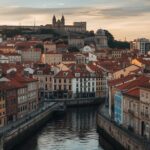
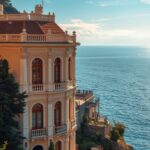
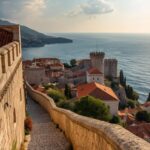
But something about those aerial shots — the turquoise Adriatic pressed up against terracotta rooftops, ancient walls rising straight out of the sea — kept pulling me back.

So I went.
And I came home a different kind of traveler.
Not because Croatia is perfect.
It’s not.
But it has this raw, layered beauty that gets under your skin fast.
The kind of place where you’re sitting on a sun-warmed stone ledge with a cold local beer, watching fishing boats drift in, and you think: yeah, this is it.
This is my honest Croatia guide — built from real time on the ground, real mistakes, and the kind of stuff I wish someone had told me before I landed.
Why Dubrovnik Is Worth Every Bit of the Hype (And the Crowds)

Look, I know what you’re thinking.
“Isn’t Dubrovnik overrun with tourists?”
Yeah.
It kind of is.
But here’s the thing — when I walked those city walls for the first time at 7am, before the cruise ships had docked, it was just me, the sea, and centuries of limestone catching the morning light.
It was genuinely one of the most beautiful things I’ve ever seen.
The walls stretch nearly two kilometers around the old city.
Every turn gives you a different angle — red rooftops tumbling down toward the Adriatic, church spires, hidden gardens pressed between old stone buildings.
My honest tip: go early.
I mean early early.
The gates open before the crowds hit and the light in the morning is softer, warmer, almost golden.
The Stradun — that long, polished main street — is completely different at dawn than at noon.
At noon it’s shoulder-to-shoulder tourists.
At dawn it echoes.
And it feels like it belongs to you.
If you only have one day in Dubrovnik, I’d say: walls in the morning, old town lunch, cable car at sunset.
That’s the trifecta.
Don’t skip the cable car.
The view from the top of Mount Srđ at golden hour made my jaw drop.
No filter needed.
Split: The City That Literally Lives Inside a Roman Palace

Split surprised me more than any other city on this trip.
I expected a transit hub.
You know, the kind of city people pass through on the way to the islands.
What I found instead was one of the most lived-in, breathing, charismatic cities I’ve ever wandered.
People actually live inside Diocletian’s Palace.
And I don’t mean metaphorically.
There are apartments, restaurants, bars, and shops built right into the ancient Roman walls.
It’s sort of surreal walking through a 1,700-year-old doorway and then stepping into a cozy wine bar with jazz playing softly in the background.
I spent two full days in Split and I honestly could have used three.
The Riva waterfront is where everything happens at night.
People sip coffee, families stroll, locals hang out with zero urgency.
It reminded me of how Europeans actually use public space — slowly, intentionally.
For food, the Green Market just outside the palace gates is where I had the best breakfast of my trip.
Fresh tomatoes, local cheese, olive oil that tasted like it was pressed that morning.
Simple stuff.
The best stuff usually is.
The Islands: Where Croatia Gets Truly Magical

Here’s where I have to be honest with you — there are a lot of Croatian islands.
So the question isn’t “should I visit an island?”
The question is: which one is right for you?
Because they’re all different.
Hvar is glamorous, buzzy, sun-soaked.
Brač has that famous Zlatni Rat beach — the one with the horn-shaped tip that shifts with the current.
Vis is quieter, greener, and has this incredible Blue Cave nearby.
Korčula is medieval and moody and honestly underrated.
When I was on Korčula, I wandered into a tiny konoba (that’s a local tavern, kind of) and had grilled fish with nothing but a squeeze of lemon and a glass of local white wine.
No menu.
The owner just brought out what was fresh that day.
That meal was perfect.
If you’re torn between islands, I’d say: go with your vibe.
Want party energy and rooftop bars?
Hvar.
Want beaches and a little more peace?
Brač or Vis.
Want something that feels genuinely off the beaten path?
Korčula or Šolta.
🗼 I Wrote a Book About My Japan Travel Catastrophes!
Before I landed in Tokyo, I thought I was the “Final Boss” of international travel. Spoiler alert: I WASN’T. 😅
🚅 I boarded the wrong Shinkansen and ended up in THE WRONG CITY. I confused locals with my “expert” bowing that was more awkward than accurate. I accidentally stumbled into a high-stakes Kendo practice thinking it was a tourist show. Sound like something you’d do?
“Things I Wish I Knew Before Going to Japan” is your shortcut to avoiding ALL my cringe-worthy mistakes. ✨ Inside, you’ll find practical, LIFE-SAVING tips on etiquette, transport, money, and hidden gems that will save you time, money, and a whole lot of confusion.
Hvar vs. Brač: My Honest Take After Visiting Both

I’ve seen a lot of travel content that makes Hvar sound like the ultimate Croatia stop.
And sure — it’s stunning.
The harbor is gorgeous, the lavender fields in the interior are something else, and the nightlife is legitimately good if that’s your thing.
But.
And this is a big but.
It can feel a little try-hard in peak season.
When I was there in July, the main harbor was packed with superyachts and influencers and prices had quietly crept up to levels that felt more Monaco than Adriatic coast.
Brač, on the other hand, felt more grounded.
More real.
Zlatni Rat beach is iconic for a reason — that shape, the crystal clear water, the pebbles under your feet.
The town of Bol, where the beach sits, has great restaurants and just enough nightlife without being overwhelming.
If I had to choose for a first Croatia trip, I’d personally split my time — one or two nights in Hvar, two nights in Brač.
That combo gives you both the glamour and the peace.
And honestly?
The ferry rides between islands are part of the experience.
There’s something about standing on the deck with the sea air hitting your face that makes you feel like you’re really in it.
Plitvice Lakes: The Most Jaw-Dropping Thing I’ve Ever Seen in Nature

I don’t say this lightly.
Plitvice Lakes National Park is the most visually stunning natural place I’ve ever stood in.
I’ve been to some incredible spots.
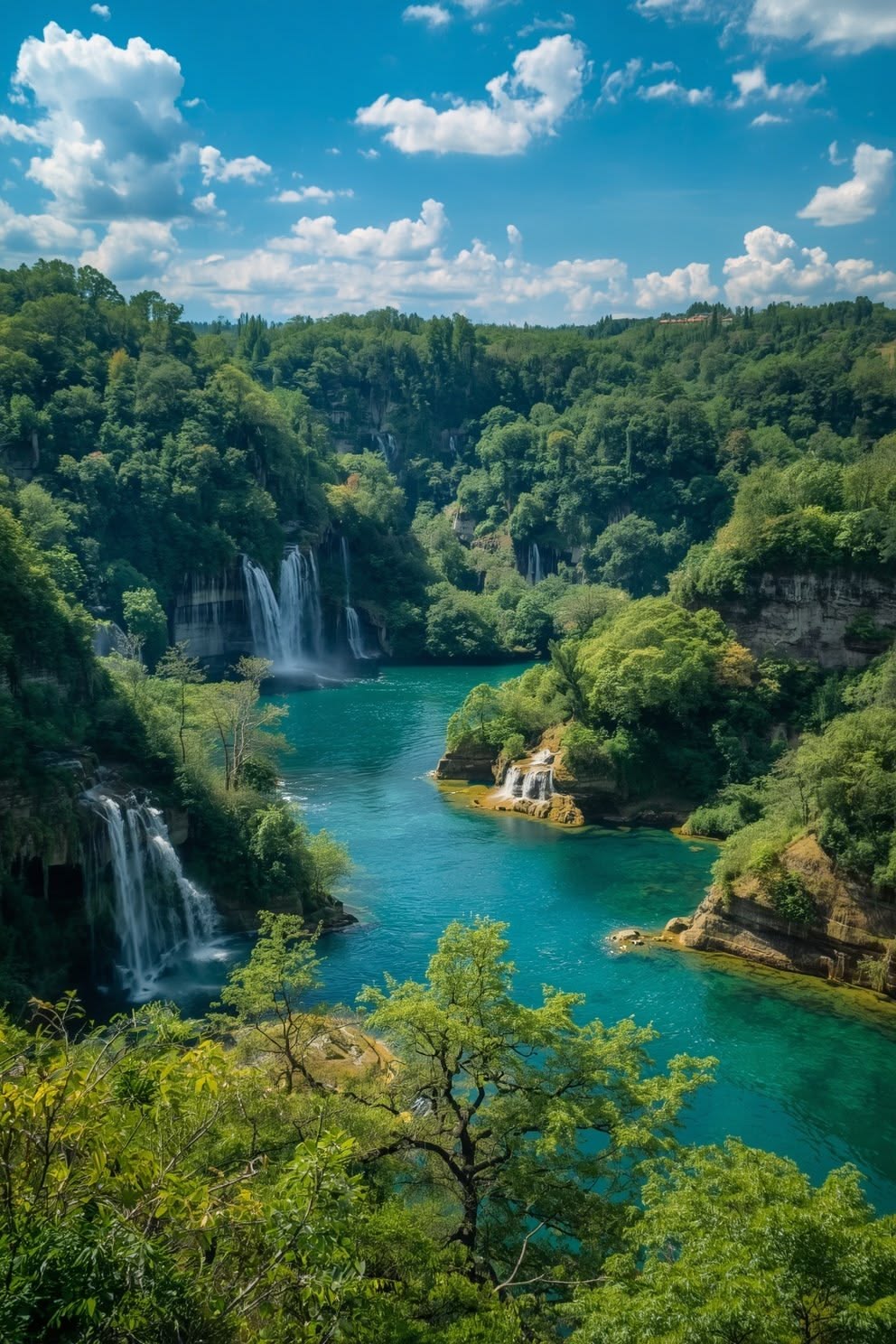
But nothing prepared me for walking wooden boardwalks over water so blue-green it looks digitally enhanced.
It doesn’t look real.
Sixteen terraced lakes connected by waterfalls — some massive, some tiny and delicate — all spilling into each other through a dense forest.
The sound alone is something.
That constant rush of water from every direction.
The light filtering through the trees hitting the surface at different angles.
My tip: go on a weekday, as early as possible, and start with the lower lakes.
Most tour groups do the upper lakes first, so you can kind of dodge the biggest crowds if you flip the route.
Also — wear shoes you don’t mind getting slightly wet.
The boardwalks are close to the waterline and things get splashy.
The drive from Split to Plitvice is about two and a half hours and completely worth making the overnight stop.
Don’t try to cram it into a day trip from the coast.
Give it time.
It deserves it.
What to Eat in Croatia (And What I’d Order Again Immediately)

Croatian food doesn’t get enough credit.
Seriously.
People go for the beaches and the walls and the clear water, and they kind of sleep on the cuisine.
That’s a mistake.
The seafood along the Dalmatian coast is incredible.
Fresh, simple, grilled perfectly.
Black risotto — made with cuttlefish ink — is one of those things I was skeptical about and then obsessed with after the first bite.
It’s rich and briny and deeply savory.
Peka is another one.
It’s meat or seafood slow-cooked under a bell-shaped lid covered in embers.
You usually have to order it hours in advance, which honestly just builds the anticipation.
Worth it every time.
For breakfast, I was grabbing burek — a flaky, layered pastry filled with cheese or meat — from bakeries every single morning.
Super cheap, super satisfying.
Wine-wise, look for Plavac Mali, a full-bodied red from Dalmatia.
And Pošip, a white wine from Korčula island that’s crisp and mineral and pairs beautifully with grilled fish.
Local wine in Croatia is genuinely good and genuinely affordable.
That combination doesn’t exist everywhere.
Don’t skip it.
Getting Around Croatia Without Losing Your Mind

Let me be real with you here because this part trips people up.
Croatia is long and thin and the geography is a little awkward.
Getting from north to south isn’t always as quick as you’d think.
The coastal road — the Magistrala — is one of the most scenic drives in Europe.
Cliffs on one side, Adriatic on the other.
But it can be slow, especially in summer when traffic backs up around the bigger towns.
If you’re flying into Split and want to reach Dubrovnik, the drive is about four hours without stops.
With stops — and you’ll want stops — give it six or seven hours.
Renting a car is 100% worth it for the mainland portions of your trip.
For the islands, ferries are the move.
The national ferry company runs frequent routes and the prices are very reasonable.
I’d book ferry tickets in advance during peak season, especially if you’re bringing a car.
Foot passenger?
Usually fine to show up day-of.
Buses between cities are also solid and surprisingly comfortable.
I took the bus from Split to Dubrovnik once and it was smooth, affordable, and the views out the window made the whole thing feel like a scenic tour anyway.
Where to Stay: My Honest Breakdown by Budget

Croatia has options at almost every price point, which I genuinely appreciate.
On the higher end, there are some stunning boutique hotels in Dubrovnik’s old city and along the Hvar harbor.
Stone walls, terrace views, canopy beds — the whole thing.
Genuinely special if it’s in the budget.
For mid-range, I’d strongly recommend looking at private apartments and rooms — what locals call sobe.
These are small guesthouses or rooms in family homes.
They’re often cheaper than hotels, usually include a host who can give you real local recommendations, and they have a warmth to them that a big hotel just can’t replicate.
When I stayed in a sobe in Korčula, the owner brought fresh figs from her garden to my door every morning.
Come on.
You can’t book that on a hotel website.
Budget travelers: hostels in Split and Zadar are genuinely good.
Clean, social, well-located.
And Zadar, by the way, is massively underrated as a base.
It’s less crowded than Dubrovnik, has great nightlife, Roman ruins, and a famous sea organ that plays music using the waves.
Yes, the ocean literally plays music there.
Wild.
The Adriatic Coast Road Trip: My Favorite Way to Do Croatia

If I were planning my Croatia trip from scratch, I’d build it around one long coastal drive.
Start in Rijeka or even Pula in Istria.
Wind south through Zadar, stopping at Krka National Park along the way.
Then Split.
Then the islands — ferry hop to Hvar or Brač for a few nights.
Back to the mainland.
Drive the stunning Pelješac Peninsula.
End in Dubrovnik.
That route covers a huge amount of ground and gives you a real feel for how diverse Croatia is.
Because here’s the thing — Istria in the north has a totally different vibe from Dalmatia in the south.
Istria is more Italian-influenced (it was part of Venice for centuries), with truffle-rich cuisine, hill towns, and a slightly more rustic texture.
Dalmatia is that classic postcard Croatia — the whitewashed stone, the turquoise sea, the old Roman port towns.
Both are incredible.
And driving between them, watching the landscape shift, is honestly one of the great pleasures of the trip.
I kept the windows down the whole way.
Salt air and pine and the occasional lavender field blowing through the car.
Yeah.
That’s the stuff.
🗼 I Wrote a Book About My Japan Travel Catastrophes!
Before I landed in Tokyo, I thought I was the “Final Boss” of international travel. Spoiler alert: I WASN’T. 😅
🚅 I boarded the wrong Shinkansen and ended up in THE WRONG CITY. I confused locals with my “expert” bowing that was more awkward than accurate. I accidentally stumbled into a high-stakes Kendo practice thinking it was a tourist show. Sound like something you’d do?
“Things I Wish I Knew Before Going to Japan” is your shortcut to avoiding ALL my cringe-worthy mistakes. ✨ Inside, you’ll find practical, LIFE-SAVING tips on etiquette, transport, money, and hidden gems that will save you time, money, and a whole lot of confusion.
Hidden Spots Most Tourists Miss (And I’m Glad I Found)

Okay, this is the section I wish someone had given me before I went.
Vis Island.
Most people don’t make it out there because it requires a longer ferry ride.
Their loss.
Vis is quieter, greener, and has a genuinely local feel that Hvar lost somewhere along the way.
The Blue Cave on nearby Biševo island is one of the most ethereal things I’ve seen — light enters through an underwater opening and turns the entire interior electric blue.
There’s a limit to how many boats can enter per day, so book early.
Skradin is another one.
It’s the gateway town to Krka National Park and it’s adorable.
Small, stone, almost no tourists.
I had the best grilled lamb of my life at a tiny riverside restaurant there.
In Dubrovnik, most people walk the walls but skip Lokrum Island, which is just a short boat ride away.
It has a botanical garden, peacocks wandering freely, a saltwater lake, and — this is not a drill — ruins of a Benedictine monastery.
Peaceful doesn’t even cover it.
And in Split, the neighborhood of Varoš just above the old town is where locals actually live.
Narrow stone streets, laundry hanging between buildings, cats sleeping on walls.
Walk up there for half an hour.
It’ll reset you.
My Honest Packing Tips for Croatia

Croatia is a layered trip, which means your packing needs to be smart.
You’ll be doing a mix of city walking, beach days, boat rides, hiking, and nicer dinners.
That range is the challenge.
First: pack light footwear you actually trust.
The old towns are all cobblestone and uneven stone streets.
Sandals are great for the beach.
But you’ll want solid walking shoes for Dubrovnik’s walls, Plitvice’s boardwalks, and anywhere with serious steps.
Water shoes are worth throwing in if you’re hitting rocky beaches, which is most of them.
Croatia doesn’t do sandy beaches much.
It’s mostly gorgeous pebbles and rocks going into that clear water.
Beautiful, but your feet will appreciate the help.
Sun protection is non-negotiable.
The Mediterranean sun is strong, the water reflects it, and you will get burned faster than you expect.
I learned this on day two.
Bring a hat, reef-safe sunscreen, and a light long-sleeve layer for long ferry days.
A dry bag is worth its weight in gold for island hopping — keeps your phone and wallet dry on water taxis and swims.
And finally — bring less clothes than you think and more memory card space than you think.
You’re going to take a lot of photos.
Trust me on that one.
The Part of Croatia Nobody Really Talks About

Here’s what I want to leave you with — and it’s not a place, it’s a feeling.
Croatia has this thing where time slows down.
Not in a frustrating, nothing-works kind of way.
In a deliberate, intentional, everyone-knows-how-to-actually-live kind of way.
Locals sit at coffee for two hours.
Not working, not scrolling.
Just sitting.
Talking.
Watching the water.
I caught myself doing it on my third day in Split and I realized: oh, this is what rest actually feels like.
The pace of life there rewired something in me.
I came home and I still think about it.
The way the light hits the Adriatic at 6pm.
The sound of a konoba getting busy for dinner service.
A cold Karlovačko beer after a long walk on the walls.
It’s not one big moment.
It’s a hundred small ones that stack up quietly and then hit you all at once on the flight home.
Croatia isn’t just a destination.
It’s a reminder of what travel is supposed to feel like.
Go find out for yourself.