I remember sitting in a sad, flat campsite somewhere in Ohio, eating cold beans straight from the can, thinking — this can’t be what camping is supposed to feel like.
And honestly?
It wasn’t.
Because the moment I started actually exploring what camping can be across this country — the weird ideas, the unexpected setups, the spots nobody talks about — everything changed.
The USA is absolutely packed with camping experiences that will straight-up surprise you.
And most people have no idea they even exist.
The Rooftop Tent Setup That Changed My Whole Camping Game

Okay, so I’ll be honest — I used to think rooftop tents were just for people who wanted to look cool on Instagram.
I was wrong.
So wrong.
When I first climbed up into one parked at a trailhead in Colorado, I genuinely didn’t want to come back down.
You’re elevated off the ground, which means no rocks poking you in the back, no moisture seeping up from the dirt, and no critters sneaking in during the night.
The view from up there — even just watching the tree line at dusk — feels kind of cinematic.
It sets up fast, it breaks down fast, and it completely changes the vibe of any campsite.
If you’ve got a truck or an SUV and you’re still sleeping on the ground, this is honestly the first thing I’d upgrade.
It’s not cheap, I’ll be straight with you.
But the comfort-to-weight ratio is unlike anything else I’ve tried.
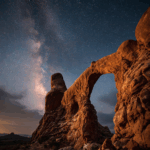
And once you sleep in one on a cold mountain night, wrapped up while the stars are insane above you, you’ll understand why people get obsessed.
Desert Camping In The Southwest Is A Whole Different Universe

Most people think camping means trees.
Dense, green, Pacific Northwest-style trees.
But the first time I camped out in the Sonoran Desert in Arizona, I completely forgot that assumption existed.
The silence out there is a living thing.
It’s so quiet at night that you can hear your own heartbeat if you pay attention.
The air smells like warm earth and something faintly sweet — I still can’t fully describe it, but I think about it a lot.
The colors at sunrise hit different when there’s no canopy blocking them.
We’re talking deep oranges, dusty purples, and this warm gold that kind of washes over everything slowly.
One thing I didn’t expect: it gets cold fast out there once the sun drops.
Like, shockingly cold.
Pack layers you actually mean it with, not just a light hoodie.
I also learned that desert campsites are often way less crowded than forest ones.
Which means you get that whole big-sky feeling without having to fight for a spot.
If you’ve never done a desert overnight, put it on the list.
Seriously.
Your Ultimate Caribbean Adventure Awaits!
Discover hidden coves, secret beaches, and the best rum punches in the islands. Your insider’s guide to Caribbean paradise.
Get Your Guide Now$15.99Cowboy Camping Under The Stars (No Tent, No Problem)

This one sounds a little unhinged the first time you hear it.
Cowboy camping is basically just sleeping outside — on the ground, under the open sky, no tent.
Just your sleeping bag, your pad, and a whole lot of stars above you.
I tried it for the first time in Utah on a warm, dry summer night and it felt sort of like cheating.
Like, was I actually allowed to feel this connected to a place?
There’s something about removing that thin nylon wall between you and the sky that makes the whole experience feel more real.
More honest, almost.
You fall asleep watching constellations and wake up with the first light touching your face.
Now — it only works in dry, low-wind conditions.
Rain is obviously a no.
And you want to be in an area with low bug pressure, or you’ll regret every decision you’ve ever made.
But when the conditions are right?
It’s one of the most memorable nights of sleep I’ve ever had outdoors.
No setup, no breakdown, no fuss.
Just you and the landscape doing its thing.
Building A Campfire Kitchen That Actually Works

Here’s the thing about campfire cooking that nobody tells you upfront.
It’s less about recipes and more about heat management.
When I first started camping, I’d just sort of throw things at the fire and hope for the best.
Charred on the outside, cold in the middle.
Every single time.
But once I started treating the campfire like a real cooking surface — building a proper coal bed, using a cast iron pan, controlling the heat zones — everything got better.
Way better.
Now I make things at the campfire that honestly impress me.
Butter-basted eggs in cast iron.
Foil packet potatoes with rosemary and garlic that come out perfectly tender.
Even a simple grilled cheese over coals hits differently when you’re sitting next to a river at dusk.
One tip I swear by: let the fire burn down to coals before you cook anything.
The big flames look dramatic, but the coals are where the actual cooking magic happens.
Also — a long-handled wooden spoon and a pair of heat-resistant gloves are two things I never leave home without anymore.
Small gear, massive difference.
Hammock Camping In The Appalachians Is A Vibe You Can’t Fake

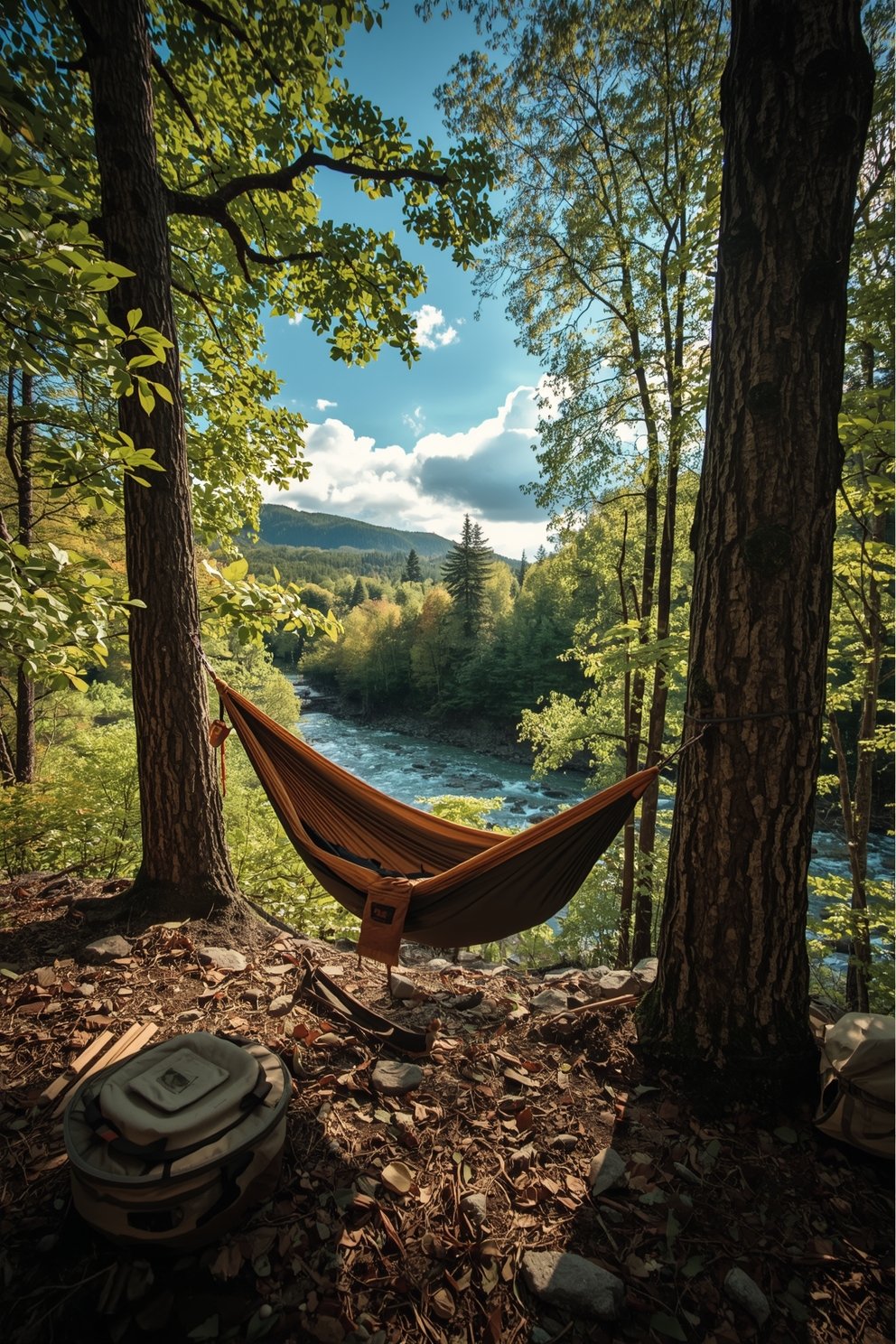
I didn’t fully understand hammock camping until I tried it in the Smoky Mountains on a foggy October morning.
The mist was sitting low between the trees.
Everything was soft and grey and kind of moody.
And I was just… suspended between two old hemlocks, wrapped in a sleeping quilt, completely still.
It felt like floating.
Hammock camping is genuinely different from tent camping in the way it makes you feel in a space.
You’re part of the forest, not just parked in it.
The gentle swing when you shift your weight, the sound of leaves overhead — it’s sort of meditative in a way I didn’t expect.
The Appalachian Trail corridor is honestly one of the best places in the country for it because tree coverage is thick and reliable.
Gear tip: always use a rainfly even if the forecast looks clear.
Mountain weather changes fast and you’ll want that coverage.
Also — hang at a slight diagonal inside the hammock rather than straight down the middle.
That small adjustment gives you a nearly flat sleeping position and it genuinely transforms the comfort level overnight.
Caribbean Paradise Unlocked
From pristine beaches to vibrant local culture, discover the Caribbean’s best-kept secrets with my comprehensive travel guide.
- 120+ Hidden Beach Secrets
- Local Cuisine Guide
- Budget Travel Tips
- Island Hopping Routes
The “Overlanding” Style Of Camping Is Blowing Up Right Now

If you haven’t heard the term overlanding yet, here’s the short version.
It’s vehicle-based travel and camping across remote terrain, usually with your gear fully packed into or onto your truck or 4×4.
Think less manicured campground, more middle-of-nowhere canyon with a fire you built yourself.
I got into it sort of accidentally after a road trip through New Mexico left me wanting to go deeper into the landscape instead of just passing through it.
The freedom is genuinely addictive.
You’re not locked into a reservation or a designated plot of land.
You follow dirt roads, find a flat spot, and make it yours for the night.
The West is incredible for this — Nevada, Utah, Colorado, the whole Four Corners region.
But honestly?
I’ve found incredible overland routes in the hill country of Texas and even up in the Upper Peninsula of Michigan.
The gear learning curve is real.
You need recovery gear, navigation tools, and you need to know your vehicle’s limits.
But once you get comfortable with it, you’ll find yourself planning trips differently.
Not just where to go — but what kind of terrain you want to sleep inside of.
Cold Weather Camping Is Way More Rewarding Than You’d Expect

I used to pack up my camping gear the second September ended.
That was a mistake I made for years.
Cold weather camping — done right — is actually some of the most peaceful outdoor time I’ve ever had.
The crowds disappear completely.
Trails that would be packed in summer feel like they belong only to you.
And there’s something about the cold, crisp air and a warm sleeping bag that produces the most satisfying, deep sleep imaginable.
The key piece of gear I’d never give up for cold camping: a quality sleeping bag rated well below what you think you’ll need.
If the forecast says lows of 30°F, I want a bag rated to 10°F.
The difference between a good night and a miserable one is almost entirely in that sleeping system.
A four-season tent and a good sleeping pad with a high R-value matter a lot too.
Ground cold is sneaky — it pulls warmth out of your body way faster than air cold does.
The Pacific Northwest in fall and winter, the Rockies in early spring, the Upper Midwest in November — all underrated camping seasons that most people skip.
Don’t skip them.
The Magic Of Backcountry Camping Nobody Warns You About

There’s a kind of silence in the backcountry that you genuinely can’t find anywhere else.
Not the silence of a quiet room, but a full, deep, wide-open silence that makes you feel very small in the best possible way.
My first solo backcountry trip was in the North Cascades in Washington State.
I hiked in about seven miles, found a spot near a glacial lake, and set up camp as the light turned gold on the peaks above me.
And I just sat there.
For a long time.
Not doing anything in particular.
Just existing in a place that felt like it hadn’t been touched.
Backcountry camping requires a real commitment to Leave No Trace principles.
Pack out everything you pack in.
Use a bear canister if the region requires it.
Know how to filter water.
Have a map, a compass, and don’t rely solely on your phone for navigation.
But if you’re willing to put in the prep work, what you get in return is access to places that most people will genuinely never see in their lifetimes.
That feels worth it to me every single time.
Your Ultimate Caribbean Adventure Awaits!
Discover hidden coves, secret beaches, and the best rum punches in the islands. Your insider’s guide to Caribbean paradise.
Get Your Guide Now$15.99Float Camping On A River Is A Secret You’ll Want To Keep

Float camping is one of those ideas that sounds too fun to be real until you actually do it.
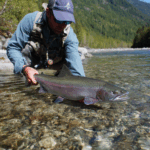
You load your gear into dry bags, strap everything to a canoe or inflatable raft, and spend the day floating a river while stopping at sandbars and riverside campsites along the way.
The Buffalo National River in Arkansas is where I first did this properly, and I’ve been chasing that feeling ever since.
There’s something deeply relaxing about the pace of river travel.
You’re not rushing anywhere.
The current is doing most of the work.
And the campsites you find on the water — elevated sandbars, shaded riverside flats, little hidden coves — are things you can’t access from any road.
The Missouri Ozarks, the Green River in Utah, the Boundary Waters in Minnesota — all incredible for this.
You don’t need to be an expert paddler to start.
A calm, flatwater river with a rented canoe and a weekend is a perfectly reasonable entry point.
Just check water levels before you go.
Rivers can change fast after rain and what’s marked as “easy” can become something very different if conditions shift.
Camp Cooking With A Dutch Oven Will Ruin Regular Camping Food For You

I know that sounds dramatic.
But I mean it.
The first time I made a slow-cooked beef stew in a Dutch oven over campfire coals on a cold night in the Ozarks, I looked at every other camping meal I’d ever eaten with something close to pity.
A Dutch oven is this heavy, cast-iron pot with a lid that lets you cook using both top and bottom heat — which basically turns your campfire into a real oven.
You can bake bread in it.
Cobblers.
Chili.
Roasts.
The kind of food that makes other campers at nearby sites wander over and look sad about their freeze-dried packets.
It’s heavy to carry — I’ll be real about that.
So it works best for car camping or overlanding where weight isn’t a huge concern.
But the payoff is the kind of campfire meal that becomes the memory of the whole trip.
I genuinely look forward to Dutch oven nights more than almost any other part of camping at this point.
It’s the thing that makes a campsite feel like home.
Camping Near Hot Springs Is An Experience That Spoils You Completely

I need to talk about this because it doesn’t get nearly enough attention.
There are natural hot springs scattered across the American West that sit right next to some really exceptional camping.
And the combination of a full day of hiking followed by soaking in a natural thermal pool under a dark sky is something I don’t have the vocabulary to fully describe.
Steamboat Springs in Colorado, the Alvord Desert in Oregon, Hot Springs National Park in Arkansas — these are just the ones I’ve personally spent time near.
The feeling of sliding into a natural hot spring after two days on the trail is sort of like your whole body exhaling at once.
Every sore muscle, every tense knot, just… releases.
Many of these springs are free and accessible on public land, which still surprises me every time I think about it.
Some require a short hike to reach, which honestly makes the experience better because it means they’re not overrun.
Tip: check water temperature before you commit to getting in.
Some springs run very hot and can actually be dangerous.
Look for mixing zones where cooler water blends with the hot source.
That’s usually where the perfect soaking temperature lives.
Caribbean Paradise Unlocked
From pristine beaches to vibrant local culture, discover the Caribbean’s best-kept secrets with my comprehensive travel guide.
- 120+ Hidden Beach Secrets
- Local Cuisine Guide
- Budget Travel Tips
- Island Hopping Routes
The Unexpected Joy Of Camping Without A Plan

Some of my absolute best camping memories in this country didn’t involve any advance planning.
Just a full tank of gas, a packed truck, and a general direction.
There’s a kind of freedom in pulling up to a Bureau of Land Management area on a Thursday afternoon and just… picking a spot.
No reservation.
No assigned site number.
No neighbors twelve feet away.
Dispersed camping on public land in the USA is one of the most underused privileges available to anyone with a vehicle and basic gear.
The West is especially generous with it.
Millions of acres of BLM land where you can legally camp for free, often with nothing around you but landscape.
I’ve had nights in the middle of the Nevada desert with no one in sight for as far as I could see.
Nights in the Coconino National Forest where the silence was so complete it felt thick.
Nights parked on a high plateau in Wyoming with the wind absolutely howling and the stars absolutely blazing.
None of them were planned.
All of them were perfect.
And that spontaneity — that willingness to just go — is something I think about every time I start getting too comfortable staying home.