Hey dear friends , bird enthusiasts!
So, you’ve got your binoculars ready, your field guide in hand, and an itch for some bird-watching adventure.
But when is the absolute best time to go birding in the Sunshine State?
Well, I’m here to tell you about the hottest months, the coolest times of day, and the most bird-friendly weather in Florida.
Now Strap in because this birding journey is about to take flight))
What Time of Year is Best to Bird Florida?
If you’re anything like me, you’re probably eager to know the nitty-gritty of when to catch Florida’s feathered stars in action.
So, let’s dive deeper into the seasons and why some months are more bird-tastic than others:
The Fall Migration Extravaganza (September – November)
As summer starts winding down, a fascinating phenomenon begins in the birding world.
Birds from all over North America, tired of the chill up north, start their journey southward.
Think of it as their own version of “snowbird” migration!
During this time, Florida becomes a pitstop for these migrating birds.
The weather is cooling off, but it’s still pleasantly warm, making it a perfect vacation spot for our feathered friends.
They come here to rest, refuel, and, well, party a bit before continuing their journey.
This is your chance to spot a variety of warblers, raptors, and waterfowl making their pitstop in Florida.
It’s like attending a glamorous layover party where you’re the paparazzi!

Winter’s Avian Delight (December – February)
Now, let’s talk about the peak of Florida’s birding season: winter.
While much of the northern U.S.
is shivering in the cold, Florida offers a warm embrace to both residents and winter visitors—birds and humans alike!
In December, the temperature in Florida is nothing short of delightful.
It’s not too hot, not too cold, just like Goldilocks’ porridge.
This pleasant climate attracts a jaw-dropping number of migratory birds.
You’ll see colorful painted buntings, majestic sandhill cranes, and even the secretive Sora rail strutting their stuff.
So, why February, you ask?
By this time, most migratory birds have settled in, and the resident birds are already showing off their breeding plumage.
It’s a bird fashion show like no other.
Plus, the weather is comfortably mild, making it a breeze to spend hours in the field.
So, whether you’re a snowbird escaping winter or a local looking for some avian excitement, Florida’s winter is the time when birds and birders unite in a symphony of colors and melodies.
The Great Spring Migration (March – April)
Just when you thought the birding season was winding down, Florida has one more trick up its sleeve: the spring migration.
March and April are a time of renewed energy and a bustling avian hubbub.
During this period, many birds that spent the winter in Florida begin their journey north to their breeding grounds.
It’s like they’re packing up their Floridian flip-flops and heading back home for the summer.
But here’s the exciting part—some birds, called “spring overshoots,” get a bit carried away and end up in Florida when they were supposed to go further north.
It’s like they took the wrong exit on the bird highway!
This means you’ll get a mix of winter residents, spring migrants, and overshoots all in one place.
It’s a birding party with unexpected guests, and you’re invited!
So, there you have it—the lowdown on the best time of year to bird Florida.
Whether you prefer the fall migration frenzy, the winter wonderland, or the spring migration surprises, there’s no shortage of avian adventures waiting for you in the Sunshine State.
Pack your binoculars, slap on some sunscreen, and let’s go birding!
Tap to Explore These Beauties
See my ideas in action 👇 Tap any image to explore full details.
What Month is Best for Birding in Florida?
Now that we’ve got a handle on the ideal birding seasons in Florida, let’s zoom in and pinpoint the single best month to unleash your inner bird nerd.
Drumroll, please… February takes center stage!
Why February, you ask?
Well, it’s like the grand finale of a rock concert—the most thrilling part where all the hits come together to create an unforgettable experience.
Let me break it down for you:
February: A Birding Extravaganza
February in Florida is like a box of chocolates—you never know what delightful birding surprise you’ll unwrap next.
Here’s why it’s the peak of the birding calendar:
-
- Migratory Birds Galore: By February, most migratory birds have arrived and settled in, and they’re in full-on party mode.
Warblers, vireos, and tanagers grace the treetops with their vibrant colors and melodies.
It’s a bit like attending a bird music festival, minus the long lines!
- Resident Birds in Breeding Plumage: Not only do you get to see the winter visitors, but the resident birds are also dressed to impress.
They put on their fanciest feathers and strut their stuff in search of love.
It’s like a bird version of “The Bachelor.”
- Mild Weather: Florida’s February weather is a Goldilocks scenario—it’s just right.
It’s not scorching hot like summer, nor is it chilly like the winter up north.
You can comfortably spend hours in the field without breaking a sweat or shivering uncontrollably.
- Less Crowds: While the winter months attract birders from all over, February sees a slight dip in the crowds.
It’s like finding a secret treasure chest; fewer people means more personal birding experiences.
- Resident Birds in Breeding Plumage: Not only do you get to see the winter visitors, but the resident birds are also dressed to impress.
They put on their fanciest feathers and strut their stuff in search of love.
It’s like a bird version of “The Bachelor.”
- Mild Weather: Florida’s February weather is a Goldilocks scenario—it’s just right.
It’s not scorching hot like summer, nor is it chilly like the winter up north.
You can comfortably spend hours in the field without breaking a sweat or shivering uncontrollably.
- Less Crowds: While the winter months attract birders from all over, February sees a slight dip in the crowds.
It’s like finding a secret treasure chest; fewer people means more personal birding experiences.
- Migratory Birds Galore: By February, most migratory birds have arrived and settled in, and they’re in full-on party mode.
Imagine yourself strolling through a lush nature reserve, your binoculars spotting dazzling warblers, your ears filled with a symphony of bird songs, and the sun casting a gentle glow.
That’s a day in the life of a birders in February in Florida!
So, there you have it—February is the month when Florida’s birding scene reaches its peak.
Whether you’re a seasoned birder or a newbie, this is the time to spread your wings, soak in the avian spectacle, and create unforgettable birding memories.
Don’t forget your sunblock and a pair of comfy shoes—Florida’s feathered residents are waiting to steal your heart!
What is the Best Time of Day to Go Birding in Florida?
Now that we’ve sorted out the best time of year and month to indulge in some serious birding in Florida, let’s talk about the clock.
When should you set that alarm and hit the birding trail?
Well, the answer is simple: early morning and late afternoon are your golden hours!
Why, you ask?
Think of it this way—it’s all about timing your birding adventure for when the avian stars are ready to put on their best performances:
There’s something magical about the crack of dawn—the world is awakening, the air is crisp, and the birds are just as excited as you are to start their day.
Here’s why early morning birding is a hit:
Many bird species are early risers.
They’re out and about, foraging for breakfast, singing their hearts out, and claiming their territories.
It’s like catching them in their pajamas!
The soft morning light makes it easier to spot and identify birds.
Their colors appear more vibrant, and their markings clearer.
It’s like having a built-in Instagram filter for your bird photos!
The early morning hours are usually quieter, with fewer people around.
It’s just you, the birds, and the gentle rustling of leaves.
It’s a bit like having your own private concert with nature as the headliner.
So, grab your binoculars, a hot cup of coffee, and get ready to witness the dawn chorus—the symphony of bird songs that welcomes a new day in the birding world.
Now, let’s forward to late afternoon.
As the sun starts its descent toward the horizon, the birding scene gets another burst of energy.
Here’s why late afternoon birding is a hit:
After a midday siesta, birds get a second wind.
They’re out and about again, preparing for their evening roost or hunting for dinner.
It’s like catching the encore of a rock concert!
The late afternoon sun bathes the landscape in a warm, golden glow.
It’s not just about the birds; it’s also about the breathtaking views.
It’s like combining birding with a front-row seat to a stunning sunset.
In Florida’s warm climate, late afternoons provide relief from the midday heat.
You can bird comfortably without feeling like you’re in a sauna.
It’s like finding the sweet spot in a temperature roulette.
So, whether you’re an early bird or prefer a leisurely start to your birding day, don’t forget to schedule some time in the late afternoon.
It’s when the feathered stars come out for their evening performance, and you won’t want to miss it!
Remember to pack some snacks, plenty of water, and your sense of adventure.
Early morning or late afternoon, Florida’s birds are waiting to share their world with you.


🗼 I Wrote a Book About My Japan Travel Catastrophes!
Before I landed in Tokyo, I thought I was the “Final Boss” of international travel. Spoiler alert: I WASN’T. 😅
🚅 I boarded the wrong Shinkansen and ended up in THE WRONG CITY. I confused locals with my “expert” bowing that was more awkward than accurate. I accidentally stumbled into a high-stakes Kendo practice thinking it was a tourist show. Sound like something you’d do?
“Things I Wish I Knew Before Going to Japan” is your shortcut to avoiding ALL my cringe-worthy mistakes. ✨ Inside, you’ll find practical, LIFE-SAVING tips on etiquette, transport, money, and hidden gems that will save you time, money, and a whole lot of confusion.
What Weather is Best for Bird Watching?
If you’ve ever tried birding in scorching heat or a torrential downpour, you know it can turn a fun day into a soggy, sweaty mess.
So, what’s the ideal weather forecast for bird watching in Florida?
Here’s the scoop:
| Weather Condition | Best for Bird Watching |
|---|---|
| Sunny and Mild | Perfect! Birds are active, and you’ll stay comfy. |
| Overcast with Light Drizzle | Not bad. Some birds prefer cooler, damper weather. |
| Heavy Rain or Thunderstorms | Avoid. Birds hunker down, and you’ll get soaked. |
Remember, birds have feathers to keep them warm, not umbrellas!
What is a Bird’s Favorite Season?
Now, you might be wondering, do birds have a favorite season?
Well, not exactly, but they do have different preferences depending on their species.
For example, the American robin loves the spring for nesting and raising chicks, while the Florida scrub-jay thrives in the winter when food is abundant.
It’s like asking someone if they prefer summer or winter—it varies from person to person, or in this case, from bird to bird!
Birds don’t exactly have favorite seasons in the way humans do because their preferences vary depending on their species and ecological niches.
However, we can generalize that different bird species have particular preferences for different seasons based on their life cycles and ecological needs.
Let’s delve into this a bit further:
Spring:
Many bird species favor spring for various reasons:
Spring is a prime time for breeding for numerous bird species.
Warblers, sparrows, robins, and other songbirds are especially active during this season, as they build nests, lay eggs, and care for their chicks.
Spring brings a surge in insect populations and plant growth, providing ample food for birds.
This abundance makes it an ideal time for many species to raise their young.
Spring is also when many migratory birds return from their wintering grounds in warmer regions.
These birds are eager to establish breeding territories and find mates.
Summer:
For some bird species, summer is the favorite season:
Summer is when the young birds hatched in spring are growing and developing.
Parent birds are actively feeding and protecting their chicks.
Longer daylight hours in summer provide more time for foraging and engaging in various bird activities.
Fall has its own attractions for certain bird species:
This season is all about migration.
Many birds, like warblers, raptors, and waterfowl, embark on long journeys to their wintering grounds.
Fall is a favorite time for birders to witness these impressive migrations.
In preparation for migration, birds often engage in a feeding frenzy to build up energy reserves.
This can lead to spectacular gatherings of birds at feeding hotspots.
Winter:
Some birds prefer winter:
For resident bird species that don’t migrate, winter offers relative tranquility compared to the breeding season.
They don’t have the pressures of nesting and raising young.
Winter in Florida, for example, attracts a wide variety of migratory birds from northern regions seeking warmer temperatures and food sources.
So, while birds themselves don’t have personal favorite seasons, they do have strong seasonal behaviors and preferences shaped by their biological needs.
Birdwatchers can take advantage of these preferences to observe different bird species at various times of the year, ensuring that there’s always something exciting happening in the world of avian enthusiasts.

Are There Any Birding Hotspots in Florida?
Absolutely!
Florida is a birding paradise with numerous hotspots that attract birdwatchers from all over.
Whether you’re a seasoned birder or just starting, these locations offer incredible opportunities to observe a wide variety of bird species.
Here are some of the top birding hotspots in the Sunshine State:
Everglades National Park
Known as one of the most iconic birding destinations in the world, the Everglades boasts an array of waterbirds, wading birds, raptors, and songbirds.
The Anhinga Trail and Shark Valley are popular birding spots within the park.
Corkscrew Swamp Sanctuary
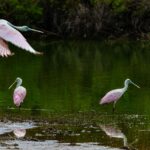
Located in southwest Florida, this sanctuary is a haven for wood storks, roseate spoonbills, and various heron and egret species.
The boardwalk through ancient cypress forests offers a unique birding experience.
Merritt Island National Wildlife Refuge
Situated on the east coast, this refuge is a must-visit for birders.
It’s home to a diverse range of birds, including waterfowl, shorebirds, raptors, and even the elusive Florida scrub-jay.
Big Cypress National Preserve
Adjacent to the Everglades, this preserve is home to the snail kite, swallow-tailed kite, and numerous other bird species.
Birders can explore the Loop Road and Turner River Road for excellent sightings.
Sanibel Island
This barrier island on Florida’s Gulf Coast is a magnet for shorebirds and seabirds.
The J.N.
“Ding” Darling National Wildlife Refuge is a top spot for observing wading birds and waterfowl.
Dry Tortugas National Park
Located 70 miles west of Key West, this remote park is a haven for migratory birds.
It’s an ideal place to spot frigatebirds, terns, and other seabirds during their spring and fall migrations.
Paynes Prairie Preserve State Park
In north-central Florida, this park offers birders a chance to see sandhill cranes, American avocets, and more.
The observation tower provides panoramic views of the prairie and its birdlife.
Florida Keys
The Keys are a hotspot for a variety of species, including tropicbirds, frigatebirds, and colorful parrots.
Visit the Key West Tropical Forest & Botanical Garden for a unique birding experience.
Lake Okeechobee
Florida’s largest freshwater lake attracts a diverse range of waterbirds and waders.
Birding from the Herbert Hoover Dike or taking a boat tour can yield fantastic sightings.
Tampa Bay Area
The Tampa Bay region offers a mix of urban and natural birding sites.
Check out Fort De Soto Park, Lettuce Lake Park, and the Circle B Bar Reserve for excellent birding opportunities.
These are just a few of the many birding hotspots you can explore in Florida.
Each location offers a unique birding experience, so whether you’re interested in shorebirds, raptors, waterfowl, or songbirds, you’re bound to find a favorite spot to enjoy Florida’s avian wonders.
What Equipment do I need for Birding in Florida?
| Equipment | Description |
|---|---|
| Binoculars | High-quality binoculars with good magnification and a wide field of view are essential for spotting and identifying birds, especially in Florida’s diverse habitats. |
| Field Guide | A field guide specific to North American birds or Florida birds will help you identify the species you encounter. |
| Notepad and Pen | Take notes on bird behaviors, locations, and other observations. A waterproof notebook is a bonus for Florida’s occasional rain. |
| Comfortable Footwear | Sturdy, comfortable hiking boots or shoes suitable for various terrains, including wetlands and forests. |
| Sunscreen | Protect your skin from the Florida sun, especially during extended birding outings. |
| Bug Spray | Florida’s warm and humid climate can attract insects. Bug spray will help keep the mosquitoes at bay. |
These essentials will ensure you have a comfortable and successful birding experience in Florida’s diverse and often sunny and humid conditions.

FAQ
Can I go birding in Florida’s summer?
You can, but be prepared for sweltering heat and afternoon rain showers.
Many birds are less active during the summer, so early mornings are your best bet.
Any tips for beginner birders?
Start with common birds to build your skills, join local birding groups for guidance, and practice patience.
Birding is a journey, not a sprint!
What’s the rarest bird you’ve spotted in Florida?
I once had the incredible luck of spotting a Florida Grasshopper Sparrow, one of the rarest birds in North America.
It was like finding a needle in a haystack!
Conclusion: Fly High and Bird On!
So, there you have it, folks—your ultimate guide to birding in the Sunshine State.
From the best time of year to the ideal weather conditions, Florida offers a birding experience like no other.
Remember to respect wildlife, stay patient, and enjoy the journey.
Whether you’re a seasoned birder or a newbie with binoculars, Florida’s feathered friends are waiting to dazzle you with their beauty and charm.
Happy birding!