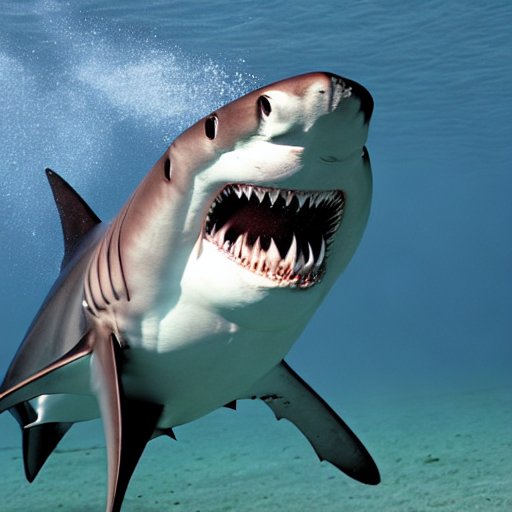

Short answer: yes.
About a dozen shark species use Tampa Bay, and parts of it are nurseries where they give birth.
But bites are rare here.
The International Shark Attack File’s count from 1882 to 2013 had zero unprovoked attacks in Hillsborough County.
And none of Florida’s 11 unprovoked bites in 2025 happened in Hillsborough, Pinellas or Manatee.
I rewrote this page in October 2026.
The old version opened with a first-person story about a nurse shark that brushed against the writer’s leg, then printed shark head counts like “approximately 1,500 Bonnethead sharks” and a table of Tampa Bay attacks per year.
None of those numbers had a source, so they’re gone.

If you’re reading this on a layover on the way to a beach week, that’s the whole answer.
You’ll share the water with sharks and almost certainly never notice.
Which sharks live in Tampa Bay
A 2004 Bay Soundings article on Mote Marine Laboratory’s shark research put it at about a dozen species.
Among them: hammerheads, bonnetheads, nurse sharks, blacktips, lemon sharks and bull sharks.
I like how the director of Mote’s Center for Shark Research put the timing.
Sharks are in the bay all year, he said, “but overwhelmingly in the spring and summer months through October.”
So sharks are around even in the off-season; spring through October is just when there are far more of them.
The ones you’re most likely to hear about:
- Bonnethead: the smallest hammerhead. It likes water warmer than 70°F and shallow bays over seagrass. Weirdly, it eats seagrass too: around 62% of the gut contents by mass in one study. It was the first shark found to be omnivorous.
- Blacktip: Terra Ceia Bay, at the mouth of Tampa Bay, is a well-known blacktip pupping ground. By 2004 Mote had put acoustic tags on 127 sharks there, and its scientists have tagged over 13,000 along the Gulf coast.
- Bull shark: handles fresh and salt water (bulls have turned up about 700 miles up the Mississippi), and the mouth of the Alafia River is a bull shark nursery. If you remember one name, make it this one. Mote’s scientist called bulls “typically the only species we need to be concerned about in terms of serious attacks.”
- Lemon shark: Pinellas Point is a pupping ground for lemons, and a feeding spot for bonnetheads.
The research hasn’t stopped.
In 2021 the Tampa Bay Estuary Program and Restore America’s Estuaries gave New College of Florida a $165,111 grant.
The money lets associate professor Jayne Gardiner track blacktip, blacknose, bull and great hammerhead sharks in lower Tampa Bay with long-term acoustic tags.
The goal is to find where the young ones grow up, and I’m glad someone’s counting.
So how often do people get bitten?
Rarely.
Here’s what the shark attack file’s Tampa Bay counts looked like from 1882 to 2013, as Patch reported them:
- Hillsborough: 0 attacks
- Pinellas: 12 attacks, two fatal
- Manatee: 4 attacks, none fatal
- Sarasota: 7 attacks, none fatal
That’s 131 years.
More recently, Pinellas had one bite in 2023.
In 2025 Florida had 11 unprovoked bites: six in Volusia County, two each in Broward and Lee, and one in Miami-Dade.
None in the Tampa Bay counties.
Honestly, you’re not what the sharks are there for.
For them the bay is a feeding ground and a nursery, and Mote’s scientist said they use it to give birth away from larger predators.
Pregnant females swim into the shallow estuaries, give birth and leave, and the pups grow up on their own.
You’d have to work at it to be in their way.
How I’d swim here
Mote’s scientist had plain advice for summer: the beaches are generally safe, but don’t swim at dusk or dawn, and it’s “probably not a good idea to swim in the open bay.”
I’d follow that, and I’d draw the line at swimming off a bayfront seawall.
You’ll have a better swim off a Gulf beach with lifeguards anyway.
Most bites, the shark file says, are test bites, where a shark mistakes a person for prey.
Its data shows bites are most often reported in September.
Bites are most common between 11 a.m. and 5 p.m., and a local news report on the shark file’s numbers puts that down to more people being out at the beaches then.
So the risk follows the crowds, not the sharks you can’t see.
Want the water temperature before you go?
Our Florida beach conditions page has today’s.
Heading to the Gulf side?
Here’s my take on sharks at Clearwater Beach.
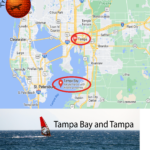
And for the rest of the area, see our Tampa Bay and St. Petersburg hub.