
Everyone told me the Maldives was for honeymoons and hedge fund managers.
I almost believed them.
I sat there scrolling through those overwater bungalow photos feeling that specific kind of ache — you know the one — where something looks so beautiful it almost feels offensive that you can’t afford it.
Then I went anyway.
Not on a trust fund.
Not on a travel influencer budget.
On a real, carefully planned, “I’m doing this” budget that left me eating fresh tuna on a local island with my feet in the sand, watching the same Indian Ocean sunset those resort guests paid ten times more to see.
This is everything I learned.
The Big Secret: Local Islands Change Everything

Nobody in the luxury travel world wants to talk about local islands.
And I get it — it doesn’t sell overwater villas.
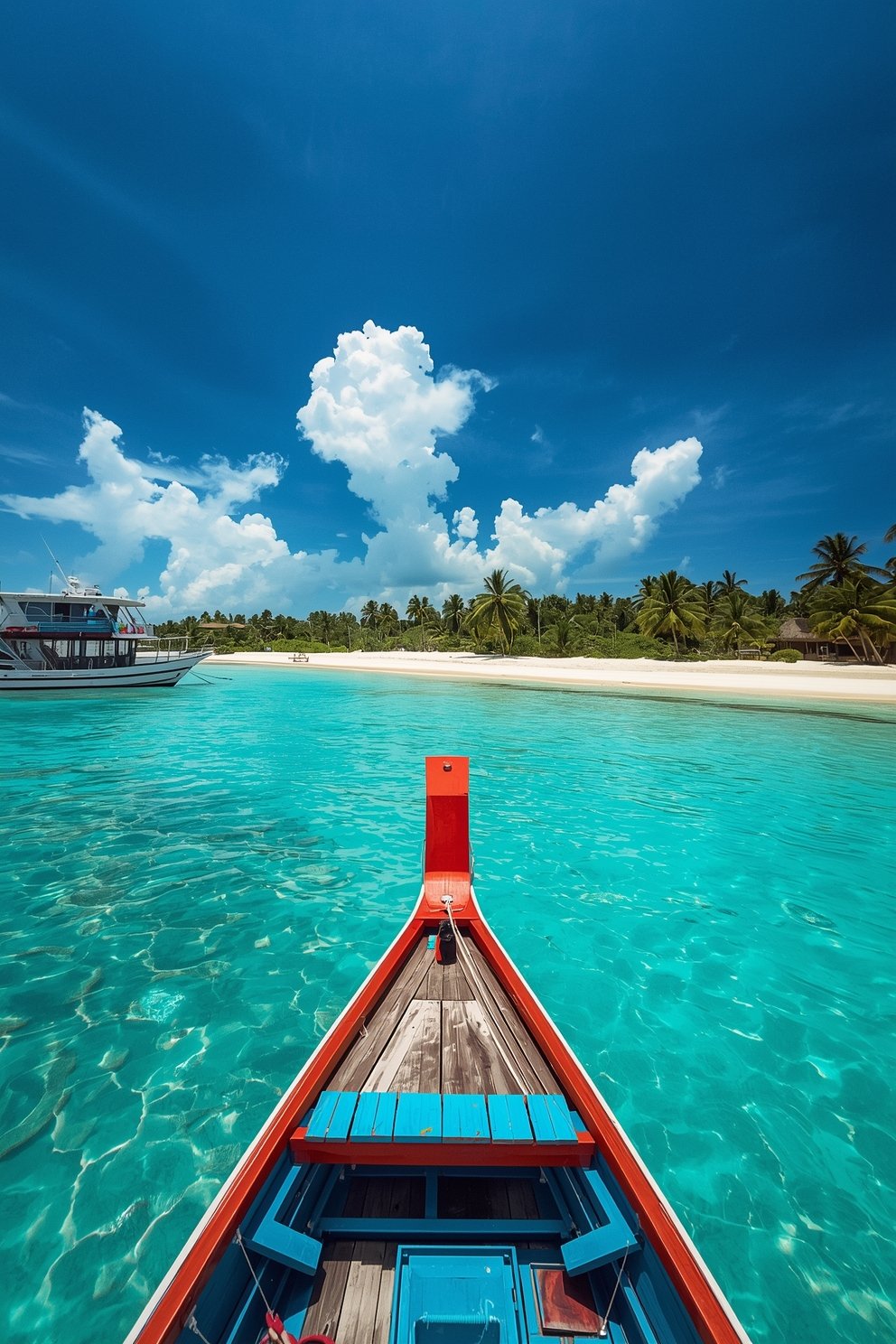
But here’s what I discovered when I first landed in Malé and took a cheap ferry instead of a seaplane: the Maldives has over 200 inhabited local islands, and most of them are breathtakingly beautiful, incredibly affordable, and almost completely off the tourist radar.
Places like Maafushi, Dhigurah, and Thoddoo have guesthouses that cost a fraction of what a resort charges — sometimes as low as $40–$60 a night — and you still get that turquoise water, that white sand, that ridiculous sky.
When I first stepped onto the beach in Maafushi, I actually stopped walking.
It looked exactly like the photos.
Maybe better.
I remember standing there thinking, “Why does everyone act like you need a black card for this?”
Local islands are the real Maldives experience — local food, local people, local pace.
And honestly?
That felt like the better deal to me.
My Honest Take on When to Book (It Matters More Than You Think)

I’m a last-minute guy by nature.
It has cost me money more times than I’d like to admit.
For the Maldives, I finally did the math and booked about four months out — and the difference in flight prices was genuinely shocking.
Flights into Velana International Airport (Malé) from the US usually connect through the Middle East — think Dubai or Doha — and those routes have serious fare fluctuations depending on the season.
The shoulder season, which runs roughly between May and July and again around November, hits that sweet spot where prices drop but the weather is still mostly cooperating.
I flew during early May and paid significantly less than peak-season rates.
The weather was warm, occasionally rainy in the evenings, and absolutely fine for swimming and snorkeling every single day.
Pro tip: set fare alerts the moment you start thinking about this trip.
Don’t wait until you’re “ready” — just track the prices and jump when they dip.
That’s how I snagged a deal I honestly didn’t think was going to happen.
Guesthouses vs. Resorts: My Real Numbers

Let me just be straight with you about the math.
A mid-range overwater bungalow at a Maldives resort can run anywhere from $500 to well over $1,500 per night — before food, before activities, before anything.
The guesthouse I stayed at in Maafushi?
About $55 a night for a clean, air-conditioned room with breakfast included and a 3-minute walk to the beach.
Now, I’m not going to pretend a guesthouse room is the same as a luxury water villa.
It’s not.
But here’s what I kept thinking: I wasn’t in my room.
I was in the ocean.
I was eating grilled fish at a local spot.
I was watching a sunset from a sandbar that required no reservation and no minimum spend.
The room is just where you sleep.
And for what I saved, I extended my trip by four extra days and still came home having spent less than a one-night resort stay would have cost.
That trade-off?
Easy call for me.

🗼 I Wrote a Book About My Japan Travel Catastrophes!
Before I landed in Tokyo, I thought I was the “Final Boss” of international travel. Spoiler alert: I WASN’T. 😅
🚅 I boarded the wrong Shinkansen and ended up in THE WRONG CITY. I confused locals with my “expert” bowing that was more awkward than accurate. I accidentally stumbled into a high-stakes Kendo practice thinking it was a tourist show. Sound like something you’d do?
“Things I Wish I Knew Before Going to Japan” is your shortcut to avoiding ALL my cringe-worthy mistakes. ✨ Inside, you’ll find practical, LIFE-SAVING tips on etiquette, transport, money, and hidden gems that will save you time, money, and a whole lot of confusion.
Getting Around Without Burning Your Budget

Transportation in the Maldives is one of those things that can sneak up on you if you’re not paying attention.
The seaplanes are gorgeous and iconic — I won’t lie, I wanted to take one so badly.
But a seaplane transfer to a resort can run $300 to $600 round trip per person.
For local islands, the answer is ferries.
The public ferry network is shockingly affordable — sometimes just a couple of dollars for an inter-island route — and it’s genuinely one of my favorite parts of the whole trip.
You’re out on the open Indian Ocean.
Local families are traveling alongside you.
The water is that impossible shade of blue in every direction.
It’s not a luxury experience.
It’s a real one.
I also used speed boats for a couple of day trips to nearby islands, which cost more than ferries but were still a fraction of seaplane pricing.
My honest advice: map out which islands you want to visit before you go, cross-reference the ferry schedule (it doesn’t run every day on every route), and build your itinerary around it.
It just takes a bit of planning.
Where I Ate and What It Actually Cost

Food in the Maldives on a budget is genuinely one of the most pleasant surprises of the whole trip.
Local restaurants — called “tea shops” or local cafés — serve fresh, simple, delicious food at prices that feel almost too good to be real.
I had a plate of fresh tuna curry with rice and a coconut-based side dish for about $4.
It was one of the best meals of my trip.
The local staple is called “mas huni” — it’s a tuna and coconut mixture they eat for breakfast with flatbread — and the first morning I tried it, I completely understood why.
Warm, savory, fresh.
Absolutely nothing like anything I’d had before.
Guesthouses often include breakfast in the rate, which helps a lot.
For lunch and dinner, I stuck to the local spots and kept my average daily food spend well under $20.
Where costs creep up is if you’re island-hopping to uninhabited resort islands for day trips — food and drinks there can be resort-priced.
Pack snacks.
Bring a water bottle with a filter.
Eat where the locals eat.
That combination kept my food budget lean without sacrificing a single good meal.
Snorkeling and Diving: The Ocean Is Free

Here’s the thing about the Maldives that the resort world sort of glosses over: the ocean doesn’t charge admission.
The reef right off the beach at Maafushi was honestly some of the best snorkeling I’ve ever done in my life.
Sea turtles.
Reef sharks.
Schools of fish in colors I didn’t know fish came in.
All of it accessible from the shoreline with a basic mask and fins I rented for a few dollars.
Now, if you want to do scuba diving, there are dive schools on the local islands that charge significantly less than resort dive centers — same certified instructors, same equipment, same ocean.
I did a dive package through a local operator and saved a substantial amount compared to what the resort next door was advertising.
Day trips to specific dive sites or sandbanks — like those famous “sandbar in the middle of the ocean” experiences — can be booked through guesthouses or local tour operators for $30–$60 depending on the trip.
One afternoon, I went on a dolphin-watching cruise at sunset for about $25.
We saw spinner dolphins jumping alongside the boat for almost an hour.
That memory cost me less than a restaurant entrée back home.
The “Bikini Beach” Rule You Need to Know

This is practical information that genuinely matters for your trip planning.
The Maldives is a Muslim country, and on local islands, modest dress is expected in public areas — meaning covered shoulders and knees outside the beach zones.
Most guesthouses on local islands have a designated “bikini beach” — a section where swimwear is permitted.
It’s usually a short walk from the main beach, clearly marked, and completely fine for sunbathing and swimming.
I want to be honest about this because I’ve seen travelers arrive unprepared and feel awkward.
It’s not complicated once you know — just pack a light coverup for walking through town, and change when you get to the beach area.
Respecting local customs isn’t just polite — it genuinely shapes how locals receive you, and on a small island, that matters.
The locals I met were incredibly warm and welcoming.
Part of that, I think, was just being respectful and curious rather than treating the island like a resort backdrop.
Pack light layers.
Be cool about it.
You’ll have a better experience for it.
My Favorite Island: Dhigurah

If I had to send one friend to one island for a budget Maldives trip, I’d say Dhigurah without hesitating.
It’s a long, narrow island in South Ari Atoll — one of the best atolls for whale shark sightings — and it has a quiet, unhurried energy that I wasn’t expecting.
The main beach stretches for what feels like forever.
The water is warm and calm.
The guesthouses are simple and good.
I went snorkeling with whale sharks off Dhigurah on a small group boat trip, and I want to be careful about how I describe this because I don’t want to sound dramatic.
It was the most remarkable wildlife experience of my life.
A whale shark the length of a school bus, gliding below me in absolute silence.
I just floated there.
Couldn’t move.
Couldn’t think.
That boat trip cost me about $50.
Dhigurah also has incredible house reef snorkeling and a very laid-back social scene in the evenings — guesthouse guests tend to gather, share stories, compare notes on the best spots.
It’s the kind of place where you mean to stay three nights and end up staying six.
Packing Smart for a Budget Maldives Trip

Packing for this trip the right way saved me real money — and I mean that genuinely, not in a vague “travel tip” kind of way.
Bringing my own snorkel mask saved me multiple daily rental fees.
A reusable water bottle with a built-in filter meant I wasn’t buying bottled water constantly.
Reef-safe sunscreen is a must — it’s the right thing to do environmentally, and buying it back home is much cheaper than buying it on the islands.
A dry bag kept my phone and wallet safe on boat trips and snorkeling excursions.
Light, quick-dry clothing meant I wasn’t overpacking and wasn’t hot in between water activities.
I also brought a small first aid kit and some basic medications — pharmacies on small islands are limited.
One thing I didn’t think to bring: a portable charger.
Guesthouse power was fine, but on long boat days I kept running low and it was frustrating.
Small thing.
Mentioning it because I wish someone had told me.
The general principle is: anything you can pack from home is something you don’t have to hunt down on a small island with limited shops.
Think through a full day — sun to sunset — and pack for that rhythm.
🗼 I Wrote a Book About My Japan Travel Catastrophes!
Before I landed in Tokyo, I thought I was the “Final Boss” of international travel. Spoiler alert: I WASN’T. 😅
🚅 I boarded the wrong Shinkansen and ended up in THE WRONG CITY. I confused locals with my “expert” bowing that was more awkward than accurate. I accidentally stumbled into a high-stakes Kendo practice thinking it was a tourist show. Sound like something you’d do?
“Things I Wish I Knew Before Going to Japan” is your shortcut to avoiding ALL my cringe-worthy mistakes. ✨ Inside, you’ll find practical, LIFE-SAVING tips on etiquette, transport, money, and hidden gems that will save you time, money, and a whole lot of confusion.
The Mindset Shift That Made the Whole Trip Work

I want to be real about something that doesn’t get talked about enough in budget travel content.
Going to the Maldives on a budget requires genuinely letting go of the resort fantasy — not just financially, but emotionally.
If you spend your whole trip feeling like you’re “missing out” on the overwater villa experience, you’ll rob yourself of what’s actually right in front of you.
When I stopped comparing my guesthouse room to the resort photos I’d been staring at for months, something shifted.
I started noticing what I actually had: local food that was better than any hotel restaurant, a reef that nobody was crowding me out of, a pace of day that felt genuinely restful.
I made a habit of leaving my phone in the room for the first hour of every morning.
Just walked to the beach, sat with a coffee, watched the water do its thing.
That quiet became my favorite part of the whole trip.
The Maldives has a way of slowing you down if you let it.
You don’t need a luxury resort to feel that.
You just need to actually show up — and choose to be present when you do.
What I’d Do Differently (Honest Lessons Learned)

No trip goes perfectly.
Here’s the real debrief.
I underestimated ferry schedules.
On one occasion, I missed a ferry by about ten minutes and had to wait four hours for the next one — which wasn’t the end of the world, but it cost me half a day.
Lesson: always check the ferry timetable the night before and build a buffer.
I also slightly over-packed clothes and under-packed snacks.
Guesthouses don’t always have food available outside of meal times, and hungry afternoons on a small island where the one café closes at 2pm is sort of miserable.
Pack granola bars.
Seriously.
The other thing I’d change: I’d book at least one “splurge” experience on purpose.
There’s a sandbank trip near Dhigurah that I kept telling myself I’d do “tomorrow” and then ran out of time.
Budget travel doesn’t mean zero treats — it means strategic ones.
Decide on one or two experiences that feel special to you, budget for them intentionally, and don’t let the penny-pinching mindset talk you out of the moments you actually came for.
Those are the memories you’ll be telling people about for years.
Is the Budget Maldives Trip Actually Worth It?

I get asked this a lot, kindda more than I expected.
And the honest answer is: yes.
Completely and genuinely yes.
The Maldives isn’t magic because of the resorts.
It’s magic because of the water — that specific shade of turquoise that looks digitally enhanced even when you’re standing in it.
It’s magic because of the silence on an island at night, the sound of the ocean through a guesthouse window, the fish that swim between your feet in water so clear it barely looks real.
None of that is behind a resort wall.
All of it is accessible on a budget that most regular people — not travel influencers, not hedge fund managers — can actually put together with some planning and some patience.
I came home from this trip having spent less than I’d spent on a long weekend in New York City.
And I came home with the kind of full, settled feeling that you only get when a trip really delivers.
So yes.
Do it.
Plan it carefully, go in with the right expectations, eat the local food, get in the water every single day, and let the Maldives do what it does.
It will not disappoint you.