
I remember sitting in a tiny plastic chair in Bangkok, sweating through my shirt, eating the best bowl of noodles I’d ever had in my life, and thinking — why did I wait so long to do this.
It cost about a dollar fifty.
The street was loud and chaotic and smelled like charcoal smoke and jasmine.
And I felt more alive in that moment than I had in years sitting behind a desk back home.
That’s the thing about Southeast Asia — it doesn’t ease you in.
It grabs you by the collar on day one and shows you exactly what you’ve been missing.
If you’re planning your first trip and you’re equal parts excited and overwhelmed, I’ve been there.
Let me walk you through exactly how I’d plan it.
Start Here: Why Southeast Asia Hits Different for First-Timers

There’s no trip quite like your first one to this part of the world.
I’ve traveled a lot, and nothing else prepared me for the sheer density of experience Southeast Asia packs into a single day.
You can wake up in a 15-dollar guesthouse, visit a 600-year-old temple, eat lunch at a street cart, swim in warm turquoise water, and still be done by 3pm.
It moves fast.
It’s colorful and loud and deeply generous — the people, the food, the landscapes.
It’s also incredibly affordable, which means you can stretch a modest budget into a genuinely rich experience.
When I planned my first trip, I made the mistake of trying to hit too many countries.
I was running instead of traveling.
My personal advice — pick two or maybe three countries max on your first go.
Go slower than you think you need to.
The magic isn’t in the airports.
It’s in the hours you spend wandering a neighborhood you didn’t plan to visit.
That’s where the real trip lives.
The Countries I’d Put On a First-Timer’s Route

Okay, so here’s how I’d lay it out if I were starting fresh.
Thailand is almost always the right entry point.
Bangkok is the kind of city that introduces you to the chaos gently — there’s incredible infrastructure, tons of English speakers, and the food scene alone could keep you busy for two weeks.
From Thailand, I’d either move into Vietnam or jump down to Bali.
Vietnam is long and stunning and surprisingly diverse — the north feels completely different from the south, almost like two separate countries.
Bali is lush and spiritual and has a pace that slows your whole nervous system down.
Cambodia is a soul-stirring addition if you have the time — Angkor Wat at sunrise is one of those experiences that you genuinely don’t have the words for until you’re standing in front of it.
Laos is underrated and quieter, which some people love and others find sleepy.
For a first trip, my honest recommendation is Thailand plus Vietnam, or Thailand plus Bali.
That gives you contrast without burning you out.
And both combos hit the full range — city energy, beach time, culture, and food.
Your Ultimate Caribbean Adventure Awaits!
Discover hidden coves, secret beaches, and the best rum punches in the islands. Your insider’s guide to Caribbean paradise.
Get Your Guide Now$15.99How Long You Actually Need

Two weeks is the minimum to feel like you’ve breathed a little.
Three weeks is the sweet spot.
A month and you start to feel like a local, which is genuinely one of the best feelings in travel.
I did three weeks on my first trip and I still left feeling like I’d only scratched the surface.
Which, honestly, is a good sign.
If you’re working with ten days, don’t try to cram five countries in.
You’ll spend more time in transit than actually in the places.
Pick one anchor city, a smaller side town, and a beach.
That’s a complete trip.
That’s a story you’ll tell for years.
One thing nobody told me before I went — the pace of life there is different, and fighting it is exhausting.
Lean into the slowness when things are slow.
Let the trip breathe.
You’ll come back more rested than you expected, even with all the moving around.
My Bangkok Breakdown: The City That Starts It All

Bangkok is loud and gridlocked and completely magnetic.
I spent five days there on my first trip and I could’ve stayed ten.
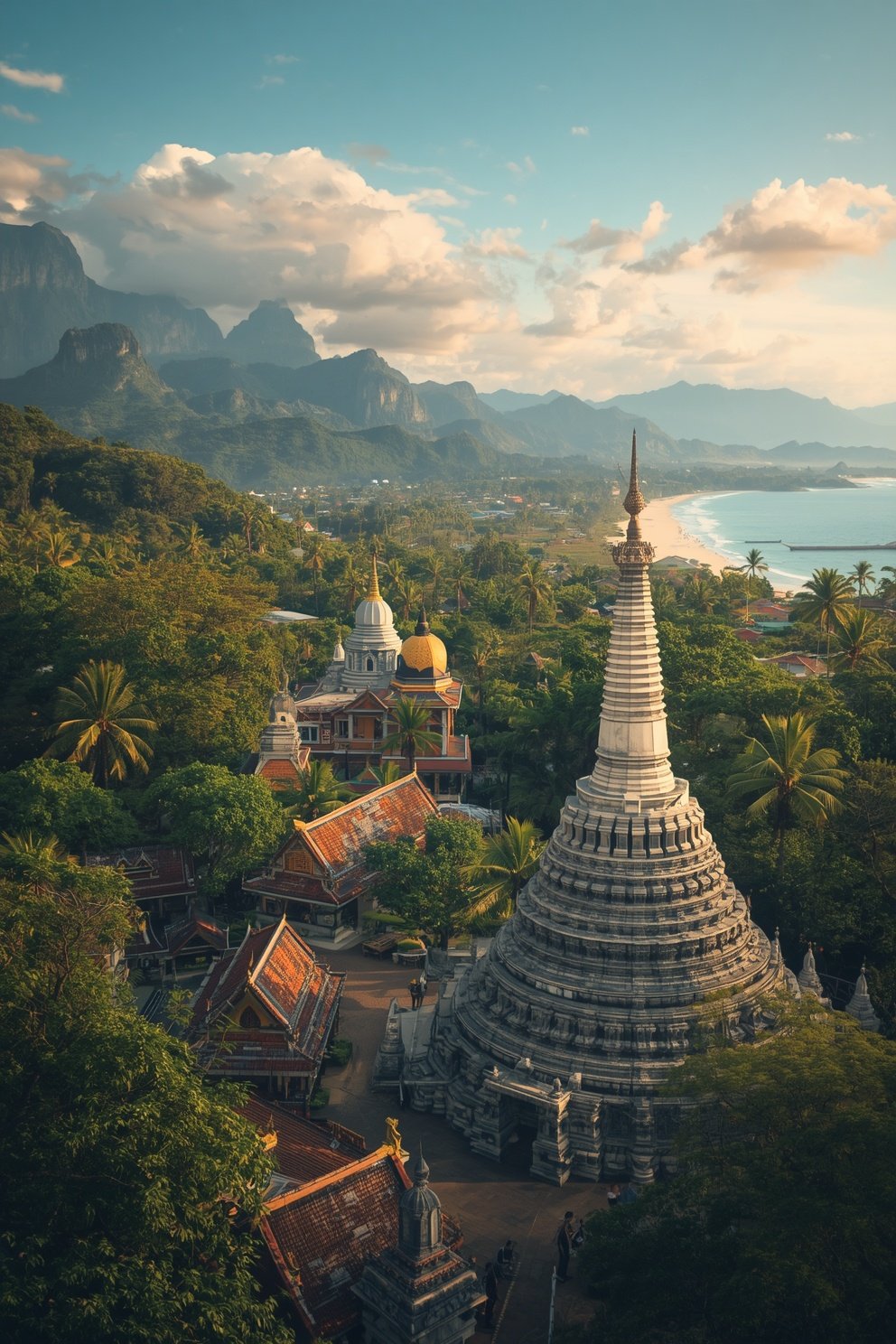
The temples alone — Wat Pho, Wat Arun, the Grand Palace — are worth a full day each if you let yourself really look at them instead of rushing through for the photo.
The Chao Phraya river at golden hour is one of those visual moments I keep coming back to in my memory.
The water turns this deep amber color and you can hear the boats and the distant sound of monks chanting and it’s just — a lot, in the best possible way.
For neighborhoods, I’d tell you to base yourself somewhere near Silom or the Ari area.
Skip the full tourist strip of Khao San Road unless you want the backpacker scene.
It’s fine, it’s fun for a night, but it’s not the real city.
Street food is your best friend here.
Pad see ew from a cart at 11pm is better than most things you’ll eat in a restaurant.
Don’t overcomplicate Bangkok.
Walk, eat, wander, repeat.
Northern Thailand: The Part Most People Sleep On

I almost skipped Chiang Mai on my first trip.
I’m so glad I didn’t.
Chiang Mai is quieter and cooler and has this incredibly warm, artistic energy that Bangkok doesn’t.
The old city is surrounded by a moat and filled with temples and coffee shops and night markets that feel handmade.
I took a cooking class there and I still use what I learned.
The Mae Sa Valley is close and worth a day — waterfalls, rice terraces, hill tribe villages.
It’s lush in a way that feels untouched.
If you have the time, a trek into the mountains for even one or two nights changes the whole texture of your trip.
You go from urban traveler to something that feels more like an explorer.
Chiang Mai is also one of the most digital nomad-friendly cities on the planet, which means the coffee culture is genuinely impressive and the wi-fi is fast basically everywhere.
Not that you should be working.
But it’s good to know.
Plan at least three or four days here.
You’ll probably want more.
Caribbean Paradise Unlocked
From pristine beaches to vibrant local culture, discover the Caribbean’s best-kept secrets with my comprehensive travel guide.
- 120+ Hidden Beach Secrets
- Local Cuisine Guide
- Budget Travel Tips
- Island Hopping Routes
Thailand’s Islands: How to Pick Without Overwhelm

There are dozens of islands in Thailand and choosing one feels impossible at first.
Here’s how I broke it down on my first trip.
Koh Samui is polished and easy — good for people who want beach vibes without roughing it at all.
Koh Phangan is famous for its full moon parties but honestly has some quieter corners that are genuinely beautiful.
Koh Tao is small and ideal if you want to dive or snorkel.
The Andaman side — Krabi, Koh Lanta, the Phi Phi islands — has a completely different look.
The limestone cliffs rising straight out of the water are something you have to see in person to believe.
I went to Koh Lanta on my first trip and it was quieter than I expected, which I ended up loving.
Long stretches of beach, hammocks, cheap seafood grills at sunset.
My honest tip — don’t island-hop too aggressively.
Ferries take time and the journey eats into your days.
Pick one or two islands and actually stay.
Let the beach find its rhythm with you.
Vietnam’s Route: Go North to South (Or South to North — Here’s Why)

Vietnam is long and skinny and you’re going to want to move through it strategically.
Most people fly into either Hanoi in the north or Ho Chi Minh City in the south, then work their way through.
I flew into Hanoi and worked south, which I’d do again in a heartbeat.
Hanoi has this moody, colonial French energy — lakes and old buildings and incredible pho.
It’s not as chaotic as Bangkok, which gave me a second to exhale after a few intense days.
From Hanoi, Halong Bay is the move.
Yes, it’s touristy.
No, that doesn’t make it less spectacular.
Overnight cruises on the bay are genuinely one of the most beautiful things I’ve ever woken up inside.
Then head down to Hoi An.
Hoi An is the kind of town that makes you want to stay for a month.
Lanterns, tailors, ancient streets, banh mi so good you’ll eat it three times in one day.
After Hoi An, Ho Chi Minh City is a completely different energy — faster, more modern, incredibly vibrant.
Vietnam alone could be a whole trip.
Multiple whole trips.
The Food: This is Actually the Whole Point

I need you to understand something about Southeast Asian food.
It’s not just good.
It’s the kind of food that reorganizes your sense of what meals are supposed to feel like.
In Thailand, you’ve got the balance of sweet, sour, spicy, and savory all happening in one bite.
A proper pad thai from a street cart in Bangkok costs almost nothing and tastes like it was made specifically for you.
In Vietnam, the broth-based dishes — pho, bun bo Hue, banh canh — are complex and deep and warming even in tropical heat.
In Bali, the satay and the nasi goreng and the fresh coconut drinks hit differently when you’re sitting with your feet in the sand.
My personal rule of thumb when it comes to eating in Southeast Asia: always eat where the locals eat.
Long line of motorbikes parked outside a tiny place with plastic stools?
That’s your restaurant.
Don’t be scared of street food.
Your gut will adjust.
And the experience of eating it — the smoke, the noise, the communal tables — is as good as the food itself.
Your Ultimate Caribbean Adventure Awaits!
Discover hidden coves, secret beaches, and the best rum punches in the islands. Your insider’s guide to Caribbean paradise.
Get Your Guide Now$15.99Getting Around Without Losing Your Mind

Transportation in Southeast Asia is surprisingly manageable once you stop expecting it to work like home.
Grab is the app you need.
It’s basically Uber for Southeast Asia and it works across Thailand, Vietnam, and most of the region.
It’s cheap, reliable, and takes the haggling out of tuk-tuks.
For longer distances, overnight trains and sleeper buses are genuinely a vibe.
The overnight train from Hanoi to Da Nang was one of my favorite parts of my Vietnam trip — watching the countryside roll by as the sun came up.
Flying between countries is often cheaper than you’d think, especially if you book a few weeks out.
Budget carriers are everywhere and they’re fine for short hops.
Renting a scooter is something a lot of first-timers ask about.
My answer — if you’re comfortable with motorcycles and traffic, go for it.
If you’re not, don’t.
The roads in Southeast Asia have their own logic and respecting that is important.
But as a passenger on a scooter, hire one with a driver for a day.
It’s one of the best ways to see a place.
What to Actually Pack (From Someone Who Over-Packed Twice)

The first time I went, I brought too much.
The second time, I brought half as much and felt completely free.
Here’s my actual list now.
Lightweight shorts and breathable linen shirts are your uniform.
You will sweat.
Accept this early.
One pair of comfortable walking shoes and a pair of sandals covers ninety percent of what you’ll need.
A small dry bag is worth its weight in gold if you’re doing any boat trips or beach days.
A good power bank because outlets aren’t always where you need them.
A buff or lightweight scarf — temples have dress codes and it saves you from having to buy a sarong every time.
Rain jacket or poncho if you’re going during shoulder season.
Sunscreen and bug spray are available everywhere but often more expensive than at home, so bring a good supply.
The biggest thing I’d tell you — pack light, then take one more thing out.
You’ll be doing laundry on the road.
It’s cheap, it’s easy, and it means your bag stays manageable.
Pack like you trust the destination to provide.
It usually does.
Budgeting Without Being Cheap About It

Southeast Asia has a reputation for being budget-friendly and it absolutely is — but I want to be honest about what that actually looks like.
Street food, guesthouses, local transport, and cheap beer can run you shockingly low.
Some people do it on twenty or thirty dollars a day.
But I think the better frame is: it’s affordable enough that you don’t have to cheap out on the things that actually matter.
Splurge on the overnight cruise in Halong Bay.
Book that bamboo bungalow on the beach.
Do the cooking class.
Take the scenic train instead of the cheap flight.
Those are the moments you’ll actually remember.
I usually budget around seventy to a hundred dollars a day all-in when I travel in this region, and that feels comfortable without being extravagant.
It covers a nice guesthouse or occasional boutique hotel, good food, activities, and transport.
The currency exchange is generally straightforward and ATMs are widely available in major cities.
Just check your bank’s international fee situation before you go.
Some banks are way better than others for travelers and it’s worth switching if yours isn’t.
Caribbean Paradise Unlocked
From pristine beaches to vibrant local culture, discover the Caribbean’s best-kept secrets with my comprehensive travel guide.
- 120+ Hidden Beach Secrets
- Local Cuisine Guide
- Budget Travel Tips
- Island Hopping Routes
The Honest Reality: What Nobody Warns You About

Okay, here’s the part the glossy travel content leaves out.
Southeast Asia is incredible.
It’s also intense in ways that can catch you off guard.
The heat is real and it’s relentless.
Some days in Bangkok or Ho Chi Minh City, you’re going to step outside and immediately want to go back inside.
Build that into your planning — midday rest time is not lazy, it’s smart.
Scam culture exists in tourist-heavy areas and it’s worth reading up on the most common ones before you go.
Tuk-tuk drivers offering to take you to a “special shop” is probably the most classic.
Being aware isn’t the same as being paranoid — just trust your gut and you’ll be fine.
Traveler’s stomach is a possibility.
I’ve gotten it once and I’ve been fine every other trip.
Start slow with the street food if you’re nervous, build up, drink water constantly, and pack a basic travel pharmacy kit.
Also — the Wi-Fi situation varies wildly.
Getting a local SIM card at the airport is one of the best moves you can make on day one.
It’s cheap, fast, and it means you’re never lost without Google Maps.
The Feeling You Leave With

There’s a specific thing that happens to you after a few weeks in Southeast Asia.
Your pace changes.
You slow down in ways that stick, even after you get home.
You stop rushing meals.
You start noticing more.
The world feels bigger and simultaneously more manageable.
I came back from my first trip with this quiet sense of confidence that I hadn’t expected.
Like something in me had been recalibrated.
That sounds dramatic but ask anyone who’s done it — they’ll tell you the same thing.
It changes how you see comfort and luxury and what actually matters on a given day.
A beautiful sunset from a twenty-dollar guesthouse porch hits differently when you let it.
If you’re on the fence about booking this trip, this is your nudge.
You don’t have to have everything perfectly planned.
You just have to go.
The rest sorts itself out remarkably well once you’re on the ground.
Trust the trip.