
The first time I saw Lake Powell from a canyon overlook, I genuinely thought my eyes were playing tricks on me.
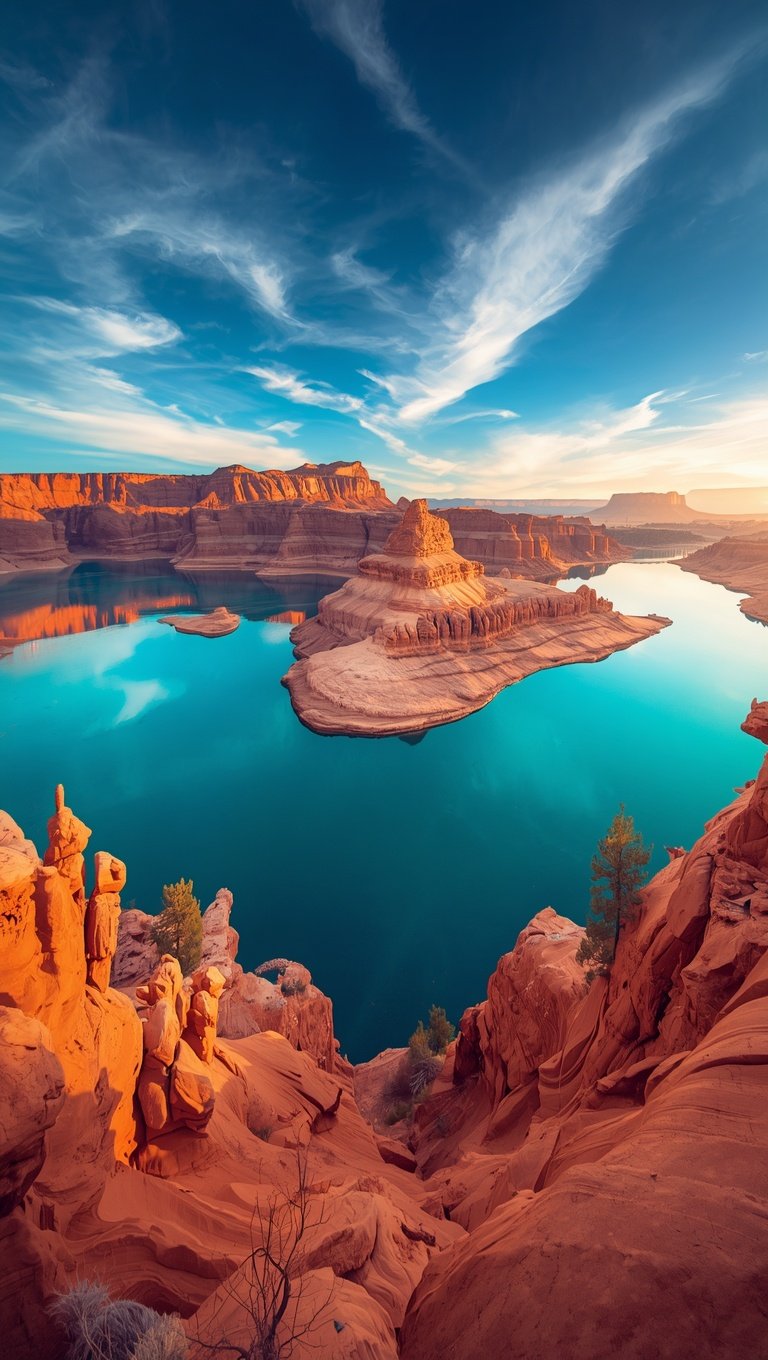
The water was this impossible shade of blue-green — almost turquoise — sitting right in the middle of raw, burnt-orange sandstone.
No green trees.
No soft shoreline.
Just ancient rock and this wild, glassy water stretching as far as I could see.
I remember standing there thinking, “This doesn’t look real. This looks like a screensaver.”
And then the wind hit, warm and dry, carrying that faint earthy smell of desert stone, and I realized — oh yeah, this is very real.
If you’ve been on the fence about making the trip, let me just tell you straight: go.
Here’s everything I wish I’d known before I showed up.
What Lake Powell Actually Is (And Why It’s So Different)

Most people picture a lake as this calm, wooded, peaceful thing surrounded by pine trees and morning mist.
Lake Powell is nothing like that.
And honestly?
That’s what makes it so unforgettable.
It’s a reservoir — formed by the Glen Canyon Dam along the Colorado River — sitting on the border of Utah and Arizona.
But calling it “just a reservoir” feels almost disrespectful once you’ve seen it.
It’s sort of carved into the canyon landscape, with these massive red and orange rock walls rising straight out of the water like nature built its own amphitheater.
The contrast between the warm stone and the cold blue water is visually stunning in a way that photographs honestly can’t capture.
When I was out on a boat for the first time, cruising through one of the narrow slot canyons, the walls towering maybe 200 feet above me on both sides, I felt genuinely small.
Not in a scary way.
In that rare, humbling way that good travel does to you.
So no, it’s not your typical lake trip.
It’s something much wilder than that.
When to Go (My Honest Recommendation)

Timing your Lake Powell trip right makes a huge difference.
Spring — late April through early June — is my personal favorite window.
The temperatures are warm but not punishing.
The crowds haven’t fully arrived yet.
And the light in the late afternoon hits those canyon walls in this deep, amber glow that I still think about.
Summer gets hot.
Like, really hot.
We’re talking triple digits in July and August.
And I know some people love that — jump in the water, stay on the houseboat, don’t think about it.
But if you’re someone who wants to hike, explore, and actually move around?
Summer can feel brutal.
Fall is also a solid option.
September and October cool things down a little, the crowds thin out, and the colors in the canyon walls seem even richer somehow.
Winter is technically possible, but a lot of services shut down and water activities get uncomfortable fast.
My honest tip: if you can swing late May, do it.
The water is warm enough to swim, the days are long, and something about that sweet spot before peak season just feels right.
Getting There and First Impressions

Lake Powell isn’t exactly on the way to anywhere.
That’s sort of part of its charm, you know?
The most common entry point is Page, Arizona — a small town that serves as the main hub for the area.
You can fly into Phoenix or Las Vegas and drive from there.
I drove from Vegas and it took around four hours through some of the most dramatic desert scenery I’ve ever seen.
The moment you start getting close — maybe 30 miles out — the landscape starts shifting.
The flat desert gives way to these big, sweeping rock formations and canyon edges.
And then you crest a hill and suddenly there it is.
That water.
That impossible blue against all that red.
My first impression was just pure silence for about a minute.
I couldn’t say anything.
I just pulled over and stood next to my truck and stared.
If you’re driving with friends, somebody’s going to audibly gasp.
I guarantee it.
Page itself is small and functional.
Not fancy.
But it has everything you need — gas, groceries, gear rentals — and it’s close enough to the water that you don’t feel like you’re missing anything by staying there.

🗼 I Wrote a Book About My Japan Travel Catastrophes!
Before I landed in Tokyo, I thought I was the “Final Boss” of international travel. Spoiler alert: I WASN’T. 😅
🚅 I boarded the wrong Shinkansen and ended up in THE WRONG CITY. I confused locals with my “expert” bowing that was more awkward than accurate. I accidentally stumbled into a high-stakes Kendo practice thinking it was a tourist show. Sound like something you’d do?
“Things I Wish I Knew Before Going to Japan” is your shortcut to avoiding ALL my cringe-worthy mistakes. ✨ Inside, you’ll find practical, LIFE-SAVING tips on etiquette, transport, money, and hidden gems that will save you time, money, and a whole lot of confusion.
Houseboating: The Lake Powell Experience You Can’t Skip

If there’s one thing that defines a Lake Powell trip, it’s houseboating.
And I’ll be real with you — I was a little skeptical before I tried it.
I’m not really a “float around on a slow boat” kind of guy.
I like moving, exploring, doing things.
But houseboating on Lake Powell absolutely converted me.
You rent the houseboat for a few days, load it up with food and gear, and then you just… go.
You cruise into a quiet cove, anchor the boat right up against a sandstone wall, and that becomes your home.
No reservations.
No front desk.
No neighbors unless you want them.
The first morning I woke up on a houseboat and stepped outside to coffee and total silence — just water, rock, sky — I felt this deep, satisfying exhale that I didn’t even know I needed.
The groups I’d say it works best for are families with kids, groups of friends splitting the cost, or couples who want real solitude.
Tip: split the rental cost across 6 to 8 people and it becomes surprisingly affordable per person.
The Best Water Activities on the Lake

Okay so beyond the houseboat, the water itself is your playground.
And there is so much to do out there.
Kayaking through the narrow canyon arms is something I’d recommend to absolutely everyone.
You’re paddling through these slot-canyon passages that are maybe 20 feet wide, with smooth water and these wild, layered walls above you.
I did a solo kayak morning where I just paddled slowly and didn’t talk to anyone for two hours, and it was one of the most peaceful things I’ve ever done in my life.
Jet skiing and powerboating are huge out here too.
The open sections of the lake are massive, and if you like speed, you’ll love it.
Paddleboarding at sunrise — I’m obsessed with this.
The water is glassy, it’s quiet, and the light on the rock walls is just breathtaking.
Swimming is completely free and accessible almost everywhere.
The water is clear and surprisingly refreshing against the desert heat.
And if you’ve got kids with you?
They will not want to leave.
Ever.
One hack I learned: get out early.
By midday, boat traffic picks up and the coves fill in.
Early mornings on this lake are a different world.
Antelope Canyon: The Day Trip You Absolutely Have to Do

Okay, technically Antelope Canyon is not on the lake.
But it’s 10 minutes from Page, and skipping it would be genuinely criminal.
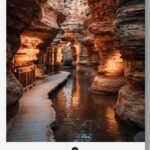
It’s a slot canyon — a narrow, twisting passage carved by flash floods through smooth sandstone — and the light that filters down from the openings above creates these warm, swirling beams that hit the rock in a way that feels almost spiritual.
I’ve seen a lot of things while traveling.
Antelope Canyon genuinely stopped me in my tracks.
The colors shift from deep burgundy to pale gold to orange as you move through, and the curves in the walls are so smooth they almost look sculpted.
There are two sections — Upper and Lower.
I did Upper and loved it, but I’ve heard Lower is actually more dramatic in some ways and less crowded.
You need a guided tour to enter, and I’d strongly suggest booking ahead especially if you’re going during peak season.
Sunrise or midday tours give you the best light beams.
My honest take: even if you’re not a photography person, Antelope Canyon will make you want to take a hundred photos.
It’s just that stunning.
Horseshoe Bend: Worth the Hype?

Short answer: yes.
Absolutely yes.
Horseshoe Bend is this dramatic overlook where the Colorado River makes this perfect, sweeping U-shaped curve around a massive sandstone butte, dropping hundreds of feet below you.
It’s only about a mile hike from the parking area, so basically anyone can do it.
The first time I walked up to that edge and looked down, my stomach dropped a little.
In the best way.
The scale of it is hard to wrap your head around.
The river looks tiny from up there, but you know intellectually it’s a full-sized river, and that disconnect is sort of mind-bending.
Go early.
Like, sunrise early if you can manage it.
The light is softer, the crowds are smaller, and there’s this golden warmth on the canyon walls that disappears once the sun gets high.
Midday is harsh — bright, flat light, and the place gets packed.
I went back a second morning on my last trip just to sit there quietly with coffee and take it in without 200 other people around me.
Totally worth losing the extra hour of sleep.
Where to Stay (Beyond the Houseboat)

If a houseboat isn’t in the cards, don’t worry — you’ve still got solid options.
Page, Arizona has several hotels and vacation rentals that work really well as a home base.
I’ve stayed at a couple of different spots there, and my honest recommendation is to look for places with outdoor space — a patio, a balcony, anything.
You want to be outside as much as possible in this landscape.
There are also campgrounds near the Wahweap Marina and further into the recreation area, and if you like that kind of thing, camping here is spectacular.
Falling asleep under a desert sky with zero light pollution and waking up to silence and sandstone — it’s sort of hard to beat.
For something a little more comfortable, vacation rentals in Page work great, especially for groups.
Glamping options have been growing in the area too, and if I were going with a partner and wanted something a little more special, that’s the direction I’d look.
My tip: wherever you stay, plan to spend as little time indoors as possible.
The whole point of this place is being outside in it.
What to Pack for Lake Powell

This is where I see people go wrong, honestly.
Lake Powell is a desert environment.
And being on the water makes the sun feel even more intense than you’d expect.
Sunscreen is non-negotiable.
And I don’t mean one bottle — I mean pack more than you think you need, reapply constantly, and don’t forget your lips, ears, and the back of your neck.
A wide-brim hat changed my life out there.
I used to resist hats.
Not anymore.
Water shoes are essential if you’re going to be scrambling on rocks or getting in and out of boats.
The sandstone can be rough and slippery.
Polarized sunglasses are huge here.
The light reflecting off the water is intense, and the polarization helps you actually see the color of the water instead of just glare.
Layers for morning and evening — it cools down fast once the sun drops in the desert.
And a dry bag.
Please bring a dry bag.
Your phone, your wallet, your keys — everything needs to be protected when you’re in and out of boats all day.
I also always pack a small waterproof speaker now.
A quiet cove, a houseboat deck, sunset — the soundtrack matters.
🗼 I Wrote a Book About My Japan Travel Catastrophes!
Before I landed in Tokyo, I thought I was the “Final Boss” of international travel. Spoiler alert: I WASN’T. 😅
🚅 I boarded the wrong Shinkansen and ended up in THE WRONG CITY. I confused locals with my “expert” bowing that was more awkward than accurate. I accidentally stumbled into a high-stakes Kendo practice thinking it was a tourist show. Sound like something you’d do?
“Things I Wish I Knew Before Going to Japan” is your shortcut to avoiding ALL my cringe-worthy mistakes. ✨ Inside, you’ll find practical, LIFE-SAVING tips on etiquette, transport, money, and hidden gems that will save you time, money, and a whole lot of confusion.
The Water Level Question (What You Should Know)

Alright, I’m going to be straight with you about something.
Lake Powell has faced some real challenges with water levels over the past decade or so.
At certain points the water has dropped significantly, and that affects things — some coves get shallow, some marinas have had limited access, and a few spots that used to be reachable by boat require more planning now.
Does that mean you shouldn’t go?
Absolutely not.
The lake is still stunning.
Still massive.
Still one of the most dramatic places I’ve ever been.
But it’s worth doing a little research before you go on current marina conditions and what’s accessible.
The Wahweap Marina near Page has historically been the most reliably accessible, so I’d start there.
Some people actually find the low-water landscape interesting in its own way — you can see canyon formations and rock walls that were previously submerged, and it’s sort of eerie and fascinating.
My personal take: go with an open mind.
This place will still blow you away.
Just adjust your expectations to the current conditions rather than old photos you might have seen.
Is Lake Powell Still Worth It?

I get asked this a lot.
Especially now that there’s been so much conversation about water levels and environmental changes.
And my honest answer is yes.
Without a lot of hesitation.
What Lake Powell offers — that combination of desert canyon landscape and open water — doesn’t exist anywhere else in the world quite like this.
It’s not perfect.
Nothing is.
But I’ve been there multiple times now, and every single time I leave with that full, quiet feeling that only certain places give you.
The kind of feeling where you’re driving away and already thinking about when you can come back.
There’s something about the scale of it — the bigness of the canyon, the depth of the water, the openness of the sky — that kind of recalibrates you.
It strips away the noise of everyday life in a way that a regular beach trip or a city weekend just doesn’t.
If you’ve been on the fence, stop overthinking it.
Some places just deserve to be experienced in person.
And Lake Powell is absolutely one of them.