I stood there in the dark, coffee going cold in my hand, waiting for a hole in the ground to erupt.
And when Old Faithful finally let loose, I actually teared up a little.
Not gonna lie, that surprised me.
I’ve seen a lot of stuff on the road, but nothing quite prepped me for how small and amazed Yellowstone makes you feel, all at once.
Before you pay at the gate, check the free national park pass calculator: the $80 pass often costs less.
This isn’t gonna be some dry checklist of “top attractions.”
This is everything I wish someone had told me before I rolled through that park entrance with zero expectations and left completely rearranged.
Grab your coffee.
Let’s get into it.
Old Faithful Will Wreck You (In the Best Way)
I’ll be honest, I walked up to Old Faithful expecting to be a little underwhelmed.

It’s the most famous geyser on the planet, so I figured it’d feel like a tourist trap with a fancy name.
I was so wrong.
When that water shot up into the sky, steam curling off it in the cold morning air, I forgot to even take a photo for the first ten seconds.
I just stood there with my mouth open like an idiot.
And I loved every second of it.
Here’s my tip: don’t just watch the eruption and bounce.
Sit on those benches for a bit afterward, let the crowd thin out, and just breathe it in.
The visitor center nearby is sort of a hidden gem too, and I spent almost an hour in there nerding out over the geology.
If you’re visiting in winter, do yourself a favor and go then instead.
Watching that eruption against snow and frozen trees is a completely different kind of magic, quieter, almost reverent.
My honest recommendation is to check the predicted eruption times posted at the visitor center and build your whole morning around it.
It’s not always exactly on schedule, so give yourself buffer.
The emotional payoff here is simple: you’re watching something that’s been doing this exact same thing for thousands of years, and somehow that makes you feel both tiny and lucky at the same time.
Grand Prismatic Spring Looks Like It Doesn’t Belong on This Planet

I remember rounding the boardwalk corner and just stopping dead in my tracks.
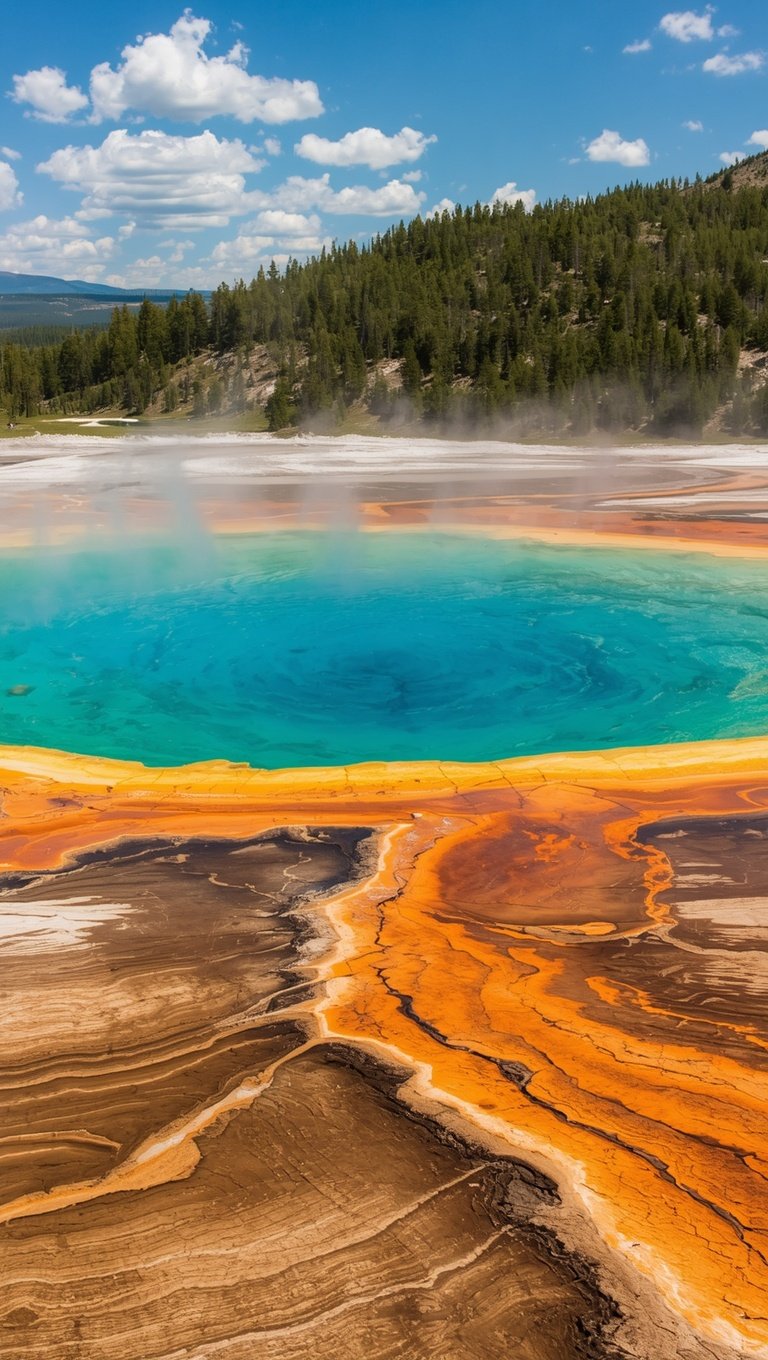
The colors hit me before anything else did, that electric orange bleeding into yellow, then green, then this deep otherworldly blue in the center.
It genuinely looks fake, like someone photoshopped the earth.
But it’s real, and it’s bacteria doing all that color work, living in different temperature zones across the spring.
Kind of wild when you think about it that way.
My tip, and this one matters: go early morning or late afternoon if you want the colors to really pop in your photos.
Midday sun tends to wash things out a bit, at least in my experience.
I also recommend hiking up to the Fairy Falls overlook if your knees can handle it, because seeing the spring from above completely changes the experience.
From up there it looks like a giant eye staring back at you.
A little spooky, honestly, but in the best way.
The steam rising off the surface shifts with the wind, so no two minutes look the same, which is part of why I ended up staying there way longer than I planned.
Stick to the boardwalks, always, both for your safety and for the fragile ecosystem underneath your feet.
This spot is the one that made me stop calling myself a “park person” and start calling myself obsessed.
The Grand Canyon of Yellowstone Humbled Me

I’ve stood at the edge of the actual Grand Canyon in Arizona, so I thought I knew what to expect here.
Nope.
This canyon has its own personality entirely, with these streaky yellow and red walls that practically glow in afternoon light.
The Lower Falls thunder down 308 feet, and you can feel the roar in your chest before you even see the water.
Artist Point is where I ended up sitting for way too long, honestly, just soaking it in with my sandwich getting soggy in my backpack.
If you’re up for it, walk down Uncle Tom’s Trail.
Fair warning, it’s 328 metal steps, and my thighs were not happy the next morning.
But standing that close to the falls, feeling the mist on your face, is worth every burning step.
My personal hack: do the North Rim Trail if you’re short on time or energy, since it gives you multiple viewpoints without demanding much from your legs.
Save the South Rim for a slower morning when you can really wander.
Watch for elk grazing near the rim trails too, they wander closer than you’d expect.
This canyon taught me that “bigger” isn’t always the point, sometimes it’s about color, sound, and how a place makes your chest tighten up a little.

🗼 I Wrote a Book About My Japan Travel Catastrophes!
Before I landed in Tokyo, I thought I was the “Final Boss” of international travel. Spoiler alert: I WASN’T. 😅
🚅 I boarded the wrong Shinkansen and ended up in THE WRONG CITY. I confused locals with my “expert” bowing that was more awkward than accurate. I accidentally stumbled into a high-stakes Kendo practice thinking it was a tourist show. Sound like something you’d do?
“Things I Wish I Knew Before Going to Japan” is your shortcut to avoiding ALL my cringe-worthy mistakes. ✨ Inside, you’ll find practical, LIFE-SAVING tips on etiquette, transport, money, and hidden gems that will save you time, money, and a whole lot of confusion.
Lamar Valley Turned Me Into a Wildlife Nerd Overnight

I did not expect to fall this hard for a valley.
But Lamar Valley, the one rangers call America’s Serengeti, genuinely rewired something in my brain.
I sat in my car at six in the morning, binoculars fogging up from my own breath, watching a bison herd move like a slow brown river across the grass.
And then wolves showed up.
Actual wild wolves, hunting together, and I just about dropped my coffee.
My honest tip is to show up early, like painfully early, between six and nine in the morning for your best shot at seeing predators.
Evenings between four and seven work too, if mornings aren’t your thing.
Bring a spotting scope if you have one, but honestly, the wildlife watchers out there are some of the friendliest people you’ll meet, and most will happily let you peek through theirs.
I made two new friends that way, no joke.
Elk bugling during mating season is a sound I still think about, this haunting, echoing call that carries across the whole valley.
A variation worth trying: drive the valley slow with your windows down, even if you don’t spot anything major right away.
Sometimes the magic is just in the stillness of it all.
Mammoth Hot Springs Feels Like Walking Through a Melting Temple
Okay, this one caught me completely off guard.

I wasn’t expecting white limestone terraces that genuinely look like something an ancient civilization carved by hand.
But nope, it’s all mineral deposits, built up slowly, sometimes two tons a day according to the rangers I talked to.
Walking the boardwalks here felt almost sacred, like I should be whispering.
Some terraces were actively flowing, glossy and wet, while others sat dry and cracked, completely dormant.
My tip: walk both the Upper and Lower Terraces if your schedule allows, because they honestly feel like two different worlds.
I also loved stumbling on elk just casually grazing right there among the formations, totally unbothered by the tourists snapping photos.
If you’re looking for a place to stay overnight, the historic hotel near the springs lets you experience the terraces in shifting light, which I’d call a personal splurge worth making.
Sunrise light on that white stone is something else, all soft pink and gold.
One little hack: go right after a light rain if you can time it, since the wet stone brings out colors you won’t notice on a dry day.
This spot reminded me that Yellowstone isn’t just about drama, sometimes it’s about quiet, strange beauty that sneaks up on you.
Driving the Grand Loop Road Is a Full Day Commitment (Plan For It)
Nobody warned me how much time this loop actually eats up, so let me warn you.

The Grand Loop is a figure-eight road covering 142 miles, and it connects basically every major thing you came to see.
I tried to do it all in one day my first trip, and honestly, I regret that.
My real recommendation, from someone who learned the hard way, is to split it into two sections if you can spare the time.
Do the Lower Loop one day, hitting Old Faithful, Grand Prismatic, and the canyon.
Then save Mammoth, Tower Falls, and Lamar Valley for a separate day on the Upper Loop.
Wildlife jams are half the fun, honestly, cars stopping suddenly because a bison decided the road looked comfortable.
Just embrace it, roll down your window, and chat with your fellow stopped drivers.
My hack for good lighting: time your drive around sunrise or sunset whenever you can swing it, because the whole landscape turns gold and a little dreamy.
Pack snacks and water in the car, since pullouts are everywhere and you’ll want excuses to stop constantly.
I promise you’ll want to pull over more than you think.
Give yourself grace here, this isn’t a race, it’s a slow, winding love letter to the whole park.
Norris Geyser Basin Smells Weird and I Kind of Love It

This one’s not for everyone, I’ll be upfront about that.
Norris is loud, it hisses and bubbles, and it genuinely smells like sulfur the second you step out of your car.
But something about that chaos pulled me in.
This basin holds the hottest thermal features in the whole park, with underground temps pushing past 400 degrees.
Steamboat Geyser lives here too, the tallest active geyser in the world, though its big eruptions are wildly unpredictable, sometimes days apart, sometimes years.
My honest tip: don’t go expecting to see Steamboat blow, treat it as a bonus if it happens.
Walk both the Porcelain Basin and Back Basin, because the colors and textures shift dramatically between the two.
Echinus Geyser erupts more often, so if you want a guaranteed show, hang around there a bit longer.
I found myself just standing still at one point, listening to the ground gurgle beneath the boardwalk, feeling like the earth was breathing.
A little unsettling, sure, but also kind of beautiful in its own strange way.
If sulfur smells bother you, bring a bandana or scarf, works better than you’d think.
This spot isn’t pretty in the classic sense, but it’s honest, raw, and completely unforgettable.
Yellowstone Lake Made Me Want to Buy a Fishing Rod on the Spot

I’ve never really been a fishing guy, but something about this lake changed that.
Yellowstone Lake is the largest high-elevation lake in North America, and the water is so clear you can actually watch trout swimming beneath your boat.
I rented gear near West Thumb and just went for it, clumsy cast and all.
My tip for beginners like me: hire a local guide for your first outing, since they know exactly where the cutthroat trout are hiding.
Late spring and early summer are your sweet spot if fly fishing is your thing, because that’s when insects hatch and the fish get aggressive.
West Thumb itself is worth visiting even if you skip the fishing entirely, since you can see geothermal features glowing right beneath the lake’s surface, which is a genuinely surreal sight.
Make sure you grab a proper fishing license before you cast a single line, the rangers check.
I also spotted an osprey diving for fish while I was out there, which honestly stole the show for a minute.
My personal hack: practice catch and release, it feels good knowing you’re helping keep those native trout populations healthy for whoever visits after you.
This lake taught me patience in a way I didn’t expect a vacation to teach me anything.
Backpacking Here Strips Away Every Bit of “Tourist” From the Experience

If you really want to feel Yellowstone, not just see it, you’ve gotta get off the road.
Over 95 percent of this park is designated wilderness, which honestly blew my mind when I first heard it.
I did a modest two night trip into the backcountry and came out a slightly different person, not gonna lie.
My tip: grab your backcountry permit early, especially if you’re eyeing popular zones, because they do fill up.
The Thorofare region is about as remote as it gets in the lower 48, so that’s a bucket list trip if you’re an experienced backpacker.
If you’re newer to this, start smaller, there are plenty of gentler overnight routes that still deliver that wild, disconnected feeling.
Bear canisters are non-negotiable, learn to use them properly before you head out.
Sleeping under a sky with zero light pollution, hearing something rustle in the brush nearby, gets your heart pounding in a way no hotel room ever could.
I woke up to a bull elk grazing about thirty yards from my tent, and I just laid there frozen, grinning like a fool.
This is where Yellowstone stops being a destination and starts feeling like a place you temporarily belong to.
🗼 I Wrote a Book About My Japan Travel Catastrophes!
Before I landed in Tokyo, I thought I was the “Final Boss” of international travel. Spoiler alert: I WASN’T. 😅
🚅 I boarded the wrong Shinkansen and ended up in THE WRONG CITY. I confused locals with my “expert” bowing that was more awkward than accurate. I accidentally stumbled into a high-stakes Kendo practice thinking it was a tourist show. Sound like something you’d do?
“Things I Wish I Knew Before Going to Japan” is your shortcut to avoiding ALL my cringe-worthy mistakes. ✨ Inside, you’ll find practical, LIFE-SAVING tips on etiquette, transport, money, and hidden gems that will save you time, money, and a whole lot of confusion.
The Night Sky Here Will Make You Feel Impossibly Small (In a Good Way)

I didn’t expect the stars to be a highlight, but here we are.
Yellowstone has some of the darkest skies left in the lower 48, and the first night I looked up, I actually gasped out loud.
The Milky Way stretched across the sky like someone had spilled glitter across black velvet.
My honest tip: bring a blanket and just lay flat on your back somewhere open, Lamar Valley and Hayden Valley both work beautifully for this.
Ranger led astronomy nights are worth checking the schedule for, since they bring telescopes and know exactly where to point you.
I learned to spot Saturn’s rings for the first time in my life that night, and I’m still a little emotional about it.
Steam rising off the geyser basins at night under starlight is a whole separate kind of magic, quiet and a little eerie.
If you’re into photography, bring a tripod and try some long exposure shots, star trails over the landscape make for genuinely stunning shots.
Summer nights are warmer and easier for lingering, while winter delivers crisper, sharper stargazing if you can handle the cold.
I’d call this one of those “you have to experience it yourself” moments, words really don’t do it justice.
Hayden Valley Is Where I Saw My First Wild Grizzly
Nobody prepared me for how emotional this moment would be.

I was driving slow through Hayden Valley at golden hour, and there it was, a grizzly ambling through the grass, completely unbothered by the line of cars pulling over.
My hands were shaking a little, I’ll admit that.
This valley is a little less crowded than Lamar, so I actually recommend it if you want a slightly calmer wildlife watching experience.
Bison graze here in huge numbers too, and the Yellowstone River winds right through the middle, giving you gorgeous reflection shots at sunrise.
My tip: bring a proper zoom lens or just enjoy binoculars, and always stay a safe distance from any bear or bison, no photo is worth that risk.
Rangers often patrol here specifically because of bear activity, so if you see cars stopped, it’s usually worth pulling over slowly and safely.
I also spotted sandhill cranes wading through the marshy sections, which was an unexpected little bonus.
Early morning fog rolling over the valley floor gave the whole scene this dreamy, almost cinematic quality.
If Lamar Valley is the famous sibling, Hayden feels like the quieter one who somehow steals the show once you actually visit.
Winter Yellowstone Is a Completely Different Park, and I Kind of Prefer It

Most people picture Yellowstone in summer, crowded parking lots and all.
But winter Yellowstone is where I fell hardest for this place, honestly.
Snow blankets everything, steam rises even thicker off the geysers against the cold air, and the crowds practically disappear.
My tip: most interior roads close to regular cars in winter, so you’ll need a snowcoach or guided tour to get around, which honestly adds to the adventure.
I bundled up more than I probably needed to and still ended up freezing, so pack layers you think are excessive, then add one more.
Bison with frost coating their fur, trudging through snow, is one of those images that’s stuck with me long after the trip ended.
Wolves are easier to spot against white snow too, if you’re patient and lucky.
My honest recommendation: book your winter lodging and tours well ahead of time, since options shrink dramatically compared to summer.
It’s colder, slower, and quieter, and something about that stillness felt like the park finally letting its guard down.
If you’ve only ever seen Yellowstone in summer, you’re genuinely missing half its personality.
My Honest Planning Tips Before You Go
Okay, let’s get practical for a second, because I made mistakes so you don’t have to.

Visit late spring or early fall if you want fewer crowds and still decent weather, summer gets packed fast.
Book lodging inside the park months ahead, seriously, it books up faster than you’d expect.
My hack: stay just outside the park in a nearby town if inside lodging is sold out, it’s not as inconvenient as it sounds.
Download offline maps before you go, cell service basically doesn’t exist in most of the park.
Pack layers no matter the season, weather here changes its mind constantly.
Bring bear spray if you’re hiking anywhere remote, and actually learn how to use it before you need it.
Fill up on gas whenever you see a station, distances between them are longer than they look on paper.
My personal variation for families: focus on one loop per day instead of trying to cram everything in, kids and adults both burn out fast here.
Give yourself at least four full days if you can, three feels rushed, and this park deserves your patience.
Trust me on this one, you’ll leave already planning your next trip back.