Arches National Park draws millions of visitors each year, but most stick to the same well-worn paths and famous photo spots.
Visiting more than two parks this year?
The free national park pass calculator shows whether the annual pass beats the gate fees.
While Delicate Arch and Landscape Arch are undeniably spectacular, the park holds secrets that go far beyond these iconic landmarks.
These hidden gems and unique experiences will transform your visit from a typical tourist trip into an unforgettable adventure that connects you deeply with one of America’s most stunning landscapes.
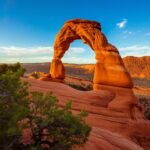
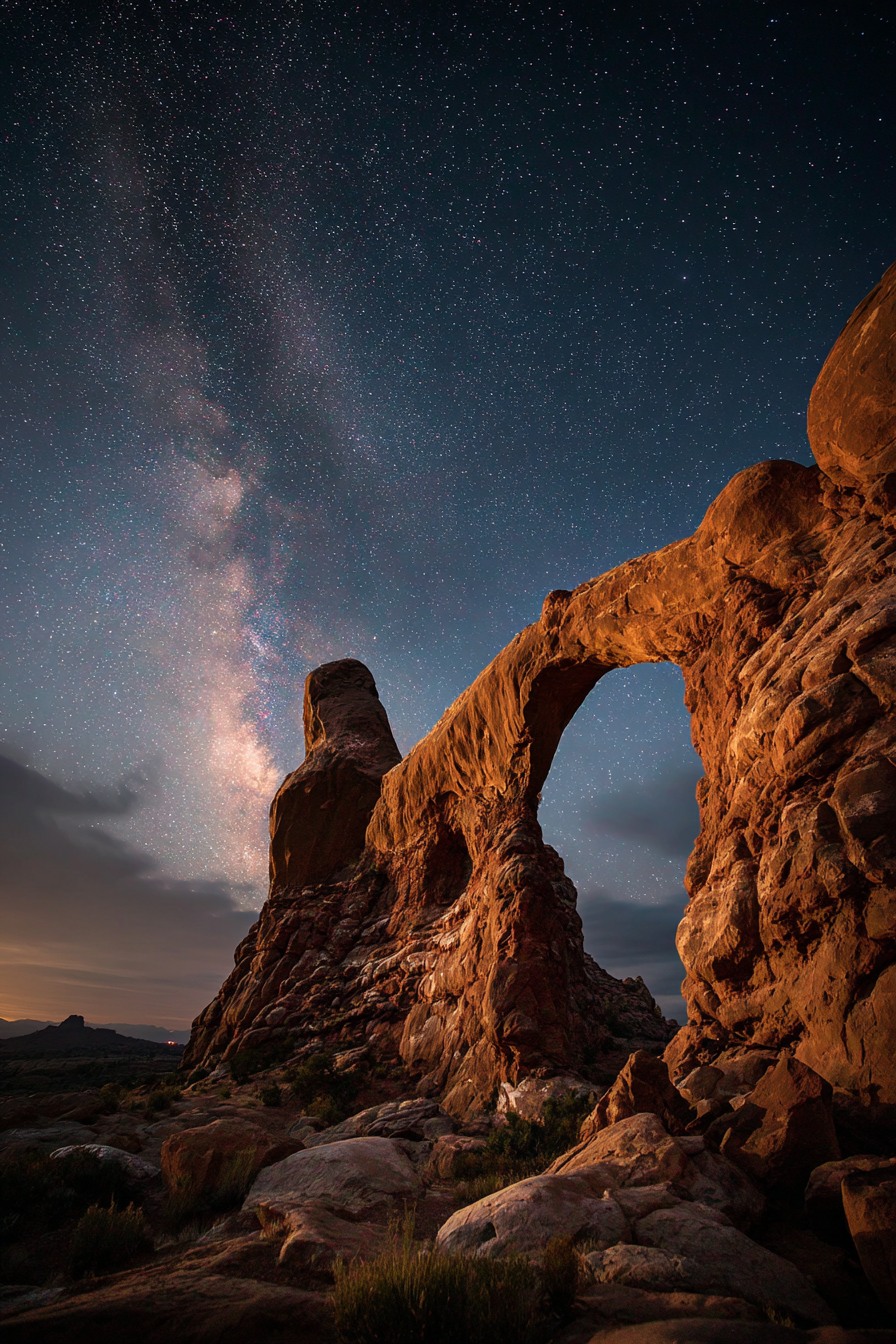
Capture the Milky Way Through Delicate Arch’s Opening

Forget the daytime crowds – the real magic at Delicate Arch happens when darkness falls and the stars emerge.
Planning a night photography session at Delicate Arch puts you in an exclusive club of photographers who understand that this iconic formation becomes truly extraordinary after sunset.
The 1.5-mile hike to reach the arch takes on an entirely different character in darkness, with your headlamp illuminating the slickrock trail ahead.
Arriving at the viewpoint around 10 PM during summer months positions you perfectly for the Milky Way to align with the arch’s opening.
The contrast between the warm sandstone and the cool starlight creates a photograph that captures both the earthly and cosmic beauty of Utah’s desert landscape.
Setting up your camera requires patience and precision, as you’ll need to balance the exposure to capture both the arch’s details and the galaxy’s faint glow.
The silence at night amplifies every sound – the distant call of a coyote, the whisper of wind through the rock formations, and the gentle click of your camera shutter.
Most visitors never experience this profound solitude at one of the park’s most famous locations.
Professional astrophotographers often spend multiple nights here, waiting for the perfect atmospheric conditions and moon phases.
The experience teaches you that Arches National Park transforms completely after dark, revealing a mysterious side that few people ever witness.
Your night photography adventure becomes more than just taking pictures – it’s about connecting with the ancient landscape under the same stars that have watched over these formations for millions of years.
Navigate the Fiery Furnace Maze Like an Explorer

Step into a natural labyrinth where towering sandstone fins create narrow passages that feel like secret corridors through an ancient castle.
The Fiery Furnace requires a guided tour or special permit, making it one of the most exclusive experiences in the entire park system.
Your ranger guide leads you through slot canyons so narrow that you’ll need to turn sideways to squeeze through certain sections.
The name “Fiery Furnace” comes from the way the red and orange sandstone glows like burning embers during sunrise and sunset.
These guided adventures take you scrambling over fallen boulders, ducking under natural bridges, and navigating passages that seem impossible to navigate without getting lost.
The three-hour journey reveals hidden arches that appear suddenly around corners, surprising you with their beauty and scale.
Your guide shares geological stories about how these formations developed over 300 million years, when this area was covered by ancient seas.
The physical challenge of the tour means you’ll be climbing, jumping small gaps, and using your hands to steady yourself on steep rock faces.
Many passages are so well-hidden that you could walk past them multiple times without noticing the entrances.
The intimate group size – limited to just 10 people – creates a sense of exclusive exploration that you simply can’t find on the park’s more accessible trails.
Photographers love the way light filters down through the narrow slots, creating dramatic shadows and highlighting the incredible textures in the sandstone walls.
The tour ends with a sense of accomplishment that comes from successfully navigating one of the Southwest’s most challenging natural mazes.
Witness Sunrise at Landscape Arch in Complete Solitude

Beat the crowds to one of the world’s longest natural arches and experience it in the peaceful silence that makes its grandeur truly overwhelming.
Arriving at the Landscape Arch trailhead before 6 AM puts you ahead of the tour buses and ensures you’ll have this geological marvel almost entirely to yourself.
The 1.6-mile round-trip hike along a well-maintained trail gives you time to watch the desert slowly wake up around you.
Early morning temperatures make the walk comfortable even during summer months, and you’ll often spot wildlife that disappears once human traffic increases.
Landscape Arch stretches an incredible 306 feet across, making it longer than a football field and one of the longest natural arches in the world.
The rock formation appears impossibly thin and delicate, especially when you learn that several large chunks have fallen from it in recent decades.
Your early arrival means you can photograph the arch without other visitors cluttering your shots, creating images that look like you discovered this wonder yourself.
The golden hour light transforms the pale sandstone into warm honey colors that contrast beautifully with the deep blue morning sky.
Geologists estimate that Landscape Arch formed over the past 100,000 years through the gradual erosion of Entrada Sandstone.
The quiet morning atmosphere allows you to truly appreciate the scale and fragility of this natural sculpture that could collapse at any time.
Rangers often mention that the arch continues to change, with small pieces occasionally falling – making your visit a glimpse of something that’s constantly evolving.
The return hike gives you different perspectives of the arch, and you’ll notice details that weren’t visible from the main viewpoint.
Your early morning adventure sets the tone for a day of exploration, giving you a sense of having the entire park as your personal playground.

🗼 I Wrote a Book About My Japan Travel Catastrophes!
Before I landed in Tokyo, I thought I was the “Final Boss” of international travel. Spoiler alert: I WASN’T. 😅
🚅 I boarded the wrong Shinkansen and ended up in THE WRONG CITY. I confused locals with my “expert” bowing that was more awkward than accurate. I accidentally stumbled into a high-stakes Kendo practice thinking it was a tourist show. Sound like something you’d do?
“Things I Wish I Knew Before Going to Japan” is your shortcut to avoiding ALL my cringe-worthy mistakes. ✨ Inside, you’ll find practical, LIFE-SAVING tips on etiquette, transport, money, and hidden gems that will save you time, money, and a whole lot of confusion.
Discover Ancient Rock Art on Hidden Panel Tours

Venture beyond the main trails to find petroglyphs and pictographs that connect you directly with the indigenous peoples who called this landscape home for thousands of years.
The Courthouse Wash Rock Art Panel requires a short off-trail hike that leads to one of the most significant collections of ancient artwork in the region.
These images, created by the Ute, Paiute, and ancestral Puebloan peoples, tell stories that predate European settlement by centuries.
The rock art includes human figures, animals, and abstract symbols that archaeologists believe may represent hunting scenes, spiritual ceremonies, or territorial markers.
Some panels feature images that are over 2,000 years old, created using techniques that involved pecking designs into the dark desert varnish to reveal lighter rock beneath.
Your self-guided exploration requires careful navigation, as these sites are intentionally kept less accessible to protect them from vandalism and erosion.
The Bureau of Land Management maintains detailed maps and guidelines for visitors who want to responsibly explore these cultural treasures.
Professional archaeologists have documented over 1,000 individual rock art elements throughout the Arches area, though many remain unstudied and unprotected.
The artistic styles range from realistic depictions of bighorn sheep and deer to more abstract spiritual symbols that continue to puzzle researchers.
Many panels show evidence of being created over multiple time periods, with newer images overlapping older ones in a kind of ancient graffiti layering.
Your rock art adventure becomes a meditation on human creativity and the deep connection between people and landscape that spans millennia.
The remote locations of these panels mean you’ll often find yourself completely alone with these ancient masterpieces, creating an almost spiritual connection to the past.
Photographing rock art requires special techniques and ethical guidelines to document these irreplaceable cultural resources without causing damage.
Experience Winter Magic When Snow Meets Red Rock

Transform your understanding of desert landscapes by visiting Arches during the rare times when snow blankets the red sandstone formations.
Winter storms occasionally dust the park with snow, creating a stunning contrast that photographers and adventurers treasure above almost any other natural phenomenon.
The snow typically melts quickly, giving you a narrow window to experience this magical transformation that occurs only a few times each year.
Delicate Arch topped with fresh snow creates one of the most sought-after images in landscape photography, combining the warm desert tones with cool winter whites.
Winter temperatures range from surprisingly cold nights to pleasant daytime hiking conditions, making proper layering essential for outdoor adventures.
The crowds disappear almost entirely during winter months, giving you an intimate experience with the park that summer visitors never encounter.
Snow accumulates differently on various rock formations, creating unique patterns that highlight the complex textures and shapes of the sandstone sculptures.
Winter light has a different quality than summer sun, casting longer shadows and creating more dramatic contrasts in your photographs.
The silence of a snow-covered desert is profound, with the white blanket muffling sounds and creating an almost otherworldly atmosphere.
Many trails become more challenging with snow and ice, requiring microspikes or other traction devices for safe hiking.
Wildlife tracks in fresh snow tell stories of the animals that call this desert home year-round, from kit foxes to bighorn sheep.
The park’s visitor center offers winter programs that help you understand how desert ecosystems adapt to cold temperatures and occasional precipitation.
Your winter visit reveals that Arches National Park is not just a summer destination but a place that offers unique beauty throughout the year.
Summit Hidden Towers Through Backcountry Routes

Escape the main trails to reach Tower Arch via the challenging backcountry route that tests your navigation skills and rewards you with incredible solitude.
The backcountry approach to Tower Arch requires a 3.4-mile round-trip hike across unmarked slickrock that demands careful attention to cairns and natural landmarks.
This route takes you through some of the park’s most pristine wilderness areas, where you’ll encounter rock formations that most visitors never see.
Tower Arch itself stands 92 feet tall and offers a completely different perspective than the more accessible arches along paved trails.
The backcountry hike involves scrambling over exposed sandstone, following washes, and navigating around massive boulders that have tumbled from the surrounding cliffs.
Your route-finding skills develop quickly as you learn to read the landscape and identify the subtle markers that keep you on track.
The physical challenge of this hike means you’ll often encounter other experienced hikers who share your appreciation for adventure and solitude.
Tower Arch was named for the tower-like rock formation that stands next to the arch opening, creating a dramatic composition that photographers love.
The approach hike reveals layers of geological history, with different rock formations telling the story of ancient seas, sand dunes, and erosional forces.
Wildlife sightings are more common in these backcountry areas, where animals feel less pressure from human activity.
Your successful navigation to Tower Arch creates a sense of accomplishment that comes from earning your views through skill and effort rather than simply following a marked trail.
The return journey offers completely different perspectives of the formations you passed on the way in, showing you how landscape changes dramatically with shifting light and viewing angles.
This backcountry adventure teaches you that the park’s true treasures often require extra effort and preparation to reach.
Join Ranger-Led Stargazing Programs During New Moon

Participate in special astronomy programs that reveal why Arches National Park is certified as an International Dark Sky Park with some of the clearest night skies in the continental United States.
The park’s remote location and minimal light pollution create viewing conditions that allow you to see over 2,000 stars with the naked eye on clear nights.
Ranger-led stargazing programs use powerful telescopes to show you deep-sky objects like nebulae, star clusters, and distant galaxies that are invisible to urban dwellers.
The new moon phases provide the darkest skies, when the Milky Way appears as a bright river of stars stretching across the entire dome of the sky.
Professional-grade telescopes reveal incredible details in planets like Saturn’s rings and Jupiter’s moons, bringing the solar system into sharp focus.
Your night vision gradually improves during the program, allowing you to perceive fainter stars and cosmic phenomena that weren’t visible when you first arrived.
The rangers share stories about how indigenous peoples used star patterns for navigation and seasonal timing, connecting astronomy to human history.
Light pollution from distant cities like Salt Lake City and Denver is visible as a faint glow on the horizon, highlighting how rare truly dark skies have become.
The International Dark Sky Association recognizes Arches as a Gold-tier Dark Sky Park, putting it among the world’s best locations for astronomical observation.
Advanced photographers often attend these programs to learn techniques for capturing star trails, meteor showers, and other celestial events.
The program includes instruction on using star charts and smartphone apps to identify constellations and track the movement of planets across the night sky.
Your stargazing experience becomes a humbling reminder of Earth’s place in the universe and the cosmic forces that shaped the very rocks you’re standing on.
Hunt for Fossils in Permitted Areas of the Park

Explore designated zones where you can legally search for ancient marine fossils that tell the story of when this desert landscape lay beneath prehistoric seas.
The Entrada and Navajo Sandstone formations contain fossilized evidence of the ancient environments that existed here 150-200 million years ago.
Fossil hunting requires a sharp eye and patience, as the remains of ancient sea creatures are often small and camouflaged against the red rock.
Common finds include brachiopods, crinoid stems, and other marine invertebrates that lived in the shallow seas that once covered this region.
The Morrison Formation, exposed in certain areas of the park, occasionally yields dinosaur bone fragments and petrified wood specimens.
Your fossil hunting adventure begins with learning to recognize the specific rock layers where fossils are most likely to be preserved.
Park regulations allow you to observe and photograph fossils but require you to leave all specimens in place for other visitors and researchers to discover.
Professional paleontologists occasionally conduct research in the park, studying how ancient ecosystems responded to climate changes millions of years ago.
The best fossil hunting occurs during late afternoon when angled sunlight creates shadows that highlight texture differences in the rock surfaces.
Many visitors are surprised to learn that this arid desert landscape preserves evidence of lush prehistoric environments with abundant marine life.
Your fossil discoveries connect you to deep time and the incredible environmental changes that transformed oceans into the modern desert landscape.
The search process teaches you to observe rock formations more carefully, noticing details and patterns that casual hikers typically overlook.
Fossil hunting becomes a treasure hunt that adds scientific discovery to your outdoor adventure, making each rock surface a potential window into prehistoric worlds.
Master Desert Photography Through Professional Workshops

Elevate your photography skills by joining specialized workshops that teach you to capture the unique challenges and opportunities of desert light and landscape.
Professional photography workshops in Arches focus on the technical aspects of shooting in high-contrast desert conditions where bright sunlight and deep shadows can confuse camera meters.
The red sandstone formations require specific white balance adjustments and polarizing filter techniques to accurately capture their vibrant colors without oversaturation.
Golden hour photography in the desert extends longer than in other environments, giving you extended periods of warm, directional light that makes the rock formations glow.
Your instructor demonstrates advanced techniques for bracketing exposures and blending multiple shots to capture the full dynamic range of desert scenes.
Composition workshops teach you to use the park’s natural lines, arches, and rock formations as leading elements that guide viewers’ eyes through your photographs.
The workshop covers specialized gear recommendations for desert photography, including lens filters, tripod techniques, and camera protection from sand and wind.
Advanced participants learn focus stacking techniques for landscape photography that keeps both foreground rocks and distant formations sharp in the same image.
The unique geological features of Arches provide perfect subjects for learning about depth of field, hyperfocal distance, and other fundamental photography concepts.
Post-processing sessions show you how to enhance desert photographs while maintaining natural color accuracy and avoiding over-processed results.
Your workshop experience includes critique sessions where you receive personalized feedback on your images from experienced landscape photographers.
The program often includes sunrise and sunset shooting sessions at multiple locations, teaching you to work efficiently during the brief periods of optimal light.
🗼 I Wrote a Book About My Japan Travel Catastrophes!
Before I landed in Tokyo, I thought I was the “Final Boss” of international travel. Spoiler alert: I WASN’T. 😅
🚅 I boarded the wrong Shinkansen and ended up in THE WRONG CITY. I confused locals with my “expert” bowing that was more awkward than accurate. I accidentally stumbled into a high-stakes Kendo practice thinking it was a tourist show. Sound like something you’d do?
“Things I Wish I Knew Before Going to Japan” is your shortcut to avoiding ALL my cringe-worthy mistakes. ✨ Inside, you’ll find practical, LIFE-SAVING tips on etiquette, transport, money, and hidden gems that will save you time, money, and a whole lot of confusion.
Explore Secret Slot Canyons Through Guided Adventures

Access narrow slot canyons and hidden passages that require local knowledge and technical skills to navigate safely through the park’s most dramatic geological features.
Private guide services offer access to slot canyons that aren’t marked on standard park maps and require advanced route-finding skills to locate and navigate.
These narrow passages were carved by flash floods over thousands of years, creating smooth, curved walls that rise dozens of feet above your head.
The most spectacular slots are only a few feet wide at points, creating dramatic light shows as sunbeams filter down through the narrow openings above.
Your guided adventure includes instruction on flash flood safety and how to recognize dangerous conditions that can develop rapidly in desert slot canyons.
The technical aspects of slot canyon travel include chimneying techniques, stemming across narrow gaps, and rappelling down obstacles using specialized equipment.
Photographers prize slot canyons for their otherworldly light conditions and the abstract patterns created by flowing water over millennia of erosion.
Many slots require you to remove your backpack and push it ahead of you through particularly narrow sections, adding to the adventure and challenge.
The geological processes that create slot canyons are still active, meaning these formations continue to evolve with each flash flood event.
Your guided experience includes education about the hydrology of desert watersheds and how seemingly distant rainstorms can create dangerous conditions in slots.
Advanced slot canyon tours may include overnight camping in hidden alcoves, giving you extended time to explore and photograph these magical environments.
The physical demands of slot canyon exploration provide an excellent workout while challenging your problem-solving skills and courage.
Your slot canyon adventure reveals how water shapes the desert landscape in ways that aren’t immediately obvious from the park’s main viewpoints.
These unique experiences showcase how Arches National Park offers far more than the typical tourist trail.
Each adventure connects you more deeply with the landscape’s geological wonders, cultural history, and natural systems.
Your willingness to explore these hidden aspects of Arches will transform a simple vacation into a meaningful adventure that stays with you long after you’ve returned home.