
On September 9, 2026, the Florida Department of Health in Glades County put out a health alert for Lake Okeechobee.
A water sample taken on September 1 had come back with blue-green algae toxins in it.
Nine days later the department’s Martin County office issued another one, for a sampling site the state calls NES135, after samples taken on September 15.
Both told the public to exercise caution in and around the lake.
So, is it safe to swim in Lake Okeechobee?
Not where you can see a bloom.
The first precaution is blunt: “Do not drink, swim, wade, use personal watercrafts, or come into contact with waters where there is a visible bloom.”
The bigger worry is the water that looks fine.
Blue-green algae may not always be visible as a bloom, but it can still be in the water.
And there are no visual signs that tell you when the algae are making toxins.
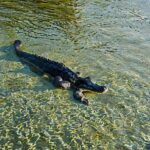
Then there are the alligators: about 33,542 in the lake in 2024, the most in the state.
The standing advice is to swim only in designated swimming areas during daylight hours.
Okeechobee is a lake you fish, boat or camp by, or bike around on top of the dike.
Honestly, it’s not one for a dip.
I’d save the swim for a spring or the beach.

The Lake’s Counties and Color
Five counties touch the lake: Glades, Hendry, Okeechobee, Palm Beach and Martin.
Eating the lake’s fish comes with conditions, too.
The lake’s color isn’t from tannins.
It comes from phosphorus and algae, plus mud the wind stirs up.
Lake Okeechobee in a Few Numbers
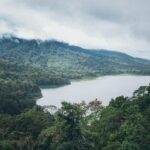
Okeechobee covers 730 square miles.
That makes it the largest lake in the southeastern United States and the second-largest freshwater lake within US borders.
For all that size, it’s shallow: 9 ft on average.
Its name comes from the Seminole words “Oki” (water) and “Chubi” (big).
Big water.
Fair enough.
About 30% of its water falls as rain.
Major tributaries and canals, plus runoff, bring the other 70%.
The major natural tributaries are Fisheating Creek, Taylor Creek and the Kissimmee River.
Around it runs the Herbert Hoover Dike, a 143-mile earthen dam.
About 110 miles of its top make up the Lake Okeechobee Scenic Trail, which you can bike.

More than 6 million people a year visit the lake and the Okeechobee Waterway.
The Army Corps of Engineers pitches it for camping, fishing, biking and relaxing.
Swimming isn’t on that list.
There are eight Corps-managed recreation areas, three campgrounds, five boat ramps, and 22 areas run by other agencies.
One of those is even called Bare Beach, near Lakeport.
But none of them is listed as a swimming area.

If you’re headed that way anyway, the Corps campgrounds take calls: St. Lucie South in Stuart (772-287-1382), Ortona South near Moore Haven (863-675-8400) and W.P. Franklin North in Alva (239-694-8770).
If a lake swim was supposed to be part of a weekend away, my list of romantic getaways in Central Florida is a better place to start.
Here’s the rest, one question at a time.
Lake Okeechobee Toxicity: What the Algae Alerts Mean

Those toxins come from blue-green algae, a type of bacteria that’s common in Florida’s freshwater.
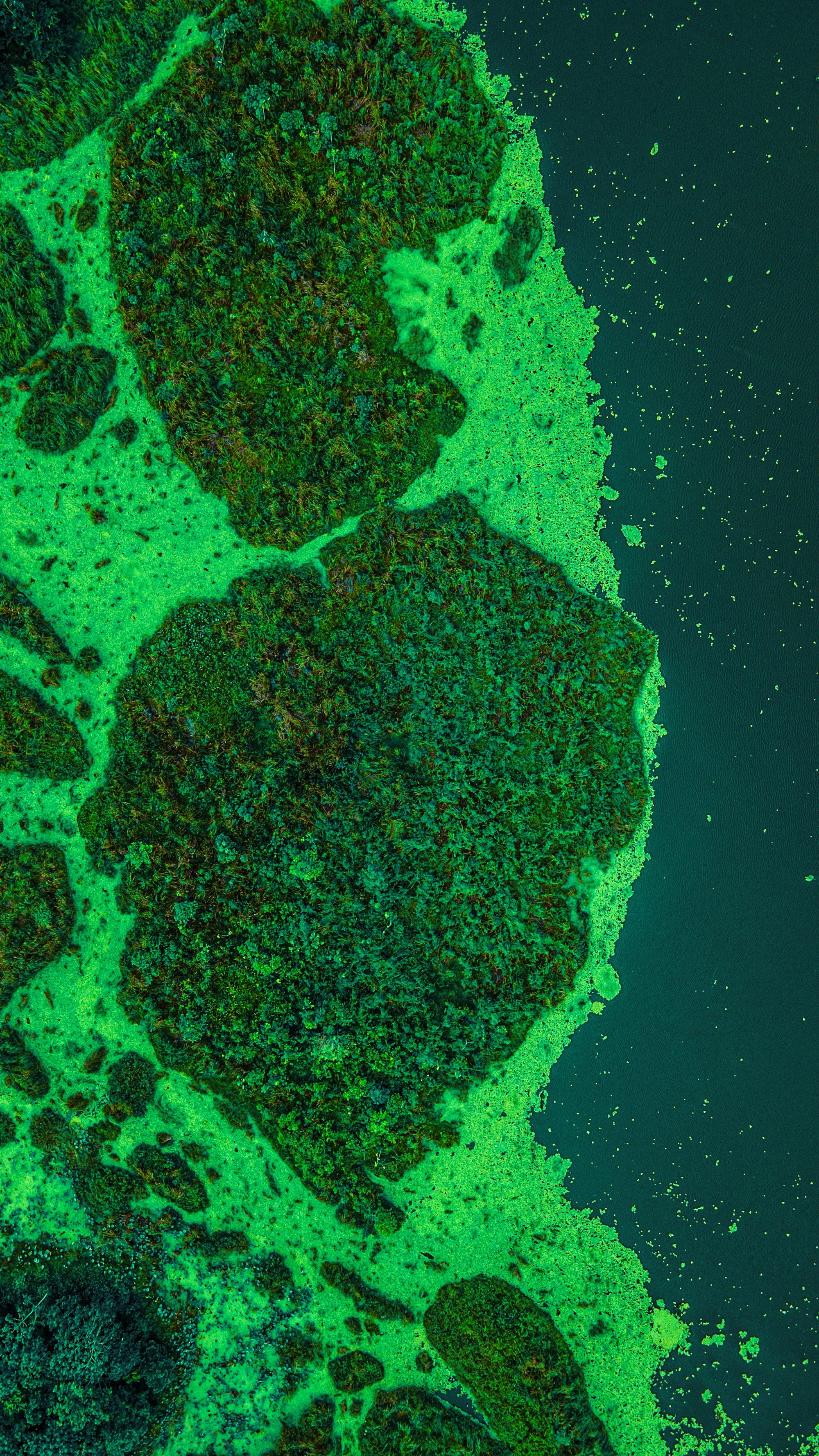
Blooms can look like scum, foam or paint on the surface of the water, in various colors.
They often form floating mats that smell bad, too.
Sunny days, warm water, still water and excess nutrients all feed a bloom.
Blooms can appear year-round but are more frequent in summer and fall, so an off-season trip doesn’t rule one out.
And Okeechobee has the nutrients.
Too much phosphorus is the first of the lake’s three main problems, and high phosphorus means more frequent algal blooms.
Total phosphorus loading runs about 600 metric tons a year.
Here’s why that matters if you swim.
Most problems happen when people swallow water with high toxin levels.
But direct contact with water high in toxins can irritate your skin and eyes, your nose and throat.
So can breathing in airborne droplets of it while you’re swimming or showering.
Children, older people and anyone with a weakened immune system may still be at risk even at low concentrations and should avoid any exposure.
Dogs and livestock count too.
Waters with algae blooms aren’t safe for animals, and boiling the water won’t get rid of the toxins.
This isn’t new.
In July 2024, the Palm Beach County health office cautioned the public about blue-green algae at Pahokee Marina.
It flagged a second lake site, S354, too, while samples were tested.
Okeechobee is hardly the only troubled lake in the country, either; here’s which state has the most polluted lakes.
Who does what?
Florida’s Department of Environmental Protection (DEP) samples reported blooms and posts the results on Protecting Florida Together and its Algal Bloom Dashboard.
County health departments put out the cautions and alerts.
I’d check both the week you go, not a forum post from last summer.
If you touch the water anyway, wash your skin and clothes with soap and water.
Report a bloom to DEP at 1-855-305-3903, symptoms to the Florida Poison Information Center at 800-222-1222, and dead or sick fish to FWC at 800-636-0511.
Lake Okeechobee’s Color: Why the Water Isn’t Clear

If you’re picturing water you can see the bottom through, drop that picture.
It wasn’t always this way.
Before the 1900s, the lake’s water was described as clear and alkaline, with a bottom of clean sand.
Then came the levees and canals, built in the first half of the 20th century.
They confined the lake to a smaller area and ended its overflow along the south shore.
They also made it possible to back-pump excess water from the Everglades agricultural area into the lake.
Over the past 30 years, rising nutrient levels and periodic increases in the lake’s scheduled water levels pushed it nearer a hyper-eutrophic state, which is a mouthful.
In plain English: too many nutrients, and nutrients feed algae.
Mud is the other half.
Out in the central lake, wind frequently mixes bottom muds into the water.
There’s a crescent-shaped ridge of rock about 1 mile offshore along the south and west sides.
When the lake is below 15 ft, that ridge keeps much of the mud out in the middle.
Well above 15 ft, the stirred-up mud can reach the shore.
Then less light gets to the bottom, and the plants that hold sediment in place die back.
The quality of raw lake water, as the Okeechobee Utility Authority’s director put it in 2021, “depends on which way the wind is blowing.”
Storms make it worse.
Hurricanes Frances and Jeanne in 2004 caused brief water-level surges to over 18 ft. Plants near the bottom then died off, with little or no sunlight getting through the cloudy water for a long stretch.
Algae adds its own tint.
Blooms come in various colors, and scum on top is your cue to stay out.
Color isn’t a safety test in either direction, though.
No visual signs show when algae are producing toxins.
It’s warm water, too.
Average water temperatures run from 59°F in January to 86°F in August, and warm water is one of the things that feed a bloom.
And it’s shallow for its size, about 9 ft on average.
If depth is what you’re after, the deepest freshwater lake in Florida is a different place entirely.
Its level moves with the seasons.
High water is kept from October through March and low water from June through August.
During a drought, the level hit a record low of 8.82 ft above mean sea level in July 2007.
That’s the lake’s level, not its depth.
So, Can You Swim in Lake Okeechobee?

You can physically get in.
None of the agencies that run the lake call it illegal, but none of them recommends it either, and here’s why to skip it.
Reason one is the algae.
During an alert you’re told to exercise caution in and around the lake, and a visible bloom means stay out of the water, full stop.
Reason two is the alligators: about 33,542 in 2024.
Second-place Lake Kissimmee had about 16,184, under half as many.
That’s a lot of gators for one lake.
Serious injuries caused by alligators are rare in Florida.
The advice is still to swim only in designated swimming areas during daylight hours, keep your distance from any gator you see, and never feed one.
Reason three: none of the agencies that run the lake points you to a designated swimming area on it.
Put that next to the swim-only-in-designated-areas rule, and it’s a no.
Okeechobee’s gators aren’t a secret.
Here are the lake-by-lake counts in Florida’s most alligator-infested lake, and Okeechobee tops it.
That same question comes up at other big Florida lakes.
If one’s on your route, here’s whether there are alligators in Lake Istokpoga.
If you’ve got a dog along, it counts double: algae toxins and gators are both a pet problem.
Keep your pets on a leash and away from the water, and remember that water with a bloom isn’t safe for animals.
So what do you do there instead?
Camp, fish, bike, relax.
And the 110 miles of trail on top of the dike are part of the Florida National Scenic Trail.
Fishing is the big one.
The lake’s nationally recognized for high quality largemouth bass and black crappie fishing.
If you want to get wet, go somewhere set up for it.
The swims I think are worth the drive, springs included, are in my list of places to swim in Florida’s lakes and springs.
Or head for the coast.
If you’re weighing beaches, here’s Cocoa Beach vs. Palm Beach.
If you’ve already booked a campsite on the waterway, the trip’s still worth it.
Pack the fishing rod, not the swim trunks.
And none of this is only about Okeechobee.
I’d follow the same swimming and bloom advice at any Florida lake.

🗼 I Wrote a Book About My Japan Travel Catastrophes!
Before I landed in Tokyo, I thought I was the “Final Boss” of international travel. Spoiler alert: I WASN’T. 😅
🚅 I boarded the wrong Shinkansen and ended up in THE WRONG CITY. I confused locals with my “expert” bowing that was more awkward than accurate. I accidentally stumbled into a high-stakes Kendo practice thinking it was a tourist show. Sound like something you’d do?
“Things I Wish I Knew Before Going to Japan” is your shortcut to avoiding ALL my cringe-worthy mistakes. ✨ Inside, you’ll find practical, LIFE-SAVING tips on etiquette, transport, money, and hidden gems that will save you time, money, and a whole lot of confusion.
Okeechobee Locks: How Boats Get Through the Dike

First, the wall itself.
Locals built the first embankments around the lake from sand and muck around 1915.
Hurricane tides went over them in 1926 and 1928, and more than 2,500 people died.
Then the Corps built new levees between 1932 and 1938, and the full Herbert Hoover Dike was finished in the late 1960s.
Locks let boat traffic safely pass from one side to the other while the water level stays controlled.
A lock moves your boat from one water level to another, like an elevator.
Most take about 15 minutes to get through, and it’s free during normal operating hours.
The South Florida Water Management District runs six locks on the lake itself: five on the north shore and one, S-310, on the south shore near Clewiston.
On the north shore, S-135 sits at J&S Fish Camp in Martin County.
G-36 at Henry Creek and S-193 at Taylor Creek are in Okeechobee County, and S-127 at Buckhead Ridge and S-131 at Lakeport are in Glades County.
Check before you go.
On November 1, 2026, the district closed the S-193 lock on Taylor Creek to boat traffic until further notice, because it’s being used to move flood waters away from local communities.
Its other north-shore locks stayed open.
All six normally open at 5:30 a.m., and closing time shifts with the season.
If you’re not sure, call the district’s lock tender line at 863-532-8042.
On the Okeechobee Waterway, the locks are the Corps’.
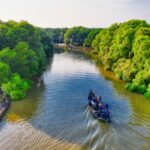
That waterway runs 154 miles from the Atlantic at Stuart to the Gulf at Fort Myers, straight through the lake.
East of the lake it’s the St. Lucie Canal; west of it, the Caloosahatchee River.
So yes, Lake Okeechobee is connected to the ocean, through locks.
It has five navigation locks: St. Lucie (S-80), Port Mayaca (S-308), Julian Keen Jr. (S-77), Ortona (S-78) and W.P. Franklin (S-79).
Water levels drive a lot of what happens at these locks and gates.
You’ll find more on why Lake Okeechobee gets drained and why there’s a berm around Lake Okeechobee in their own pages.
Lake Okeechobee FAQs

Can you eat the fish out of Lake Okeechobee?
Yes, with conditions.
Fillets from healthy fish caught in freshwater lakes with blooms are safe to eat.
Rinse them with tap or bottled water, throw out the guts, and cook the fish thoroughly.
Don’t eat shellfish from waters with algae blooms.
How often you can eat what you catch is its own question.
My page on eating fish from Lake Okeechobee has the health department’s mercury advice for the lake, species by species.
If you fish, the state’s limits apply too.
Only one largemouth bass per angler per day may be 16 inches or longer, within a bag of five.
Black crappie under 10 inches go back, and the bag limit is 25.
How many alligators are in Lake Okeechobee?
About 33,542 in 2024.
That’s built from count and size data, water levels and the odds of spotting a gator, so you’re looking at an estimate, not a head count.
Officials counted 24,678 gators on the lake in a survey from May to August 2023.
That’s an estimate too, and a year older.
Can you drink Lake Okeechobee water?
Not straight out of the lake.
Don’t drink water where there’s a visible bloom, and boiling won’t remove the toxins.
Treated, yes.
Out on S.R. 78 West, the Okeechobee Utility Authority’s surface water plant pumps water from the lake.
Its average daily production of drinking water is 2.78 million gallons, and the utility serves Okeechobee County and part of Glades County.
As of 2021, the water went through a series of filters and an injection of ozone, plus a disinfectant, and raw lake water came out drinkable in about 15 to 20 minutes.
The intake sits close to the mouth of the Kissimmee River, so it draws more river water than lake water.
Is Lake Okeechobee saltwater or freshwater?
Freshwater.
It’s Florida’s largest lake and the second-largest body of fresh water in the contiguous United States.
More on whether Lake Okeechobee is saltwater or freshwater here.
Sources
- Florida Department of Health
- Protecting Florida Together
- Florida Fish and Wildlife Conservation Commission
- South Florida Water Management District
- US Army Corps of Engineers
- Okeechobee Utility Authority
- CBS12
- USA TODAY Network
- News 6
Sources checked early November 2026.