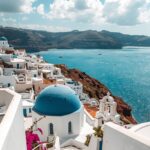
Most people think Greece and they picture Santorini.
The white buildings, the infinity pools, the influencer shots.
And look — Santorini is stunning.
But Crete?
Crete is alive in a way that’s harder to explain.
It’s the largest Greek island, and it shows — not just in size, but in personality.
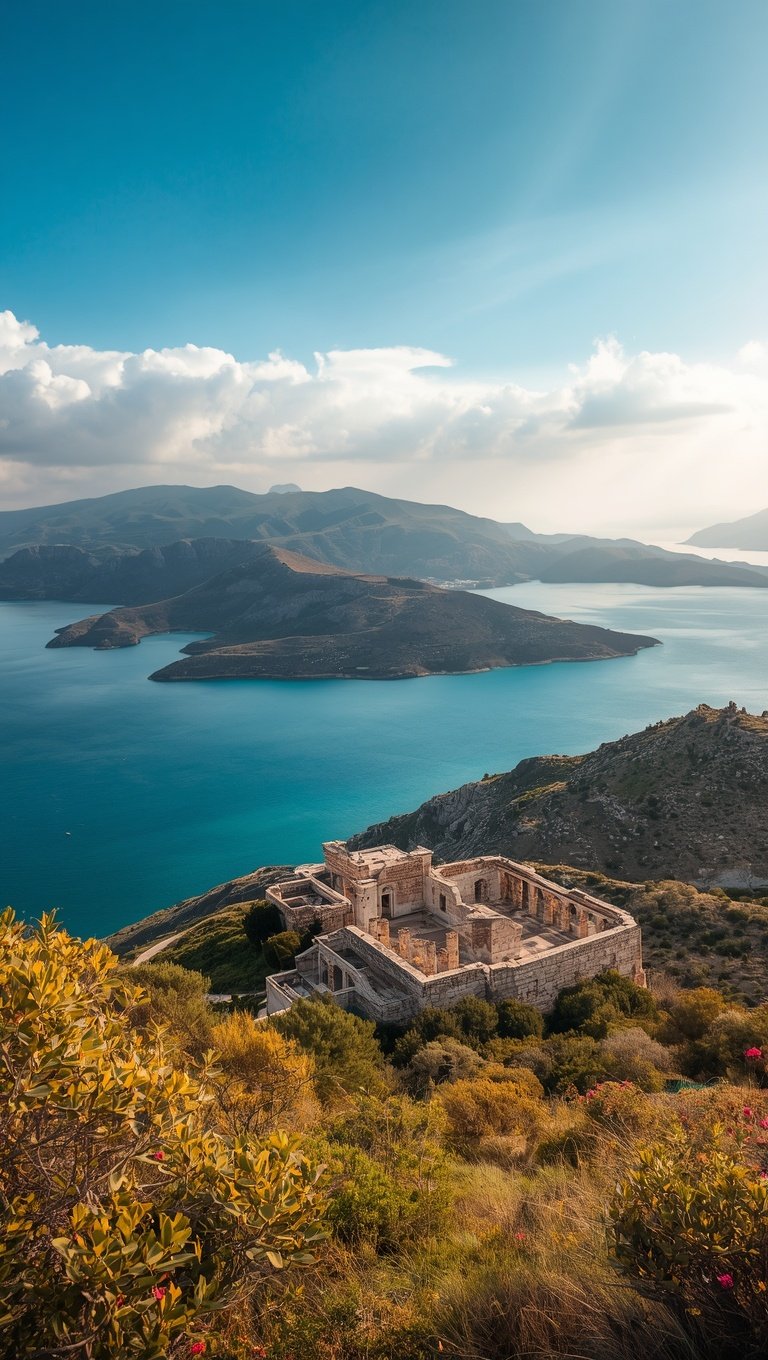
You’ve got mountains, gorges, ancient ruins, beach towns, wine villages, and fishing harbors all existing on the same island, sometimes within an hour of each other.
When I first drove across the island from Heraklion toward the south coast, I kept pulling over just to stand there and look.
The landscape shifts from dry and dramatic to lush and green almost without warning.
It doesn’t feel like one place.
It feels like five countries stitched together by olive groves and really good olive oil.
And the people — warm, proud, and genuinely happy to share their island with you — make the whole thing feel less like tourism and more like a visit to a place that actually wants you there.
When to Go (And When to Skip It)

Here’s my honest take: the shoulder seasons are where it’s at.
Late spring and early fall are, in my opinion, the sweet spots for Crete.
The weather is still warm — genuinely warm — but the crowds thin out in a way that makes the whole experience breathe.
I went in late September, and it was kind of perfect.
The water was still bath-warm from the summer sun.
The tourist rush had slowed down.
Restaurant tables were actually available.
Locals were relaxed and chatty again.
Peak summer — especially July and August — is hot.
Really, genuinely, relentlessly hot.
Temperatures push past 100°F in some areas, and if you’re planning to hike or explore gorges, that heat will wear you down fast.
I’m not saying don’t go in summer — plenty of people love it.
But if you have flexibility, I’d aim for May, June, or September.
You’ll see more, sweat less, and honestly enjoy every single meal more when you’re not melting into the pavement.
How to Get Around Crete Like a Local

I cannot stress this enough.
Renting a car was the single best decision I made for this trip, and I say that as someone who usually avoids driving abroad.
Crete is long — almost 160 miles from east to west — and the best stuff is often tucked into places that buses simply don’t reach.
I’m talking about hidden beach coves down dirt roads.
Mountain villages with no signs in English.
Gorges that you can only get to if you’re willing to park at the side of a road and hike down.
The roads themselves are mostly fine — some of the mountain passes are narrow and a little dramatic, but manageable if you drive slowly and stay calm.
A small SUV or even a standard compact car works well.
And gas stations are easy enough to find in most towns, though I always made sure to fill up before heading into the interior.
Public buses connect the main cities, and taxis are available in tourist areas.
But honestly, the freedom of just pointing the car in a direction and seeing what you find?
That’s half the experience.
Your Ultimate Caribbean Adventure Awaits!
Discover hidden coves, secret beaches, and the best rum punches in the islands. Your insider’s guide to Caribbean paradise.
Get Your Guide Now$15.99The Best Places to Stay on the Island

Crete is big enough that where you base yourself actually matters.
My personal recommendation: split your time between at least two areas if you have more than five days.
I stayed in Chania for the first few nights — and Chania is gorgeous.
The Venetian harbor at sunset looks like something out of a painting, all warm amber light on old stone walls and fishing boats bobbing gently in the water.
The Old Town is walkable and charming without feeling too manicured or touristy.
For the second half of my trip, I moved further east toward the quieter south coast villages.
Places like Loutro — which you can only reach by ferry or on foot — or the area around Plakias offer a completely different vibe.
Slower.
More local.
More real.
If you want luxury, there are beautiful boutique hotels tucked into converted Venetian mansions in Chania.
If you want simple and affordable, small family-run guesthouses in the villages are clean, charming, and usually come with the best breakfast you’ll eat all trip.
The Food: This Is Where Crete Really Gets You

I think about Cretan food more than is probably reasonable.
It’s one of the great culinary traditions of the Mediterranean — and most people don’t even know it.
Cretan cuisine is its own thing, distinct from mainland Greek food in ways that matter.
It’s rooted in simplicity and quality: local olive oil (some of the best in the world), fresh vegetables, wild herbs, and slow-cooked meats.
The dish I keep thinking about is dakos — a twice-baked barley rusk soaked in tomato and olive oil, topped with crumbled mizithra cheese and a drizzle of local honey sometimes.
It sounds modest.
It tastes like it was designed specifically to make you never want to leave.
I also ate my weight in grilled octopus, slow-cooked lamb, and fresh-caught fish at a tiny harbor taverna where the owner brought me an extra plate of fried zucchini because he saw I was eating alone and wanted to make sure I was taken care of.
That’s the kind of thing that happens in Crete.
Avoid the tourist traps near the main harbor fronts — the real spots are usually one or two streets back, with handwritten menus and mismatched chairs.
The Beaches (They Are Not All Equal)

People talk about “the beaches of Crete” like they’re one thing.
They are not one thing.
The north coast has the developed, easy-access beaches — nice, convenient, sometimes crowded in summer.
The south coast is where things get genuinely wild and beautiful.
Elafonissi is the one everyone photographs — the shallow lagoon with the pink-tinged sand.
It lives up to the hype, especially if you get there early in the morning before the crowds arrive.
Balos Lagoon is similarly dramatic — turquoise, shallow, and surrounded by cliffs that drop straight into the water.
But my personal favorite was a beach I found almost by accident, down a badly-marked dirt road on the south coast.
No name on any map.
Just a curve of pebbles, crystal water, and a couple of old fishing boats.
Not a sunbed in sight.
That’s the thing about Crete — for every famous beach, there are three more that nobody’s written about yet.
Drive the coast roads slowly.
Look for the dirt tracks heading seaward.
Be willing to walk a bit.
The reward is almost always worth it.
Caribbean Paradise Unlocked
From pristine beaches to vibrant local culture, discover the Caribbean’s best-kept secrets with my comprehensive travel guide.
- 120+ Hidden Beach Secrets
- Local Cuisine Guide
- Budget Travel Tips
- Island Hopping Routes
Ancient History You’ll Actually Want to See

I’m not usually a “ruins guy.”
I respect history, but I don’t always feel it when I’m standing in a roped-off archaeological site holding a laminated brochure.
Crete changed that for me.
Knossos — the Bronze Age palace complex near Heraklion — genuinely floored me.
It’s considered one of the oldest cities in Europe, and walking through it, you feel the weight of that in a way that’s hard to describe.
There’s something about standing in a room where people lived and cooked and made decisions over three thousand years ago that does something quiet to your brain.
Go early, before the tour buses arrive.
Hire a guide if you can — the context they add makes everything click in a way that solo exploration doesn’t always deliver.
Heraklion’s Archaeological Museum is also one of the best I’ve been to anywhere.
The Minoan artifacts — the bull-leaping fresco, the snake goddess figurines — are stunning.
Plan at least two hours there.
Hiking and the Outdoors

If you have any love for the outdoors, Crete will give you more than you expected.
The Samaria Gorge is the big one — a 10-mile hike through a dramatic gorge that ends at a tiny village on the Libyan Sea.
It’s long.
It’s rocky underfoot.
Your knees will know about it the next day.
But it’s one of the most spectacular walks I’ve done anywhere in Europe.
The scale of the cliffs around you is genuinely humbling.
The hike is one-way — you take a bus to the top, walk down, and catch a ferry from the coast back to civilization.
Plan a full day for it and wear solid shoes.
I made the rookie mistake of wearing semi-worn trail runners and my feet were not happy with me by mile seven.
Beyond Samaria, the White Mountains (Lefka Ori) offer serious mountain hiking for those who want it.
And the E4 trail crosses the entire island if you’re ever crazy enough to do the whole thing.
Shorter day hikes around the Lasithi Plateau or toward the Dikti Cave are beautiful, manageable, and absolutely worth the effort.
The Wine and the Raki Situation

Let’s talk about raki.
Because if you go to Crete and you don’t end up in a small taverna at 11pm with a Cretan man who insists you try his homemade raki, did you even really go to Crete?
Raki (also called tsikoudia) is the local spirit — clear, strong, and served as a gesture of hospitality rather than something you order.
It will arrive at your table without warning.
Often free.
Often followed by a small plate of something — olives, cheese, maybe a slice of honey cake.
You drink it.
You smile.
You say “yamas.”
On the wine side, Crete has a genuinely excellent wine tradition that most people overlook.
The local grape varieties — Vidiano, Vilana, Kotsifali — produce wines that are crisp, mineral, and food-friendly in ways that pair brilliantly with the local cuisine.
I picked up a few bottles from a small winery near Heraklion that I’m still rationing at home, honestly.
Ask at a local restaurant which wines they love and why.
You’ll get a better answer than any app can give you.
Your Ultimate Caribbean Adventure Awaits!
Discover hidden coves, secret beaches, and the best rum punches in the islands. Your insider’s guide to Caribbean paradise.
Get Your Guide Now$15.99Practical Tips I Wish I’d Known Before I Arrived

A few things that would’ve saved me some time:
Download offline maps before you go.
Cell service in the mountain villages and on the south coast roads can be patchy, and you do not want to be navigating blind on a mountain switchback.
Carry cash.
Many smaller tavernas and villages operate cash-only, and ATMs are not always where you need them to be.
Learn three words of Greek.
“Efharisto” (thank you), “Yamas” (cheers), and “Parakalo” (please/you’re welcome) will open more doors than you’d expect.
Cretans notice and appreciate the effort enormously.
Book ferries and popular hikes (like Samaria) ahead in peak season.
They fill up faster than you’d think.
Pack layers for the evenings, even in summer.
Once the sun drops, especially in the mountains, the temperature falls quickly.
And don’t rush.
The biggest mistake people make in Crete is trying to see too much.
Slow down.
Sit longer.
Order another carafe of local wine.
The island rewards patience more than planning.
The Villages Nobody Puts on Their List

This is the section I most want you to pay attention to.
The famous towns — Chania, Rethymno, Heraklion — are genuinely worth your time.
But the villages are where Crete’s soul lives.
Anogia, up in the mountains, is fierce and proud and unlike anywhere else on the island.
It’s known for its musical tradition and its deeply independent spirit — there’s a palpable sense that this village does things its own way and always has.
Archanes, near Heraklion, is a beautiful, well-preserved village surrounded by vineyards with a wonderful local wine scene.
Argiroupoli in the west has Roman ruins tucked inside the village itself — you’ll literally walk past ancient stonework between the coffee shop and the square.
And Spili, with its famous Venetian fountain of lion-head spouts, is the kind of place you stop for a cold drink and stay for two hours because the light is perfect and nobody is in a hurry.
These are the places you’ll tell people about when you get home.
Not Chania’s harbor — though it’s beautiful.
The tiny village where a woman waved you over to try something she’d just baked.
That’s the real Crete.
What Nobody Warns You About (The Honest Stuff)

Okay, real talk.
A few things caught me off guard that I want to be honest about.
The driving on mountain roads can be genuinely nerve-wracking if you’re not used to narrow, winding passes with no guardrails and the occasional flock of goats standing directly in your lane.
It’s manageable.
But go slow and give yourself extra time.
The summer heat in the interior of the island is serious.
Not “wear sunscreen” serious — “drink a liter of water before you leave the hotel” serious.
Hydration is not optional.
Some of the “beach road” signs lead you down tracks that are more goat path than road.
A small SUV handles these better than a low-clearance sedan.
And finally: time works differently in Crete.
Lunch doesn’t start until 2pm at the earliest.
Dinner at 8pm is early.
Some shops close in the afternoon for hours.
Don’t fight it.
Adjust to the rhythm of the island and everything gets more enjoyable.
The slowness isn’t a bug — it’s kind of the whole point.