
None.
Sorry.
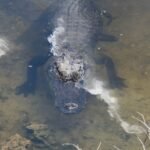
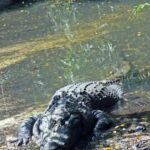
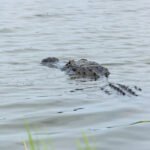
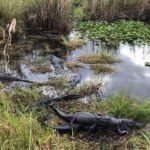
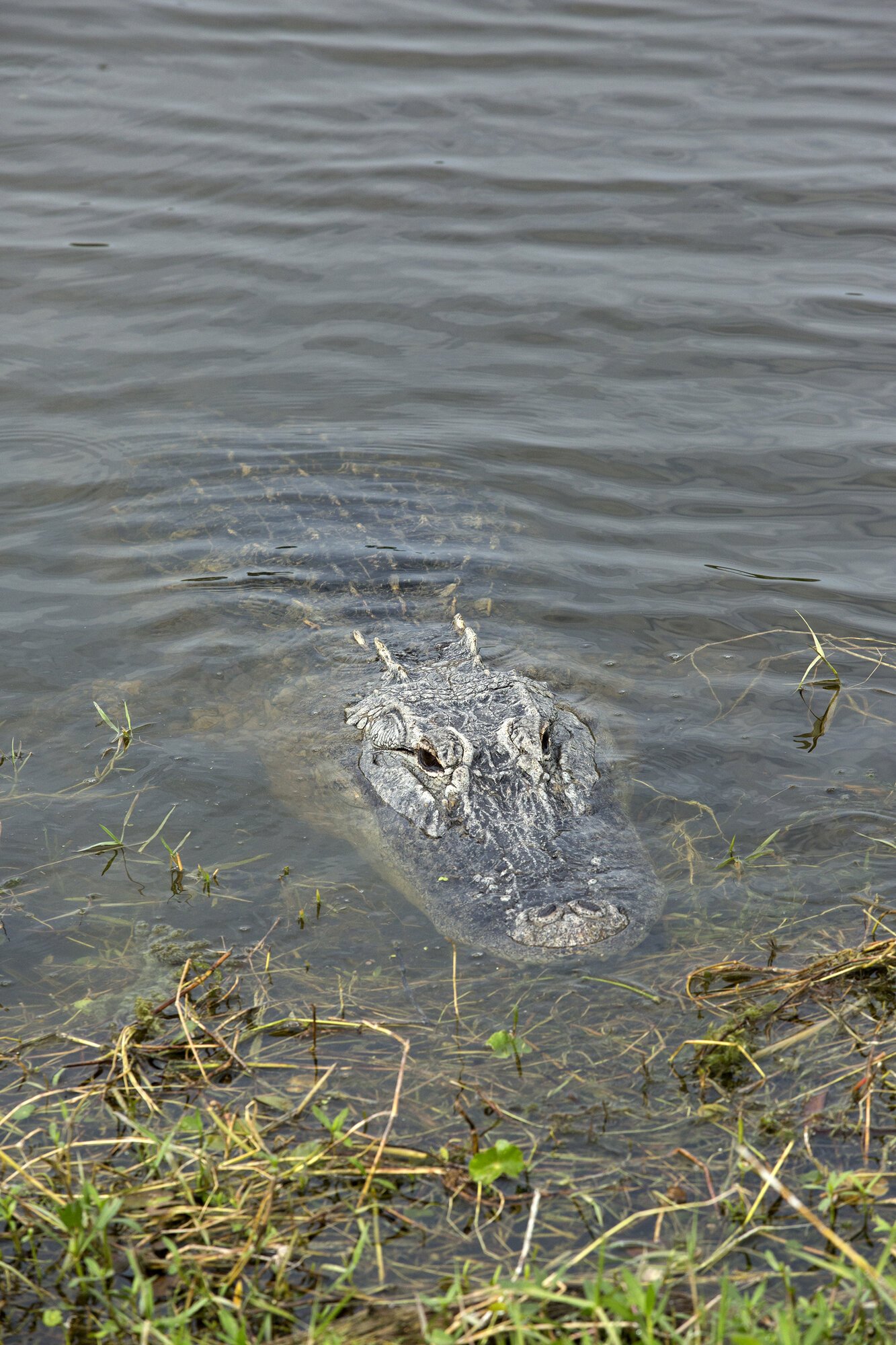
Florida has about 1.3 million alligators, living in all 67 counties and in every wild area that can support them.
So here’s a better question: which water gives you the lowest odds of company, and how do you swim there safely?
That one has a real answer.
It just isn’t a list of secret springs.
No County Gets a Pass

Even the remote parts of the state already have healthy alligator populations, which is why nuisance gators don’t get moved out there.
What they like is plain enough: fresh water lakes and slow-moving rivers, plus the wetlands around them, and sometimes brackish water.
Freshwater swamps and marshes too, and smaller bodies of water.
Small water counts.
The state even offers signs warning that alligators may be in ponds and canals.
Plus, more of us are near the water now.
Florida’s population has grown tremendously in recent years, many residents want waterfront homes, and that can mean more frequent run-ins with alligators.
Want the flip side?
Here’s what part of Florida has the most alligators, plus whether any lake in Florida is alligator-free.
Short version: no.
Not Even the Keys

The Keys look like the obvious exception.
They’re islands, after all, with the Lower Keys alone a hundred-mile stretch running south and west from south Florida.
Turns out the islands have fresh water too.
The National Key Deer Refuge has freshwater wetlands, next to its salt marsh wetlands and mangrove forests.
And alligators bask in the sun on cold mornings and are present year-round at Blue Hole.
In March and April, you may hear them bellowing to attract a mate.
Not exactly a quiet beach town.
I’d treat Blue Hole as a place to look, not a place to swim.
Bring binoculars or a telephoto lens to get up close.
Good advice for a gator, too.
The Ocean Side Is as Close as You’ll Get

Want the lowest odds?
Get in the ocean.
Alligators are primarily freshwater animals and they don’t live in the ocean.
There are many things you may run into on an ocean swim, but alligators probably aren’t one of them.
Notice the “probably,” though.
They can tolerate salt water for a few hours or even days, and they’re occasionally found in brackish water around mangrove swamps (even though they lack the salt-secreting glands crocodiles have).
So a gator by the mangroves isn’t impossible.
It’s just not home.
South Florida adds an asterisk with teeth.
American crocodiles live mainly in south Florida’s brackish and saltwater habitats, the ponds and creeks of mangrove swamps among them.
Recently they’ve moved north within their range, even inland into freshwater areas of southeast Florida.
Here’s whether Florida has crocodiles, alligators or both.
If Biscayne is on your list, can you swim at Biscayne covers it.
For the gator question alone, the surf wins.
And if a board’s more your speed than a swim, here’s whether you can surf all year round in Florida.

🗼 I Wrote a Book About My Japan Travel Catastrophes!
Before I landed in Tokyo, I thought I was the “Final Boss” of international travel. Spoiler alert: I WASN’T. 😅
🚅 I boarded the wrong Shinkansen and ended up in THE WRONG CITY. I confused locals with my “expert” bowing that was more awkward than accurate. I accidentally stumbled into a high-stakes Kendo practice thinking it was a tourist show. Sound like something you’d do?
“Things I Wish I Knew Before Going to Japan” is your shortcut to avoiding ALL my cringe-worthy mistakes. ✨ Inside, you’ll find practical, LIFE-SAVING tips on etiquette, transport, money, and hidden gems that will save you time, money, and a whole lot of confusion.
Wakulla Springs Has Gators and Swimmers, by Design

This is the spring that kills the “gator-free spring” idea.
Wakulla Springs is one of the world’s largest and deepest freshwater springs, and its water holds manatees and alligators and a host of other wildlife.
The riverboat cruise even promises riders views of alligators of all sizes.
And people swim there anyway.
That’s not a contradiction (it’s the system working).
Swimming is allowed only within the designated swimming area near the spring, and that area closes when thunderstorms threaten.
It opens by 8:30 a.m., and closing times move with the daylight.
The water?
Around 69° or 70°.
Neither one is bathwater.
The diving platform’s part of the swim area, and the jump from its 22-foot tower may be one of the most exhilarating things to do in Wakulla County.
Recreational scuba diving isn’t allowed in Wakulla Spring or the swimming area.
Open water diving, for divers with open water certification, happens at Cherokee Sink instead.
More Springs

Ichetucknee and more springs come up for a swim.
None of them is gator-free.
Here’s what to know at each one:
- Ichetucknee Springs. Eight major springs join to make the Ichetucknee River, which runs 6 miles. It’s well known for tubing, and its Blue Hole stays 72°F year-round. Heads-up: the Midpoint Tube Launch has been closed for repairs since March 17, 2026, until further notice. Tubers launch from Dampier’s Landing at the South Entrance until 5 p.m., and tube rentals end at 4:30 p.m.
- Fanning Springs. 72° water, and 65 million gallons of it a day. You may see musk turtles, bass, mullet, freshwater flounder and bowfin, plus manatees during the colder days. Its floating dock has had an improvement project since Aug. 20, 2026. Swimming stays open, but be prepared to be asked to get out at any time.
- Wekiwa Springs. The water is 72° year-round, and the park is just minutes from downtown Orlando. You’ll need your day booked, though. Day-use reservations have been required since Sept. 2, 2025.
- Rainbow Springs. Reservations only here, too. Since April 29, 2026, all visitors need a reservation to enter the park.
- Troy Spring. It’s a 70-foot deep, first-magnitude spring with swimming, plus snorkeling and scuba diving.
People do tube rivers with alligators in them.
Look, Wakulla has a swim area and a boat ride that promises gators.
A crowd tells you a place is popular.
It doesn’t tell you it’s empty.
Picking a spring?
Our list of places to tube in Florida state parks and the post on Florida’s top swimming springs go deeper.
What Actually Lowers Your Odds

The rules are short.
I’d follow them to the letter:
- Swim only in designated swimming areas during daylight hours, and without your pet. Alligators are most active between dusk and dawn.
- Keep a safe distance if you see one.
- Keep your pets on a leash and away from the water’s edge, since they often resemble alligators’ natural prey.
- Never feed an alligator. It’s illegal and dangerous. When fed, alligators can lose their natural wariness and learn to associate people with food.
For the record, the risk is small.
Serious injuries caused by alligators are rare in Florida.
From 2012 to 2022, the state averaged eight unprovoked bites a year serious enough to need professional medical treatment.
Rare isn’t never.
The potential for conflict always exists, and that’s the line I’d keep in my head at any freshwater edge.
If a gator worries you, call the Nuisance Alligator Hotline at 866-FWC-GATOR (866-392-4286).
Generally, a gator counts as a nuisance if it’s at least 4 feet long and believed to pose a threat to people, pets or property.
A smaller one in your pool or on your porch?
Same number.
And don’t handle one, even a little one.
The bites can result in serious infection, and handling one is illegal.
If you want a Florida swim with the lowest gator odds, go with the ocean.
If it has to be fresh water, I’d go with a state park spring’s designated swim area, in daylight, booked ahead where the park needs it.
Leave the dog at home.
It isn’t gator-free, but nothing here is.
Still planning?
Here’s more on gators and Florida water, plus a few other reads:
- Should I Worry About Alligators in Florida?
- Florida’s Most Alligator-Infested Lake
- Is It Safe to Swim in Lake Okeechobee?
- Are There Alligators in Fort Pierce?
- The Wildlife of Ichetucknee Springs
- Is Florida the Only State With Publix?
- Fishing and Kayaking on the Little Miami River
- Can You Go to the Top of the Empire State Building for Free?
Sources
- Florida Fish and Wildlife Conservation Commission
- NOAA’s National Ocean Service
- National Park Service
- US Fish and Wildlife Service
- Florida State Parks
Sources checked early November 2026.