
Florida’s springs have a party trick: the water comes out of the ground at about 72 degrees Fahrenheit and stays there.
July, January, doesn’t matter.
In summer that feels like walking into an air-conditioned room.
In winter, with a cold front sitting over the peninsula, it can feel almost warm until you climb out and the wind finds you.
The most famous winter spring in the state closes to swimmers for the cold months, because that same 72-degree water is where the manatees go to escape the cold.
So the question isn’t which springs are warm.
It’s which ones will actually let you in, and that changes by the week.
Start With the Number: 72 Degrees, and What It Feels Like
That number shows up all over the state.
Ichetucknee’s Blue Hole stays at a constant 72 degrees Fahrenheit year-round, Wekiwa’s water is a refreshing 72 all year, Ginnie’s seven springs hold 72 degrees all year, and Devil’s Den’s cave spring keeps the same constant 72.
Seventy-two degrees Fahrenheit is about 22 Celsius.
Think of a lap pool that nobody bothered to heat (not cold, just honest).
Fine for a swim, a little sharp for the first 30 seconds, and then you adjust.
What changes in winter is everything around the water: the air, the wind, the walk from the car, and the long, wet minute after you get out.
So plan for the exit, not the entry.
The cold lives on the bank, and honestly the wind is worse than the water.
Blue Spring Is Famous, and Closed to Swimmers Right Now
This is the first one most people think of, and it’s the one to skip if you want to get wet.
But it’s still worth a look.
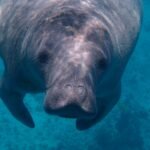
Blue Spring State Park, near Orlando, has the most famous winter crowd in Florida: manatees.
The park says that from mid-November to March, hundreds of manatees fill the spring run to get out of the cold.
The count has climbed a long way since 1970, when researchers tracked 14 in the run.
By 2023 it hit a record 729.
That’s the reason the water is off limits to people.
The park says swimming season runs from April 1 to November 14, so from now until spring the run belongs to the manatees.
You can still go and watch, and in my view it’s worth the trip on a cold morning.
There are boardwalks, a webcam if you want to check the crowd first, and guided boat cruises on the river.
Two things to know before you drive over:
- Since July 15, 2026, every day-use visitor needs a reservation to get in.
- The park frequently reaches capacity and may temporarily close, so a reservation isn’t an excuse to show up late.
Entry is $6 per vehicle.
The French Landing boat ramp and the canoe and kayak rentals have been closed since November 2, so a paddle isn’t on the table either.
Ichetucknee’s Blue Hole: The Winter Snorkel
If I were picking a single spring to swim in this month, it’d be Blue Hole at Ichetucknee Springs State Park, near Fort White in north Florida.
The park’s own page says the Blue Hole stays at a constant 72 degrees year-round and can be “an all-season experience,” and that you can snorkel it.
The park itself is built around eight major springs that join to form a 6-mile river.
The upper stretch inside the park is a National Natural Landmark, and the park suggests paddling it in the cooler months.
In summer the river is better known for tubing.
The park is open every day from 8 a.m. to sunset and costs $6 per vehicle.
A few things have changed lately: the Midpoint Tube Launch has been closed for repairs since March, and tubers launch from Dampier’s Landing at the south entrance until 5 p.m., with tube rentals ending at 4:30.
In winter, that hardly matters: fewer people tube in January, and the water’s calmer for it.
A snorkeler gets a clear view of the spring bottom, and the 72-degree water doesn’t care what the calendar says.

🗼 I Wrote a Book About My Japan Travel Catastrophes!
Before I landed in Tokyo, I thought I was the “Final Boss” of international travel. Spoiler alert: I WASN’T. 😅
🚅 I boarded the wrong Shinkansen and ended up in THE WRONG CITY. I confused locals with my “expert” bowing that was more awkward than accurate. I accidentally stumbled into a high-stakes Kendo practice thinking it was a tourist show. Sound like something you’d do?
“Things I Wish I Knew Before Going to Japan” is your shortcut to avoiding ALL my cringe-worthy mistakes. ✨ Inside, you’ll find practical, LIFE-SAVING tips on etiquette, transport, money, and hidden gems that will save you time, money, and a whole lot of confusion.
Wekiwa and Rainbow: Springs Near the Big Cities
Two state parks are close enough to a metro area that you can go for a morning and be home for lunch, once you’ve booked.
Wekiwa Springs State Park is in Apopka, minutes from downtown Orlando.
The park invites you to swim in the crystal clear spring, where the water is 72 degrees all year, and it has trails and rents canoes and kayaks.
Reservations have been required for day-use entry since September 2, 2025.
Entry is $6 per vehicle.
Book first, then pack.
Rainbow Springs State Park in Dunnellon, southwest of Ocala, is the other one worth a look.
Swimmers get “sapphire-blue” water.
Two things to know before you drive.
Every visitor has needed a day-use reservation since April 29, 2026.
And the parking lot is being renovated through February 4, 2027, so parking is limited.
I’d call the park the day before a cold-weather swim and ask whether the swimming area is open that day.
A phone call costs nothing.
And it beats a locked gate.
Madison Blue and Manatee Springs: North Florida Swimming Holes
Further north, two other state parks are worth knowing, and they cost very little to get into.
Madison Blue Spring State Park, between Lee and Jasper, is a first-magnitude spring that’s popular for swimming, and for cave diving among divers with cave certification.
It won a USA Today vote for the No. 1 swimming hole in the country.
The headspring flows down a 150-foot run to the Withlacoochee River, and the run is “ideal for swimming.”
Entry is $4 to $5 per vehicle.
Large RVs aren’t recommended, since there’s little room to turn around.
It fills up, too.
The park often closes at capacity between 10 a.m. and 3 p.m. on weekends and holidays, and waiting in your car by the side of the road gets a citation.
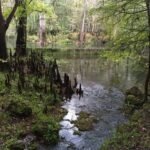
Manatee Springs State Park, near Chiefland, has an 800-foot boardwalk through a cypress forest and a first-magnitude spring that releases about 100 million gallons of water a day.
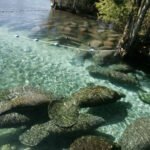
As the name suggests, manatees show up in the cooler months.
Swimming is listed among the park’s activities, but with manatees in the water I’d confirm the day’s rules with the park before you pack the car.
Entry is $6 per vehicle.
The waterfront restroom has been closed since January 14, 2026, and the ranger station and waterfront picnic area have been under construction since October 6, so plan to change somewhere else.
If you want a longer list of options up north, the Panhandle springs guide covers a lot of ground, and the Florida Springs Finder sorts them by what you want to do.
Private Springs: Ginnie and Devil’s Den
Two privately run springs stay open through most of the cold months, and they have their own rules.
Ginnie Springs sells day passes online.
Its seven springs are 72 degrees all year, and you can float, paddle, camp, or dive if you’re certified.
Campers have to be 18 or older unless they’re with a parent or legal guardian, who needs proof of guardianship, and a government ID is required.
Devil’s Den is a different kind of place.
It’s a spring inside a 120-foot-wide cave, with fossils on the walls.
There’s no general swimming: access is limited to snorkelers and certified scuba divers, and you need a reservation.
It closes at 1:30 p.m. on Thanksgiving and Christmas Eve and is closed on Christmas Day.
No sunscreen is allowed, to protect the fish and turtles.
Anyone under 18 needs a parent on site or a notarized consent form.
Both advertise 72-degree water all year.
Check each site’s hours for the cold months and today’s prices before you go.
Pack for the Exit, Not the Water
The water is the easy part.
The cold hits you on the bank, and a carry-on-size bag covers it:
Plan the swim for the warmest hours, but get to any park that fills up before the gate does, and keep the first swim short.
If the drive is long, plan the swim for the early afternoon and a late lunch on the way home, so you’re never sitting in damp swimsuit weather waiting for a table.
Nobody needs a prize for staying in the longest.
Seriously.
And because winter is the off-season for swimming here, you may have a long bank to yourself, though the line at a busy weekend gate can still eat a morning.
If you’d rather stay dry, the kayak springs list and the guide to the clearest water in Florida cover the paddling side.
Check Before You Drive: What’s Closed Right Now
Spring rules change often, and each park posts its own notices.
These are the ones to double-check right now:
One more rule, for the big manatee town.
At Crystal River National Wildlife Refuge, manatee season runs November 15 through March 31.
In Kings Bay the refuge asks you to watch from the surface and never start contact.
It bans chasing, cornering, feeding, riding, holding or standing on a manatee, and it bans diving down onto a resting or feeding one, touching one, or separating a mother from her calf.
Look, don’t touch, and keep your distance.
If you’re comparing the two big manatee towns, the Crystal River vs Homosassa guide lays it out.
Which Spring Fits Your Winter Day
The short version: Ichetucknee’s Blue Hole for the cleanest swim, Wekiwa if you’re in Orlando and booked ahead, and Blue Spring just to watch the manatees.
Ginnie if you want a private park with day passes sold online, and check its hours before you go.
Whatever you pick, look up the park’s page the morning you leave.
It takes two minutes, and it can save you a two-hour drive to a closed gate.