When I first heard about Nantes, I shrugged.
Another French city with old buildings and croissants, right?
But then I spent three days there last spring, and it completely rewired how I think about European cities.
This place doesn’t scream for attention like Paris or Nice.
It just quietly does its own weird, creative thing.
One minute you’re standing inside a mechanical elephant the size of a building.
The next, you’re sipping wine on an island that used to be shipyards.
Nantes feels like someone took industrial grit, mixed it with wild imagination, and then casually tossed in some of the best food I’ve had in France.
So here’s what I actually did there—the stuff that made me want to stay longer.
Ride The Giant Mechanical Elephant (And Yes, It’s As Wild As It Sounds)

Most people see photos and think it’s Photoshop.
Nope.
The Grand Éléphant is a 40-foot-tall walking machine that carries up to 50 people on its back.
I climbed aboard on a drizzly afternoon, feeling slightly ridiculous.
Then this thing started moving—gears grinding, trunk spraying water at kids below—and I got it.
It’s part carnival ride, part moving sculpture, part fever dream.
You’re high enough to see across the old shipyard district, and the whole experience feels like stepping into a Miyazaki film.
The Machines of the Isle of Nantes aren’t just tourist traps.
They’re living art.
After the elephant, I wandered through the workshop where they’re building even crazier creatures—a giant heron you can actually fly in is coming soon.
I stood there watching welders and artists collaborate, and it hit me: this is what happens when a city decides to be playful instead of precious.
Go early morning or late afternoon to avoid school groups.
And yeah, ride the elephant.
Your inner kid will thank you.
Tap to Explore These Beauties
See my ideas in action 👇 Tap any image to explore full details.
Wander Île De Nantes Like You Own The Place

This island used to build ships.
Now it builds experiences.
I rented a bike and just… rode.
No map, no plan.
Past graffiti-covered warehouses turned into galleries.
Through parks where locals were doing tai chi at sunset.
Along the Loire River, where the light hits the water in that specific golden way that makes you stop and stare.
Île de Nantes is where the city experiments.
There are weird public art installations everywhere—giant rings you can swing on, colorful sculptures that make no sense but somehow work.
I grabbed a sandwich from a food truck near the old cranes (they’re painted now, part of the landscape) and ate it sitting on a dock.
Nobody rushed me.
Nobody cared.
The whole island feels like controlled chaos in the best way.
It’s industrial and green, polished and raw.
If you want to understand what makes Nantes different from other French cities, spend an afternoon here.
Just ride, walk, get a little lost.
That’s the whole point.
Explore Château Des Ducs De Bretagne (But Skip The Crowds)

Yeah, it’s a castle.
But it’s not your typical Loire Valley postcard situation.
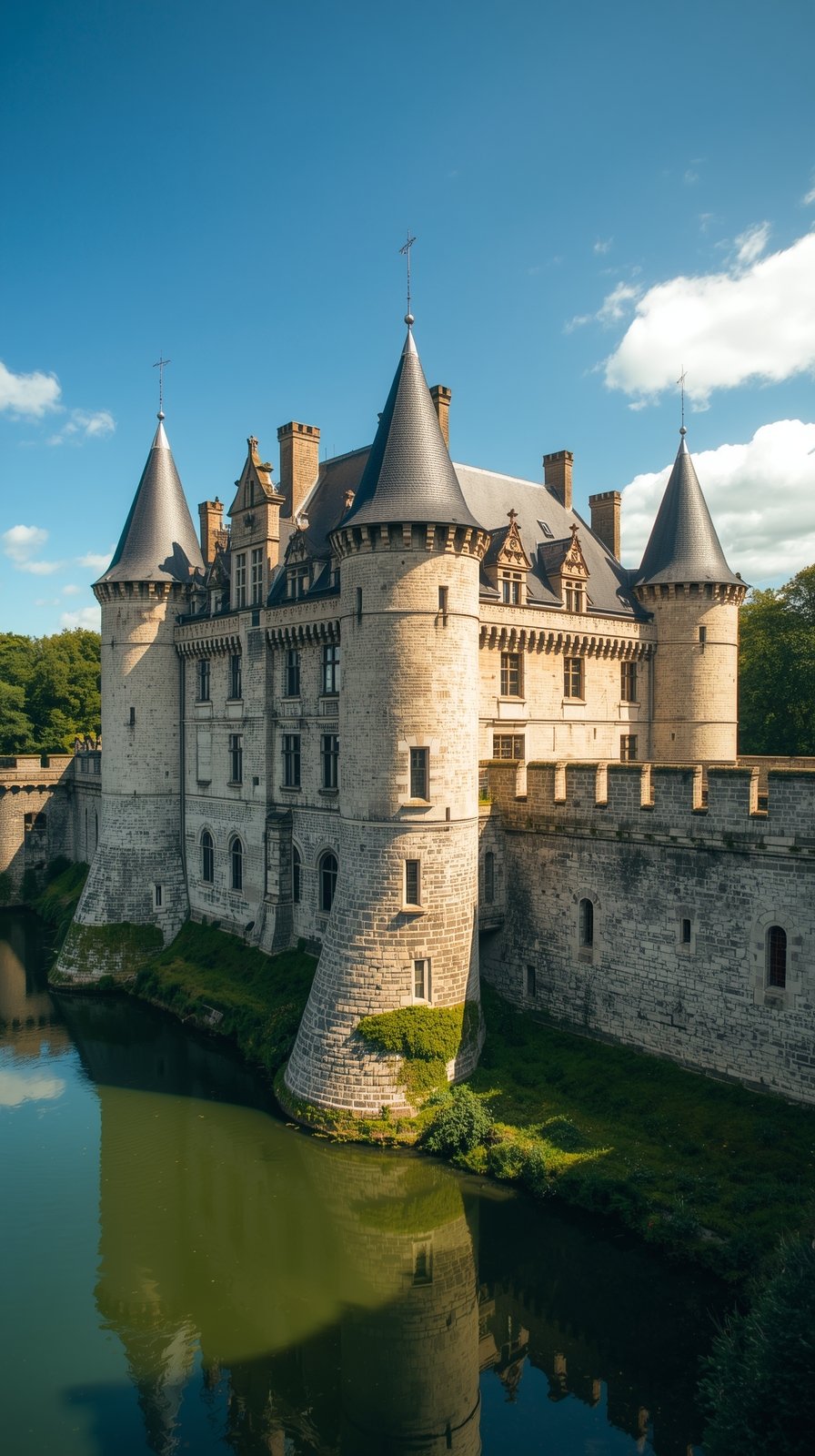
This fortress sits right in the city center, surrounded by a moat that’s now a peaceful walking path.
I went on a Tuesday morning when it was nearly empty.
Walked the ramparts alone, looking down at the courtyard where dukes once schemed.
The views over Nantes from up there?
Underrated.
You can see the cathedral spires, the modern buildings, the way old and new crash together here.
Inside, there’s a museum about Nantes’ history—and they don’t sugarcoat the ugly parts.
The city’s role in the slave trade gets serious space and honest treatment.
I spent longer than I expected, reading stories, looking at artifacts.
It’s heavy stuff, but important.
Here’s my move: visit the castle, then grab a coffee at one of the cafés just outside the walls.
Sit in the square and watch people.
The contrast between medieval stone and modern life happening right there feels very Nantes.
Go before 10 AM if you want it quiet.

🗼 I Wrote a Book About My Japan Travel Catastrophes!
Before I landed in Tokyo, I thought I was the “Final Boss” of international travel. Spoiler alert: I WASN’T. 😅
🚅 I boarded the wrong Shinkansen and ended up in THE WRONG CITY. I confused locals with my “expert” bowing that was more awkward than accurate. I accidentally stumbled into a high-stakes Kendo practice thinking it was a tourist show. Sound like something you’d do?
“Things I Wish I Knew Before Going to Japan” is your shortcut to avoiding ALL my cringe-worthy mistakes. ✨ Inside, you’ll find practical, LIFE-SAVING tips on etiquette, transport, money, and hidden gems that will save you time, money, and a whole lot of confusion.
Get Lost In Passage Pommeraye (The Most Beautiful Shopping Arcade You’ve Ever Seen)

I’m not a shopping guy.
But this 19th-century arcade stopped me cold.
Three levels of curved staircases, ornate railings, and glass ceilings that flood everything with natural light.
It’s like someone built a palace and then decided to put shops in it.
I walked through twice, just gawking at the architecture.
There are small boutiques, a couple of bookstores, a chocolate shop that smells insane.
But honestly, the building itself is the attraction.
The way the levels connect, how light plays off the old ironwork, the sense that you’ve stepped into another era—it’s all just beautiful.
And it’s free to wander through.
I ended up buying a book I didn’t need just because the setting felt too perfect not to participate.
This is one of those spots where you realize Nantes has style baked into its bones.
It’s not trying to be grand like Paris.
It just is, quietly and confidently.
Visit in the afternoon when sunlight comes through the ceiling.
Bring your camera.
You’ll want to remember this one.
Eat At Marché De Talensac (And Actually Talk To The Vendors)

Farmers markets are everywhere in France.
But this one hit different.
Maybe because I showed up hungry and curious on a Saturday morning.
The smell of roasting chickens mixed with fresh herbs and cheese—I was gone.
I bought weird stuff I’d never heard of just because the vendor’s enthusiasm was infectious.
A type of butter that tasted like grass and salt in the best way.
Tiny strawberries that were almost purple they were so ripe.
Bread still warm from someone’s oven.
But here’s what made it special: people actually talked to me.
Not the polite tourist-vendor transaction.
Real conversations about food, about cooking, about why this apple is better than that apple.
My terrible French didn’t matter.
Enthusiasm is a universal language.
I made a whole meal from market ingredients back at my Airbnb that night.
Nothing fancy—cheese, bread, tomatoes, wine.
Best dinner of the trip.
Go early, bring a bag, and don’t be shy about asking questions.
The food here is stupid good, and the people are proud to share it.
Visit LU Tower And Factory (For Cookies And History)

The LU biscuit company started here.
Those little butter cookies with the scalloped edges?
Yeah, those.
The old factory is now a cultural center called Le Lieu Unique.
I went expecting a corporate museum.
Instead, I found an industrial space that hosts art shows, concerts, weird performances, and a bar where locals hang out.
The building itself is gorgeous—all exposed brick and iron beams.
There’s still a weird magic in walking through a space that used to make cookies for the entire country.
They kept some of the original machinery as decoration.
I grabbed a coffee at the ground-floor café and watched people drift between an art installation and a debate about urban planning.
Only in France, right?
This place represents what Nantes does best: takes something old and industrial, respects its history, then fills it with new life.
Also, you can still buy LU cookies at the gift shop.
I brought home three boxes.
Check their event schedule online before you go—sometimes there are free exhibitions or performances.
Take The Ferry Across The Loire (It’s Stupidly Scenic)

Nantes has a public ferry system called Navibus.
For the price of a regular bus ticket, you can cross the Loire River.
I took it just to take it.
No destination, just wanted to be on the water.
The city looks completely different from the middle of the river.
You see the bridges, the islands, the way Nantes spreads out on both banks.
There were commuters with bikes heading home from work.
Tourists with big cameras.
A couple of old guys just riding back and forth, killing time.
It took maybe ten minutes.
But something about moving across water, even for a short trip, just hits different.
You slow down automatically.
I ended up on the other side in a neighborhood I wouldn’t have explored otherwise—quieter streets, small restaurants, locals walking dogs.
Then I took the ferry back.
Best two euros I spent in Nantes.
Try it at sunset if you can time it right.
The light on the river is something else.
Discover Jardin Des Plantes (Not Just Another Botanical Garden)

I almost skipped this.
How special could another garden be?
Turns out, very.
Jardin des Plantes in Nantes is 17 acres of plant collections, hidden pathways, and weird sculptures.
But what got me was how locals use it.
This isn’t a preserved museum garden.
People picnic here, read books under trees, let their kids run wild.
I found a section with giant sequoias that made me feel tiny.
A greenhouse with plants from places I’ve never been.
Benches tucked into corners where you could sit and just breathe.
The whole place feels generous.
Like the city is saying: here, have some beauty, no charge.
I spent two hours there on my last afternoon, not really doing anything.
Just walking slowly, sitting occasionally, watching light filter through leaves.
It was exactly what I needed before heading back to reality.
Go without expectations.
Bring a book or just your thoughts.
Let the garden be whatever you need it to be that day.
Experience A Night At Le Lieu Unique’s Bar

After visiting during the day, I came back at night.
Completely different vibe.
The bar at Le Lieu Unique isn’t fancy.
It’s in the old cookie factory’s boiler room—rough walls, industrial lighting, long tables.
But the crowd is what makes it.
Artists, students, older locals who’ve been coming for years.
Everyone just… mingles.
I ended up in a conversation with a graphic designer and a retired teacher about French wine regions.
Neither spoke much English.
My French is embarrassing.
Didn’t matter.
We figured it out with hand gestures and laughter.
The drinks are reasonably priced (rare in Western Europe these days).
Sometimes there’s live music or a DJ.
Sometimes it’s just people talking.
This is where you meet actual Nantes, not tourist Nantes.
The people who live here, who love this city for real reasons.
Show up after 9 PM.
Order whatever local beer they recommend.
Be open to random conversations.
That’s where the magic lives.
🗼 I Wrote a Book About My Japan Travel Catastrophes!
Before I landed in Tokyo, I thought I was the “Final Boss” of international travel. Spoiler alert: I WASN’T. 😅
🚅 I boarded the wrong Shinkansen and ended up in THE WRONG CITY. I confused locals with my “expert” bowing that was more awkward than accurate. I accidentally stumbled into a high-stakes Kendo practice thinking it was a tourist show. Sound like something you’d do?
“Things I Wish I Knew Before Going to Japan” is your shortcut to avoiding ALL my cringe-worthy mistakes. ✨ Inside, you’ll find practical, LIFE-SAVING tips on etiquette, transport, money, and hidden gems that will save you time, money, and a whole lot of confusion.
Walk The Green Line (Voyage À Nantes)

Every summer, Nantes paints a green line through the city.
You follow it, and it takes you to art installations, historical spots, and surprises.
I’m usually skeptical of these touristy treasure hunt things.
But this one works.
The line wanders through neighborhoods I wouldn’t have found otherwise.
Past street art that changes every year.
Through parks and along the river.
Some installations are profound.
Some are just goofy.
I found a giant zipper sculpture connecting two buildings.
A musical playground where you could make sounds by touching different elements.
A tiny garden built inside an old phone booth.
The whole thing felt less like a tour and more like the city showing off its personality.
And you can do it at your own pace.
Stop for coffee when you want.
Duck into a side street if something catches your eye.
It’s self-guided adventure without the pressure.
The green line runs roughly May through September.
Grab a map at the tourist office or just look down and follow the paint.
Eat Crêpes At A Hole-In-The-Wall (Not The Tourist Traps)

Nantes is in Brittany region territory.
Which means crêpes are serious business here.
Forget the places with menus in five languages near the main squares.
I found my spot because I got lost and hungry.
Tiny place, maybe six tables, woman making crêpes in the window.
I pointed at what someone else was eating.
She nodded.
Five minutes later, I had a buckwheat galette with egg, cheese, and ham that made me reconsider every crêpe I’d eaten before.
The edges were crispy, the center was soft, everything was perfectly balanced.
I ate slowly, savoring it, trying to figure out what made it so damn good.
Maybe it was the quality of ingredients.
Maybe technique.
Maybe it was just that this woman had been making them for thirty years and knew exactly what she was doing.
I went back the next day for a dessert crêpe with salted caramel.
Worth every calorie.
My tip: wander the residential neighborhoods north of the city center.
Look for places locals line up at.
Trust your gut and your nose.
Drink Wine At A Natural Wine Bar

Nantes has embraced the natural wine movement hard.
I’m not a wine snob, but I appreciate when something tastes alive instead of manufactured.
I found a small bar near the cathedral one evening.
The kind of place with no sign, just a door and some chalkboard writing.
Inside: exposed stone walls, mismatched furniture, maybe 20 people.
The bartender asked what I liked.
I said I had no idea.
He poured me something orange (not rosé, actually orange wine).
It tasted like summer fruit and earth and something I couldn’t name.
We talked about where it came from—a small vineyard three hours away, biodynamic farming, wild fermentation.
He was passionate but not pretentious.
Just genuinely excited about good wine.
I stayed for three glasses and some cheese.
Met some locals who gave me restaurant recommendations I actually used.
Natural wine bars aren’t just about the drinks.
They’re about the people who gather there—curious, open, ready to talk about flavors and life and whatever else comes up.
Look for places with minimal signage and extensive by-the-glass options.
Trust the staff’s recommendations.
You’re there to discover, not to order what you already know.