
There’s a specific kind of quiet that hits you when you pull off the highway, cut the engine, and realize there’s absolutely nothing around you except mountains.
No notifications.
No deadlines.
Just wind, rock, and sky so wide it feels almost offensive.
That was me, somewhere between two parks I’d been putting off visiting for years, wondering why on earth I waited so long.
This itinerary is what I built from that trip — and honestly, from several road trips before it — stitched together into something I’m genuinely proud of.
It’s not perfect.
But it’s real.
My Starting Point: Why a Road Trip Beats Flying Into the Parks

I’ll be straight with you — flying into a gateway city and busing into a national park is fine.
Before you pay at the gate, check the free national park pass calculator: the $80 pass often costs less.
But it’s not this.
When you drive, you feel the landscape change under your wheels.
The elevation climbs slowly.
The trees get thicker, then thinner, then disappear entirely.
The air smells different at 8,000 feet than it does at sea level, and you only know that if you drove up yourself.
When I planned my first serious national parks road trip, I gave myself two extra driving days that weren’t tied to any specific park.
Those turned out to be some of my favorite days of the whole trip.
You stop at a pullout because something looks interesting.
You find a gas station that also sells the best beef jerky you’ve ever tasted.
You get a little lost and find a back road that’s more beautiful than anything on the map.
Flying skips all of that.
And all of that is sort of the whole point.
My Suggested Route Structure (West Is Best for First-Timers)

If you’re planning your first serious national parks road trip, I’d genuinely start in the American West.
The parks are more concentrated, the drives between them are dramatic and interesting, and the infrastructure for road trippers is pretty solid.
My go-to backbone route runs roughly through Utah, Arizona, and Nevada — with flexibility built in on both ends.
You can start in Las Vegas or Salt Lake City depending on your flights, and the parks slot in almost naturally between those two cities.
The rough shape of it looks something like this: arrive, grab your rental or prep your own vehicle, spend a recovery night in a real bed, then head out early the next morning.
Don’t try to rush into your first park on arrival day.
That’s a rookie mistake I made once, and I was too tired to actually appreciate anything.
Give yourself a buffer night.
Stock up on snacks, water, and a good playlist.
Then go.

Your Ultimate Caribbean Adventure Awaits!
Discover hidden coves, secret beaches, and the best rum punches in the islands. Your insider’s guide to Caribbean paradise.
Get Your Guide Now$15.99Zion National Park: My First Stop, Always
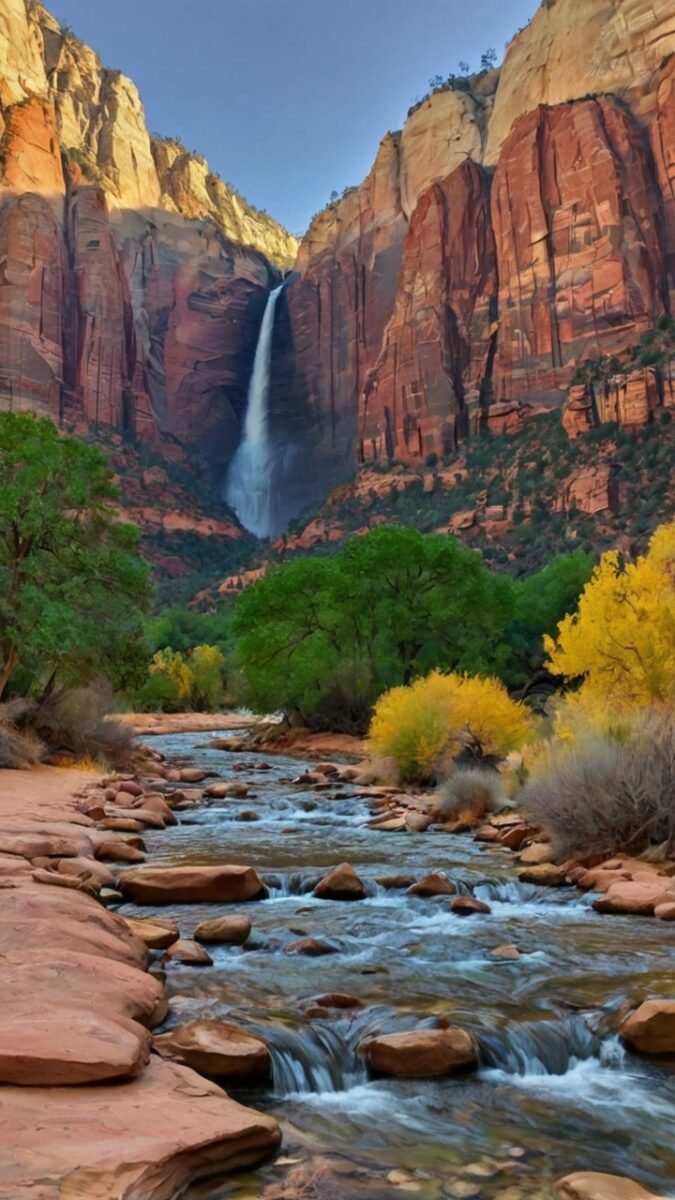
Zion is my non-negotiable first stop on any Utah-based road trip.
 Zion National Park” class=”wp-image-91278″/>
Not because it’s the most dramatic park on the list — though it absolutely is — but because it eases you in with something immediately stunning.
The canyon walls are this deep, warm red-orange that photographs can’t fully capture.
In person, they feel almost alive.
The scale of them stops you mid-sentence.
I remember standing at the base of Angel’s Landing trail on my first morning there and genuinely laughing out loud because I didn’t know what else to do with the feeling.
I’d recommend two full days minimum in Zion.
One day for the shuttle system and the canyon floor — Riverside Walk, Emerald Pools, taking your time.
One day for a bigger hike if you’re up for it.
The Narrows is my personal favorite.
You hike through the Virgin River itself, water up to your knees sometimes, canyon walls closing in on both sides.
It’s sort of surreal in the best way.
Rent waterproof boots from one of the outfitters near the entrance.
Your regular trail shoes will not thank you.
Bryce Canyon: The Park That Looked Fake Until I Got There

I’ll be honest — I almost skipped Bryce Canyon on my first road trip.
It looked too small on the map, and I figured it would feel like a lesser version of Zion.
I was completely wrong.
Bryce doesn’t feel like any other park I’ve visited.
The hoodoos — those tall, skinny rock spires — cover the amphitheater in a way that genuinely looks like a sci-fi movie set.
Pink, orange, white, all stacked together in columns that somehow just… stand there.
Sunrise at Bryce is legitimately one of the most beautiful things I’ve seen on any trip.
Set an alarm for it.
I know early mornings on vacation are rough, but this one is worth the sacrifice.
The light hits the hoodoos at a low angle and turns everything warm gold.
It lasts maybe twenty minutes before the shadows shift.
You’ll be glad you were awake for it.
One full day is enough for Bryce if you’re working through a longer itinerary.
Do the Navajo Loop trail.
It takes you down into the amphitheater itself.
The Drive Between Parks: Don’t You Dare Rush It

This is the section I think most road trip guides skip, and it drives me a little crazy.
The drives between national parks on this route are stunning.
Highway 12 in Utah, connecting Bryce to Capitol Reef, is one of the most beautiful roads I’ve ever driven in my life.
It runs along a ridge so narrow you can sometimes see drop-offs on both sides.
The colors shift constantly — red rock, white sandstone, green forest — sometimes all in the same ten miles.
Pull over constantly.
Don’t be the person who white-knuckles it from park to park without stopping.
There are overlooks with no signs, no crowds, just you and the view.
Some of my best photos from any trip have come from random pullouts on drives like this one.
Also — and I feel strongly about this — download your offline maps before you go.
Cell service out here is inconsistent at best, and nonexistent in some stretches.
Old-school paper maps of the region are a genuinely good backup.
Caribbean Paradise Unlocked
From pristine beaches to vibrant local culture, discover the Caribbean’s best-kept secrets with my comprehensive travel guide.
- 120+ Hidden Beach Secrets
- Local Cuisine Guide
- Budget Travel Tips
- Island Hopping Routes
Arches National Park: Worth Every Early Morning

Arches is iconic.
You’ve seen Delicate Arch on screensavers and postcards, and yes, it’s exactly as impressive in person.
But what I didn’t expect was how many other arches — over 2,000 of them — are scattered throughout the park.
You could spend three days here and still not see everything.
I recommend arriving right at opening, before the heat builds and before the parking lots fill up.
Arches is a victim of its own popularity, especially during peak season.
The main parking areas can fill by mid-morning, and then you’re stuck waiting.
Get there early, do your biggest hikes first, and retreat to Moab for lunch when the midday sun gets brutal.
Fiery Furnace is my personal recommendation if you want something off the standard path.
It’s a guided experience through a maze of narrow sandstone fins.
You’re scrambling, squeezing through gaps, navigating by feel.
It sounds intimidating, but honestly it’s more fun than strenuous.
Capitol Reef: The Park Nobody Talks About Enough

Capitol Reef is one of those places that serious road trippers mention in hushed, slightly smug tones.
Like it’s a secret, even though it isn’t.
It doesn’t get the foot traffic of Zion or Arches, which means you can actually breathe here.
The park runs along a massive geological feature called the Waterpocket Fold — essentially a 100-mile wrinkle in the earth’s crust.
It looks otherworldly.
There’s also an old pioneer orchard inside the park where you can pick fruit in season.
Peaches, apricots, apples.
I picked a peach off a tree there once and ate it standing in the afternoon sun, and it was one of those small, perfect travel moments.
No overlook or summit needed.
Just a warm piece of fruit in a quiet, ancient place.
The Scenic Drive through Capitol Reef is paved and accessible, so it’s a good option if you want visual payoff without a strenuous hike.
Grand Canyon: Save It for When You’re Ready to Be Humbled

I put Grand Canyon toward the end of my itinerary deliberately.
After days of stunning parks, you might wonder if you’ve become immune to beauty.
The Grand Canyon will remind you that you haven’t.
Standing at the South Rim for the first time, I genuinely felt small in a way that didn’t feel bad — it felt right.
The canyon is so big that your brain sort of refuses to process it.
It just looks like a painting at first.
Give it a few minutes.
Let it sink in.
Then hike down a little way, even if just the first mile of Bright Angel Trail.
Because looking at the canyon from above and being inside the canyon are two entirely different experiences.
Inside it, the walls close around you and the sky becomes a ribbon of blue overhead.
It smells like dry earth and something ancient.
Two nights minimum here.
One sunrise, one sunset.
Your Ultimate Caribbean Adventure Awaits!
Discover hidden coves, secret beaches, and the best rum punches in the islands. Your insider’s guide to Caribbean paradise.
Get Your Guide Now$15.99Where to Sleep: My Real Recommendations

I’ll be honest — glamping and fancy lodges inside the parks are lovely, but I don’t always have that budget, and you might not either.
Gateway towns are your best friend.
Springdale for Zion.
Moab for Arches and Canyonlands.
Torrey for Capitol Reef.
These towns exist specifically because of the parks, and they’re generally well-stocked with decent food, gear, and places to sleep.
For camping inside the parks, book early.
Some reservations open months in advance and fill within minutes.
I’m not exaggerating — set a reminder on your phone.
If you miss the reservation window, last-minute cancellations do happen.
Check the recreation reservation sites the night before your planned arrival.
Sometimes spots open up.
Also: if you’re sleeping in your vehicle or tent camping, download a white noise app.
Parks are quieter than you think until about 5am when every bird in the western hemisphere apparently needs to announce something.
What to Actually Pack (From Someone Who Over-packed Twice)

My first national parks road trip, I brought way too much.
Giant hiking boots I wore twice.
A full rain jacket system I never needed.
Cooking equipment I was too tired to use most nights.
Here’s what actually matters: sun protection, more than you think you need.
Sunscreen, a wide-brim hat, lightweight long sleeves for hiking.
The UV at elevation is no joke, and getting burned on day two of a two-week trip is genuinely miserable.
Layers matter more than bulk.
Mornings in the desert can be surprisingly cold, afternoons can be brutal.
A packable fleece and a light windbreaker covers most scenarios.
A reusable water bottle you can actually drink from while hiking — not a heavy flask, something light with a good lid.
And snacks that don’t melt.
Chocolate-covered anything will turn into a sad puddle by noon.
Trail mix, jerky, nut butter packets, fruit.
Simple.
Practical.
Keeps you moving.
The Mindset Shift That Made My Road Trips Better

Somewhere around my third national parks trip, I stopped trying to see everything.
And the trips got dramatically better.
There’s a version of road trip planning that’s basically a checklist — hit this viewpoint, photograph that arch, move to the next park.
I used to do that.
And I’d come home with hundreds of photos and a vague sense of exhaustion.
Now I build in empty time.
A morning with no plan.
An afternoon where the only goal is to sit somewhere pretty and drink coffee from a thermos.
Parks feel different when you’re not rushing through them.
You notice smaller things — the way light shifts on a canyon wall over an hour, the sound of wind through pines, a lizard doing something ridiculous on a rock.
That’s the stuff that actually stays with you.
The Instagram shot is great.
But the ten minutes you sat quietly after taking it?
That’s the part you’ll remember in five years.
Caribbean Paradise Unlocked
From pristine beaches to vibrant local culture, discover the Caribbean’s best-kept secrets with my comprehensive travel guide.
- 120+ Hidden Beach Secrets
- Local Cuisine Guide
- Budget Travel Tips
- Island Hopping Routes
My Honest Tips for First-Time Road Trippers

Go slower than you think you need to.
Most people pack in too many parks and end up exhausted and resentful.
I’d rather do three parks really well than six parks in a blur.
Start your drives early — before 8am when possible.
You beat the heat, the crowds, and you arrive at trailheads before the parking situation becomes a problem.
Tell someone your rough itinerary before you leave.
Not in a dramatic safety way, just a practical one.
Cell service disappears out there, and a rough plan shared with a friend is just smart.
Build in one full rest day per week.
A day where you sleep in, eat a big breakfast, do laundry, and maybe just drive slowly through somewhere pretty without hiking.
Your body and your mood will thank you.
And finally — if something on the itinerary isn’t working for you, change it.
The plan is a suggestion, not a contract.
Some of my favorite travel memories have come from detouring away from the plan entirely.