I pulled off Highway 29 for the first time on a Tuesday afternoon, windows down, no real plan.
And honestly?
That might have been the best decision I ever made.
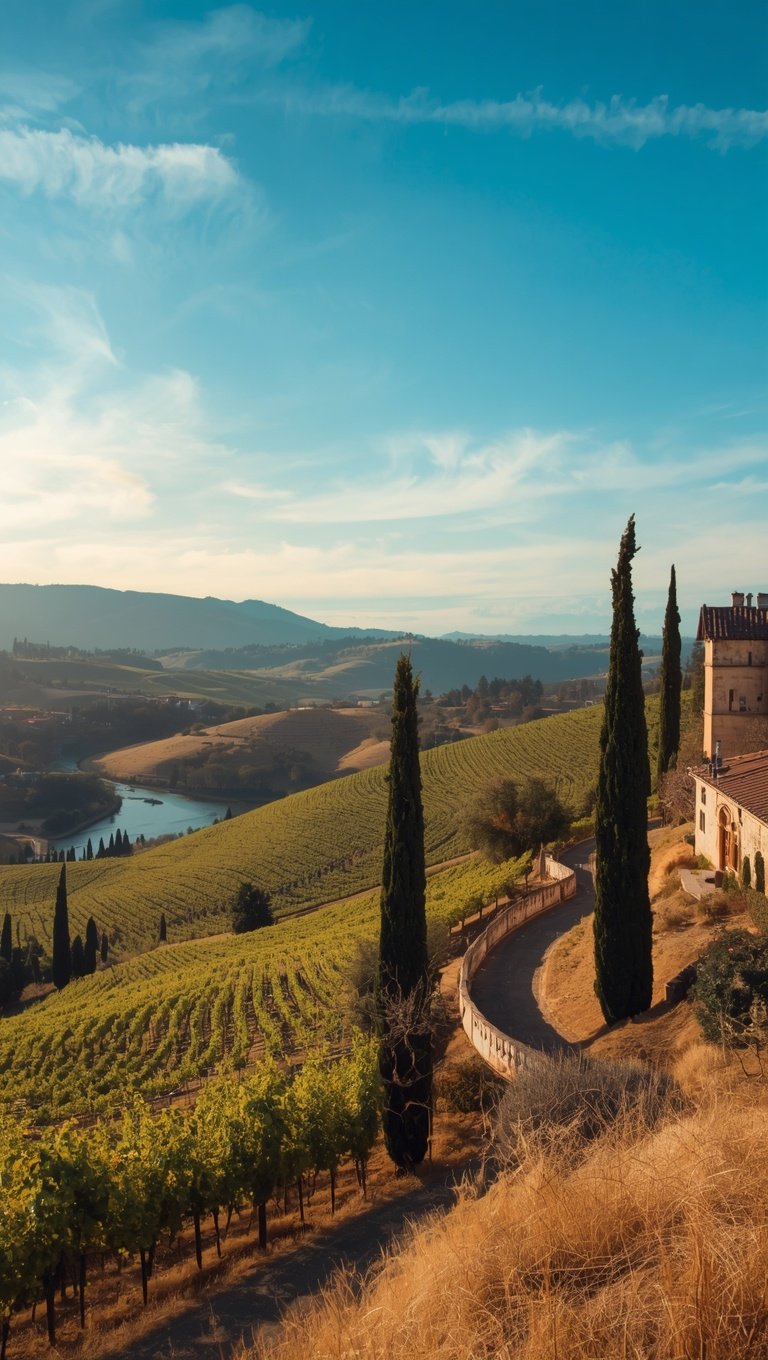
There’s something about that first moment when the valley opens up — gold-lit hills, rows of vines running perfect and quiet — that just slows your whole body down.
It didn’t feel like a tourist destination.
It felt like somewhere people actually live beautifully.
That trip wrecked me in the best way, and I’ve been chasing that feeling ever since.
So here’s everything I wish someone had handed me before I went.
When I Finally Figured Out the Best Time to Go

Napa surprised me on this one.
Everyone talks about harvest season — late summer into early fall — and yeah, it’s gorgeous.
The light is warm, the energy is buzzing, and you can literally smell fermentation in the air on certain mornings.
But here’s what I didn’t expect: late winter and early spring are quietly incredible.
The crowds thin out, the hills go bright green after the rains, and the tasting rooms actually have time for you.
I went one February and had a 45-minute conversation with a winemaker who walked me through every single barrel in his cave.
That never happens in peak season.
So if flexibility is yours, consider going off-peak.
You’ll get a slower, richer version of Napa that most people never see.
Spring also means mustard flowers blooming between the vines — and honestly, it’s one of the most beautiful things I’ve ever laid eyes on.
Either way, avoid major holiday weekends if you can.
Napa is small, and the roads feel it.
My Honest Take on Getting Around the Valley

Okay, real talk — you need a plan for transportation before you get here.
Napa is not a walk-everywhere kind of place.
The wineries are spread out along Highway 29 on the west side and the Silverado Trail on the east, and there’s a lot of ground between them.
When I first went, I drove myself everywhere.
And while that’s totally doable, it limits you — obviously — if you want to actually taste wine rather than just sniff it.
My favorite solution now is hiring a driver for a half day or using one of the local car services for your main tasting day.
It’s not as expensive as you’d think, and it completely changes the vibe.
You stop clock-watching and start actually relaxing.
Some people love renting bikes for the flat stretches near Yountville — and I get it, that area is stunning and manageable on two wheels.
If you’re staying in the town of Napa itself, you can walk to some great spots.
But for the full valley experience?
Plan your transport ahead.
It’ll save you a lot of stress on the day.

Your Ultimate Caribbean Adventure Awaits!
Discover hidden coves, secret beaches, and the best rum punches in the islands. Your insider’s guide to Caribbean paradise.
Get Your Guide Now$15.99The Wineries I Keep Recommending to Everyone I Know

I’ve been to a lot of wineries now — more than I probably should admit.
And here’s what I’ve learned: bigger doesn’t always mean better.
Some of the most memorable tastings I’ve had were at smaller, family-owned estates where the person pouring was also the person who made the wine.
That connection changes everything.
I love finding spots that require reservations because it usually means they’re keeping the experience intentional.
You’re not being shuffled through a crowd.
You’re actually being hosted.
Look for wineries that offer cave tastings, vineyard walks, or food pairings — those elevated experiences are where Napa really shines.
If you’re into big, bold Cabernets, the Oakville and Rutherford areas along Highway 29 are your people.
If you prefer something lighter — Pinot, Chardonnay, Rosé — head toward Carneros in the southern part of the valley.
My personal tip: book your tastings before you leave home.
The best spots fill up fast, and showing up without a reservation at a top winery is a gamble I’ve lost more than once.
Give yourself two, maybe three tastings per day max.
You want to actually taste what’s in the glass.
Where I Stay and Why It Matters More Than You Think

Where you sleep in Napa genuinely shapes the whole trip.
I’ve stayed in a few different spots over the years and the difference is real.
The town of Napa is the most budget-friendly base — it’s gotten so much better in recent years, with a solid food scene and walkable waterfront.
Yountville is my personal favorite.
It’s small, absurdly charming, and walkable in a way the rest of the valley isn’t.
You can roll out of dinner and be back at your inn in ten minutes on foot.
That matters after a long day of tasting.
St.
Helena has a more old-school, classic Napa feel — beautiful inns, great main street energy, closer to a lot of the iconic wineries.
Calistoga, at the northern end, is the most relaxed.
It has a spa town vibe, natural hot springs, and feels a little less polished, which I actually love.
If budget allows, splurge on at least one night somewhere really special.
A room with vineyard views and a porch?
You’ll understand why the second the sun starts setting over those hills.
My Approach to Eating Well in Napa (It’s Not All Fine Dining)

People assume Napa is all white tablecloths and three-hour dinners.
And yes, some of the best meals of my life have happened here.
But there’s a whole other side to eating in this valley that I’m equally obsessed with.
The farmers markets, the little delis with insane local cheese, the bakeries in St.
Helena — that’s the daily texture of Napa that most visitors miss.
I always try to do one really special dinner and then balance it with more casual, local eating the rest of the time.
The Oxbow Public Market in the town of Napa is one of my first stops every single trip.
It’s this indoor market with local vendors, great coffee, oysters, charcuterie — you could spend an entire morning there just grazing.
If you’re doing a picnic lunch at a winery — and you should, at least once — grab your provisions there.
For the big dinner, book ahead.
Napa’s top restaurant tables go fast, sometimes weeks out.
Don’t leave it to chance and then end up disappointed.
Food here is as much a part of the experience as the wine.
Treat it that way.
Caribbean Paradise Unlocked
From pristine beaches to vibrant local culture, discover the Caribbean’s best-kept secrets with my comprehensive travel guide.
- 120+ Hidden Beach Secrets
- Local Cuisine Guide
- Budget Travel Tips
- Island Hopping Routes
The Silverado Trail: Why I Always Drive It at Least Once

Most visitors stick to Highway 29 the whole time.
And I get it — the famous names are mostly along that corridor.
But the Silverado Trail, running parallel on the east side of the valley, is one of my favorite drives in all of California.
It’s quieter.
The vineyards feel more open, less commercial.
And some genuinely excellent wineries sit along that stretch without the foot traffic of the main highway.
I usually drive it in the late afternoon when the light goes golden and everything turns that warm amber color that makes you want to pull over and just sit.
A few times, I have.
There’s something meditative about that drive — the vines on both sides, the hills rising up, the valley stretching long in front of you.
It’s the kind of thing that reminds you why you travel in the first place.
Don’t skip it.
Even if you don’t stop anywhere, just drive it end to end once.
You’ll thank yourself.
Things I Wish I’d Known Before My First Trip

Let me save you some rookie mistakes, because I made most of them.
Tasting fees are real and they add up fast.
Budget for them — some places charge $50 to $100+ per person for a seated tasting experience, and it’s worth it, but only if you’re going in with your eyes open.
Wear comfortable shoes.
I know that sounds obvious, but Napa involves more walking on gravel paths and uneven terrain than you’d expect.
I showed up once in shoes that looked great and felt terrible by hour three.
Never again.
Drink water.
Seriously.
It’s so easy to forget when you’re having fun, but a full day of tasting without hydrating properly is a one-way ticket to a wasted evening.
Most wineries will happily give you water — just ask.
Don’t try to pack too much in.
I’ve done the overscheduled Napa trip and I’ve done the slow, two-or-three-stop day.
The slower version wins every time.
This place rewards people who linger.
Hiking in the surrounding hills gives you views of the valley that you just can’t get from the road.
Robert Louis Stevenson State Park has trails that are legitimately beautiful and barely crowded.
The town of Napa itself has become a real destination — art galleries, great cocktail bars, weekend markets.
It’s not just a pass-through anymore.
And cycling through the flat stretches near Yountville on a slow morning?
One of the most peaceful things I’ve done on any trip, anywhere.
How I Build My Ideal Napa Itinerary

After a few trips, I’ve sort of landed on a rhythm that works really well.
Day one is about arriving, getting settled, and not rushing.
I’ll do one easy winery stop in the afternoon — nothing too serious — and then walk around wherever I’m based, get dinner somewhere comfortable, and just breathe.
Day two is the main event.
That’s when I pre-book the tastings I’m most excited about, hire a driver if I’m planning to taste heavily, and really commit to the experience.
I build in a long lunch somewhere with a view.
Day three — if I have it — goes slower.
Maybe a bike ride in the morning, the farmers market, a late afternoon tasting somewhere new I discovered the day before.
The thing I’ve learned is that Napa doesn’t reward rushing.
The best moments happen when you let the day unfold a little.
When you follow a recommendation from someone at a tasting room.
When you take the scenic road back just because.
Build some space into your itinerary.
That’s where the magic actually lives.
Your Ultimate Caribbean Adventure Awaits!
Discover hidden coves, secret beaches, and the best rum punches in the islands. Your insider’s guide to Caribbean paradise.
Get Your Guide Now$15.99What to Pack and How to Dress for the Valley

Napa has a specific dress code situation that’s worth knowing about.
It’s sort of smart-casual but outdoorsy at the same time.
You’ll see people in everything from sundresses to hiking boots, and somehow it all works.
What I’d tell you is: layer up, always.
Mornings in the valley can be cool and misty — that marine influence from the bay doesn’t disappear overnight.
By midday it’s usually warm, sometimes genuinely hot in summer.
And then evenings cool back down quickly.
A good light jacket or linen shirt you can throw over a tee is your best friend here.
Comfortable walking shoes are non-negotiable, as I mentioned.
Nice enough for a good restaurant, practical enough for a vineyard path.
A small crossbody bag works better than a big backpack for winery days — you want your hands free.
And sunscreen.
You’re outside a lot more than you realize.
I always pack a nice but not too precious outfit for the one splurge dinner.
Napa’s dressier restaurants have an atmosphere that makes you want to show up a little.
It feels like the right way to honor a great meal.
The Quiet Moments That Made Napa Unforgettable for Me

Here’s the stuff that doesn’t make the highlight reel but stays with you longest.
Sitting on a winery patio at 4pm with a glass of Cab and nowhere to be.
The way the light hits the valley from a hilltop overlook — that blue-gold afternoon haze.
Talking to a harvest worker during a cave tour who’s been doing this for thirty years and lights up when he talks about soil.
Finding a tiny roadside farm stand with produce so good I bought more than I could eat.
A morning walk through Yountville when the streets were still quiet and the bakeries were just opening.
These are the moments Napa is actually built for.
Not the Instagram shots.
Not the checked boxes.
The actual feeling of slowing down inside a place that was designed — by geography, by culture, by something harder to name — to make you do exactly that.
You’ll have your own version of these moments.
I can almost guarantee it.
And they’ll stick with you longer than any tasting note ever could.
My Final Thoughts Before You Go

I’ll be honest — I was a little skeptical of Napa the first time.
It felt like it might be too polished, too expensive, too much of a scene.
And there are parts of it that are exactly that.
But underneath all of that, there’s a real place.
A valley with its own personality, its own rhythms, its own kind of beauty.
And when you find that version of Napa — the slower, quieter, more personal version — it gets under your skin in the best possible way.
Go with an open itinerary and a willingness to linger.
Talk to the people pouring your wine.
Eat well and eat locally.
Drive the Silverado Trail in the afternoon light.
And don’t try to see everything.
The best trips I’ve taken there were the ones where I did less and felt more.
That’s the version of Napa I keep going back for.