When a buddy suggested Jackson Hole for a summer trip, my brain immediately went to ski slopes, snow pants, and rich people in North Face jackets.
Summer?
In a ski town?
It felt like showing up to a steakhouse and ordering a salad.
But I went anyway — and within about forty-five minutes of arriving, standing in a meadow while a bull moose casually ate breakfast twenty feet away from me, I knew I had gotten this completely, embarrassingly wrong.
Jackson Hole in summer isn’t a consolation prize.
It’s the whole trophy.
Why Jackson Hole Completely Surprised Me the First Time Around

I’ll be honest with you — I came in with low expectations.
I thought summer here meant crowds, overpriced lodges, and a few nice mountain views you could see from a parking lot.
What I actually got was one of the most raw, untamed, visually overwhelming landscapes I’ve ever walked through in my life.
The Teton Range doesn’t care what season it is.
Those peaks just sit there, jagged and massive and completely indifferent to how small they make you feel.
The air in July has this quality to it — cool in the morning, warm by noon, with that faint pine-and-sage smell that hits you and immediately makes you want to slow down.
There are no stoplights in Grand Teton National Park.
That small fact tells you everything.
When I drove into the valley for the first time at sunrise, the light was hitting the Snake River and the mountains were reflected in it perfectly.
I pulled over.
I just sat on the hood of my rental truck for a while.
Sometimes a place just knocks the words out of you, and this was one of those moments.
If you’ve been sleeping on Jackson Hole summers, I get it.
But you’re wrong.
The Wildlife Situation Is Genuinely Unreal

I need to talk about the animals first, because nothing else prepared me for this.
Grand Teton and the surrounding valley — including the National Elk Refuge — is one of the densest wildlife corridors in the lower 48 states.
That’s not a travel brochure line.
That’s just the truth.
On my first full day, before I’d even done a single hike, I spotted a black bear, two moose, a bald eagle, and a coyote trotting along a ridgeline like he owned the place.
Which, I mean, he kind of does.
The Laurance S. Rockefeller Preserve area is especially good for moose sightings in the early morning.
I’m talking walking-distance close.
Respectful distance, obviously — you’re not trying to be that guy on the news — but close enough that you can see every detail.
Pronghorn antelope are everywhere in the flats.
They move in these fluid, almost liquid-looking herds and they are fast in a way that genuinely seems impossible.
Bison roam through here too, particularly near Antelope Flats Road.
Pull over.
Watch them.
Don’t rush it.
One morning I sat with a cup of coffee watching a bison herd move through the sage for almost an hour and I did not regret a single minute of it.
My Favorite Hikes in Grand Teton National Park

Okay, so let me walk you through the hikes I actually did and loved — not just the ones that show up on every top-ten list.
The variety here is something else.
You can do a mellow two-mile loop around a glacial lake or you can push yourself up a technical ridge trail where the views will make your legs forget they’re on fire.
I did both.
And everything in between.
The thing about hiking the Tetons in summer is that the wildflower situation is absolutely out of control — in the best possible way.
Indian paintbrush, lupine, columbine — the meadows look almost fake, like someone painted them specifically to mess with your head.
Trail conditions are generally excellent from late June through early September.
Snow can linger on higher passes well into July, so always check current conditions before heading out.
I made the mistake of assuming a trail was clear once.
It was not clear.
My boots were soaked for two days.
Learn from me.
Bring layers even on warm days because the afternoon thunderstorms in the Tetons are real and they come fast.
A light rain jacket stuffed in your pack is never the wrong call here.
🗼 I Wrote a Book About My Japan Travel Catastrophes!
Before I landed in Tokyo, I thought I was the “Final Boss” of international travel. Spoiler alert: I WASN’T. 😅
🚅 I boarded the wrong Shinkansen and ended up in THE WRONG CITY. I confused locals with my “expert” bowing that was more awkward than accurate. I accidentally stumbled into a high-stakes Kendo practice thinking it was a tourist show. Sound like something you’d do?
“Things I Wish I Knew Before Going to Japan” is your shortcut to avoiding ALL my cringe-worthy mistakes. ✨ Inside, you’ll find practical, LIFE-SAVING tips on etiquette, transport, money, and hidden gems that will save you time, money, and a whole lot of confusion.
Cascade Canyon: The Hike That Stopped Me Cold

If you only do one hike in Grand Teton, make it Cascade Canyon.
I know everyone says that.
There’s a reason everyone says that.
You take the Jenny Lake Ferry across the lake — a short, scenic boat ride that already feels like a win — and then you start climbing into this massive, cathedral-like canyon.
The walls rise up on both sides of you.
The creek runs alongside the trail the whole way and that sound, that constant cold water moving over rock, keeps you company the entire time.
About four miles in, the canyon opens up into a high alpine meadow called the Upper Cascade Canyon, and I sat down on a boulder there and genuinely felt my nervous system reset.
It’s one of those places that makes your chest feel lighter just by being in it.
The full out-and-back to Hurricane Pass is around eighteen miles and gains serious elevation.
You don’t have to do the whole thing.
Even going four or five miles in and turning back is a completely satisfying day.
I talked to a family at the trailhead who had just done it with their kids and they all looked genuinely happy in a way that you don’t always see on difficult trails.
That trail does something to people.
Hidden Trails That Most Visitors Completely Skip

Here’s where I’ll give you the slightly less obvious stuff.
Phelps Lake via the Death Canyon Trailhead is one of my personal favorites.
The lake itself is stunning — clear, cold, ringed by forest and backed by cliffs — and the trail to get there is gorgeous and far less crowded than the Jenny Lake area.
You can swim in Phelps Lake in summer.
The water is glacier-cold and perfect on a hot afternoon.
I did it on a dare from myself and it was worth every shriek.
Taggart Lake is another one that tends to be quieter in the early morning.
It’s a shorter hike, maybe three miles round trip, and the lake sits in this peaceful basin with great Teton views.
Good option if you want something beautiful without wanting to destroy your legs.
For something more adventurous, the Paintbrush Canyon to Cascade Canyon loop is a full-day, roughly twenty-mile circuit that takes you up over a high pass and back down.
It’s demanding.
Your legs will know about it the next morning.
But the views from Paintbrush Divide — when you’re standing there looking at both canyons falling away below you — are the kind of thing you’ll bring up in conversation for years.
The Town of Jackson Itself Is Way More Than a Pit Stop

People fly into Jackson and drive straight to the park.
I get it.
But you’re missing something if you don’t spend some time in the actual town.
The Town Square with its famous antler arches is genuinely charming in a kinda-kitschy, completely-unpretentious way.
There are great local restaurants, good coffee shops, and a craft beer scene that punches above its weight.
The Million Dollar Cowboy Bar is a classic for a reason — saddle bar stools, live country music, the whole thing.
You don’t have to be a country music person to enjoy it.
I’m definitely not, and I had a great time.
The local art scene is quietly excellent too.
There are several galleries around the square and surrounding streets that carry work from regional artists — a lot of wildlife and landscape pieces that actually make you want to own art for the first time.
If you’re into fly fishing, the shops in town can hook you up with guides and gear.
The Snake River is right there.
Fly fishing the Snake on an early summer morning before the crowds are out is one of the more peaceful experiences I’ve had anywhere.
Even if you’ve never done it before, a half-day guided float is totally worth it.
Where to Stay Without Spending Your Entire Savings

Jackson Hole has a reputation for being expensive, and look, it’s not wrong exactly.
But it’s also not impossible to navigate if you plan smart.
Staying in the town of Jackson itself tends to be more affordable than lodges inside the park or right on the slopes.
There are solid mid-range hotels and motels within a ten or fifteen minute drive of the park entrance that won’t ruin your budget.
If you want to feel genuinely embedded in the landscape, the Headwaters Lodge at Flagg Ranch up near the south entrance to Yellowstone is a solid option — rustic, comfortable, and in an incredible location.
Camping is another level entirely.
I camped at Gros Ventre Campground inside the park for several nights, and waking up at altitude with the Tetons right there in front of your tent is an experience I’d rank up there with the actual hikes.
First-come, first-served spots fill fast in peak summer.
Get there early, or reserve ahead when reservations are available.
My personal tip: if you’re flexible on dates, the shoulder weeks of early summer or late August tend to have noticeably fewer people and equally gorgeous conditions.
Float Trips on the Snake River Are Absolutely Worth It

The Snake River runs right through the valley and it’s one of those things that sounds optional but really isn’t.
A scenic float trip — no white water, just a gentle drift through wildlife habitat — is one of the best ways to see the valley from an angle most visitors never get.
The wildlife viewing from the water is exceptional.
Bald eagles nest along the riverbanks.
Osprey dive and fish right in front of you.
Great blue herons stand completely still in the shallows like they’re posing.
On the float I did, we drifted past a cow moose and her calf grazing in the willows at the river’s edge.
She didn’t even look up.
We were maybe thirty feet away.
It was one of the best wildlife moments of the entire trip and it happened from a raft.
Guided floats run a few hours and most companies provide everything you need.
You don’t need any experience.
You basically just sit there and the river does its thing and the landscape unfolds around you.
If you want a little more action, white water trips are available on the more challenging sections of the river downstream.
Both are great.
But if I had to pick one, I’d take the scenic float every time.
Doing a Yellowstone Day Trip from Jackson Hole

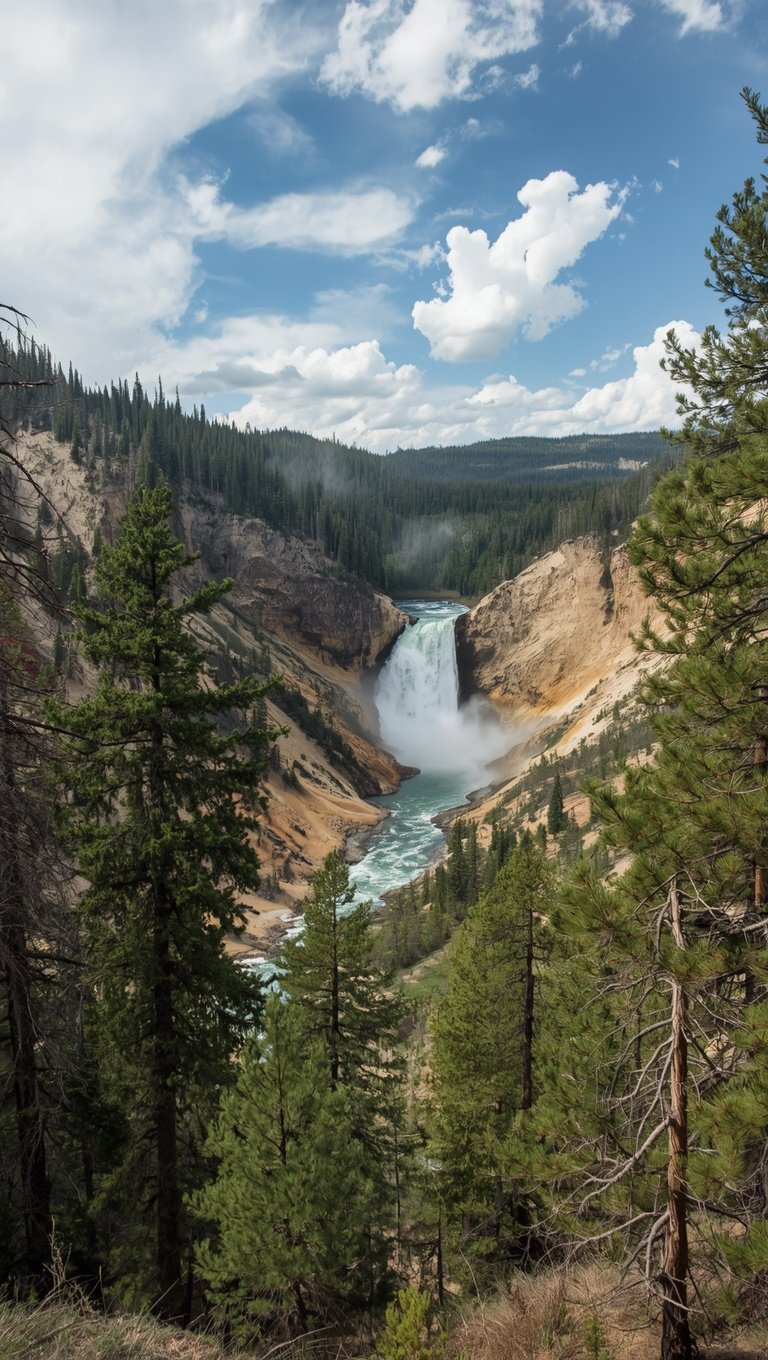
Jackson Hole sits at the southern entrance to Yellowstone, which means one of the most extraordinary national parks on earth is about an hour from where you’re sleeping.
You’d be sort of doing yourself a disservice not to go.
I drove up early — left Jackson around five-thirty in the morning — and got to the Old Faithful area before the crowds arrived.
Watching a geyser erupt in the early morning mist with almost no one around is very different from watching it at two in the afternoon surrounded by tour buses.
Go early.
Always go early.
The Grand Prismatic Spring is worth the hike up to the overlook — seeing those vivid rings of color from above is the kind of thing your brain keeps coming back to.
The wildlife in Yellowstone’s Lamar Valley is a whole separate chapter.
Wolves, grizzly bears, bison herds that stretch for miles — it’s dense and wild in a way that genuinely feels prehistoric.
I’d suggest building at least one full Yellowstone day into any Jackson Hole summer trip.
Two days if you can swing it.
The combo of Teton and Yellowstone is, no exaggeration, one of the great American road trip moves.
🗼 I Wrote a Book About My Japan Travel Catastrophes!
Before I landed in Tokyo, I thought I was the “Final Boss” of international travel. Spoiler alert: I WASN’T. 😅
🚅 I boarded the wrong Shinkansen and ended up in THE WRONG CITY. I confused locals with my “expert” bowing that was more awkward than accurate. I accidentally stumbled into a high-stakes Kendo practice thinking it was a tourist show. Sound like something you’d do?
“Things I Wish I Knew Before Going to Japan” is your shortcut to avoiding ALL my cringe-worthy mistakes. ✨ Inside, you’ll find practical, LIFE-SAVING tips on etiquette, transport, money, and hidden gems that will save you time, money, and a whole lot of confusion.
What I Packed That Actually Mattered

Let me save you some trial and error here.
Layers are not optional.
Mornings at altitude start cold, warm up fast, and afternoons can bring thunderstorms that roll in with very little warning.
A lightweight rain jacket is something you want in your pack every single day, not sitting in the car.
Sun protection matters more than people think.
At elevation, the UV index is higher than you expect, and you’re often hiking in open meadows with no shade.
Sunscreen, sunglasses, and a hat are actual necessities.
Good hiking boots with ankle support made a real difference for me on the rocky, root-heavy trails in the canyon areas.
Trekking poles are worth having if you’re doing anything with significant elevation gain.
A water filter or purification tablets let you refill from the abundant streams and lakes — which saves both weight and money.
Binoculars.
This is the one I recommend most enthusiastically.
You can rent them, borrow them, buy a cheap pair — whatever.
But wildlife viewing here without binoculars is like watching a great movie on a tiny screen.
Get the binoculars.
You’ll use them constantly and you’ll be glad every single time.
The Light Here Does Something to You

I want to talk about the light for a second, because I think it’s one of the things that makes Jackson Hole feel different from other mountain destinations.
At sunset, the Teton Range catches the last light in this way that turns the granite peaks every shade of orange, pink, and gold simultaneously.
It sounds like a postcard.
It somehow looks better than a postcard.
I sat at the Oxbow Bend pullout one evening — a calm bend in the Snake River that perfectly mirrors the mountains — and the reflection in the water was so exact it looked like the world had been folded in half.
I sat there for a long time.
I didn’t take that many photos.
Some things you just want to actually look at.
The morning light is equally absurd.
The Tetons face east, so sunrise hits those peaks hard and fast, and the color that moves across them in the first twenty minutes after dawn is something you have to just experience.
Wake up early.
Sacrifice the sleep.
Mornings in Jackson Hole in summer are a legitimate reason to set a four-thirty alarm and mean it.
The alpenglow — that reddish-pink glow on the peaks just before and just after sunrise — is one of the most beautiful things I’ve ever seen in this country.
Who This Trip Is Really Made For

I want to be real with you here.
Jackson Hole in summer is not a beach vacation.
It’s not a city trip where you stroll around and eat great food and people-watch from a cafe.
Well — you can do some of that.
But if that’s all you want, this probably isn’t your place.
This trip is for people who want to feel genuinely small in the best possible way.
For people who want to drive around a corner and pull over because a grizzly just walked out of the tree line two hundred yards ahead.
For people who want to be physically tired at the end of the day from a hike that earned its views.
For people who want to sit quietly by a glacial lake and feel like they’re actually somewhere that hasn’t been completely tamed by civilization.
If that sounds like you, you’re going to love it here.
I came in skeptical, left completely converted, and started planning my next trip about four days after I got home.
That’s the kind of place Jackson Hole is in summer.
It doesn’t announce itself.
It just shows you what it’s got, quietly and completely, and waits for you to catch up.