
Hungary isn’t just another dot on the European map – it’s a treasure chest of thermal springs, fairy-tale castles, and underground mysteries waiting to Blow Your Mind…
Budapest’s Legendary Thermal Baths

Picture yourself floating in naturally heated waters while snowflakes dance outside – that’s the magic of Budapest’s thermal bath culture hitting you from day one.
The city sits on over 100 thermal springs, making it the ultimate spa destination where relaxation meets centuries of tradition.
Széchenyi Thermal Baths stands as the largest medicinal bath complex in Europe, featuring 18 pools ranging from a refreshing 64°F to a toasty 100°F.
You’ll find locals playing chess while soaking in the outdoor pools, creating an atmosphere that perfectly blends leisure with local culture.
The Neo-Baroque architecture surrounding you adds an element of grandeur that transforms a simple soak into a royal experience.
Gellért Baths offers a more intimate setting with its Art Nouveau design and stunning mosaic tiles that make every corner Instagram-worthy.
The indoor pools here feature magnificent columns and stained glass windows that create an almost cathedral-like atmosphere.
Both locations offer various spa treatments, from massages to mud wraps, allowing you to customize your relaxation experience.
The mineral-rich waters are believed to have healing properties, particularly beneficial for joint pain and circulation issues.
Don’t miss the unique experience of transitioning between indoor and outdoor pools, especially during winter months when the contrast creates an almost surreal sensation.
Most thermal baths operate year-round, making them perfect regardless of the season.
You can easily spend an entire day moving between different temperature pools, relaxing in saunas, and enjoying the unique social atmosphere that defines Hungarian bath culture.
Explore the Majestic Buda Castle Complex

Standing proudly on Castle Hill, Buda Castle commands attention like a medieval fortress straight out of a fantasy novel.
This UNESCO World Heritage Site has witnessed over 700 years of Hungarian history, from royal coronations to devastating wars and remarkable reconstructions.
The castle complex houses the Hungarian National Gallery, where you can immerse yourself in centuries of Hungarian art spanning from medieval altarpieces to contemporary works.
You’ll discover masterpieces that tell the story of Hungary’s cultural evolution through paintings, sculptures, and decorative arts.
The Budapest History Museum occupies the southern wing, offering fascinating exhibits about the city’s development from Roman times to the present day.
Underground, you can explore the medieval royal palace’s excavated foundations, revealing layers of history buried beneath your feet.
The castle’s courtyards provide breathtaking panoramic views of the Danube River and Pest side of the city, especially magical during sunset hours.
You can reach the castle via the historic Castle Hill Funicular, a charming cable railway that’s been operating since 1870.
The funicular ride itself becomes part of the adventure, offering stunning views as you ascend the hill.
Walking through the castle grounds, you’ll encounter beautiful baroque and gothic architectural details that showcase different periods of reconstruction.
The Royal Wine House and Wine Cellar Museum beneath the castle offers wine tastings featuring Hungary’s finest vintages in atmospheric underground chambers.
Don’t miss the changing of the guard ceremony that takes place regularly, adding pageantry to your visit.
Evening visits are particularly enchanting when the castle is illuminated, creating a romantic atmosphere perfect for photos and quiet contemplation.
Cruise the Legendary Danube River

The Danube River doesn’t just flow through Budapest – it practically defines the city’s soul, separating Buda from Pest while creating some of Europe’s most spectacular urban scenery.
A river cruise offers you the perfect vantage point to appreciate Budapest’s architectural masterpieces from a completely different perspective.
During daytime cruises, you’ll glide past the Hungarian Parliament Building, whose Gothic Revival spires reflect magnificently in the water.
The Chain Bridge, Buda Castle, and Fisherman’s Bastion create a stunning backdrop that changes with every bend of the river.
Evening cruises transform the experience into pure magic as Budapest’s illuminated landmarks create a golden reflection pathway on the water’s surface.
You can choose from various cruise options, including dinner cruises that combine sightseeing with traditional Hungarian cuisine and folk music performances.
Some boats feature glass-enclosed upper decks, ensuring you stay comfortable while enjoying unobstructed views regardless of outdoor conditions.
The cruise provides interesting commentary about the historical significance of each landmark, enriching your understanding of Hungarian culture and history.
Photography enthusiasts will find countless opportunities to capture iconic shots of Budapest’s skyline from unique water-level angles.
Longer cruises extend beyond Budapest to the scenic Danube Bend, where the river curves through hills dotted with charming towns like Szentendre and Visegrád.
These extended journeys reveal Hungary’s countryside beauty, with medieval ruins, baroque churches, and traditional villages lining the riverbanks.
You’ll often spot local wildlife, including various bird species that make the Danube their home.
The gentle movement of the boat creates a relaxing atmosphere that allows you to unwind while taking in the constantly changing scenery.

🗼 I Wrote a Book About My Japan Travel Catastrophes!
Before I landed in Tokyo, I thought I was the “Final Boss” of international travel. Spoiler alert: I WASN’T. 😅
🚅 I boarded the wrong Shinkansen and ended up in THE WRONG CITY. I confused locals with my “expert” bowing that was more awkward than accurate. I accidentally stumbled into a high-stakes Kendo practice thinking it was a tourist show. Sound like something you’d do?
“Things I Wish I Knew Before Going to Japan” is your shortcut to avoiding ALL my cringe-worthy mistakes. ✨ Inside, you’ll find practical, LIFE-SAVING tips on etiquette, transport, money, and hidden gems that will save you time, money, and a whole lot of confusion.
Marvel at the Hungarian Parliament Building

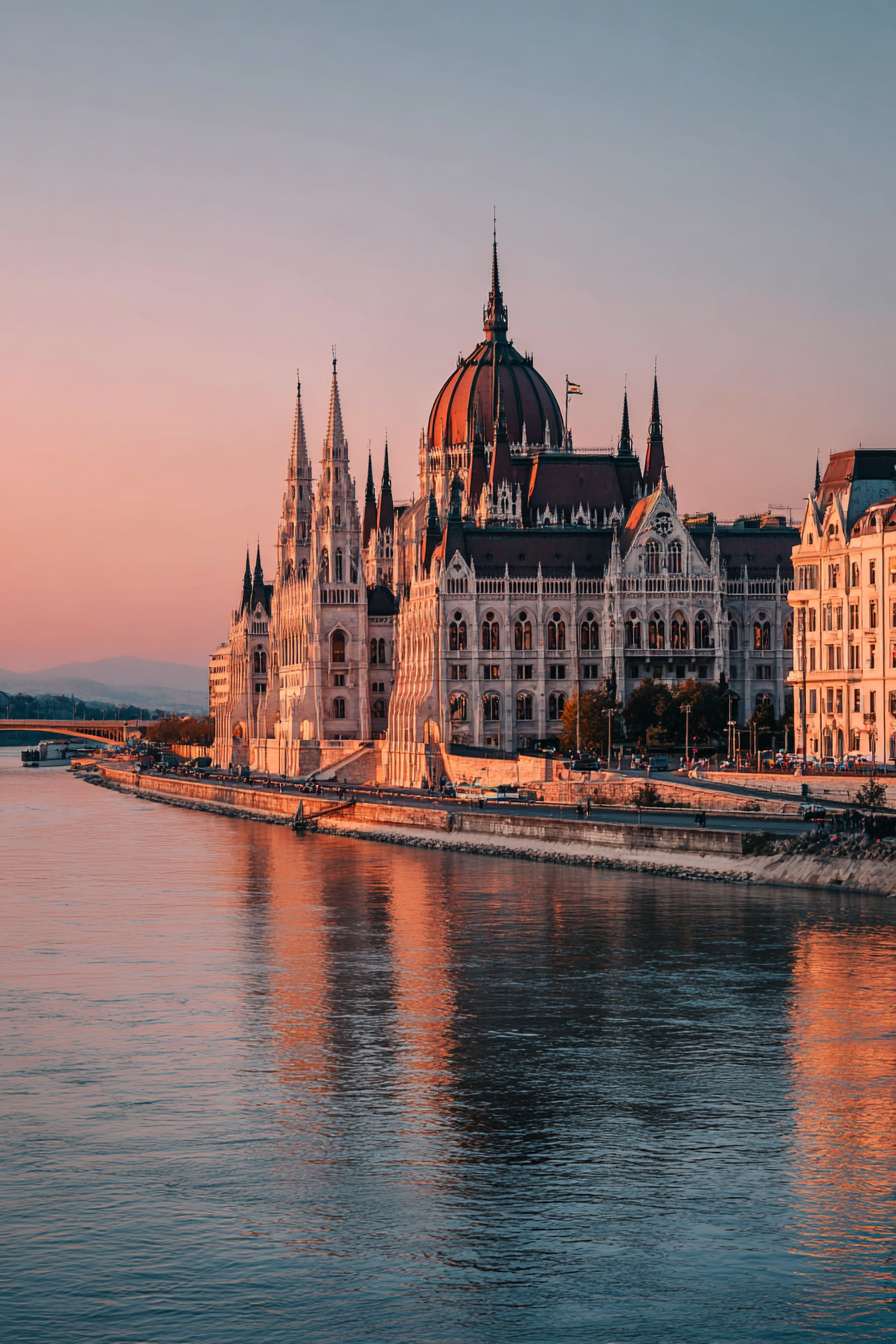
The Hungarian Parliament Building rises from the Pest riverbank like a Gothic cathedral merged with a Renaissance palace, demanding attention with its 691 rooms and 20 kilometers of staircases.
This architectural marvel ranks among the world’s most beautiful parliament buildings, rivaling London’s Houses of Parliament and Vienna’s Rathaus in grandeur and detail.
You can explore the building’s interior through guided tours that reveal stunning chambers decorated with Hungarian oak, marble columns, and intricate frescoes.
The Crown Jewels of Hungary are housed here, including the Holy Crown of St.
Stephen, which you can view in a specially designed exhibition space.
The crown’s history spans over a thousand years, making it one of Europe’s oldest surviving royal crowns with immense symbolic importance to Hungarian national identity.
The main staircase features red carpet and gold gilding that creates an immediately regal atmosphere as you ascend toward the tour areas.
You’ll visit the Assembly Hall, where Hungary’s National Assembly meets, featuring horseshoe-shaped seating arrangements and magnificent ceiling decorations.
The building’s dome rises 315 feet above the Danube, making it one of Budapest’s most recognizable landmarks visible from multiple vantage points throughout the city.
Tours are available in multiple languages and must be booked in advance, especially during peak tourist seasons when demand is particularly high.
The parliament’s exterior is equally impressive, with 233 Gothic-style spires and statues representing Hungarian rulers and military leaders throughout history.
Evening illumination transforms the building into a golden beacon reflected in the Danube, creating one of Budapest’s most photographed scenes.
You can also admire the building from across the river in Buda, where the full facade creates an stunning backdrop for sunset photography.
The architectural details include intricate stone carvings, stained glass windows, and decorative elements that showcase the finest craftsmanship of the late 19th century.
Discover Budapest’s Famous Ruin Pubs

Szimpla Kert doesn’t just serve drinks – it’s an alternate universe where old bathtubs become sinks, bicycles hang from ceilings, and every corner tells a story of creative chaos.
This legendary ruin pub launched an entire movement that transformed Budapest’s nightlife scene by converting abandoned buildings into eclectic drinking establishments.
You’ll find yourself navigating through rooms filled with mismatched furniture, vintage decorations, and plants growing in unexpected places, creating an atmosphere that’s part garden, part antique shop.
The concept emerged in the early 2000s when creative entrepreneurs began occupying derelict buildings in Budapest’s Jewish Quarter, turning urban decay into artistic expression.
Each ruin pub has its own personality – Instant offers multiple dance floors and outdoor courtyards, while Fogas Ház focuses on live music and underground culture.
You can spend entire evenings exploring different rooms within a single pub, discovering hidden corners, secret passages, and surprise installations around every turn.
The drinks menu typically features Hungarian beers, pálinka (traditional fruit brandy), and creative cocktails served in mason jars or repurposed containers.
Live music performances range from local indie bands to international DJs, creating an ever-changing entertainment landscape that keeps the scene fresh and exciting.
Many ruin pubs also function as cultural centers during daytime hours, hosting art exhibitions, farmers markets, and community events that engage local residents.
The outdoor areas often feature string lights, makeshift seating arrangements, and garden spaces that blur the lines between indoor and outdoor entertainment.
You’ll encounter a diverse crowd mixing tourists with local artists, students, and young professionals, creating an inclusive atmosphere that welcomes everyone.
The ruin pub phenomenon has inspired similar concepts in other cities worldwide, but Budapest remains the authentic birthplace where the movement continues to evolve.
Don’t miss the Sunday morning farmers market at Szimpla Kert, where the party space transforms into a local produce market with live music and breakfast options.
Escape to Lake Balaton’s Pristine Waters

Lake Balaton stretches across the Hungarian landscape like a freshwater sea, earning its nickname as the “Hungarian Riviera” with 77 kilometers of stunning shoreline.
This massive lake, Central Europe’s largest, offers a completely different side of Hungary where rolling vineyards meet crystal-clear waters and charming resort towns dot the coastline.
You’ll discover that the lake’s southern shore features shallow, gradually deepening waters perfect for families, while the northern shore offers more dramatic scenery with volcanic hills and historic castles.
Siófok serves as the lake’s party capital, where beach clubs, waterfront restaurants, and summer festivals create a vibrant atmosphere reminiscent of Mediterranean resort destinations.
The northern town of Balatonfüred combines elegant 19th-century architecture with modern wellness facilities, making it perfect for those seeking relaxation and cultural enrichment.
You can explore the Tihany Peninsula, where a beautiful Benedictine abbey overlooks the lake from atop volcanic hills covered in lavender fields.
The region’s volcanic soil produces exceptional wines, particularly white varieties that you can taste at numerous lakeside wineries and traditional cellars.
Water activities include sailing, windsurfing, fishing, and swimming in some of the cleanest lake waters in Europe, with several beaches holding Blue Flag environmental certifications.
The lake’s unique ecosystem supports diverse wildlife, including protected bird species that you can observe in the nearby Kis-Balaton wetland nature reserve.
Cycling paths circle the entire lake, offering opportunities for multi-day adventures through vineyards, traditional villages, and scenic natural areas.
Historic castles like Festetics Palace in Keszthely showcase aristocratic life with magnificent baroque gardens and Europe’s largest private library.
You can take ferry rides across the lake, connecting different towns while enjoying panoramic views of the surrounding Transdanubian hills.
Summer brings numerous festivals, including outdoor concerts, wine celebrations, and traditional folk events that showcase regional culture and gastronomy.
Walk Across the Iconic Chain Bridge

The Széchenyi Chain Bridge doesn’t just connect Buda and Pest – it symbolizes Hungary’s determination to bridge divides and create unity from separation.
This engineering marvel, completed in 1849, was the first permanent bridge spanning the Danube in Budapest and remains one of the world’s most beautiful suspension bridges.
You’ll walk in the footsteps of history as you cross the bridge that survived World War II bombing attempts, though it required complete reconstruction afterward.
The bridge’s massive stone lions guard both entrances, though local legend claims they have no tongues – a detail you can verify by looking closely at these impressive sculptures.
During your crossing, panoramic views unfold in every direction, with Buda Castle rising majestically to your left and the Parliament Building commanding attention to your right.
The bridge’s nighttime illumination creates one of Europe’s most romantic settings, with golden lights reflecting off the Danube’s surface below.
You can time your walk to coincide with sunset, when the sky’s changing colors provide a spectacular backdrop for the architectural landmarks surrounding you.
The bridge’s construction story involves British engineer William Tierney Clark and Scottish engineer Adam Clark (no relation), whose vision transformed Budapest’s urban landscape forever.
Walking across reveals architectural details often missed from vehicle windows, including the intricate ironwork and decorative elements that showcase mid-19th-century engineering excellence.
Photography opportunities abound from various points along the bridge, with each angle offering different perspectives of Budapest’s skyline and riverfront.
The pedestrian walkways provide safe passage separated from vehicle traffic, allowing you to take your time appreciating the views and atmosphere.
Early morning walks offer peaceful moments when tourist crowds are minimal and you can enjoy the bridge’s grandeur in relative solitude.
The bridge serves as a perfect starting point for exploring either side of the city, with major attractions easily accessible from both Buda and Pest endpoints.
Admire the Fairytale Fisherman’s Bastion

Fisherman’s Bastion emerges from Castle Hill like a medieval fantasy brought to life, with its seven towers representing the seven Magyar tribes that settled in the Carpathian Basin.
This neo-Gothic and neo-Romanesque terrace, built between 1895 and 1902, offers arguably the most spectacular panoramic views of Budapest’s Pest side and the Danube River.
You’ll feel transported to a storybook castle as you explore the ornate terraces, decorative arches, and spiral staircases that create endless photo opportunities.
The bastion’s name honors the guild of fishermen responsible for defending this section of the city wall during medieval times, though the current structure is purely decorative.
From the upper terraces, you can see across the Danube to the Parliament Building, St.
Stephen’s Basilica, and the sprawling urban landscape that makes up modern Pest.
The central statue depicts King Stephen I of Hungary on horseback, commemorating the first King of Hungary and the country’s conversion to Christianity.
You can access most areas of the bastion for free, though the upper towers require a small entrance fee that’s well worth the investment for the enhanced views.
The structure’s white limestone walls and conical towers create a striking contrast against the sky, making it one of Budapest’s most photographed landmarks.
Sunrise visits offer particularly magical lighting conditions when golden light illuminates the bastion’s pale stone and casts dramatic shadows across the terraces.
The adjacent Matthias Church, with its colorful tiled roof, complements the bastion perfectly and is worth exploring as part of your Castle Hill adventure.
You can combine your visit with exploration of the medieval streets surrounding the bastion, where cobblestone paths lead past historic houses and charming cafes.
Evening visits during summer months often feature outdoor concerts and cultural events that add musical ambiance to the already enchanting atmosphere.
The bastion’s design incorporates elements from various architectural periods, creating a unique aesthetic that captures the romantic spirit of 19th-century Hungarian nationalism.
Conquer Eger’s Historic Castle and Wine Cellars

Eger strikes you as the perfect Hungarian town where medieval heroism meets world-class wine culture, creating an irresistible combination that satisfies both history buffs and wine enthusiasts.
This charming baroque city gained legendary status in 1552 when a small garrison of 2,000 defenders successfully repelled a massive Ottoman army of 80,000 soldiers in one of history’s most dramatic underdog victories.
You’ll climb up to Eger Castle, where the heroic siege took place, and explore the fortress walls, underground casemates, and museums that bring this incredible story to life.
The castle grounds feature multiple exhibits including medieval weapons displays, torture chambers, and detailed dioramas that recreate the famous siege with surprising authenticity.
From the castle ramparts, panoramic views stretch across Eger’s red-tiled rooftops to the surrounding Bükk Mountains, providing perfect photo opportunities and a sense of the strategic importance this location held.
The castle’s underground tunnel system, carved from solid rock, housed defenders during the siege and now offers you a chance to walk through history in atmospheric subterranean passages.
After exploring the fortress, you can descend into the famous Valley of Beautiful Women, where over 200 wine cellars burrow into the hillside like a underground wine village.
These historic cellars, some dating back centuries, maintain perfect temperatures for aging Eger’s renowned red wines, particularly the robust Egri Bikavér (Bull’s Blood) blend.
You’ll discover that Bull’s Blood wine got its name from the siege legend, when defenders allegedly drank red wine before battle, leading Turks to believe they gained strength from drinking bull’s blood.
The wine cellars offer tastings directly from enormous wooden barrels, where local vintners share stories about their family traditions and wine-making techniques passed down through generations.
Many cellars feature traditional Hungarian folk music performances during summer evenings, creating an authentic cultural experience that combines music, wine, and storytelling.
You can easily spend an entire day moving between different cellars, each offering unique wine varieties and distinct atmospheres ranging from rustic caves to elegant tasting rooms.
The town’s baroque architecture, including the stunning Eger Cathedral and ornate Archbishop’s Palace, provides beautiful backdrops for leisurely walks between castle exploration and wine tasting adventures.
🗼 I Wrote a Book About My Japan Travel Catastrophes!
Before I landed in Tokyo, I thought I was the “Final Boss” of international travel. Spoiler alert: I WASN’T. 😅
🚅 I boarded the wrong Shinkansen and ended up in THE WRONG CITY. I confused locals with my “expert” bowing that was more awkward than accurate. I accidentally stumbled into a high-stakes Kendo practice thinking it was a tourist show. Sound like something you’d do?
“Things I Wish I Knew Before Going to Japan” is your shortcut to avoiding ALL my cringe-worthy mistakes. ✨ Inside, you’ll find practical, LIFE-SAVING tips on etiquette, transport, money, and hidden gems that will save you time, money, and a whole lot of confusion.
Venture Into Budapest’s Underground Cave System

Beneath Budapest’s bustling streets lies a hidden world of caves carved by thermal springs over thousands of years, creating Europe’s most extensive urban cave network.
The Pál-völgyi Cave system stretches over 29 kilometers underground, making it Hungary’s longest cave and offering you an adventure that few tourists ever experience.
You’ll descend into a subterranean wonderland where limestone formations, underground chambers, and narrow passages create an otherworldly landscape sculpted by nature.
The guided tours lead you through spectacular formations including stalactites, stalagmites, and unique coral-like structures called cave pearls that formed over millennia.
Szemlő-hegyi Cave offers a different experience with its flowstone formations and crystal-clear pools that reflect the cave’s delicate formations like underground mirrors.
You’ll need to wear comfortable clothing and sturdy shoes, as cave exploration involves climbing ladders, squeezing through narrow passages, and navigating uneven terrain.
The caves maintain a constant temperature around 50°F year-round, providing a refreshing escape during hot summer months and a moderate environment during winter.
Adventure tours offer more challenging routes for experienced spelunkers, including sections that require headlamps and more technical climbing skills.
The cave system’s formation relates directly to Budapest’s thermal spring activity, with hot water having carved these passages through the limestone bedrock over geological time.
You can learn about the caves’ discovery and scientific importance, as they provide insights into the region’s geological history and groundwater systems.
The Molnár János Cave offers underwater cave diving for certified divers, featuring flooded chambers and passages that extend deep beneath the city.
Photography in the caves requires special techniques due to low light conditions, but the unique formations create stunning images when properly illuminated.
These cave tours provide a completely different perspective on Budapest, revealing natural wonders that exist parallel to the city’s cultural and historical attractions above ground.
Hungary delivers experiences that go far beyond typical European tourist destinations, blending thermal relaxation with architectural grandeur and underground adventures.