
I remember the exact moment I got hooked.
It was early morning, maybe six-thirty, and the sky over Naples was doing that cotton-candy thing it does right before the sun fully commits.
Travelling in the fall?
The free hurricane risk calculator shows how often a storm came near on your dates in the last 50 years.
I wasn’t even looking for shells, honestly.
I was just walking, coffee in hand, half asleep.
And then I stepped on something.
A junonia.
Right there, half-buried in wet sand, perfect and spotted like something out of a museum case.
I stood there for a full minute just staring at it.
That was it for me.
If you’ve never experienced that rush — that quiet, ridiculous thrill of finding something beautiful the ocean just decided to leave for you — Naples, Florida is where it starts.
Why Naples Is a Shelling Paradise (It’s Not Just Luck)

Most people think shelling is random.
You show up, walk the beach, and either get lucky or you don’t.
But honestly, Naples works differently from most Florida beaches, and once I understood why, everything changed.
The geography here is special.
Naples sits along the Gulf of Mexico, and the Gulf’s shallow, warm waters create the perfect conditions for a massive variety of mollusks to thrive.
When those shells die, the slow, west-facing current pushes them right onto shore.
And because Naples doesn’t have the same heavy wave action you’d get on the Atlantic side, shells arrive more intact.
So you’re not just finding fragments.
You’re finding whole, gorgeous specimens.
Add in the natural tidal rhythm — which I’ll talk about more in a minute — and you’ve got a beach system that’s sort of designed to reward patient walkers.
My tip: don’t write off a beach just because it looks empty on arrival.
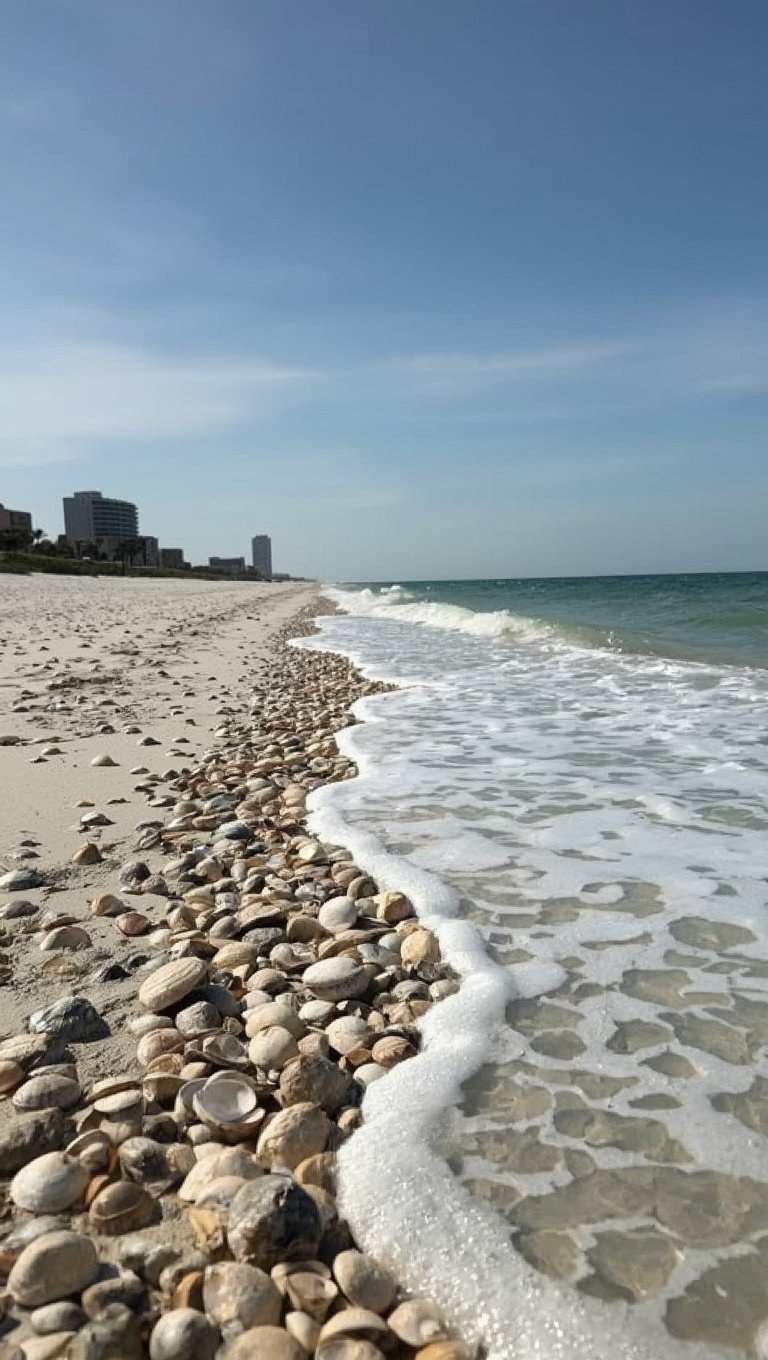
The shells are often buried just under the surface of wet sand, right at the waterline.
You have to look with your feet sometimes, not just your eyes.
That’s the kind of thing nobody tells you before your first shelling trip, and it makes all the difference.
Lowdermilk Park Beach: My Go-To for a Casual Morning Hunt

Lowdermilk Park doesn’t always make the “shelling legend” lists, and I think that’s honestly in your favor.
It’s a bit more local.
A bit quieter in feel, even when it’s not empty.
When I first started coming to Naples regularly, this was my warm-up beach.
The kind of place I’d hit before coffee, just to ease into the day.
The shoreline here tends to collect smaller shells — olives, auger shells, coquinas in all their little rainbow colors — but don’t underestimate that.
Coquinas are sort of addictive.
You start picking them up casually and suddenly your pockets are full and you have no idea how it happened.
The vibe at Lowdermilk is relaxed.
Families, joggers, locals with dogs.
It’s not a spot where everyone’s heads-down hunting, which I kind of love.
You feel less pressure.
You can meander.
My personal hack here: arrive right after a storm or strong overnight wind.
The wave action stirs things up and deposits a fresh layer of shells by morning.
I’ve had some genuinely excellent finds here after a breezy night, totally unexpectedly.
So don’t count it out just because it’s “the easy beach.”
Sometimes easy is exactly what you need.

Your Ultimate Caribbean Adventure Awaits!
Discover hidden coves, secret beaches, and the best rum punches in the islands. Your insider’s guide to Caribbean paradise.
Get Your Guide Now$15.99Delnor-Wiggins Pass State Park: Where the Serious Shellers Go

Okay, so this one.
This one is where I send everyone who’s ready to graduate from casual beach walker to actual shelling enthusiast.
Delnor-Wiggins Pass State Park is, in my experience, one of the most consistently productive shelling beaches in the Naples area.
And it’s because of the pass.
The tidal pass at the north end of the beach acts like a natural funnel.
Shells get carried in with the tide, concentrate near the pass, and just… wait for you.
I’ve found lightning whelks here — big, heavy, gorgeous ones — more than once.
The first time I found a large intact whelk at the pass, I literally took a photo of it in the sand before I picked it up because I didn’t want to forget the moment.
Kinda nerdy, I know.
Worth it.
The beach itself is beautiful in a wild, natural way.
No high-rises blocking the horizon.
Just palms, sea grapes, and that long stretch of creamy white sand.
My recommendation: park early.
The lot fills up fast, especially on weekends.
Get there at opening, walk straight to the north end near the pass, and start there before working your way south.
You’ll thank me later.
Clam Pass Beach: Hidden Gem Energy, For Real

Clam Pass has this quality I can only describe as secret.
Even though people absolutely know about it, it still feels like something you stumbled onto.
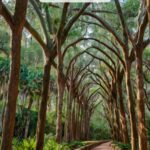
You access it by walking through a long boardwalk that cuts through mangrove tunnels, and by the time you emerge onto the sand, you feel like you’ve earned it somehow.
That boardwalk walk alone is worth the trip, by the way.
The mangroves are kind of stunning.
Shelling here tends to be more varied than predictable, which I actually love.
Some mornings you’ll find a haul of lettered olives and cone shells.
Other days it’s mostly coquinas and broken pieces.
But when Clam Pass delivers, it really delivers.
One late afternoon visit last spring, I found a near-perfect banded tulip right at the edge of the tidal zone.
Still have it on my shelf.
The pass opening here creates similar shell-funneling conditions to Delnor-Wiggins, just on a smaller scale.
My hack for Clam Pass: time your visit to low tide in the late afternoon.
The light hits the water at this gorgeous golden angle, and the shallow tidal flats near the pass really open up.
You can wade in ankle-deep and see shells resting right on the bottom.
It’s one of my favorite shelling experiences in all of Naples.
Totally underrated.
Tigertail Beach (Marco Island): Worth the Drive, Every Single Time

Technically, Tigertail Beach is on Marco Island, which is just south of Naples proper.
But if you’re making a shelling trip to this part of Florida and you skip Tigertail, I’m going to be genuinely sad for you.
This beach is special.
It has a unique double-beach setup — the main beach, and then a sandbar lagoon called Sand Dollar Island that forms across a shallow tidal flat.
That lagoon is where the magic happens.
When the tide is low, you can wade across the knee-deep water to Sand Dollar Island and find shells that haven’t been touched.
I’m talking undisturbed, fresh-off-the-ocean-floor stuff.
The first time I crossed over, I found three sand dollars in less than twenty minutes.
Big ones.
Honestly, it felt sort of unreal.
The variety here is exceptional too — horse conchs, fighting conchs, lace murexes, lightning whelks.
The fighting conch in particular shows up here in really good condition because the lagoon shields shells from wave damage.
My recommendation: wear water shoes for the crossing.
The sand is soft and a little uneven, and you’ll be glad you did.
Go at low tide — you can check tide charts for Marco Island before you head out.
It’s the kind of beach that makes you want to stay all day.
And honestly, you should.
Caribbean Paradise Unlocked
From pristine beaches to vibrant local culture, discover the Caribbean’s best-kept secrets with my comprehensive travel guide.
- 120+ Hidden Beach Secrets
- Local Cuisine Guide
- Budget Travel Tips
- Island Hopping Routes
The Best Time of Day to Find Shells (My Honest Routine)

I’ve tried every time of day.
Midday, sunset, even a few ill-advised late-afternoon sessions when the beach was crowded and the shells were picked over.
And I’ll tell you straight up: early morning low tide is when Naples gives you its best.
Like, really early.
Think sunrise or just before.
The beach is mostly empty.
The light is soft and low, which actually helps you spot shells because it creates shadows and contrast in the sand.
And most importantly, the overnight tide has just deposited a fresh layer of everything the Gulf pushed in.
You’re essentially first in line.
I’ve gotten into the habit of checking tide predictions the night before any beach day.
When low tide falls between six and eight in the morning, I’m setting an alarm.
No question.
That window is gold.
Now, second best option if you’re not a morning person (no judgment, I wasn’t either before Naples converted me): try the hour before and after low tide in the late afternoon.
The light is still beautiful, the crowds thin out as people head to dinner, and you can sometimes find a surprisingly good haul as the tide recedes.
But honestly?
Dawn is where it’s at.
Once you have a sunrise shelling session on one of these beaches, you’ll just get it.
What Shells to Actually Look For in Naples
Naples has a reputation for variety, and it’s not exaggerated.
But knowing what you’re looking for makes the whole thing more fun.
Let me tell you about my personal most-wanted list.
The lightning whelk is the big prize.
It’s Florida’s state shell, it spirals to the left (which is rare), and finding a large intact one feels like winning something.
The horse conch is the other trophy shell — massive, orange-pink on the inside, and absolutely stunning when it’s fresh.
I found a baby horse conch once, about two inches long, and it was the cutest thing.
Kept it.
For everyday finds, watch for the lettered olive — smooth, cylindrical, beautifully patterned.
Auger shells are fun to collect in multiples because they’re long and twisty and look great in a jar.
The banded tulip is another favorite of mine — sort of creamy with rust-colored swirling bands.
Really elegant.
And then there’s the junonia.
The legendary junonia.
Spotted, rare, and the kind of shell that makes Naples shelling enthusiasts act slightly insane.
If you find one, take the photo before you pick it up.
Trust me on that.
Shelling Etiquette Nobody Talks About But Should

I’m going to say something that might be unpopular but I genuinely believe it.
Please don’t collect live shells.
I know it’s tempting — a live cone shell is gorgeous and vivid and the colors are unbelievable.
But taking live shells disrupts the ecosystem in ways that add up fast.
And honestly, a shell with an animal still in it is going to smell terrible within a day or two, so it’s not even practical.
The rule I follow: if something’s alive, photograph it and put it back.
If it’s empty and clean, it’s yours.
Also — and this one matters — be mindful about quantity.
Naples has seen heavy shelling pressure over the years.
I take what I genuinely love and will display or keep.
Not handfuls of the same shell just because I can.
There’s something more intentional about that approach anyway.
Your collection means more when every piece is chosen.
One more thing: some areas within state parks have specific rules about shell collecting.
Delnor-Wiggins, for example, has guidelines about live shells and quantities.
It’s worth knowing the rules before you go.
The beaches stay beautiful when we all show up with a little respect for them.
And we want these beaches to be incredible for the next person too, you know?
Your Ultimate Caribbean Adventure Awaits!
Discover hidden coves, secret beaches, and the best rum punches in the islands. Your insider’s guide to Caribbean paradise.
Get Your Guide Now$15.99What to Bring on a Naples Shelling Trip (My Actual Packing List)

I’ve shown up underprepared enough times to have strong opinions about this now.
Here’s what I actually bring.
A mesh bag or net bag — not a plastic bag.
Mesh lets water and sand drain out as you walk, so you’re not lugging around a wet, heavy lump of sand by the end of the morning.
Polarized sunglasses are genuinely useful for shelling.
They cut the glare off the water surface so you can actually see into shallow tidal zones.
I didn’t believe this until I tried it.
Water shoes if you’re heading to Tigertail or anywhere with a tidal crossing.
Non-negotiable for me now.
Sunscreen and a hat.
You will be out there longer than you think, especially once you get into it.
A small field guide to Gulf shells — there are physical ones you can pick up locally in Naples.
Great for identifying what you found on the spot.
And finally: a waterproof phone pouch or case.
You will want to wade in at some point.
You will also want to take photos.
Wet phone is not the vibe.
My optional addition that sounds ridiculous but I swear works: a small strainer or garden sieve.
Sifting wet sand right at the waterline reveals tiny shells you’d never see otherwise.
Some of my most beautiful small finds have come from sifting.
How Weather and Tides Actually Change Everything

I used to think beach conditions were just about whether it was sunny or cloudy.
Then Naples taught me to think in tides and weather patterns, and shelling became a completely different experience.
Here’s the thing: the best shelling days often come after the least comfortable weather.
A day or two after a strong onshore wind — or better yet, after a storm system passes through — the beaches are loaded.
The wave action stirs up the seafloor and the current pushes everything toward shore.
I’ve walked beaches the morning after a rough weather night and found more shells in an hour than I’d find in a full calm day.
Low tide is your other major variable.
At low tide, more seafloor is exposed, tidal pools form, and shallow areas near passes become wading zones full of shells that are just sitting there.
High tide buries everything.
So the combo I’m always chasing: low tide, post-wind, early morning.
When all three line up, it’s sort of extraordinary.
You can check tide predictions easily through free weather and marine apps, and I’d really encourage you to build that habit.
Matching your beach visit to the tidal cycle makes such a dramatic difference.
It took me two or three trips to Naples to figure this out.
Now it’s the first thing I do when I’m planning a shelling morning.
Nearby Spots Worth Adding to Your Shelling Trip

Naples itself is wonderful, but the surrounding area has a few more spots I’d be doing you a disservice not to mention.
Barefoot Beach Preserve in Bonita Springs is just north of Naples and honestly one of the most beautiful stretches of sand in the whole region.
It’s a county preserve, which means low crowds and a more natural feel.
I’ve had solid shelling luck here, particularly in the area near the northern end of the beach where it starts to curve toward Little Hickory Bay.
Keewaydin Island is a shell collector’s dream.
It’s a barrier island accessible only by boat — no roads, no development, basically just beach and shells.
You can take a water taxi from Naples.
The lack of foot traffic means shells pile up undisturbed, and the variety is excellent.
It’s one of those places that feels genuinely remote even though you’re just a short boat ride from downtown Naples.
And then there’s the Ten Thousand Islands area just south of Naples, which offers a totally different experience — more mangroves, more kayaking, more of a wild-Florida feel.
Shelling from a kayak here is a specific kind of adventure I’d recommend to anyone who’s comfortable on the water.
Each of these spots adds something different to a Naples shelling trip.
Don’t feel like you have to stick to just one beach.
Caribbean Paradise Unlocked
From pristine beaches to vibrant local culture, discover the Caribbean’s best-kept secrets with my comprehensive travel guide.
- 120+ Hidden Beach Secrets
- Local Cuisine Guide
- Budget Travel Tips
- Island Hopping Routes
Why Shelling in Naples Gets Under Your Skin

I’ll be real with you.
I didn’t expect to become a shell person.
I thought it would be a one-time thing, a beach activity I’d do once to say I’d done it.
But there’s something about shelling that just gets you.
It’s slow in a world that isn’t slow.
You’re looking at the ground, thinking about almost nothing except what’s right in front of you.
There’s no phone to check.
No emails.
Just the sound of the Gulf, the warmth of early sun on your shoulders, and the particular quiet satisfaction of spotting something beautiful in the sand.
I think that’s why Naples keeps pulling me back.
It’s not just the shells themselves — though honestly, some of what I’ve found is genuinely jaw-dropping.
It’s the feeling of the whole thing.
The ritual of waking up early, walking to the water, the slight chill of morning air before it turns warm.
The way your eye starts to calibrate after twenty minutes and you begin to see shapes and colors you were missing before.
It’s meditative in a way that doesn’t ask anything of you.
You’re just present.
And in the middle of a life that moves way too fast, that feeling is sort of rare and precious.
Naples gave that to me.
And I genuinely think it might give it to you too.