I had the flights booked for somewhere else entirely.
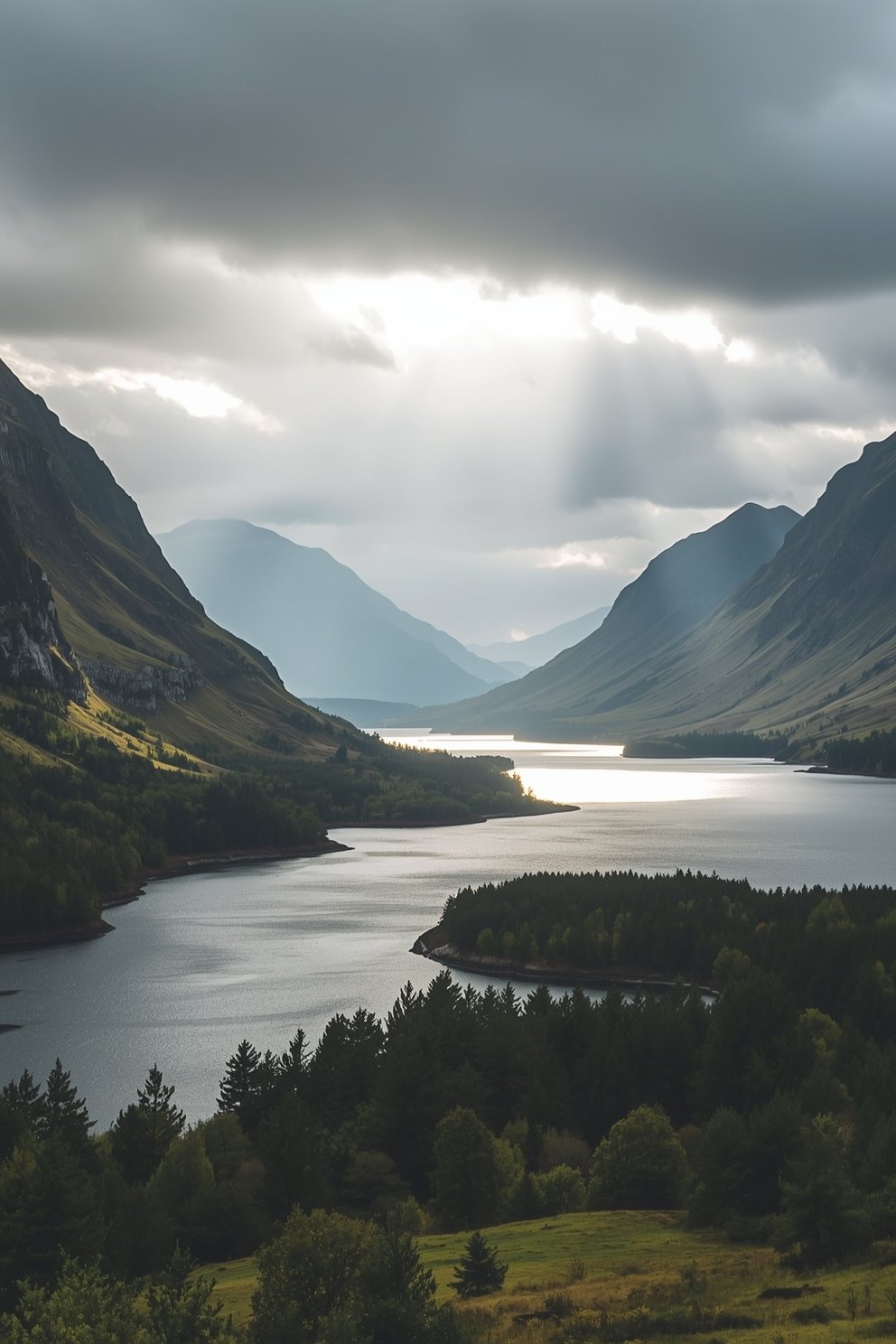
Then a buddy of mine sent me a ten-second clip — just fog rolling over a ridge, a single-lane road cutting through golden moorland, complete silence.
I cancelled the other trip that night.
Something about that footage hit different.
It wasn’t just beautiful.
It felt untouched.
Like the land didn’t care whether you showed up or not, and that’s exactly what made me need to go.
I’ve been travel vlogging for a while now, and I’ll be honest — it’s easy to lose the spark when every destination starts to feel curated and filtered before you even get there.
Scotland handed me something I hadn’t felt in a long time.
Real, unscripted, slightly-uncomfortable-in-the-best-way adventure.
And I got most of it on camera.
Getting Into the Highlands — The Drive That Changes You

Nobody tells you enough about the drive up.
Seriously.
People talk about the castles and the lochs, but the drive itself?
That’s the first scene of your vlog right there.
I flew into Glasgow, grabbed a rental car, and headed north on the A82 along Loch Lomond.
Within twenty minutes, I had pulled over four times just to film.
The road narrows as you push further into the Highlands, and the landscape starts doing this slow, dramatic reveal — like it’s building up to something.
Hills get bigger.
Clouds get lower.
The green gets so saturated it almost looks fake on the lens.
If you’re vlogging, I’d strongly suggest mounting a camera on your dashboard from the moment you leave the city.
Some of my most-watched footage ended up being just me driving, reacting, narrating in real time.
No script.
No plan.
Just the road and whatever showed up.
That rawness is what people connect with.
Don’t try to make the drive look polished.
Let it be what it is — a slow, stunning introduction to one of the most cinematic places on earth.
Why the Highlands Are Basically a Vlogger’s Dream Location

I don’t say this lightly — the Scottish Highlands might be the single most naturally dramatic filming location I’ve ever been to.
And I’ve filmed in some places.
Every direction you point a camera, there’s something happening.
Mist moving through a valley.
A lone stag standing on a hilltop.
A stone bridge over a river that looks like it’s been there since before anyone thought to name it.
The light does something insane here too.
Because of the latitude and how often clouds are moving through, you get these sudden golden breaks where everything just glows.
Cinematographers call it “soft light.”
I call it “the universe cooperating.”
It’s moody, it’s dramatic, and it photographs beautifully even on a phone camera.
I brought my mirrorless setup and a small drone, and both performed like they were made for this place.
But here’s what I want you to know — even if you’re vlogging on a smartphone, the Highlands will make your footage look expensive.
The location does the heavy lifting.
You just have to show up, stay curious, and keep the lens pointed outward.
My First Morning in Glencoe — And Why I Got Emotional

Glencoe broke me a little bit, in the best way.
I camped near the valley floor my first night, woke up before sunrise, and stepped outside into this absolute stillness.
No wind.
No cars.
Just a purple-grey sky slowly catching light over the Three Sisters — those three massive ridgelines that frame the valley.
I stood there for probably ten minutes before I even thought to grab my camera.
Sometimes the moment is bigger than the content.
When I did start filming, I just talked.
I didn’t have notes.
I didn’t have a plan for what to say.
I just described what I was seeing and feeling, and that five-minute clip ended up being one of the most commented videos I’ve ever posted.
People said it gave them chills.
One person said they booked flights the next day.
That’s what Glencoe does to you.
It’s not just pretty.
It’s heavy with history — it was the site of a brutal 17th-century massacre, and the landscape carries that weight somehow.
You feel it even if you don’t know the story.
Film here.
Stay here if you can.
Let the place talk through your footage.
🗼 I Wrote a Book About My Japan Travel Catastrophes!
Before I landed in Tokyo, I thought I was the “Final Boss” of international travel. Spoiler alert: I WASN’T. 😅
🚅 I boarded the wrong Shinkansen and ended up in THE WRONG CITY. I confused locals with my “expert” bowing that was more awkward than accurate. I accidentally stumbled into a high-stakes Kendo practice thinking it was a tourist show. Sound like something you’d do?
“Things I Wish I Knew Before Going to Japan” is your shortcut to avoiding ALL my cringe-worthy mistakes. ✨ Inside, you’ll find practical, LIFE-SAVING tips on etiquette, transport, money, and hidden gems that will save you time, money, and a whole lot of confusion.
What to Actually Pack for a Highlands Vlog Trip

Let me save you some headaches here, because I learned a few things the slightly painful way.
Layers are everything.
I cannot stress this enough.
The weather in the Highlands changes every fifteen minutes — I’m not exaggerating.
I went from filming in sunshine to getting absolutely soaked in about four minutes flat near Loch Ness.
Waterproof jacket, waterproof pants, waterproof boots.
All three.
Every day.
For filming gear, I’d recommend a solid windscreen for your microphone because the wind up here is relentless, and it will ruin your audio if you’re not prepared.
I use a dead cat cover on my shotgun mic and still had to reshoot audio on some clips.
A polarizing filter for your lens is a game-changer for capturing lochs — it cuts the glare and makes the water look that deep, mysterious green-blue color you see in all the best Highland photos.
A sturdy tripod matters too.
The terrain is uneven and sometimes you want to step away from the camera and just be in the scene.
Pack light overall though.
You’re going to be hiking, scrambling over rocks, and probably getting wetter than you planned.
Keep your kit manageable.
Loch Ness — Yes, You Should Still Go

I know.
You’ve heard about it.
You’ve seen the cheesy tourist stuff.
Go anyway.
Here’s the thing about Loch Ness that the internet doesn’t really convey — it is genuinely one of the largest, most imposing bodies of water you will ever stand next to.
It stretches 23 miles long and is so deep that it holds more fresh water than all the lakes in England and Wales combined.
Just let that sit for a second.
Standing on the shore, looking out at that dark, glassy surface with mist sitting low over the far bank — it’s actually eerie in a fascinating way.
For vlogging, I shot a segment where I just sat by the water at dawn and talked about how strange it is to be somewhere so mythologized in pop culture, and then experience it as this completely raw, wild place.
That tension — expectation versus reality — is great content.
Also, Urquhart Castle ruins sit right on the loch and are genuinely one of the most atmospheric spots I’ve ever filmed.
Golden hour there is something else entirely.
Don’t let the tourist reputation put you off.
Go early, stay late, and find your own angle.
The Small Towns Nobody Tells You to Stop In

Okay, this is my personal favorite part of the whole trip.
The tiny towns.
Everybody rushes through to get to the famous spots, and I get it — but some of my most unexpectedly perfect footage came from just pulling over in a village that didn’t even show up on my original itinerary.
Kinlochleven.
Inveraray.
Dunkeld.
These places have this incredible layered quality — old stone buildings, rivers running right through town, locals who are genuinely happy to chat if you approach with respect and curiosity.
I had a twenty-minute conversation with an older Scottish guy outside a bakery in a town I’d never heard of, and I filmed part of it (with his permission).
That clip humanized the whole trip in a way that no landscape shot could.
People connect with people.
If you’re building a travel vlog and you want depth, slow down.
Stop in the towns that don’t have an Instagram hashtag yet.
Order something from a local café.
Ask someone what their favorite spot nearby is.
You’ll find things that simply do not exist on any “Top 10 Highlands” list.
And your audience will feel the difference immediately.
Filming the Fairy Pools on Skye — A Lesson in Patience

I’m going to be honest about the Fairy Pools on the Isle of Skye.
They are as beautiful as advertised.
They are also extremely popular.
I showed up mid-morning like an amateur and the trail was packed.
Not great for the kind of serene, immersive vlog content I was hoping for.
So I came back.
Left my accommodation at 5:30am, drove through the dark, and arrived at the trailhead just as the sky was beginning to lighten.
I had the whole place to myself for almost ninety minutes.
The water in those pools is this impossible turquoise color — cold, clear, fed by waterfalls coming off the Black Cuillin mountains above.
I set up a wide shot with my tripod, let the camera roll, and just stood there listening to the water.
Some of the best footage I’ve ever captured was completely passive — just letting the scene happen in front of a locked-off camera.
My tip: go at first light, go at golden hour, or go in light rain.
The rain actually makes the Fairy Pools look incredible — the colors deepen and the falls get more dramatic.
Don’t let a little weather stop you.
That’s part of the story.
How I Structured My Highlands Vlog Series

This is the behind-the-scenes stuff I know a lot of you actually want.
So here’s how I broke it down.
Rather than one long video, I split the Highlands content into a series.
The first episode was pure arrival energy — the drive, the first reactions, the landscape reveal.
Emotional and cinematic.
Second episode went deeper — I focused on one place (Glencoe) and told the history alongside my personal experience.
More substance, more storytelling.
Third episode was a “slow travel” format — less rushing, more sitting with the place.
Café stops, small towns, genuine conversations.
Fourth was the practical guide — gear, driving tips, where I stayed, what I’d do differently.
That one gets the most saves and shares, consistently.
Structuring it as a series rather than one video gave each episode room to breathe, and it kept people coming back across multiple weeks.
The Highland trip ended up being my most-watched content in a long time.
Not because I had fancy equipment or a huge budget.
Because the place is genuinely extraordinary, and I let that come through instead of trying to produce over it.
Trust the destination.
It will do most of the work for you.
What Surprised Me Most About Scottish People

I want to talk about this because it genuinely shaped the trip.
Before I went, I’d heard the stereotype — reserved, dry sense of humor, not particularly warm to outsiders.
Complete opposite of my experience.
Scottish people, especially up in the Highlands, are some of the most welcoming, funny, and quietly proud people I’ve ever encountered while traveling.
They love their country deeply.
And if you show genuine curiosity and respect — not the performative tourist kind, but actual interest — they open up in a really generous way.
I had a pub owner in Fort William spend forty-five minutes drawing me a hand-written map of his favorite spots in the area that weren’t on any tourist guide.
That map led me to a waterfall I had entirely to myself.
I had a farmer near Rannoch Moor stop his truck to explain the history of the land clearances to me when I asked what a particular stone structure was.
These interactions are the soul of travel content.
Film them when you can.
Reference them when you can’t.
And always, always lead with respect and genuine curiosity.
People can feel the difference between someone who wants to extract content and someone who actually wants to connect.
Be the second kind.
🗼 I Wrote a Book About My Japan Travel Catastrophes!
Before I landed in Tokyo, I thought I was the “Final Boss” of international travel. Spoiler alert: I WASN’T. 😅
🚅 I boarded the wrong Shinkansen and ended up in THE WRONG CITY. I confused locals with my “expert” bowing that was more awkward than accurate. I accidentally stumbled into a high-stakes Kendo practice thinking it was a tourist show. Sound like something you’d do?
“Things I Wish I Knew Before Going to Japan” is your shortcut to avoiding ALL my cringe-worthy mistakes. ✨ Inside, you’ll find practical, LIFE-SAVING tips on etiquette, transport, money, and hidden gems that will save you time, money, and a whole lot of confusion.
The Drone Footage That Made My Whole Channel Go Nuts

I need to talk about drones in the Highlands because — good lord.
I’ve flown my drone in a lot of places.
Nothing prepared me for what the aerial perspective looked like over the Highlands.
You get up maybe 200 feet and suddenly you understand the scale of everything.
You can see how the valleys were carved by glaciers.
You can see the full geometry of a loch stretching off toward the horizon.
You can see tiny roads cutting through massive, treeless moors that look like something from another planet.
My drone footage over Rannoch Moor — this wild, open expanse of boggy moorland — got more comments than almost anything I’ve posted.
People were genuinely shocked by how vast and empty it looked.
A few practical notes though: check the drone regulations before you go.
There are restrictions around certain heritage sites and national park areas, and you don’t want to get caught out.
Also, wind is a real factor up here.
The gusts come out of nowhere, especially near ridgelines and open water.
Know your drone’s wind tolerance and don’t push it.
The shots are worth getting safely, not recklessly.
Plan your flights for calm mornings.
The footage will be better for it anyway.
If I Were Planning This Trip Again — What I’d Change

A few honest reflections here, because I think this is useful.
I’d give myself more time.
I did nine days and felt like I barely scratched the surface.
The Highlands are massive — bigger than you think when you’re looking at a map — and driving distances between spots take longer than GPS estimates because the roads are so narrow and winding.
Beautiful, but slow.
I’d stay in more local guesthouses instead of splitting my time between those and generic hotels.
The guesthouses had character, better breakfast, and hosts who gave me information that turned into some of my best content.
I’d skip trying to see everything and instead go deep on a few areas.
The Cairngorms, for example — I only had one day there and it deserved at least three.
I’d also plan one full unfilmed day.
No camera.
No vlogging.
Just being there.
It sounds counterintuitive, but when you let yourself be a traveler instead of a content creator for even one day, you come back to filming with so much more to say.
The rest day always improves the vlog.
Always.
Your audience can feel when you’ve actually lived the place versus just filmed it.
Give yourself permission to put the camera down.
The Feeling That Stays With You After the Highlands

I’ve been home for a while now and I still think about it almost every day.
That’s not something I say about every trip.
There’s a specific feeling the Highlands give you that I’ve been trying to articulate ever since I got back.
It’s something like being reminded that the world is enormous and ancient and largely indifferent to your schedule.
And somehow that’s comforting instead of frightening.
Standing in Glencoe at dawn, or watching the light move across Rannoch Moor, or sitting by a loch so quiet you can hear your own breathing — those moments recalibrate something in you.
They make the noise of ordinary life feel very, very far away.
I think that’s why the vlog resonated with so many people.
Not because I had perfect footage or clever editing.
Because the place itself carries something true.
And when you put a camera in front of something true and get out of the way, people feel it.
That’s the whole job, really.
Go somewhere real.
Stay curious.
Get out of the way.
The Highlands will handle the rest.