Most road trips have one or two “wow” moments.
The free driving abroad checker covers every country: which side of the road, and the International Driving Permit.
The South Island is basically one continuous wow moment with a few gas stations in between.
And I mean that in the best way possible.
The landscape changes so fast it almost feels unreal.
One hour you’re driving through golden tussock grasslands that look like something out of a fantasy film.
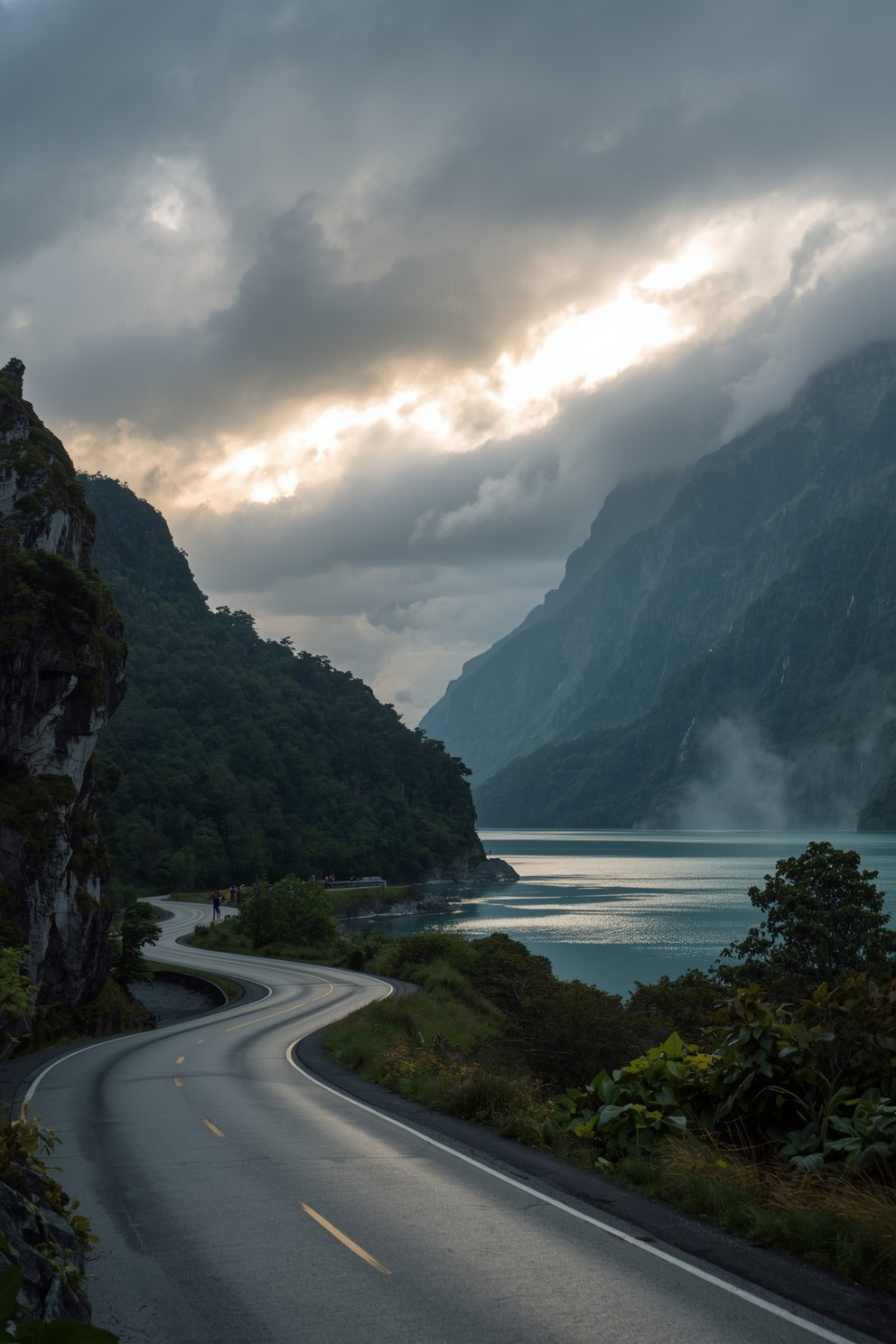
The next, you’re hugging a cliffside road with a glacier on your left and a turquoise river on your right.
What makes it so special — and I’ve thought about this a lot — is that it never feels crowded in the way other beautiful places do.
Even in the busy season, there are long stretches of highway where it’s just you, the mountains, and whatever playlist you’ve got going.
I drove a big chunk of this trip solo, and I never once felt lonely.
If anything, the landscape kind of becomes your company.
It’s majestic without being intimidating.
Wild without being harsh.
And once you get past Christchurch and into the interior, there’s this feeling of genuine remoteness that’s hard to find anywhere else without a helicopter.
It’s the kind of place that resets something in you.
I don’t know how else to say it.
My Recommended Route and the Order I’d Drive It

So here’s the thing — there’s no single “right” way to do this road trip.
But after doing it myself and talking to a lot of other travelers who’ve made the loop, I’d strongly suggest starting in Christchurch and heading south and west before looping back.
My rough route went: Christchurch → Lake Tekapo → Mount Cook → Wanaka → Queenstown → Milford Sound → The Catlins → Dunedin → Christchurch.
That’s roughly twelve to fifteen days if you actually want to breathe and not just race through it.
Ten days is the absolute minimum I’d recommend, and even then, you’ll wish you had more.
If you’re the type who likes to stop constantly — which I very much am — build in buffer days.
I had one unplanned day in Wanaka because I simply couldn’t bring myself to leave.
No regrets whatsoever.
Renting a car in Christchurch is easy, and returning it there means you don’t pay a drop-off fee at a different location.
Get a car that sits a little higher if you can.
Some of the side roads are unpaved and bumpy, and trust me, you’ll want to take those side roads.
Christchurch: Don’t Just Speed Through It

A lot of road trip guides treat Christchurch like a layover city — a place you fly into and immediately drive away from.
I disagree.
Give it at least a day, maybe two.
The city has this fascinating, slightly scrappy creative energy that I found genuinely compelling.
It went through a lot after the earthquakes, and what’s been rebuilt has this raw, intentional feeling — street art, container markets, independent coffee shops wedged into spaces that haven’t been fully rebuilt yet.
There’s a neighborhood called the Arts Centre that I wandered through for an entire afternoon and didn’t want to leave.
The Botanic Gardens are the kind of place where you sit on the grass and suddenly two hours have passed.
The food scene is legitimately good, by the way.
I had a breakfast at a little café near the Avon River that I still think about — poached eggs on sourdough with this smoky tomato situation that I could not fully identify but absolutely loved.
Fuel up here.
Stock the car with snacks.
Get your head into the road trip mindset.
Because once you leave Christchurch and start heading toward the interior, the landscape starts doing things to your brain that require you to be paying full attention.
Your Ultimate Caribbean Adventure Awaits!
Discover hidden coves, secret beaches, and the best rum punches in the islands. Your insider’s guide to Caribbean paradise.
Get Your Guide Now$15.99Lake Tekapo and Why the Color of That Water Is Actually Real

The first time I saw Lake Tekapo, I genuinely thought my sunglasses were messing with me.
The water is this impossible, almost electric turquoise — the kind of blue that doesn’t look like it belongs in nature.
Except it does.
It’s caused by glacial flour suspended in the water, which sounds very scientific but basically just means the lake looks like a dream and there’s a good reason for it.
The Church of the Good Shepherd sits right on the shoreline, small and stone-built, with a window behind the altar that frames the mountains and the lake instead of stained glass.
It’s one of those spots that you’ve probably seen in photos and assumed would be overrated.
It’s not overrated.
Even with other people around, it manages to feel quiet and meaningful.
What I’d suggest — and this changed the whole experience for me — is staying at least one night.
The Mackenzie Basin has some of the darkest skies in the world, and on a clear night, the stars are so dense and bright that it looks like the sky is crowded.
If you’ve never seen the Milky Way properly, this might be your moment.
Bring a jacket.
The nights get cold fast, and standing outside staring up at the sky for forty-five minutes is kind of unavoidable.
Mount Cook: The Non-Negotiable Stop

Mount Cook — or Aoraki, which is its Māori name and the one I prefer — is the tallest peak in New Zealand, and it is absolutely, completely worth the detour.
The road into the Aoraki/Mount Cook National Park is a dead-end road, which means you drive in and drive back out the same way.
Some people skip it for that reason.
Those people are missing out enormously.
The valley it sits in is this long, wide corridor of grey gravel and braided rivers, with glacier-covered peaks at the end of it that get bigger and more dramatic the closer you get.
I did the Hooker Valley Track, which is about a three-hour round trip walk that ends at a glacial lake with icebergs floating in it.
Actual icebergs.
It’s not a hard walk — you cross a few suspension bridges and gain some gentle elevation — but the payoff is ridiculous.
Standing at the end of that trail, looking at Mount Cook reflected in glacier water with chunks of ice drifting past you, is the kind of moment that doesn’t need a filter.
The village has a small store and a café.
Fuel up here if you need to.
And then, reluctantly, drive back out and keep going toward Wanaka.
Wanaka: The Town I Almost Stayed In Forever

Wanaka has a reputation as the “quieter alternative” to Queenstown, and while that’s technically true, it undersells it pretty badly.
Wanaka isn’t just a quieter version of something else.
It’s its own thing entirely, and I think it might be my favorite stop on the whole route.
The town sits right on the edge of Lake Wanaka, with views of the Buchanan Peaks across the water that you’ll find yourself staring at constantly.
There’s a famous lone tree that grows out of the lake just offshore — you’ve probably seen it in photographs — and yes, it’s a little touristy to go see it, but it’s also genuinely beautiful, especially at sunrise.
The café culture here is fantastic.
I found a little spot near the main street that made the best flat white I had on the entire trip, and I went back twice.
If you’re into hiking, Roys Peak is a big deal — a long, steep climb with panoramic views at the top that are legitimately jaw-dropping.
It’s a full-day commitment.
I did it, slightly undersupported on snacks, and paid for it, but would absolutely do it again.
Give Wanaka two nights if you can.
It’s the kind of town that rewards you for slowing down.
Caribbean Paradise Unlocked
From pristine beaches to vibrant local culture, discover the Caribbean’s best-kept secrets with my comprehensive travel guide.
- 120+ Hidden Beach Secrets
- Local Cuisine Guide
- Budget Travel Tips
- Island Hopping Routes
Queenstown Without Falling Into the Tourist Trap

Queenstown has a lot going on, and not all of it is for me.
It’s the adrenaline capital of the world, which means bungee jumping and skydiving and jet boating and every other thing that involves speed and screaming.
That’s genuinely great if that’s your thing.
If it’s not, Queenstown can feel a little loud.
But here’s what I discovered — there’s a version of Queenstown that’s totally worth your time even if you don’t want to jump off anything.
The lake is stunning.
The Remarkables mountain range behind the town looks almost cartoonishly dramatic, especially when there’s snow on the peaks.
A gondola ride up to the Skyline is worth it for the views alone.
The food and restaurant scene is legitimately world-class.
I had a meal at a small restaurant in town — nothing fancy-looking from the outside — that was one of the best meals of the trip.
The wine region around Queenstown is also special.
Central Otago is one of the southernmost wine regions on the planet, and the Pinot Noir coming out of there is extraordinary.
Hit a cellar door or two.
Don’t rush through Queenstown just because it has a party reputation.
Find your version of it.
Milford Sound: The Drive Is Half the Point

Milford Sound is one of those places that makes it onto every list of the world’s most beautiful places, and it earns it.
But nobody talks enough about the drive to get there.
The road from Te Anau into Fiordland winds through beech forest that gets increasingly dramatic the further in you go.
The Homer Tunnel — a single-lane tunnel carved straight through a mountain — is this genuinely wild experience, especially when you emerge on the other side into the Cleddau Valley and your brain takes a second to process what it’s seeing.
The Sound itself is all dark, vertical cliffs dropping straight into the sea, with waterfalls spilling off the tops of them everywhere you look.
It rains a lot here — a lot — and honestly, the more it rains, the more waterfalls appear, so there’s a case to be made that bad weather makes it better.
I took a cruise on the Sound, which I’d recommend.
Being out on the water and looking back at those cliffs gives you a scale that you can’t get from the shore.
Stay in Te Anau the night before and do the drive early in the morning if you can.
The light is softer, the tour buses are thinner on the road, and you’ll have a few stretches all to yourself.
The Catlins: New Zealand’s Best Kept Secret

I almost skipped the Catlins.
It wasn’t in the original plan, and a guy I met at a hostel in Queenstown told me about it almost as an afterthought.
I am so glad I listened to him.
The Catlins is a wild, remote stretch of coastline in the southeastern corner of the island that feels completely different from everywhere else on this route.
It’s rugged and windswept and gorgeous in this raw, untouched way that caught me off guard.
The roads are mostly narrow and a little rough.
There are sea lions just… lying on the beaches.
Waterfalls that drop directly into the ocean.
A petrified forest that disappears at high tide.
Nugget Point Lighthouse sits at the end of a short walk out on a headland, with rocks below covered in seals and seabirds and crashing waves.
I sat out there for a long time and didn’t want to move.
The Catlins doesn’t have much in the way of infrastructure — small towns, a few cafés, some basic accommodations.
Pack food.
Don’t rely on finding fuel everywhere.
And don’t go there expecting manicured tourist experiences.
Go there expecting something that feels genuinely wild and discovered.
It’ll deliver.
Your Ultimate Caribbean Adventure Awaits!
Discover hidden coves, secret beaches, and the best rum punches in the islands. Your insider’s guide to Caribbean paradise.
Get Your Guide Now$15.99What to Pack and What to Leave at Home

The South Island will throw a lot of different weather at you, sometimes all in the same afternoon.
Layers are not optional — they are survival strategy.
A good waterproof jacket is probably the single most important thing you can bring.
Not a light rain layer.
An actual, serious waterproof jacket.
I learned this on the Hooker Valley Track when the sky went from blue to sideways rain in about twelve minutes.
Merino wool base layers are worth the investment.
They regulate temperature incredibly well and don’t smell after a full day of hiking, which matters when you’re living out of a car.
Comfortable hiking boots that are already broken in.
Please, for your own sake, do not bring new boots on this trip.
A reusable water bottle with a filter is genuinely useful in some of the more remote areas.
Leave the heavy stuff at home.
You do not need four pairs of jeans.
The car will feel small after day three, and everything you don’t need will start to annoy you.
A small dry bag for day hikes is smart.
Sunscreen, even on cloudy days — the UV down here is no joke.
And a portable power bank, because you will absolutely be somewhere beautiful with a dead phone at some point.
Where to Sleep Without Wrecking Your Budget

Accommodation on the South Island runs the full range, from luxury lodges to freedom camping spots that cost you nothing.
If you’re on a budget, New Zealand has a really solid network of holiday parks and campgrounds that are clean, well-equipped, and often in genuinely beautiful locations.
Freedom camping — which means pulling off and sleeping in or near your car at designated spots — is legally allowed in many areas with the right permit and a self-contained vehicle.
It’s worth looking into if you want the full rugged experience.
For the towns, I’d suggest booking ahead for Queenstown and Milford Sound.
They fill up fast, especially in the popular seasons.
Wanaka has a few smaller guesthouses and apartments that I found way more charming than the bigger hotels, and they were better value too.
The Mackenzie Basin area near Tekapo has some beautiful self-contained cottages if you want something a little more cozy and private.
Hostels, if you’re open to them, are genuinely social on this route.
I met some of my favorite people from this trip at a hostel in Wanaka and ended up hiking Roys Peak with them the next morning.
Don’t underestimate the value of that.
The Moments Nobody Tells You About

Here’s the thing nobody really prepares you for — it’s not the big landmarks that stay with you longest.
It’s the stuff in between.
It’s the gas station in the middle of nowhere where the guy behind the counter had a fifteen-minute conversation with me about trout fishing and gave me a handwritten note with his favorite spot.
It’s the roadside pull-off near Burke Pass where I sat on a fence post and watched the light change over the tussock for forty minutes because I couldn’t leave.
It’s ordering fish and chips from a van near Kaikōura and eating them on a rock while fur seals napped ten meters away like we were sharing the same beach.
The South Island does this thing where it hands you unexpected gifts constantly, if you’re moving slowly enough to receive them.
And that’s the real advice I’d give you — more than any route planning or packing list.
Slow down more than you think you need to.
Say yes to the unmarked turnoff.
Talk to locals like they have something to tell you, because they always do.
This road trip has a way of giving back exactly what you put into it.
Put in your full attention.
You’ll get back something you’ll be thinking about for years.