Before travelling to Japan I had done my research.
I had a list my saved my itinerary in my notes.
Check your own trip with the free travel adapter finder: the plug type, the voltage and what each device needs.
And none of it fully prepared me for what Japan actually feels like.

If you’re planning your first trip and you want the real stuff — not the polished tourist brochure version — you’re in the right place.
This is the guide I wish someone had handed me before I boarded that plane.
Figure Out Your First Night Before You Land — Seriously

This one sounds obvious until you’re jet-lagged at midnight trying to figure out which train goes where.
Japan’s transit system is incredible.
It is also wildly complex when you’re running on no sleep and culture shock is hitting you in waves.
Book your first night somewhere close to a major station — Tokyo, Osaka, Kyoto, wherever you land first.
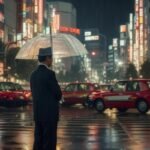
When I arrived in Tokyo, I stayed one night in a hotel literally above Shinjuku Station.
I paid a little more than I wanted to.
It was absolutely worth every dollar because I didn’t have to think on night one.
I just dropped my bag, walked outside, and let the city hit me at my own pace.
Give yourself that grace.
Your first night in Japan should be about arriving — not navigating.
Pick your base, pre-book it, and show up ready to just exist for a few hours.
Get the IC Card the Second You Clear Customs

If there’s one thing I tell every single person who asks me about Japan, it’s this.
Get your IC card — like Suica or ICOCA — at the airport before you leave the arrivals hall.
It’s a rechargeable transit card that works on subways, buses, and even convenience store purchases across most of the country.
I made the mistake of trying to buy individual tickets my first day.
Standing at a ticket machine, staring at a screen covered in kanji, with a line forming behind me — it was not my finest travel moment.
The IC card changed everything.
You tap in, you tap out, the fare is deducted automatically.
You don’t have to figure out zones or prices or anything.
You just move.
Load it with around 3,000 to 5,000 yen to start.
You can top it up at any convenience store or station machine.
It’s one of those small, practical things that completely shifts how smooth your trip feels from day one.
Tokyo Is Not All of Japan — Plan Beyond It

Tokyo is going to Blow Your Mind.
And it should be on your list.
But first-timers sometimes make the mistake of spending their whole trip there and thinking they’ve seen Japan.
They haven’t.
Not even close.
Kyoto will make you feel like you’ve stepped into a different century.
Osaka will feed you better than almost anywhere else on earth.
Hiroshima will stop you in your tracks and stay with you long after you leave.
The Shinkansen — Japan’s bullet train system — makes moving between cities genuinely enjoyable.
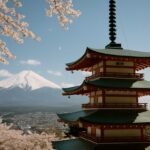
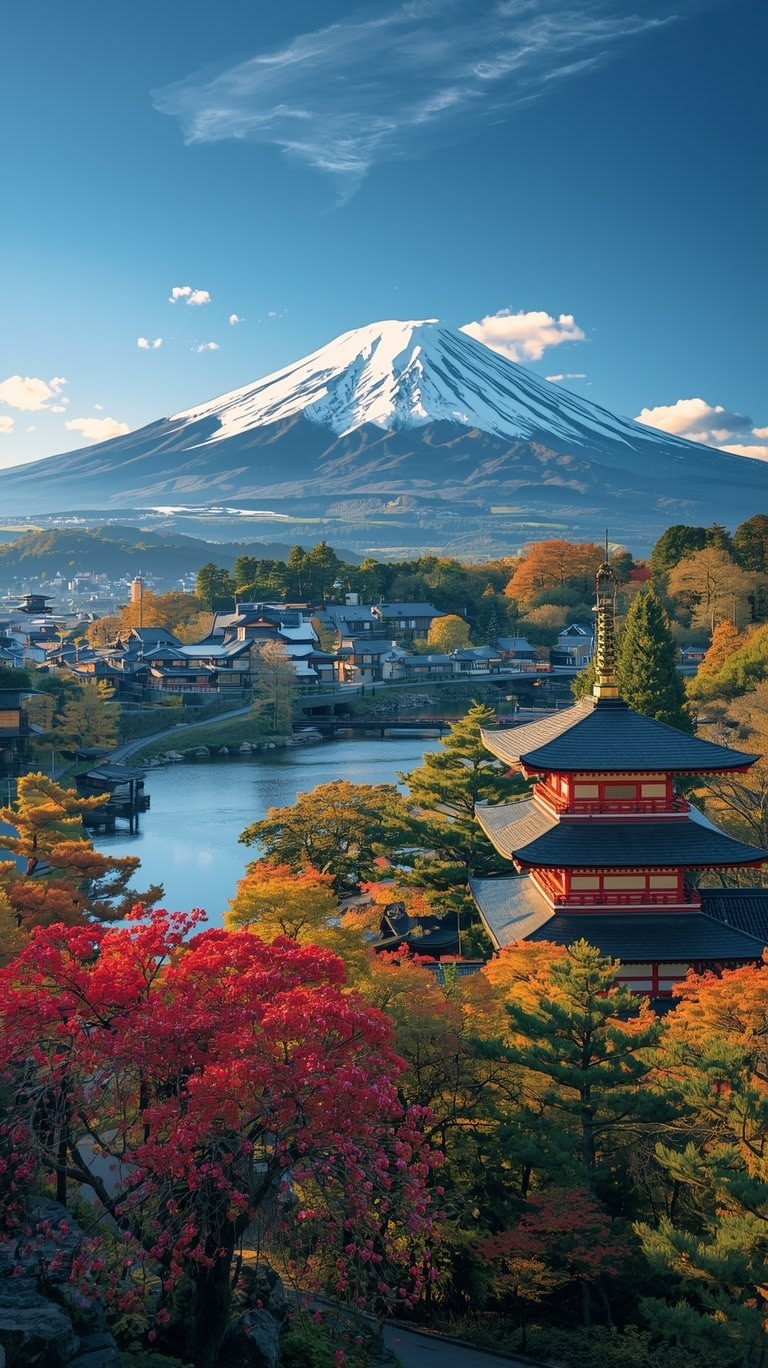
Fast, clean, on-time to the minute, and with views of Mount Fuji if you position yourself on the right side of the car heading southwest.
I’d suggest a loose framework of Tokyo for the energy and scale, Kyoto for the soul, and Osaka for the food and nightlife.
Three cities.
One unforgettable trip.
If you’ve got more time, add Nara for the deer and the temples, or head south to Hiroshima and Miyajima Island.
But don’t sleep on building in that variety.
Japan rewards the traveler who wanders.
🗼 I Wrote a Book About My Japan Travel Catastrophes!
Before I landed in Tokyo, I thought I was the “Final Boss” of international travel. Spoiler alert: I WASN’T. 😅
🚅 I boarded the wrong Shinkansen and ended up in THE WRONG CITY. I confused locals with my “expert” bowing that was more awkward than accurate. I accidentally stumbled into a high-stakes Kendo practice thinking it was a tourist show. Sound like something you’d do?
“Things I Wish I Knew Before Going to Japan” is your shortcut to avoiding ALL my cringe-worthy mistakes. ✨ Inside, you’ll find practical, LIFE-SAVING tips on etiquette, transport, money, and hidden gems that will save you time, money, and a whole lot of confusion.
Learn Three Japanese Phrases — Just Three

I’m not going to tell you to become fluent before you go.
That’s unrealistic and honestly unnecessary.
But I will tell you that learning just a handful of phrases made my trip feel warmer and more connected in ways I didn’t expect.
Sumimasen — excuse me, or sorry to bother you.
Arigatou gozaimasu — thank you, formally.
Eigo ga hanasemasu ka? — do you speak English?
That’s genuinely all you need to open doors and put a smile on people’s faces.
The Japanese people I met were incredibly gracious, patient, and kind — especially when they could see you were making even a small effort.
There were moments where my pronunciation was definitely wrong.
And people smiled anyway.
Kindly.
Without judgment.
It made me feel like a guest being welcomed, not a tourist being tolerated.
I love that distinction.
It’s a feeling I try to replicate in how I travel now, everywhere I go.
Small effort.
Big impact.
Convenience Stores Are Going to Change Your Life

I’m not being dramatic.
Japan’s convenience stores — 7-Eleven, FamilyMart, Lawson — are not what you think of when you hear the words “convenience store.”
They are destinations.
On my first full morning in Tokyo, I walked into a FamilyMart at 7 a.m.
not expecting much.
I walked out with a perfectly made onigiri, a warm matcha latte, a surprisingly good egg salad sandwich on soft milk bread, and a little container of edamame.
The whole thing cost me under 700 yen.
That’s around five dollars.
And it was genuinely delicious.
These stores are open 24 hours.
They have ATMs that work with foreign cards — which is clutch because cash is still king in a lot of places in Japan.
They sell hot food, cold food, snacks, sake, umbrellas, phone chargers, and socks.
If you forget something, there’s a conbini nearby.
There is always a conbini nearby.
Lean into it.
Don’t be embarrassed to eat your best meal of the day from a shelf next to a display of Kit Kats in flavors you’ve never heard of.
Cash Is Still King — Carry It

Japan is an incredible country in about a thousand ways.
A cashless society, it is not.
Not yet, anyway.
Many smaller restaurants, temples, shrines, and local vendors still operate cash-only.
I learned this the slightly painful way when I tried to pay for a bowl of ramen at a tiny standing noodle shop and had to awkwardly mime that I needed an ATM.
The woman behind the counter was patient and pointed me in the right direction.
But I felt the embarrassment of it for the rest of the afternoon.
Carry cash.
I’d suggest keeping around 10,000 to 20,000 yen on you at any given time during your trip.
The best place to withdraw is at 7-Eleven ATMs inside the convenience stores — they consistently accept foreign cards with minimal fees.
Don’t rely on finding your bank’s international partners.
Just use the conbini ATM.
It works.
It’s fast.
And it’ll save you from a ramen situation like mine.
The Food Is Going to Ruin You for Everything Else

I want to be honest with you about something.
After eating in Japan, I came home and spent about three weeks being mildly disappointed in every meal I ate.
Not because the food here is bad.
Because the food there is extraordinary.
Japan has more Michelin-starred restaurants than any country on earth.
But you don’t need a reservation at a high-end spot to eat like royalty.
Some of my greatest food memories from that trip were from places with no English menu, plastic food displays in the window, and exactly six seats inside.
I pointed at something that looked good.
I sat down at a narrow counter.
A bowl of ramen arrived that had clearly been simmered for hours.
The broth was rich and smoky with just a little sweetness underneath.
I finished the whole thing in about four minutes.
Ask locals where they eat lunch.
Go to the basement food floors of department stores — called depachika — and try everything.
Don’t skip the standing sushi bars.
And eat the street food.
Always eat the street food.
Respect the Temple and Shrine Etiquette

This one matters more than most travel blogs will tell you.
Japan’s shrines and temples are not photo backdrops.
They are living, active places of worship.
People go to pray.
People go to reflect.
And when I visited Fushimi Inari in Kyoto at sunrise before the tour groups arrived, I got it.
The quiet was profound.
I watched an elderly man bow at the entrance, wash his hands at the temizuya — the purification fountain — and walk in with this calm, unhurried presence.
It shifted the whole experience for me.
Here’s what I’d suggest doing: follow the lead of the people around you.
Bow at the entrance torii gate.
Use the water purification station before entering a shrine if there is one.
Keep your voice low.
Don’t eat inside the main shrine area.
And if there is a sacred rope or closed-off section, don’t cross it for the photo.
The image you’ll actually carry home from these places isn’t a picture anyway.
It’s a feeling.
Protect it.
Plan One “Weird” Experience Alongside the Classics

The iconic stuff is iconic for a reason.
You should absolutely see the Senso-ji temple in Asakusa.
You should do the Arashiyama bamboo grove in Kyoto, even if there are crowds.
But I’d also strongly encourage you to book one experience that feels a little offbeat.
For me, it was a late-night visit to a standing bar in Golden Gai — a tiny cluster of micro-bars in Shinjuku where each place fits maybe eight people and has its own specific vibe.
Some play jazz.
Some play metal.
Some are just lit by candles and serve one type of whisky.
I sat at a bar that fit four stools and talked to a retired Japanese architect for two hours about Tokyo’s changing neighborhoods.
That conversation is still one of my favorite travel memories.
Other options: a capsule hotel stay just for the experience, a ninja or samurai experience in Kyoto, a walk through the eerie Aokigahara forest near Fuji, or a visit to the Okunoshima island where hundreds of tame rabbits roam freely.
Weird is often where the magic lives.
🗼 I Wrote a Book About My Japan Travel Catastrophes!
Before I landed in Tokyo, I thought I was the “Final Boss” of international travel. Spoiler alert: I WASN’T. 😅
🚅 I boarded the wrong Shinkansen and ended up in THE WRONG CITY. I confused locals with my “expert” bowing that was more awkward than accurate. I accidentally stumbled into a high-stakes Kendo practice thinking it was a tourist show. Sound like something you’d do?
“Things I Wish I Knew Before Going to Japan” is your shortcut to avoiding ALL my cringe-worthy mistakes. ✨ Inside, you’ll find practical, LIFE-SAVING tips on etiquette, transport, money, and hidden gems that will save you time, money, and a whole lot of confusion.
Seasonal Timing Will Make or Break Your Experience

Japan is stunning in every season.
But knowing what to expect — and what to avoid — will seriously shape how your trip feels.
Spring brings cherry blossoms, which are genuinely as beautiful as every photo suggests.
But they also bring massive crowds and hotel prices that spike significantly.
If you go during peak blossom season, book your accommodation months in advance.
Autumn is my personal favorite.
The foliage in Kyoto and Nikko turns amber, red, and gold in a way that feels almost cinematic.
Temperatures are comfortable.
Crowds are present but manageable.
Summer is hot, humid, and intense — but it also brings incredible festivals like Gion Matsuri in Kyoto and gorgeous fireworks shows.
Winter is cold, quiet, and deeply underrated.
Snow-covered temples.
Steaming bowls of noodles.
Fewer tourists.
Hot spring baths — onsens — that hit completely differently when it’s cold outside.
Pick your season based on what kind of experience you want, not just what looks best on Instagram.
How to Handle the Overwhelming Moments

Let me be real with you for a second.
Japan is a lot.
Especially at first.
The sensory input, the language barrier, the unfamiliar systems, the crowds in certain areas — it can pile up.
And if you have a moment where you feel genuinely overwhelmed, that’s completely normal.
It happened to me on day three.
I was tired, my feet hurt, I couldn’t figure out a train connection, and I just needed a minute.
I found a little café near the station.
I sat down.
I ordered a coffee by pointing at the menu.
I sat there for 45 minutes and watched people walk by outside.
And then I felt fine again.
Give yourself permission to pause.
Japan is not a place you need to sprint through.
It rewards slowness.
It rewards the person who sits at the right moment and just takes it in.
Build in margin.
Don’t over-schedule every hour.
Some of my favorite moments happened because I had nothing planned and just started walking.
Related read: Things I Wish I Knew Before Going to Japan — Instant PDF + Kindle download. Secure checkout by Stripe