Poland isn’t just pierogi and castles – it’s a country where medieval legends collide with modern thrills, where underground salt cathedrals rival Disney’s wildest dreams, and where you can party in former communist bunkers.
Get ready to discover why Poland should be at the top of your travel bucket list.
Explore the Underground Salt Cathedral in Wieliczka

Forget everything you think you know about salt mines – Wieliczka will make you question reality itself.
Deep beneath the earth, 700 years of miners carved an entire underground city from pure salt, complete with chapels, ballrooms, and sculptures that would make Michelangelo weep.
The Chapel of St.
Kinga stretches longer than a football field, with chandeliers carved entirely from salt crystals that shimmer like diamonds in the underground light.
You’ll walk through chambers where kings once held royal banquets, and where salt carved walls tell stories of Poland’s medieval glory.
The mine goes down 327 meters – that’s deeper than the Eiffel Tower is tall – and every single surface around you is edible salt.
Underground lakes reflect the carved ceilings like mirrors, creating an otherworldly atmosphere that feels more like fantasy than reality.
The air down here is so pure that people with respiratory problems come specifically for salt therapy treatments.
You’ll see salt sculptures of famous Polish figures, including Pope John Paul II, all carved by miners who turned this working mine into an artistic masterpiece.
The UNESCO World Heritage site hosts underground concerts where the acoustics are so perfect that musicians travel from around the world just to perform here.
Your tour guide will let you lick the walls to prove it’s real salt – and yes, it tastes exactly like the stuff on your dinner table.
The temperature stays at a constant 14°C year-round, making it a perfect escape from summer heat or winter cold.
What started as a simple salt mine became Poland’s most visited tourist attraction, welcoming over a million visitors annually who leave utterly speechless.
The miners’ elevator ride down feels like descending into the center of the earth, and the journey back up feels like returning from another dimension entirely.
Tap to Explore These Beauties
See my ideas in action 👇 Tap any image to explore full details.
Get Lost in the Fairytale Magic of Zakopane

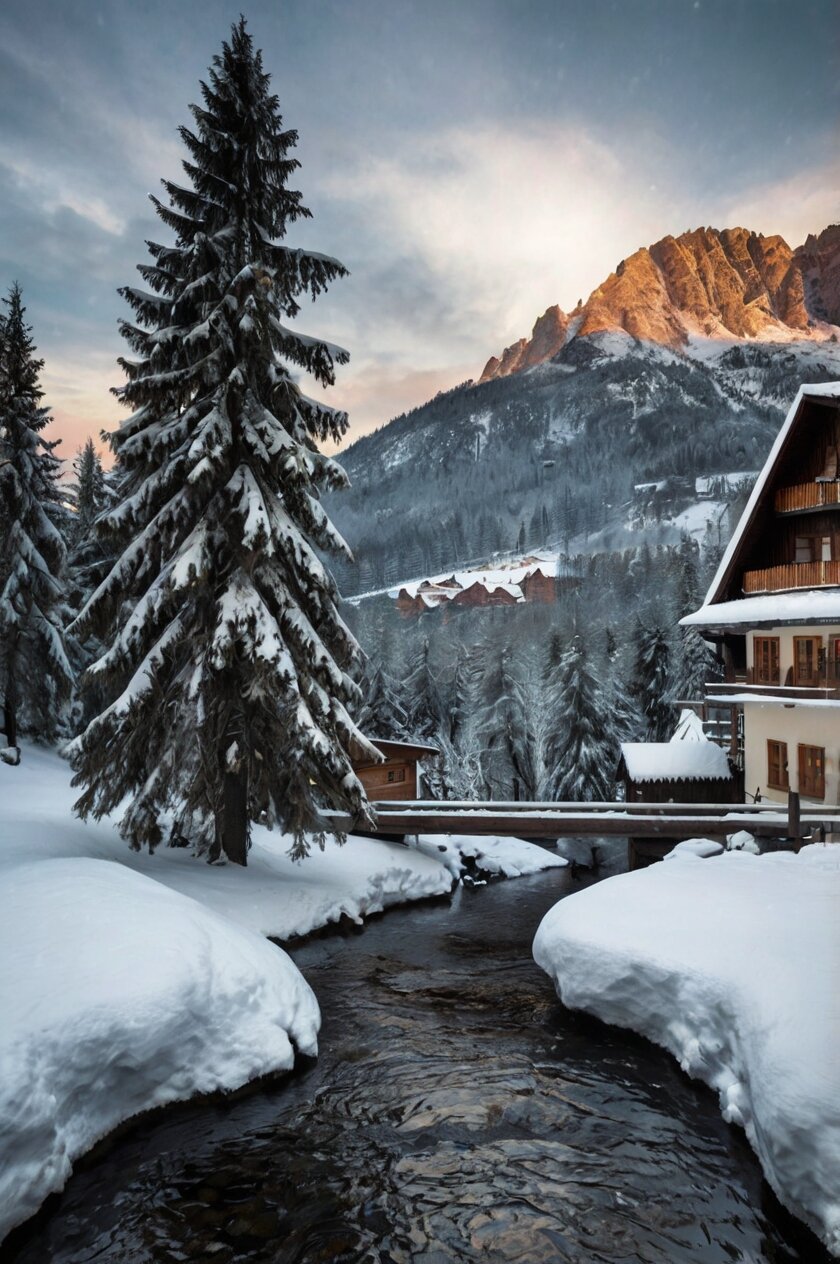
Zakopane transforms you into the main character of a Brothers Grimm story, complete with wooden chalets that look like gingerbread houses and mountains that pierce the clouds.
This mountain town sits at the foot of the Tatra Mountains, where every building follows traditional highlander architecture that makes the entire place look like it was built by elves.
The Gubałówka Hill cable car lifts you above the treeline for panoramic views that stretch into Slovakia, with peaks so sharp they look like they could cut glass.
Street vendors sell oscypek – smoked sheep cheese shaped like pinecones – that’s been made the same way for centuries by mountain shepherds.
The wooden architecture here isn’t just decoration; it’s a living tradition where craftsmen still use techniques passed down through generations.
You can hike to Morskie Oko, a glacial lake so pristine it mirrors the surrounding peaks perfectly, creating the illusion of mountains floating in the sky.
In winter, Zakopane becomes Poland’s ski capital, with slopes that challenge Olympic athletes and cozy highland huts serving mulled wine by crackling fires.
The Krupówki pedestrian street buzzes with highlander music, where locals in traditional outfits play folk songs that echo off the mountain walls.
Local restaurants serve hearty mountain cuisine like zurek soup in bread bowls and grilled sausages that taste like they were blessed by the mountain gods themselves.
The thermal pools in nearby Chochołów let you soak in naturally heated water while snow-capped peaks surround you like nature’s own infinity pool.
Horse-drawn carriages clip-clop through the streets, making you feel like you’ve stepped back in time to when life moved at the pace of mountain streams.
The highlander culture here is so authentic that UNESCO recognizes the region’s folk traditions as cultural heritage worth preserving.
Every sunrise over the Tatras paints the sky in colors so vivid that your camera will struggle to capture what your eyes are seeing.
Swim in the Floating Gardens of Mazury

The Mazury Lake District contains over 2,000 lakes connected by rivers and canals, creating a water wonderland where you can literally sail from your breakfast spot to your dinner reservation.
These glacial lakes formed during the Ice Age, leaving behind a landscape so perfectly designed for water sports that it feels like nature was planning the ultimate summer playground.
You can rent a sailboat and navigate the Great Masurian Lakes Waterway, a 100-kilometer route that lets you pilot your own vessel through pristine wilderness.
The lakes are so clean and clear that you can see bottom even in deeper sections, with water so pure that locals drink it straight from the source.
Kayaking through the smaller lakes takes you past abandoned castles, ancient forests, and villages where time seems to have stopped in the 19th century.
The region’s countless islands create hidden coves and secluded beaches where you can anchor your boat and swim in water that feels like silk against your skin.
Fishing here isn’t just a hobby – it’s a spiritual experience, with pike, perch, and zander so abundant that even amateur anglers leave with enough fish to feed a small village.
The lake ecosystem supports over 200 bird species, including white-tailed eagles that soar overhead while you float on your back, watching clouds drift across an endless blue sky.
Floating restaurants and bars operate on pontoons, where you can dock your boat and enjoy fresh fish while your feet dangle in the same water where your dinner was swimming hours earlier.
The winds here are so consistent and predictable that Mazury has become a sailing training ground for Olympic teams from across Europe.
Summer days stretch long into the evening, with sunsets that paint the lakes in shades of gold and pink that make every evening feel like a romantic movie scene.
Local legends tell of water spirits and lake monsters, adding mysterious charm to midnight swims when the lakes turn black as mirrors reflecting starlight.
The region operates on “lake time,” where schedules bend to match the rhythm of wind and waves, and the biggest decision you’ll make is which lake to explore next.
🗼 I Wrote a Book About My Japan Travel Catastrophes!
Before I landed in Tokyo, I thought I was the “Final Boss” of international travel. Spoiler alert: I WASN’T. 😅
🚅 I boarded the wrong Shinkansen and ended up in THE WRONG CITY. I confused locals with my “expert” bowing that was more awkward than accurate. I accidentally stumbled into a high-stakes Kendo practice thinking it was a tourist show. Sound like something you’d do?
“Things I Wish I Knew Before Going to Japan” is your shortcut to avoiding ALL my cringe-worthy mistakes. ✨ Inside, you’ll find practical, LIFE-SAVING tips on etiquette, transport, money, and hidden gems that will save you time, money, and a whole lot of confusion.
Step Into Medieval Times in Krakow’s Wawel Castle

Krakow’s Wawel Castle perches on a hill like a crown jewel, where Polish kings ruled for 500 years and where legends of dragons blend seamlessly with documented history.
The castle complex spans centuries of architectural evolution, from Romanesque foundations to Renaissance courtyards that showcase the wealth and power of medieval Poland.
Inside the royal chambers, you’ll walk through rooms where kings made decisions that shaped European history, with original tapestries and furnishings that have witnessed centuries of royal drama.
The cathedral within the castle walls contains tombs of Polish royalty, including the silver coffin of Saint Stanisław and crypts where kings sleep eternal rest beneath elaborate stone carvings.
The Dragon’s Den cave beneath the castle connects to Poland’s most beloved legend, where a fire-breathing beast once terrorized the city until a clever shoemaker defeated it with a lamb stuffed with sulfur.
Original medieval kitchens showcase how royal feasts were prepared, with massive fireplaces and copper vessels large enough to cook for hundreds of guests during grand celebrations.
The castle’s art collection includes Leonardo da Vinci’s “Lady with an Ermine,” one of only four portraits the master painted during his lifetime.
Wawel Hill archaeology reveals 50,000 years of human settlement, making it one of the longest continuously inhabited sites in Poland.
The Royal Treasury displays crowns, scepters, and ceremonial swords that crowned kings and witnessed coronations that legitimized rule across Central Europe.
The castle’s Renaissance courtyard, designed by Italian architects, created a style that influenced palace construction throughout the Polish-Lithuanian Commonwealth.
During World War II, Nazi Governor-General Hans Frank lived here, making the castle a symbol of both Polish heritage and occupation that adds layers of historical complexity.
The restoration work continues to reveal hidden chambers and forgotten passages, with archaeologists regularly discovering artifacts that rewrite understanding of medieval royal life.
Standing on the castle’s ramparts, you overlook the Vistula River and a city that has survived Mongol invasions, Nazi occupation, and communist rule while maintaining its medieval heart.
Experience the Wild Beauty of Białowieża Forest

Białowieża represents Europe’s last remaining primeval forest, where trees grow exactly as they did when mammoths roamed the continent and where every step takes you deeper into ecological time travel.
This UNESCO World Heritage site spans the border between Poland and Belarus, protecting 150,000 hectares of forest that has never been touched by human axes or plows.
European bison – the continent’s largest mammals – roam freely here, with over 800 of these magnificent creatures living in their ancestral homeland after being saved from complete extinction.
Oak trees in Białowieża can live over 600 years, growing to heights that dwarf cathedral spires and developing trunks so massive that six people holding hands couldn’t wrap around them.
The forest ecosystem operates according to natural laws, where fallen trees become nurseries for new growth and where death feeds life in cycles that have continued uninterrupted for millennia.
You can spot wolves, lynx, and brown bears during guided tours that reveal tracks and signs of predators that most Europeans know only from fairy tales.
The canopy creates a cathedral-like atmosphere where filtered sunlight creates shifting patterns on the forest floor, and where silence feels so complete it becomes almost tangible.
Over 12,000 species call this forest home, including insects found nowhere else on Earth and birds whose calls echo through trees that their ancestors have known for countless generations.
The Palace Park within the forest showcases how 19th-century Russian tsars used this wilderness as their private hunting ground, complete with luxury lodges and imported exotic animals.
Wooden walkways let you explore wetland areas where rare plants grow in conditions identical to those that existed before human civilization began altering natural landscapes.
The strict reserve core remains completely off-limits to tourists, preserving 47 square kilometers where nature operates without any human interference whatsoever.
Night tours reveal a forest that comes alive after dark, with owl calls, rustling leaves, and the possibility of glimpsing nocturnal animals that avoid human contact during daylight hours.
Standing among these ancient trees creates a humbling connection to the deep past, where you realize that this forest was already ancient when the pyramids were built.
Discover the Colorful Chaos of Gdansk’s Old Town

Gdansk’s Old Town rebuilds European history in technicolor, where medieval merchant houses painted in rainbow hues line cobblestone streets that have witnessed 1,000 years of trade, war, and revolution.
The Long Market stretches like a carnival of architecture, with burgher houses competing for attention through elaborate facades that showcase the wealth of merchants who traded with the entire known world.
Neptune’s Fountain stands as the city’s symbol, where the Roman god of the sea watches over a port that once controlled grain shipments feeding all of Northern Europe.
The massive St.
Mary’s Church holds the record as the world’s largest brick church, with space for 25,000 worshippers and an astronomical clock that has tracked time since the 15th century.
Amber shops line every street, selling “Baltic gold” that formed 40 million years ago and washing up on beaches where prehistoric insects remain perfectly preserved in golden resin.
The European Solidarity Centre tells the story of how shipyard workers in Gdansk sparked the movement that brought down communism across Eastern Europe.
Mariacka Street creates a fairy-tale atmosphere with its tiny gargoyles and ornate doorways, where each building tells stories of medieval guilds and Renaissance prosperity.
The port area buzzes with ships from across the Baltic, continuing a maritime tradition that made Gdansk one of Europe’s most important trading cities.
Local restaurants serve dishes that reflect the city’s international heritage, blending Polish traditions with German, Dutch, and Scandinavian influences that arrived with centuries of merchants.
The Royal Way procession route leads from the Golden Gate to the Green Gate, following the path where Polish kings entered the city for official visits and coronations.
World War II history permeates every stone, as Gdansk (then Danzig) was where the first shots were fired and where the war began on September 1, 1939.
The reconstruction after 1945 created a unique phenomenon where a completely destroyed city was rebuilt using original plans, making modern Gdansk both authentic and artificial.
Evening light turns the colored facades into a painter’s palette, where every sunset creates new combinations of colors reflecting off windows and wet cobblestones.
Uncover the Dark History of Auschwitz-Birkenau

Auschwitz confronts visitors with humanity’s capacity for both evil and resilience, where preserved barracks and personal artifacts tell stories that must be remembered to prevent repetition.
The entrance gate bearing “Arbeit macht frei” (“Work sets you free”) immediately establishes the cruel irony that defined this place, where lies masked systematic murder.
Original barracks display thousands of personal items – shoes, glasses, hair, and suitcases – creating a overwhelming visual representation of the 1.1 million lives lost here.
The preservation efforts maintain the site exactly as liberating Soviet forces found it in January 1945, ensuring that future generations can witness the physical evidence of genocide.
Birkenau, the larger section of the camp complex, stretches to the horizon with ruins of gas chambers and crematoriums that Nazi forces tried to destroy before retreating.
Survivor testimonies, recorded and displayed throughout the museum, provide first-person accounts that transform statistics into individual human stories of suffering and survival.
The international nature of victims becomes clear through exhibits showing artifacts from Jews, Poles, Roma, and other groups murdered here from across Nazi-occupied Europe.
Educational programs bring students from around the world to learn about Holocaust history, ensuring that “Never Again” remains more than just a slogan.
The railway platform at Birkenau, where cattle cars unloaded their human cargo, stands as a powerful symbol of the industrial scale of Nazi killing operations.
Medical experiment blocks reveal the horrific human experiments conducted by Nazi doctors, showing how medical ethics were completely abandoned in service of ideology.
Liberation artifacts include photographs taken by Soviet soldiers, showing the skeletal survivors and massive piles of bodies that greeted the arriving army.
The memorial wall lists names of known victims in multiple languages, though many victims remain unnamed due to the systematic destruction of records.
Walking through Auschwitz creates a profound silence where normal conversation feels inappropriate, and where the weight of history demands respectful contemplation of human suffering and moral responsibility.
Sail Through the Venice of Poland in Wrocław

Wrocław spreads across twelve islands connected by over 100 bridges, creating a waterway network that rivals Venice while maintaining its own distinctly Polish character and charm.
The city’s bridges range from medieval stone spans to modern glass walkways, each connecting different districts that developed their own personalities over centuries of growth and change.
Cathedral Island (Ostrów Tumski) contains Poland’s oldest parts of the city, where Gothic spires reflect in the Oder River and where gas lamp lighting creates magical evening atmospheres.
The Market Square claims the title of Poland’s largest medieval square, surrounded by colorful townhouses and dominated by the Gothic Old Town Hall with its intricate astronomical clock.
Wrocław’s famous dwarfs appear throughout the city as small bronze sculptures, with over 400 tiny figures hidden on street corners, creating a city-wide treasure hunt for visitors.
The Centennial Hall showcases early 20th-century reinforced concrete architecture, representing a UNESCO World Heritage site that influenced modern building techniques worldwide.
The Oder River system creates natural flood plains that the city has transformed into parks and green spaces, making Wrocław one of Europe’s greenest urban centers.
Four Denominations District demonstrates religious tolerance, where Catholic, Protestant, Orthodox, and Jewish places of worship coexist within a few blocks of each other.
The university quarter pulses with student energy, where 130,000 students from Wrocław’s multiple universities create a vibrant nightlife and cultural scene.
Boat tours navigate the waterways, revealing the city from perspectives impossible to achieve on foot and showcasing architecture that spans from medieval to contemporary periods.
The annual bridge jumping tradition sees locals and tourists leaping from Tumski Bridge into the Oder River, continuing a summer ritual that dates back generations.
Local legends tell of a master bridge builder who sold his soul to the devil, explaining why Wrocław has more bridges than any other Polish city.
The reconstruction after World War II transformed a majority-German city into a Polish cultural center, creating a unique blend of architectural styles and cultural influences that defines modern Wrocław.
Marvel at the Mysterious Crooked Forest Near Gryfino

The Crooked Forest defies every law of nature you thought you understood, where 400 pine trees grow in perfect C-shapes that look like question marks asking questions about reality itself.
These trees bend at 90-degree angles just above ground level before straightening up toward the sky, creating a forest that looks like it was designed by Dr.
Seuss during a fever dream.
Every single tree curves in exactly the same direction – northward – with mathematical precision that suggests human intervention, yet no one alive remembers who did this or why.
The trees were planted around 1930, making them nearly a century old, but the technique used to create these impossible shapes died with whoever created this living sculpture garden.
Local theories range from gravitational anomalies to alien interference, though the most likely explanation involves a lost forestry technique that deliberately shaped trees for shipbuilding or furniture making.
The forest creates an otherworldly atmosphere where shadows bend at impossible angles and where your brain struggles to process what your eyes are seeing.
Photographers travel from around the world to capture these surreal trees, but no camera can fully convey the disorienting feeling of standing among vegetation that seems to mock the laws of physics.
The surrounding normal forest makes the curved section even more bizarre, like stepping through an invisible portal into a dimension where trees follow different evolutionary rules.
Scientists have studied the trees extensively but found no genetic mutations, diseases, or environmental factors that explain why these specific trees grew in identical curved patterns.
The mystery deepens when you realize that despite their unusual shape, these trees remain perfectly healthy and continue growing normally above their curved sections.
Local legends tell of witches who cursed the forest, Nazi experiments with tree genetics, or ancient Slavic rituals that bent nature to human will.
The forest covers only a small area – about 1.7 hectares – making it feel like a secret that nature is keeping hidden from the rest of the world.
Standing among these impossible trees creates a humbling reminder that the natural world still holds mysteries that science cannot fully explain, and that sometimes the most beautiful things are also the most inexplicable.
🗼 I Wrote a Book About My Japan Travel Catastrophes!
Before I landed in Tokyo, I thought I was the “Final Boss” of international travel. Spoiler alert: I WASN’T. 😅
🚅 I boarded the wrong Shinkansen and ended up in THE WRONG CITY. I confused locals with my “expert” bowing that was more awkward than accurate. I accidentally stumbled into a high-stakes Kendo practice thinking it was a tourist show. Sound like something you’d do?
“Things I Wish I Knew Before Going to Japan” is your shortcut to avoiding ALL my cringe-worthy mistakes. ✨ Inside, you’ll find practical, LIFE-SAVING tips on etiquette, transport, money, and hidden gems that will save you time, money, and a whole lot of confusion.
Hunt for Amber Treasures on the Baltic Coast

Poland’s Baltic coastline stretches for 500 kilometers of sandy beaches where amber hunting becomes an addictive treasure hunt that connects you directly with prehistoric oceans.
Storms churn the Baltic Sea and wash amber onto beaches, where pieces containing 40-million-year-old insects, leaves, and bubbles create natural time capsules that fit in your palm.
The best amber hunting happens after winter storms, when rough seas dislodge pieces from underwater deposits and deposit them along the shoreline like golden gifts from ancient forests.
Sopot’s wooden pier extends 500 meters into the Baltic, creating the longest wooden pier in Europe and providing perfect vantage points for spotting amber in shallow water.
Local amber merchants teach visitors how to distinguish real amber from plastic imitations, using techniques like the salt water test and the hot needle method that reveal authentic fossilized resin.
The Amber Museum in Gdansk displays incredible specimens, including pieces containing perfectly preserved prehistoric spiders, flies, and plant matter that showcase life from the Eocene epoch.
Misdroy and Świnoujście beaches offer the highest concentrations of amber finds, where early morning beachcombing reveals treasures that the tide deposited during the night.
The amber trade history spans millennia, with ancient trade routes connecting the Baltic coast to Rome and Egypt, where amber was valued more highly than gold.
Different types of amber wash ashore, from clear golden pieces to cloudy white varieties and rare blue amber that fluoresces under ultraviolet light.
Amber workshops teach traditional jewelry-making techniques, where skilled artisans transform raw beach finds into polished gems and intricate carved pieces.
The scientific value of Baltic amber continues growing as paleontologists discover new species preserved in amber, with some specimens containing DNA remnants.
Beach towns along the coast celebrate amber with festivals and markets, where local artists display contemporary amber jewelry alongside traditional Polish folk designs.
Finding your first piece of amber creates an almost magical moment, when you realize you’re holding a piece of forest that existed before humans walked the Earth.
Poland delivers experiences that redefine what Eastern Europe can offer, from underground salt cathedrals to primeval forests where European bison roam free.
These adventures represent just the beginning of what this remarkable country holds for travelers brave enough to look beyond the obvious destinations.
Pack your sense of wonder – Poland is waiting to exceed every expectation you never knew you had.