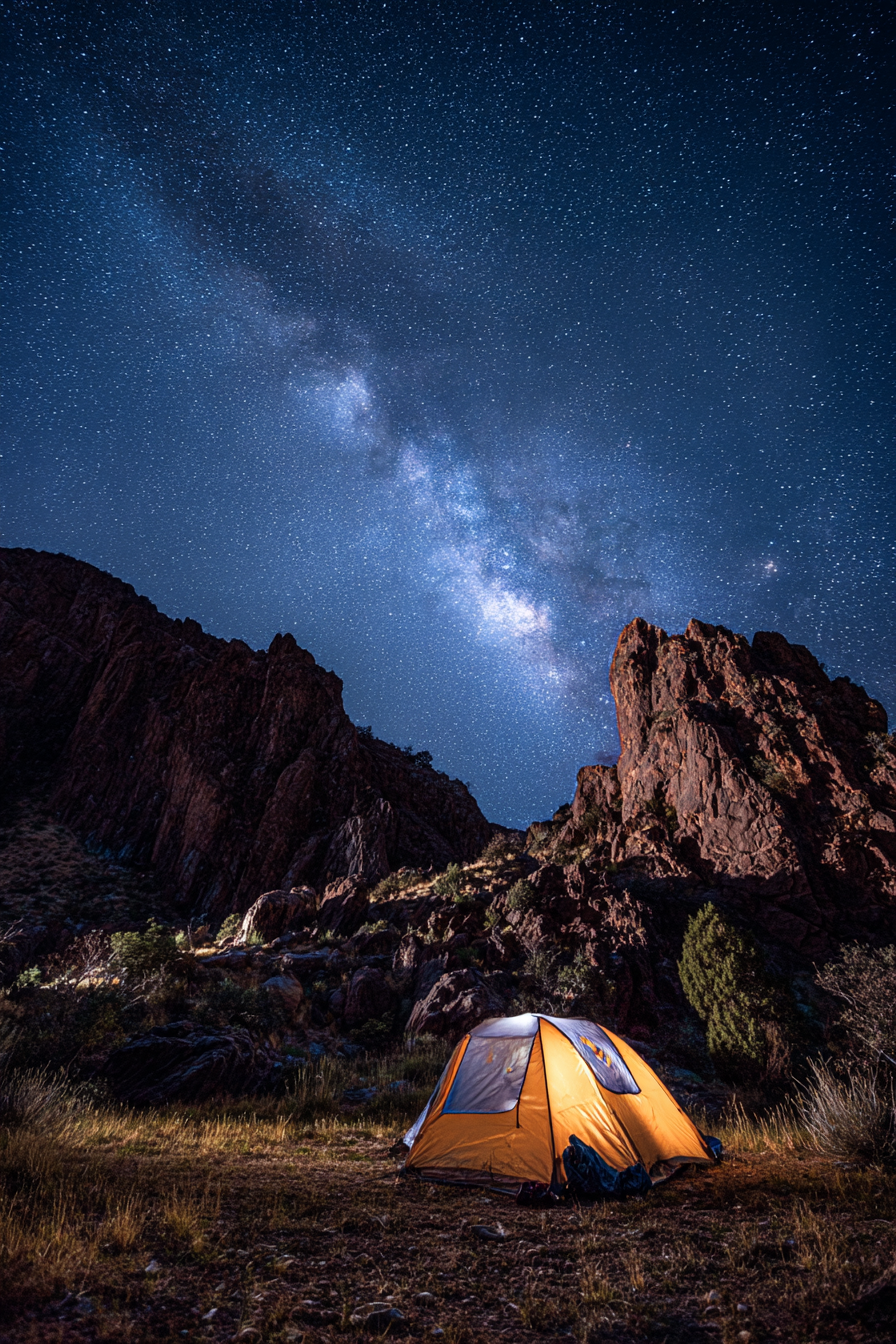

The Grand Canyon isn’t just a big hole in the ground – it’s a natural wonderland that’ll leave you speechless and craving more adventure than you ever imagined possible.
Visiting more than two parks this year?
The free national park pass calculator shows whether the annual pass beats the gate fees.
Watch the Sun Paint the Canyon in Liquid Gold
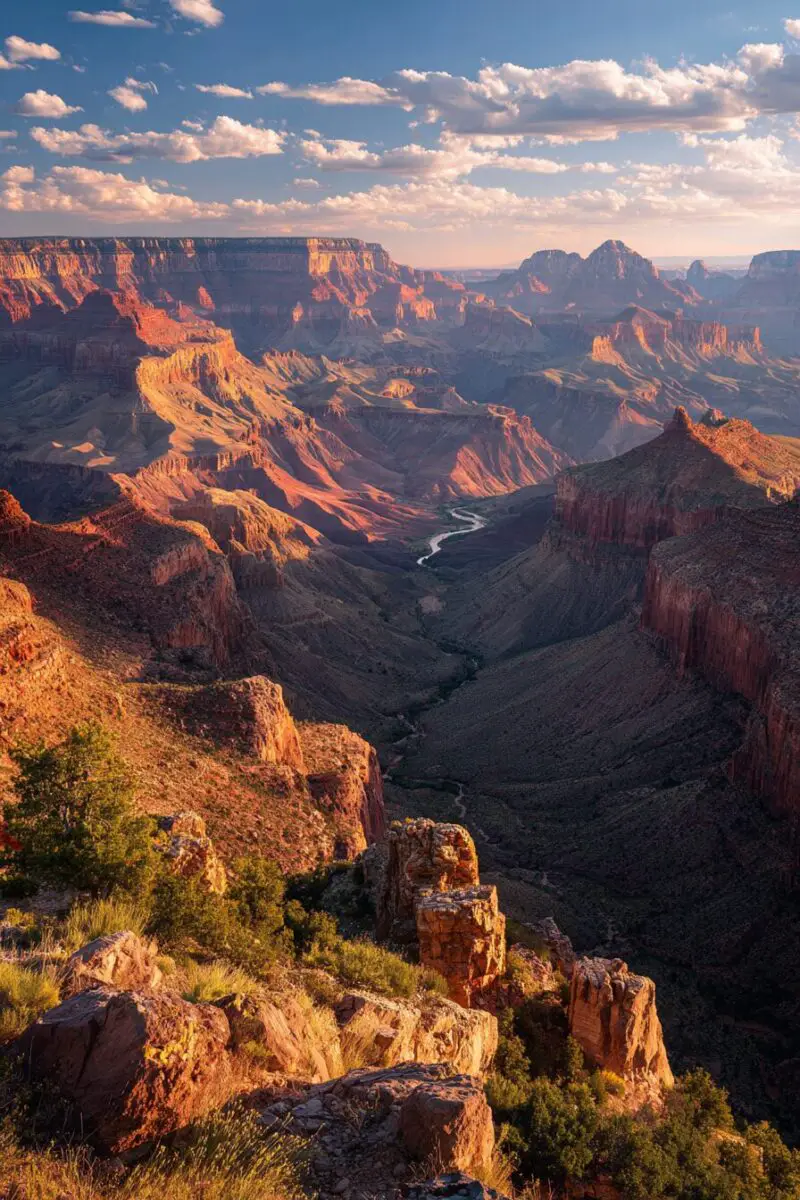
Nothing prepares you for that magical moment when the first rays of sunlight kiss the canyon walls and transform them into a masterpiece of amber, crimson, and gold.
You’ll want to arrive at least 30 minutes before sunrise to snag the perfect viewing spot along the South Rim, where crowds gather in hushed anticipation like they’re about to witness something sacred.
The temperature drops significantly in the early morning hours, so pack layers and bring a thermos of hot coffee to keep your hands warm while you wait for nature’s greatest light show to begin.
As the sun climbs higher, watch how the shadows dance across the canyon walls, revealing hidden crevices and rock formations that seem to change shape right before your eyes.
Professional photographers swear by Hopi Point and Mather Point for the most spectacular sunrise views, but don’t overlook the quieter spots along the rim trail where you can enjoy the moment without fighting for elbow room.
The entire experience lasts about two hours from pre-dawn setup to full daylight, and you’ll find yourself taking hundreds of photos that somehow never quite capture the raw beauty you’re witnessing firsthand.
Sunset viewing offers an equally stunning but completely different experience, as the canyon walls glow like embers in a fireplace while the sky explodes in shades of purple, orange, and pink.
Many visitors make the mistake of only catching sunrise or sunset once during their trip, but each day brings unique atmospheric conditions that create entirely different color palettes and moods.
The South Rim stays open year-round and offers heated visitor centers where you can warm up between viewing sessions, while the North Rim provides a more rugged and isolated experience for those seeking solitude.
Smart travelers bring a small camping chair or blanket to sit on, because standing for two hours on concrete can take away from the zen-like experience of watching the canyon wake up or drift off to sleep.
Soar Above Like a Bird on a Helicopter Tour
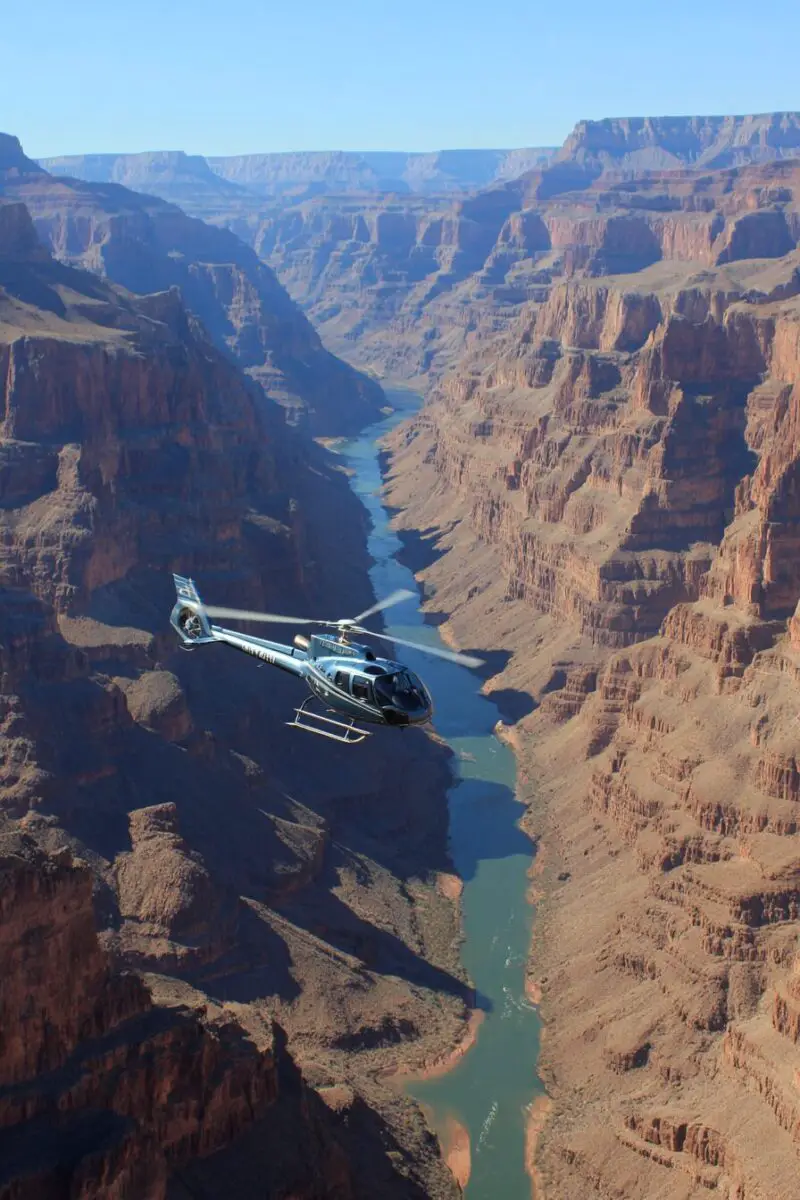
Helicopter tours reveal the Grand Canyon’s true scale in a way that ground-level viewing simply can’t match – suddenly you’re floating above a landscape so vast it seems to stretch beyond the curve of the Earth itself.
You’ll lift off from helipads near the South Rim or Las Vegas, and within minutes you’re hovering over geological formations that took millions of years to create, feeling like you’ve been transported to an alien planet.
The most popular tours last between 25 to 50 minutes, giving you enough time to see multiple viewpoints and geological features while your pilot provides expert commentary about the canyon’s formation and history.
During the flight, you’ll spot the Colorado River snaking through the canyon floor like a silver ribbon, appearing deceptively calm from your aerial vantage point despite its powerful rapids and churning waters below.
Many helicopter companies offer doors-off flights for the ultimate photography experience, though you’ll need to secure all loose items and wear safety harnesses while you lean out to capture that perfect shot.
The sensation of floating silently above ancient rock layers creates an almost spiritual experience that ground-based visitors never get to enjoy, as you drift past towering spires and hidden alcoves invisible from the rim.
Advanced tours include landings on private plateaus within the canyon itself, where you can step out and explore areas that most tourists never see, often including champagne toasts and gourmet picnics.
Booking morning flights typically provides the smoothest rides and clearest visibility, as afternoon thermal updrafts can create bumpy conditions that might make sensitive passengers uncomfortable.
Some tour packages combine helicopter rides with boat trips along the Colorado River, creating a multi-dimensional adventure that showcases the canyon from every possible angle and perspective.
The cost ranges from $200 to $500 per person depending on flight duration and extras, but most visitors agree that seeing the Grand Canyon from above ranks among the most unforgettable experiences of their lifetime.
Conquer the Colorado River on a White Water Adventure
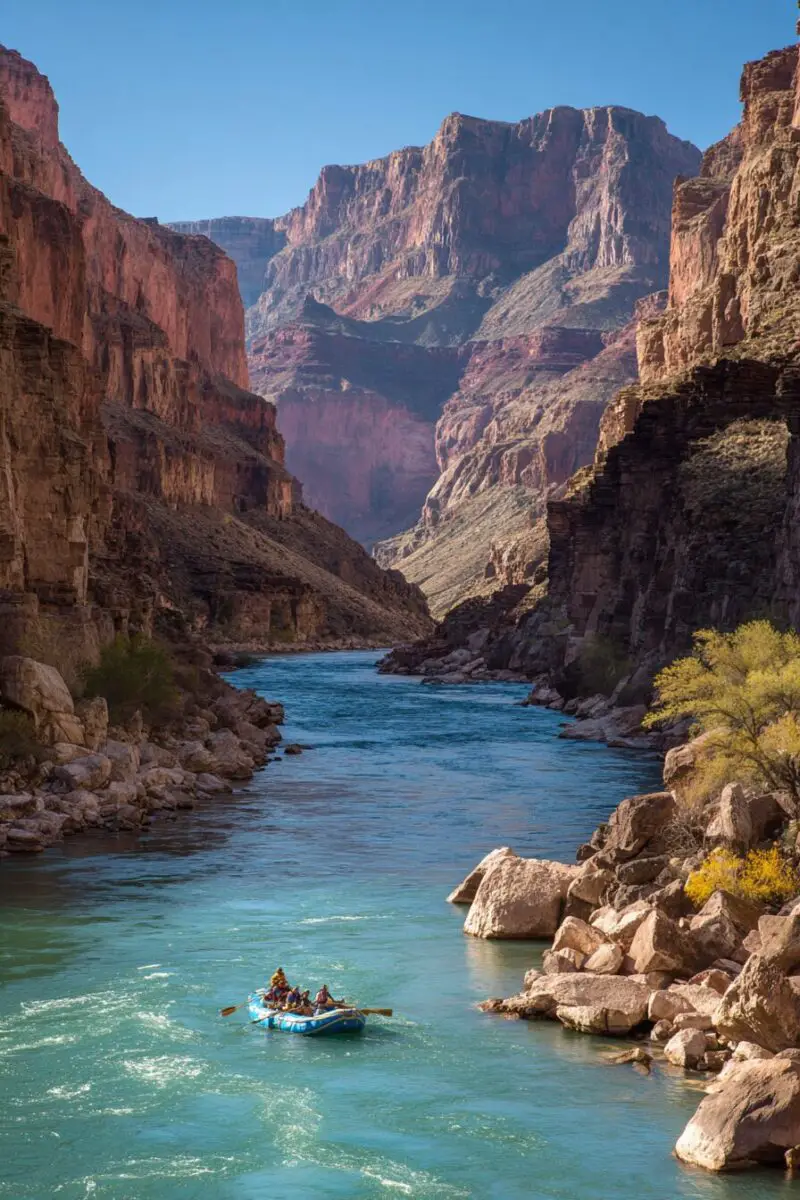
White water rafting through the Grand Canyon transforms you from a casual tourist into a legitimate adventurer as you navigate the same rapids that have challenged explorers for over a century.
The Colorado River offers everything from gentle float trips perfect for families to heart-pounding Class V rapids that’ll have you gripping your paddle and screaming with pure adrenaline-fueled joy.
Multi-day expeditions range from three days to three weeks, allowing you to disconnect completely from civilization while camping under star-filled skies and waking up to coffee brewed over campfires.
Your professional river guides become part historian, part comedian, and part wilderness survival expert as they navigate treacherous rapids with names like “Lava Falls” and “Crystal Rapid” that sound as intimidating as they actually are.
Between the intense rapid sections, you’ll drift through calm stretches where ancient rock walls tower hundreds of feet above your head, creating a sense of peaceful isolation that modern life rarely provides.
The physical demands vary significantly depending on your chosen trip, from motorized rafts that do most of the work to paddle rafts where you become an active crew member responsible for powering through challenging sections.
Side hikes lead to hidden waterfalls, Native American ruins, and swimming holes with water so clear you can see straight to the bottom, providing perfect opportunities to cool off after hours in the desert sun.
Camping equipment and gourmet meals are included on most trips, with experienced river chefs somehow managing to prepare restaurant-quality dinners using portable camp stoves and Dutch ovens right on the beach.
The permit system makes these trips incredibly exclusive, with some operators booking reservations years in advance, so you’ll need to plan ahead if you want to experience this bucket-list adventure.
By trip’s end, you’ll have stories that’ll last a lifetime and a deep appreciation for the raw power of nature that shaped this incredible landscape over millions of years.

🗼 I Wrote a Book About My Japan Travel Catastrophes!
Before I landed in Tokyo, I thought I was the “Final Boss” of international travel. Spoiler alert: I WASN’T. 😅
🚅 I boarded the wrong Shinkansen and ended up in THE WRONG CITY. I confused locals with my “expert” bowing that was more awkward than accurate. I accidentally stumbled into a high-stakes Kendo practice thinking it was a tourist show. Sound like something you’d do?
“Things I Wish I Knew Before Going to Japan” is your shortcut to avoiding ALL my cringe-worthy mistakes. ✨ Inside, you’ll find practical, LIFE-SAVING tips on etiquette, transport, money, and hidden gems that will save you time, money, and a whole lot of confusion.
Hike the Rim Trail for Endless Photo Opportunities
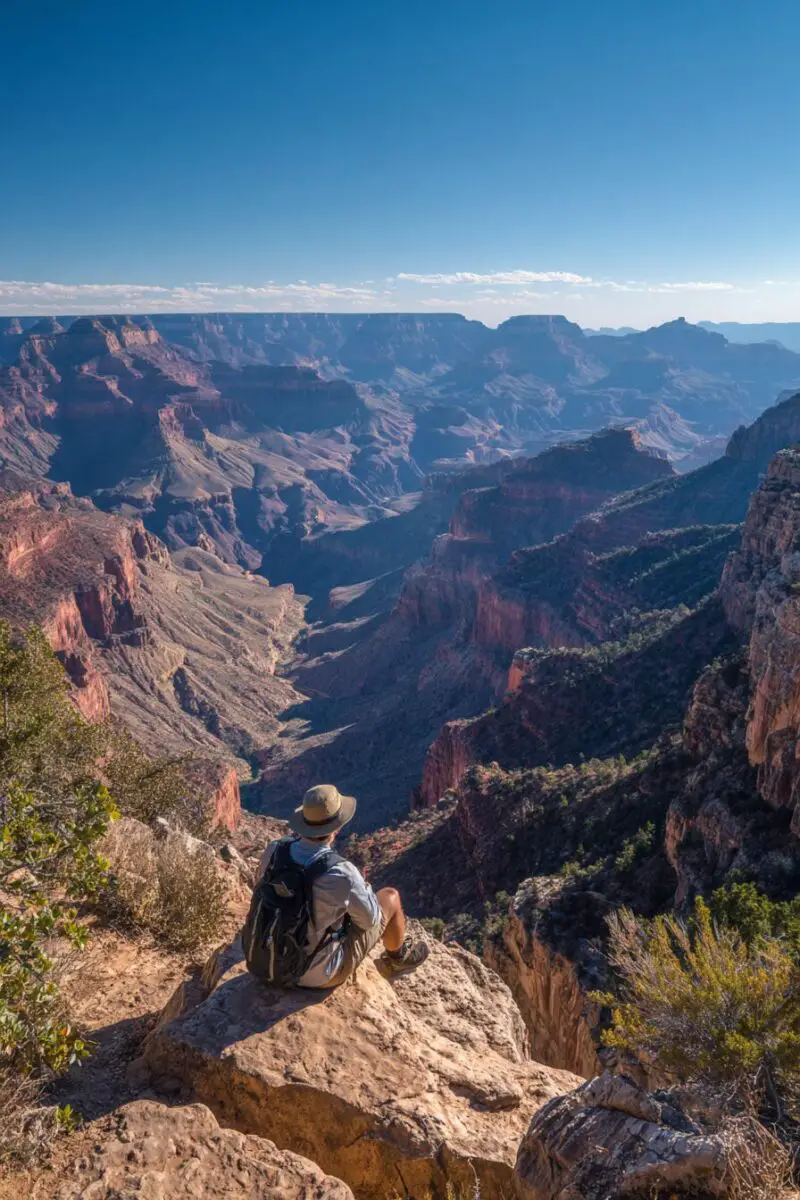
The Rim Trail offers 13 miles of mostly flat, paved pathway that hugs the canyon’s edge, providing countless opportunities to capture that perfect Instagram shot without requiring serious hiking experience.
You can access the trail from multiple points along the South Rim, making it easy to customize your walk based on your fitness level, available time, and specific viewpoints you want to visit.
Every few hundred yards brings a completely new perspective of the canyon, as the trail winds around promontories and through forests, constantly revealing fresh angles and compositions for photography enthusiasts.
The paved sections accommodate wheelchairs and strollers, making this one of the most accessible ways to experience multiple canyon viewpoints during a single visit without exhausting yourself or your family members.
Shuttle stops along the route mean you can hop on and off at various viewpoints, allowing you to walk challenging sections while skipping areas that might be too crowded or less interesting for your particular interests.
Early morning and late afternoon provide the best lighting conditions for photography, as harsh midday sun tends to wash out the canyon’s natural colors and create unflattering shadows in your pictures.
The trail connects famous viewpoints like Mather Point, Yavapai Point, and Hermits Rest, each offering unique geological features and different angles of the canyon’s most photographed rock formations.
Along the way, you’ll encounter interpretive signs that explain the geological processes that created the canyon, turning your leisurely walk into an educational experience about Earth’s ancient history.
Wildlife spotting opportunities abound, as elk, mule deer, and various bird species frequently appear along the trail, often posing cooperatively for photos if you approach quietly and respectfully.
The entire trail can be completed in one day by determined hikers, but most visitors prefer to tackle shorter sections over multiple days, allowing time to truly absorb the incredible views and take plenty of breaks for photos and rest.
Experience the Wild West on a Mule Ride Adventure
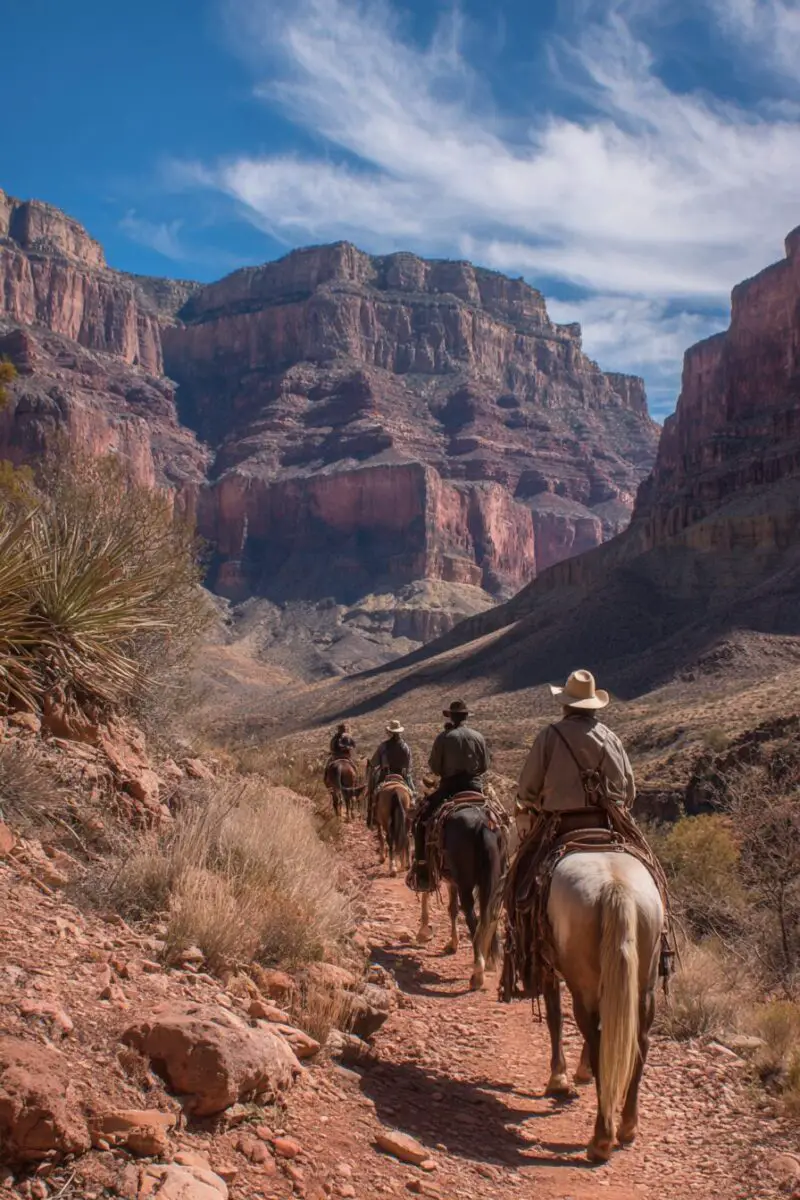
Mule rides offer a uniquely Western way to explore the Grand Canyon while channeling your inner cowboy or cowgirl as these sure-footed animals navigate trails that would challenge even experienced hikers.
The mules possess an almost supernatural ability to navigate narrow ledges and steep switchbacks, giving you confidence to enjoy the scenery instead of worrying about where to place your feet on treacherous terrain.
Day trips typically descend partway into the canyon before returning to the rim, while overnight expeditions take you all the way to the canyon floor where you’ll spend the night at Phantom Ranch, a rustic lodge accessible only by foot, mule, or river.
Your mule becomes your trusted partner for the journey, and these intelligent animals seem to understand the significance of their cargo as they carefully pick their way along paths carved into cliffsides.
The swaying motion takes some getting used to, but most riders find the rhythm relaxing once they learn to trust their mule’s expertise and stop trying to micromanage every step of the journey.
Reservations fill up months in advance, especially for overnight trips, because the National Park Service strictly limits the number of mules on the trails to protect both the environment and ensure a quality experience for riders.
Weight restrictions and age requirements ensure that all participants can safely complete the journey, with guides carefully matching riders to appropriate mules based on experience level and comfort around large animals.
The overnight experience includes hearty Western-style meals, comfortable cabin accommodations, and the unique opportunity to watch sunrise and sunset from the bottom of the canyon where few visitors ever venture.
Professional wranglers share stories about the canyon’s history, pointing out geological features and wildlife while ensuring that everyone stays safe during the multi-hour journey down steep and winding trails.
By the end of your mule adventure, you’ll have conquered one of America’s most challenging landscapes while experiencing the same mode of transportation that explorers and settlers used over a century ago.
Discover the Universe Through World-Class Stargazing

The Grand Canyon’s designation as an International Dark Sky Park means you’ll experience some of the clearest night skies in North America, revealing billions of stars invisible from light-polluted cities.
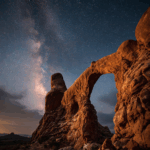
On moonless nights, the Milky Way stretches across the sky like a cosmic river, appearing so bright and detailed that you can actually see its spiral structure with the naked eye.
Rangers host regular astronomy programs featuring high-powered telescopes that bring distant galaxies, nebulae, and star clusters into sharp focus, transforming tiny points of light into detailed celestial objects.
The high elevation and dry desert air create perfect viewing conditions year-round, though winter months offer the longest nights and some of the most spectacular constellation displays visible from the Northern Hemisphere.
You’ll want to arrive at viewing areas at least 30 minutes before sunset to allow your eyes to adjust to darkness, as this adaptation process dramatically improves your ability to see faint stars and celestial features.
Popular stargazing locations include Desert View, Lipan Point, and various spots along the rim trail where you can set up blankets or camping chairs for comfortable extended viewing sessions.
Smartphone apps help identify constellations, planets, and passing satellites, turning your stargazing session into an interactive educational experience about astronomy and navigation techniques used by ancient cultures.
The combination of clear skies and minimal light pollution means you might spot phenomena rarely visible elsewhere, including meteor showers, the International Space Station, and even the aurora borealis during periods of high solar activity.
Photography enthusiasts can capture stunning images of star trails and the Milky Way arcing over the canyon rim, creating composite images that showcase both terrestrial and celestial beauty in a single frame.
Many visitors report that Grand Canyon stargazing fundamentally changes their perspective on Earth’s place in the universe, as the combination of geological time scales and cosmic distances creates a profound sense of wonder and humility.
Climb the Desert View Watchtower for Panoramic Views
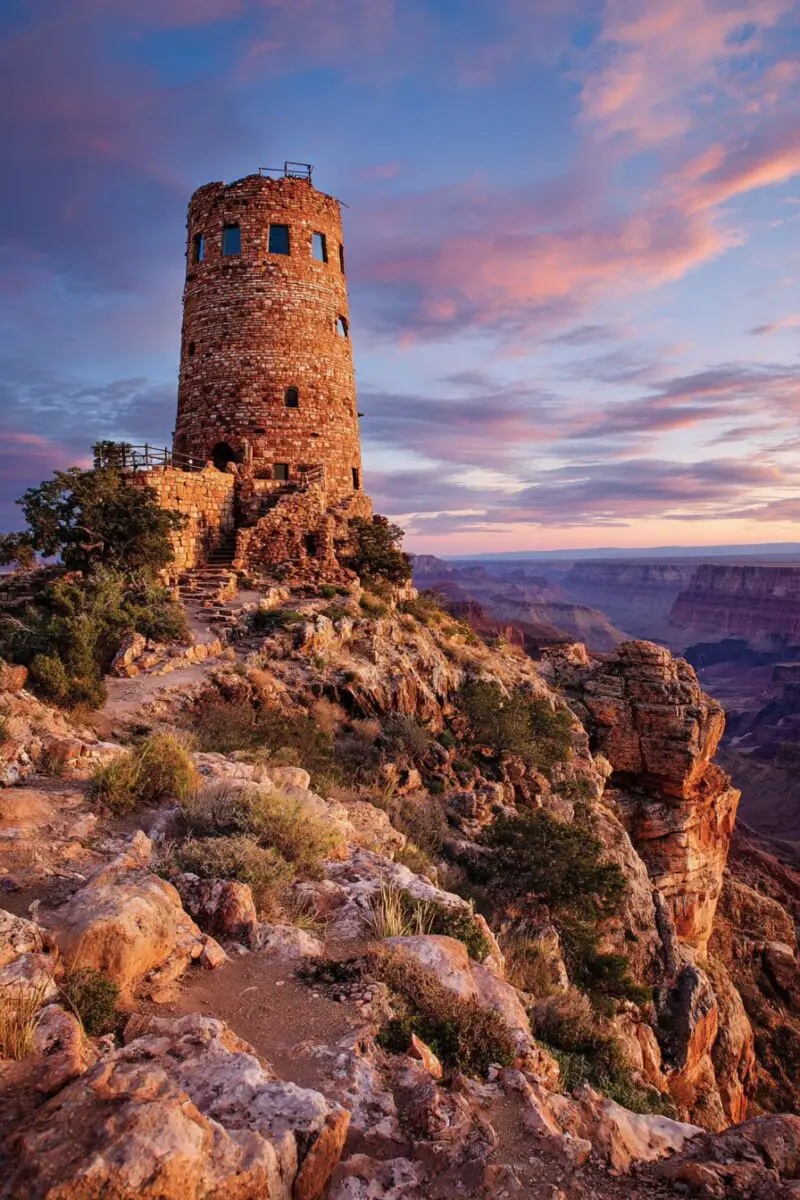
Desert View Watchtower stands as a 70-foot stone monument that offers the highest public viewpoint on the South Rim, providing 360-degree panoramic views that stretch beyond the canyon to distant mountain ranges.
Built in 1932 by architect Mary Colter, the watchtower mimics ancient Puebloan architecture while incorporating modern engineering techniques that allow it to withstand high winds and seismic activity common to the region.
The interior features authentic Native American artwork and murals created by Hopi artist Fred Kabotie, turning your climb into a cultural experience that honors the indigenous peoples who called this landscape home for thousands of years.
Each of the tower’s four levels offers different perspectives and viewing angles, with narrow windows framing specific canyon features like distant temples, mesas, and the Colorado River far below.
The spiral staircase winds upward through increasingly narrow passages, creating anticipation that builds with each step until you finally emerge onto the observation deck at the top.
From the tower’s summit, you can see the Painted Desert stretching toward the horizon, the San Francisco Peaks rising in the distance, and the entire eastern portion of the Grand Canyon spread out like a geological map.
The tower houses a gift shop featuring authentic Native American crafts, books about canyon geology and history, and unique souvenirs you won’t find at other locations throughout the park.
Photography opportunities abound both inside and outside the tower, as the stone architecture creates interesting frames for canyon views while the murals provide colorful subjects for interior shots.
Sunrise and sunset visits offer the most dramatic lighting conditions, though midday visits provide the clearest long-distance visibility for spotting geographical features dozens of miles away.
The tower’s location at Desert View also serves as the eastern entrance to the park, making it a perfect first or last stop for visitors entering from the Flagstaff area or traveling to other Southwest destinations.
Walk on Air at the Grand Canyon Skywalk
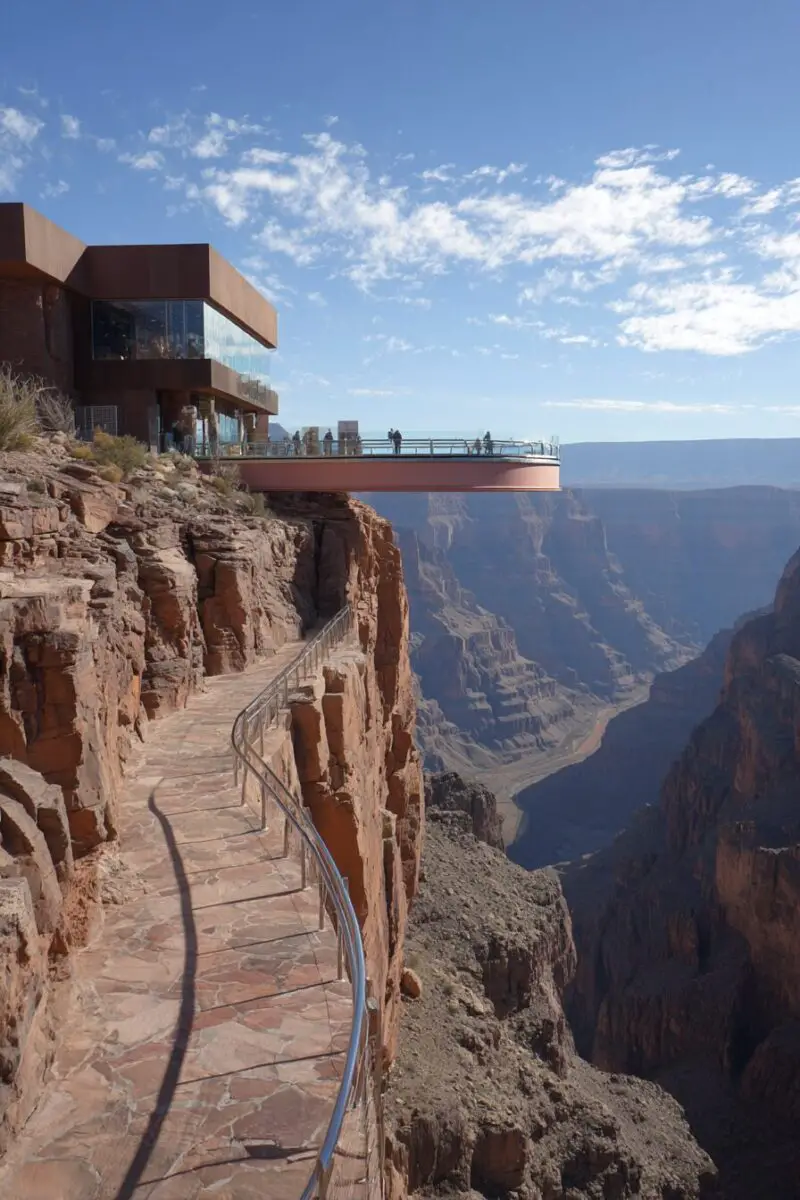
The Grand Canyon Skywalk extends 70 feet beyond the canyon rim as a horseshoe-shaped glass bridge that creates the illusion of walking on air 4,000 feet above the Colorado River.
Located on the Hualapai Indian Reservation at Grand Canyon West, this engineering marvel features a glass floor that provides unobstructed views straight down to the canyon bottom, creating an experience that’s equal parts thrilling and terrifying.
The bridge can support the weight of 71 fully loaded Boeing 747 aircraft, though you might find it hard to believe those statistics as you step onto transparent panels suspended over one of Earth’s most dramatic landscapes.
Visitors must wear special protective shoe covers to prevent scratching the glass surface, and personal cameras aren’t allowed on the bridge itself, though professional photographers capture memorable shots that you can purchase as souvenirs.
The sensation of stepping into apparent nothingness triggers primal fears in many visitors, creating an adrenaline rush that makes this experience unforgettable even for seasoned thrill-seekers and adventure enthusiasts.
Beyond the Skywalk itself, the Grand Canyon West area offers additional attractions including zip lines, helicopter tours, and cultural presentations by Hualapai tribal members who share their ancestral connections to this sacred landscape.
The drive to Grand Canyon West from Las Vegas takes about two and a half hours through desert landscapes that gradually reveal the approaching canyon, building anticipation for the main attraction.
Package deals often combine Skywalk admission with other activities like boat rides along the Colorado River or stops at nearby ranches where you can experience authentic Western hospitality and cuisine.
The experience challenges your perception of safety and solid ground in a way that few tourist attractions can match, creating memories and photos that will make your friends back home question your sanity.
Most visitors spend several hours at Grand Canyon West, giving you time to overcome initial nervousness and return to the Skywalk multiple times as you gradually work up the courage to look straight down through the glass floor.
Sleep Under a Billion Stars While Camping

Camping at the Grand Canyon transforms your visit from a quick sightseeing trip into an immersive wilderness experience where you fall asleep to coyote calls and wake up to sunrise painting the canyon walls in brilliant colors.
Mather Campground on the South Rim accommodates both tent and RV camping, placing you within walking distance of canyon viewpoints while providing modern amenities like restrooms, showers, and a camp store for forgotten essentials.
Desert View Campground offers a more primitive experience with fewer crowds and stunning sunrise views, though you’ll need to bring your own water and plan for cooler temperatures at the higher elevation.
Backcountry camping requires permits and serious preparation, but rewards adventurous souls with solitude and access to hidden canyon areas that day visitors never see, including secret waterfalls and ancient ruins.
Campfire programs led by park rangers feature stories about canyon geology, wildlife, and human history, creating educational entertainment that beats any television show or movie you might stream at home.
The dramatic temperature swings between day and night mean you’ll need appropriate gear for both desert heat and near-freezing conditions, especially during shoulder seasons when daily highs and lows can vary by 40 degrees.
Wildlife encounters become much more likely when camping, as elk, deer, and smaller animals venture closer to human habitations after dark, providing opportunities for photography and observation rarely available to day visitors.
Cooking meals over camp stoves or fire rings while surrounded by one of the world’s natural wonders creates a sense of self-reliance and connection to the landscape that hotel stays simply can’t provide.
The absence of light pollution means every night brings a natural planetarium show featuring countless stars, planets, and celestial phenomena visible only in locations far from cities and suburbs.
Many campers report that their Grand Canyon camping experience ranks among the most memorable trips of their lives, combining outdoor adventure with natural beauty in ways that create lasting connections to this incredible landscape.
🗼 I Wrote a Book About My Japan Travel Catastrophes!
Before I landed in Tokyo, I thought I was the “Final Boss” of international travel. Spoiler alert: I WASN’T. 😅
🚅 I boarded the wrong Shinkansen and ended up in THE WRONG CITY. I confused locals with my “expert” bowing that was more awkward than accurate. I accidentally stumbled into a high-stakes Kendo practice thinking it was a tourist show. Sound like something you’d do?
“Things I Wish I Knew Before Going to Japan” is your shortcut to avoiding ALL my cringe-worthy mistakes. ✨ Inside, you’ll find practical, LIFE-SAVING tips on etiquette, transport, money, and hidden gems that will save you time, money, and a whole lot of confusion.
Master the Art of Canyon Photography
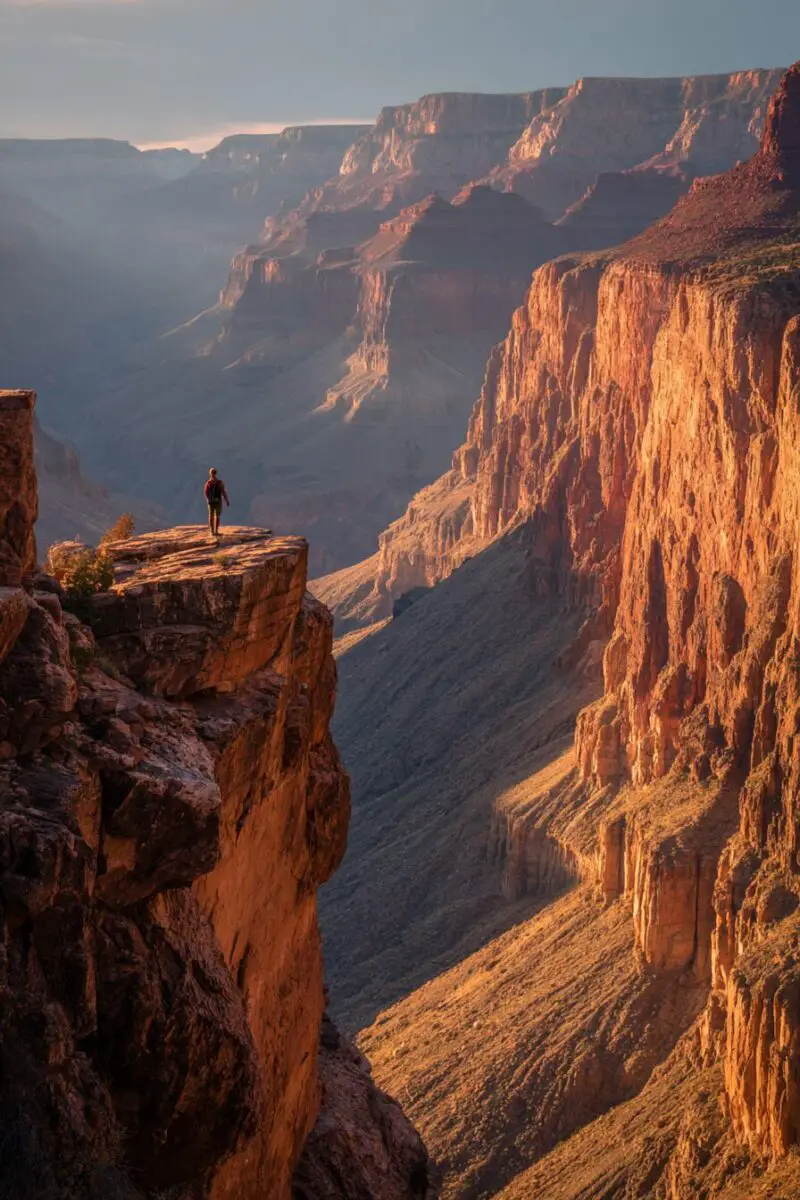
Photography workshops at the Grand Canyon teach you to capture images that do justice to this incredible landscape while developing technical skills that improve all your future travel photography endeavors.
Professional instructors lead small groups to the best shooting locations during optimal lighting conditions, sharing secrets about composition, exposure settings, and timing that separate amateur snapshots from stunning artistic images.
The canyon’s constantly changing light creates different moods and colors throughout the day, requiring photographers to understand how various conditions affect their subjects and adjust camera settings accordingly for best results.
Workshop participants learn to use foreground elements like twisted juniper trees or interesting rock formations to add depth and scale to their images, creating more compelling compositions than simple horizon shots.
Advanced techniques include focus stacking for maximum sharpness, exposure bracketing for high dynamic range images, and long exposure methods for capturing cloud movement and water flow in canyon streams.
The variety of subjects within the park means you’ll practice landscape photography, wildlife shots, macro photography of desert plants and flowers, and even astrophotography during evening sessions under dark skies.
Group critiques and one-on-one instruction help you identify strengths and weaknesses in your work while learning from other participants who bring different perspectives and experience levels to the learning environment.
Equipment recommendations and hands-on practice with filters, tripods, and specialized lenses teach you to make the most of your camera gear while avoiding common mistakes that ruin potentially great shots.
Many participants discover that learning to really see the canyon through a camera lens deepens their appreciation for its geological complexity and natural beauty in ways that casual viewing never achieves.
The skills you develop during Grand Canyon photography workshops transfer directly to other travel destinations, making this educational investment valuable long after you return home from your canyon adventure.
The Grand Canyon offers adventures that go far beyond simply peering over the edge – each experience reveals new dimensions of this natural wonder while creating memories that’ll last a lifetime.
Pack your sense of adventure and prepare to be amazed by everything this incredible destination has to offer.