Homosassa Springs isn’t a national park.
It’s a Florida state park, and its full name (a mouthful) is Ellie Schiller Homosassa Springs Wildlife State Park.
Looking for one near you? The free Florida Springs Finder lists the springs you can swim in, nearest first, with the fee and the water.
That comes first because it’s easy to get wrong.
It isn’t a national park, and going by the park’s own pages, it’s no place for swimming, scuba diving or camping.
Every fact below is from Florida State Parks, the Florida Fish and Wildlife Conservation Commission (FWC) or the U.S. Fish and Wildlife Service, as of November 2026.
So what’s special about it?
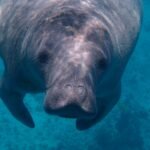
You can watch manatees from an underwater observatory, on any day of the year, and you never get wet.
Honestly, that’s pretty much the whole pitch.
It’s a genuinely good one.
One of the park’s own pages calls it Florida’s only wildlife state park.
Animals are the point here, more than the water.
Every resident is there because it can’t make it in the wild.
Coming up from Orlando for the day?
If you’re still picking a base, here’s whether Disney World is closer to Orlando or Tampa, and here’s what else there is to do in Orlando besides Disney.
And if you came here looking for Coral Springs, that’s a different Florida town.
Our Coral Springs restaurant guide is the page you want.
What Is There to Do in Homosassa Springs?
Start with the spring itself.
Homosassa’s main spring is the biggest in a group of nearly 30.
Together they put out 65 million gallons of water a day, which makes the group a first-magnitude spring.
It’s the head of the Homosassa River, which runs 8 miles west to the Gulf.
Under the surface it gets odd.
Its main vent flows from three points underground, and each one has a different salt content.
Weirdly, that means saltwater and freshwater fish share the same bowl.
Large jacks gather there with snapper and snook, according to the park.
The Fish Bowl and the manatees
Your best seat for all of that is the Fish Bowl Underwater Observatory.
It floats in the main spring, and you look out at the fish and the manatees from below the surface.
Up top, the sundeck has a live-feed TV with the underwater view too.
Manatee programs run daily at 11 a.m. and 1 p.m., at the bleachers above the Fish Bowl.
I’d plan the whole day around those two times.
Rangers feed the park’s resident manatees lettuce four times a day: around 7:30 a.m., 11:30 a.m., 1:30 p.m. and 3:30 p.m. Those times can shift a bit, the park says.
That 7:30 one happens before the gates open at 9, so it’s one for the webcam (Save the Manatee Club runs it with Explore.org).
Those are captive manatees that can’t survive in the wild.
Feeding a wild one is illegal, and the park says so right on its webcam page.
Winter adds a bonus.
FWC says wild manatees now have access to the headwaters of Homosassa Spring during winter.
So in the cold months, the residents may have company.
A quick note on the manatee, too.
FWC says the Florida manatee was moved from endangered to threatened in May 2017, and adults typically weigh around 1,000 pounds.
More on where manatees live in Florida.
The Wildlife Walk
Beyond the spring, there’s the Wildlife Walk: 1.1 miles of paved paths and elevated boardwalks, with benches and rain shelters along the way.
Wheelchairs and strollers are fine on the boardwalks.
Along the walk, the park lists manatees, alligators, bobcats, bears, panthers, deer and birds of prey.
Its residents also include red wolves, whooping cranes, Key deer and flamingos.
Ambassadors for their species, the park calls them.
Maximus is the bear with the backstory.
He was born in the wild in February 2019 and weighed 4 pounds when FWC rescued him.
He’d imprinted on humans, so he couldn’t go back out.
These days he moves between a night house and a daytime enclosure.
One line from his page stuck with me: black bears can sprint up to 35 mph.
Fine behind a fence.
But on a trail somewhere else, if you carry bear spray, check whether your bear spray has expired.
One animal you won’t see anymore is Lu the hippo.
He was born at the San Diego Zoo in 1960, came here in 1964 and died on June 8, 2025, at 65.
By the park’s count, he was the oldest known hippo in the world, and a memorial is planned.
Lu was a leftover from the park’s showbiz years.
In 1964 a development company turned it into Homosassa Springs “Nature’s Own Attraction,” and animals from the Ivan Tors troupe lived here between film and TV jobs (Buck, the stand-in for Gentle Ben, was one).
When the state took over in 1989, the focus shifted to native Florida wildlife.
Turns out the public pushed hard enough that the governor made Lu an honorary Florida citizen in 1991, and he got to stay.
Birders get Pepper Creek Trail too, a paved ¾-mile path from the visitor center on U.S. 19 to the park’s west entrance.
It’s part of the Great Florida Birding Trail.
On it, the Citrus County Audubon Society runs monthly bird walks from October through April.
What you can’t do
Now the part that matters most.
You can’t swim here.
Even the webcam page puts it plainly: “The Homosassa Spring is closed for recreational use.”
Anyone it shows swimming, snorkeling or scuba diving in the spring is a park ranger or an authorized person from a partner agency.
That rules out swimming and tubing, and snorkeling and scuba diving too.
No park page mentions “1,000 feet of underground passages,” either.
And the park’s own list of experiences has no camping, fishing or kayaking on it.
No pets past the gate, because of the captive wildlife.
It does keep free, self-service kennels at the main entrance on U.S. 19, and service animals are welcome.
If the dog’s coming along for the day, you’ll do better at one of these dog-friendly springs in Florida.
Crocodiles?
None of the park’s own pages names one.
Alligators, yes.
Wild crocodiles live farther south.
FWC puts the northern end of their range in South Florida and the Keys.
Here’s how to tell a crocodile from an alligator, and whether you can swim at Homosassa Springs.
Airboat and hovercraft rides?
Not on the park’s list either.
What it does run is the Pepper Creek shuttle boat (more on that below).
If you came for an in-water manatee swim, that’s Crystal River National Wildlife Refuge.
It was set up in 1983 and is the only refuge created specifically for the Florida manatee.
FWC says vendors there offer in-water tours for a fee.
Crystal River and Kings Bay are also the only area in Florida where swimmers are monitored around manatees.
FWC’s guidelines come down to look, don’t touch, don’t chase and don’t feed.
If you’re allowed in the water, float at the surface with a snorkel.
Scuba bubbles may make them leave.
Those rules have teeth.
A state conviction can mean a fine of up to $500, up to 60 days in jail, or both.
A federal conviction can bring up to $50,000, up to a year in prison, or both.
One more thing, about the word “gem.”
I’m wary of Florida hidden-gem lists.
Too many of them, to my eye, describe a place with a two-hour line.
Homosassa isn’t hidden.
It’s a staffed state park with a ticket counter, and that’s fine by me.
If clear water is what you’re after, our pick for Florida’s purest river is worth it.

How Long Does It Take to Go Through Homosassa Springs?
There’s no official visit length on the park’s site.
So here’s one built from its own times.
It’s open 9 a.m. to 5:30 p.m. every day.
Ticket counters close at 4:45 p.m., and the Wildlife Walk closes at 5 p.m. A late start leaves you racing the gate.
I’d get there for the 11 a.m. manatee program, walk the 1.1 miles, eat, then catch the 1 p.m. program before leaving.
That’s a long morning and an early afternoon.
Add the boat and the Pepper Creek Trail, and you’re likely closer to a full day.
About that boat.
Effective Feb. 4, 2026, the park’s page says, the shuttle boat service is unavailable because of low water levels.
That notice was still up in November 2026.
When it does run, the boat goes along Pepper Creek from the visitor center on U.S. 19 to the park’s west entrance.
It costs $5 plus tax for ages 13 and up and $4 plus tax for ages 6 to 12, and kids 5 and under ride free.
It runs hourly from 10 a.m. to 2 p.m. on Wednesday and Thursday, and every 30 minutes from 10 a.m. to 3 p.m. Friday through Sunday.
Without it, Pepper Creek Trail (about ¾ of a mile) connects the same two points on foot.
I’d call the park at 352-423-5600 before you go and ask where they want you to start.
A 1.5-hour boat tour or a full-day Orlando package isn’t on the park’s site.
If you’ve booked a tour from Orlando, ask the operator what’s actually in it.
Same goes for scratching a manatee’s sides when one swims up to a boat.
FWC’s guidelines say don’t touch them, and don’t chase one while you’re swimming, paddling or operating a boat.
Want to paddle anyway?
It’s not on the park’s list.
Our Homosassa kayaking post and our list of the best springs in Florida to kayak are the places to start.

What’s the Best Time of Year to Visit Homosassa Springs?
For manatees, winter.
FWC says they head for warm water when it drops below about 68°F. Long spells in colder water can lead to cold stress, and that can be fatal.
That’s also when wild manatees can reach Homosassa’s headwaters, on top of the residents.
In summer, FWC says, manatees spread out across Florida’s waterways.
But the resident manatees are there year-round.
So a summer trip isn’t wasted.
It’s the off-season for the wild ones, that’s all.
At Crystal River National Wildlife Refuge, manatee season runs Nov. 15 to March 31.
That’s when its seven warm-water manatee sanctuaries are in effect.
It isn’t a spring fishing trip either.
Fishing isn’t on the park’s list, and the jacks and snook in the spring bowl are there to look at.
In summer, I’d lean on those rain shelters and bring a refillable water bottle, which the park asks you to do anyway.
🗼 I Wrote a Book About My Japan Travel Catastrophes!
Before I landed in Tokyo, I thought I was the “Final Boss” of international travel. Spoiler alert: I WASN’T. 😅
🚅 I boarded the wrong Shinkansen and ended up in THE WRONG CITY. I confused locals with my “expert” bowing that was more awkward than accurate. I accidentally stumbled into a high-stakes Kendo practice thinking it was a tourist show. Sound like something you’d do?
“Things I Wish I Knew Before Going to Japan” is your shortcut to avoiding ALL my cringe-worthy mistakes. ✨ Inside, you’ll find practical, LIFE-SAVING tips on etiquette, transport, money, and hidden gems that will save you time, money, and a whole lot of confusion.
How Much Does It Cost to Get Into Homosassa Springs?
Admission is $13 for ages 13 and up and $5 for ages 6 to 12.
Kids 5 and under get in free.
Boat rides are extra when they run ($5 or $4 plus tax, by age, as above).
A Florida State Parks annual pass helps less here than you’d think.
An individual pass is $60, and companions normally pay $2 each, but at Homosassa and Weeki Wachee they pay the standard fee.
A family pass is $120 and normally covers up to 8 people.
At these two parks it covers two, the passholder included.
Pack lunch.
Wildside Café and Gator Bites are both closed until further notice, the Grill at Pepper Creek has no daily lunch service, and the park lists only limited food at the west entrance.
Covered picnic pavilions sit in the Garden of the Springs and behind the main-entrance parking on U.S. 19, with more tables by the Fish Bowl and Alligator Lagoon.
If you add Crystal River, the refuge’s visitor center at 1502 SE Kings Bay Drive has no entry fee.
Three Sisters Springs is another matter: for its entry fees, the refuge sends you to the City of Crystal River.
And if what you really want is a spring you can get into, look elsewhere.
Try our list of natural springs in the Florida Panhandle, or the Springs Finder up top.