

Most “swim with” wildlife trips are a fenced lagoon and a photo package.
This one isn’t.
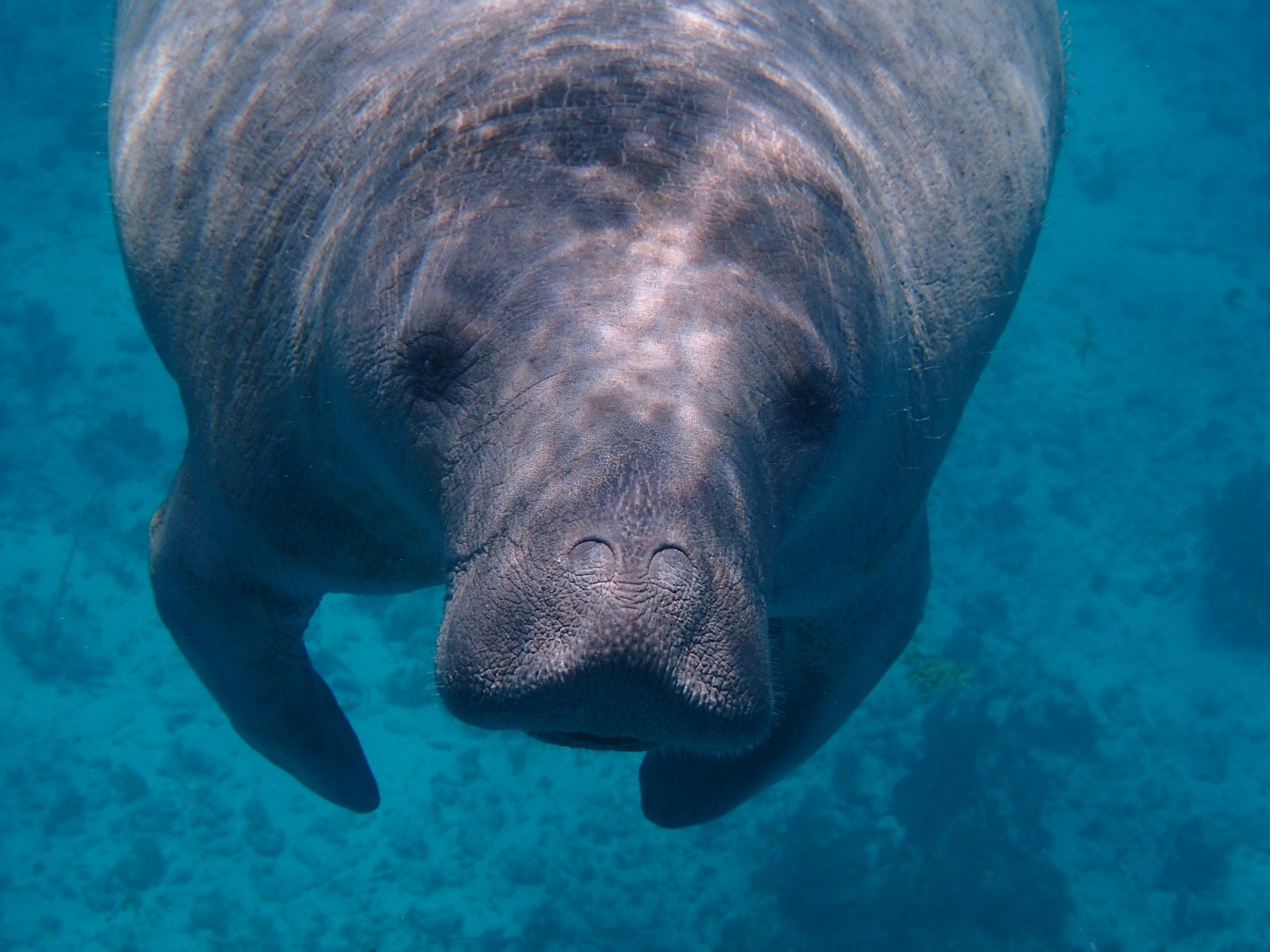
In Crystal River you float in a wild spring, in the animals’ own winter home, and a manatee a lot bigger than you drifts past at its own pace.
Or it doesn’t, and you float there feeling silly in a rented wetsuit.
Both happen.
I’ve had both.
I’ve done enough tourist traps to be suspicious of anything this popular (my rule is that if it’s on every billboard, it’s probably a lagoon).
This one earns it, as long as you go in the right months and know how the day actually works.
Here’s what I’d tell a friend before they booked.
Why Crystal River, of All Places

It comes down to warm water.
So here’s the short version.
According to the U.S. Fish and Wildlife Service, the springs in Kings Bay put out a few hundred million gallons a day at a constant 72°F. When the Gulf drops below 68°F, hundreds of manatees move into those shallow springs to get out of the cold.
That’s why the Crystal River National Wildlife Refuge exists.
It was set up in 1983, and the Service calls it the only refuge created specifically to protect the Florida manatee, which is listed as threatened.
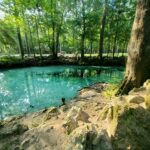
It also protects Three Sisters Springs, the spot you’ve probably seen in every blue-water manatee photo online (I had it saved on my phone for two years before I went).
The part people miss: in winter, the manatees aren’t there to meet you.
They’re there to rest.
The refuge’s fact sheet says they rest for long hours to save the energy they need for short feeding trips out of the bay between cold spells.
You’re a guest in their living room.
The rules below make a lot more sense once you think of it that way.
When to Go: Mid-November Through March

The refuge’s manatee season runs from November 15 to March 31.
That’s when its seven warm-water sanctuaries are in effect, and it’s when the animals crowd into Kings Bay.
Fun 2 Dive, one of the tour companies, says the same thing in plainer words: mid-November through March is when manatees gather in large numbers.
Inside that window, aim for a cold snap.
Since the trigger is the Gulf dropping under 68°F, a chilly week brings more of them into the springs than a warm one.
A cold, gray morning feels like bad luck when you’re standing on the dock in a wetsuit.
It’s usually the opposite.
And go early, too.
Fun 2 Dive’s own FAQ says earlier tours usually see fewer people on the water, and weekday or early morning tours are best for dodging crowds.
Plus, the line of boats on a holiday weekend is real.
I booked a Saturday once, and it felt like a parking lot with manatees in it.
My next trip was a Tuesday at dawn, and it was a different place.
The off-season is a different trip. From April 1 to November 14 most of the herd spreads back out along the coast, so a sighting is less of a sure thing. The upside is the water. Paddle craft are allowed inside Three Sisters Springs in those months, which they aren’t in winter.
Your Ultimate Caribbean Adventure Awaits!
Discover hidden coves, secret beaches, and the best rum punches in the islands. Your insider’s guide to Caribbean paradise.
Get Your Guide Now$15.99How a Tour Actually Runs
The refuge doesn’t run swim tours itself.
Instead it gives special use permits to local businesses, and you book with one of them.
The refuge’s website keeps the list of permitted operators, and that’s the list I’d pick from.
Here’s how a trip runs at Fun 2 Dive, which is pretty much the standard setup.
You show up at their shop for a short briefing on “manatee manners.”
You get into a wetsuit.
Then it’s onto the boat and out into the refuge, with an in-water guide who stays with you on land and in the water.
Their whole trip runs about three hours from arrival to return: roughly 2.5 hours on the boat and 1 to 2 hours in the water, depending on conditions and on what the manatees are doing.
That last part matters.
Nobody can promise you a close encounter, and a good guide won’t try to force one.
Some days you spend most of your in-water time watching one sleeping manatee from a respectful distance.
Honestly?
That still beats most aquariums I’ve paid for.
You’ll also need to be able to swim.
Fun 2 Dive says every participant must, even though you mostly float with a mask and snorkel instead of swimming laps.
They hand out foam pool noodles for extra float (take one, nobody’s judging), and the wetsuit helps too.
The Rules Once You’re in the Water
The Fish and Wildlife Service asks for what it calls passive observation: don’t start contact with a manatee, and watch calmly from a distance, at the surface.
In all of Kings Bay, Three Sisters included, these are against the rules:
- Disturbing or touching a resting or feeding manatee
- Diving from the surface onto a resting or feeding manatee
- Cornering or surrounding one
- Riding, holding, grabbing, pinching, poking or prodding one, hands and feet included
- Separating a mother and calf, or splitting up a group
- Giving a manatee anything to eat or drink
- Starting contact with a manatee that wears a belt or a tag
- Getting in the way of rescue or research work
Leave the fins at home.
I packed mine in my carry-on and never used them.
Fun 2 Dive says fins aren’t allowed because of Fish and Wildlife Service rules, which makes sense once you picture a dozen tourists kicking up the sandy bottom over a sleeping animal.
Turns out the pool noodle does the job.
The roped-off areas are a hard no. Under federal rules, all waterborne activities are banned inside the manatee sanctuaries from November 15 to March 31.
The refuge also asks every visitor to watch its “Manatee Manners” videos before doing anything on the water in Kings Bay.
I watched them in my hotel room, and they’re the best prep you can do the night before.
What It Costs and What’s Included
Prices change, so check before you book, but here’s one real example.
Fun 2 Dive lists its Classic Manatee Swim from $70.95 a person, with up to 12 people on the trip.
Its semi-private swim starts at $89.95, and its small-group tours keep it to no more than 6 guests a boat.
For that price you get a mask, a snorkel, a wetsuit and parking, with no rental line at the counter.
Their wetsuits go from toddler sizes up to adult 4XL.
Kids ages 3 and up can join a group tour if they’re comfortable in the water and can follow the guide.
Anyone younger has to go on a private trip.
That’s a short list of extras, which I like.
The semi-private one costs $19 more.
I’d say it’s worth it on a busy winter weekend.
Fewer people in the water means less splashing, and calmer water is what keeps a manatee from drifting off.
On a quiet weekday morning, the classic trip is fine.
Photos are extra.
A photographer shoots you in the water and on the boat, and you can buy the pictures back at the shop.
If you’ve got a decent waterproof phone case, you can skip it.
I didn’t skip them (they cost me a bit more than I’d planned), and I don’t regret it.
Caribbean Paradise Unlocked
From pristine beaches to vibrant local culture, discover the Caribbean’s best-kept secrets with my comprehensive travel guide.
- 120+ Hidden Beach Secrets
- Local Cuisine Guide
- Budget Travel Tips
- Island Hopping Routes
Not a Swimmer? Three Sisters Springs From the Boardwalk

Not everybody wants to get into 72°F water on a cold morning, and that’s fine.
In winter, the Fish and Wildlife Service says the most popular place to watch manatees from above the water is the Three Sisters Springs boardwalk.
Its fact sheet puts the boardwalk at about 1,300 feet, with viewing platforms along the way.
Two things to know.
First, you get there by shuttle, since there’s no public parking at the springs except a limited number of spaces.
And the land side has no water access at all, so nobody’s swimming from the boardwalk (someone always asks).
Entry fees are handled through the City of Crystal River’s Three Sisters Springs Center, so check their page for this season’s price.
During manatee season the refuge runs programs at Three Sisters every day, and you don’t need to sign up.
If someone in your group is sitting out the swim, this is where I’d send them.
They might honestly get the better view, because the water is clear and the boardwalk sits right above it.
Weirdly, I think the view from up there can beat the one in the water.
How I’d Plan the Day

Crystal River is about 1.5 hours northwest of the Orlando theme parks, according to Fun 2 Dive.
The tour companies don’t pick you up, so you’ll want a rental car.
Uber and Lyft work too, but I wouldn’t count on a quick ride back at the end of a tour.
Taking the bus is not really an option here.
Get the car.
If you can, sleep in Crystal River the night before and book the earliest boat you can get.
Driving in at dawn from Orlando after a long flight with jet lag is how people end up napping on the boat.
Ask me how I know.
Bring a warm layer and a towel for the ride back.
You’ll be wet, the boat is moving, and a winter morning on the water feels a bit colder than you’d expect after the 72°F spring you just climbed out of.
A dry hat helps more than you’d think.
So does a thermos of coffee in the car.
Still deciding where to base yourself?
My Crystal River vs Homosassa Springs comparison covers the hotels, food and the sure-thing summer option.
For the bigger picture on where manatees live in Florida, and when, that one’s worth a read too.