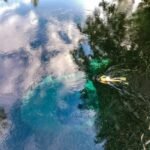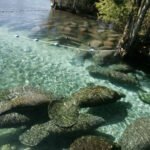

Kelly Park is an Orange County park in Apopka, Florida, built around Rock Springs, a cold, clear spring run you float down on an inner tube.
Tickets are online only, and yes, it has a campground.
Only 280 tickets go on sale for each day, a cap the county set to keep the day a good one and protect the park’s natural beauty.
And once you’re booked, you’re in.
So buy your ticket on OCPORTAL.net before you leave the house, rent a tube before you reach the gate, and leave the dog and the beer at home.
Where Is Kelly Park?

Kelly Park is at 400 E Kelly Park Rd, Apopka, FL 32712.
The park’s number is (407) 254-1902, and there’s a separate information line at 407-254-1906.
It covers 380 acres, and it’s been around a while.
Kelly Park opened on June 7, 1927, so it’s pushing a hundred.
Kelly Park, Rock Springs and Kelly Park Rock Springs all mean the same place.
The park’s full name is Kelly Park/Rock Springs, and Rock Springs is the spring you tube on.
The hours change with the clocks.
From March until early November the park is open 8 a.m. to 8 p.m., and from November until March it’s 8 a.m. to 6 p.m. The waterfront and the trails close an hour before the park does, so staff have time to get everyone out safely.
Plan your last float around that, not around the gate.
Three nearby parks are easy to mix up with Kelly Park.
Camp Joy is Kelly Park’s sister site next door, with dorm-style lodges and a canoe and kayak launch.
Rock Springs Run State Reserve is a state-run reserve on Rock Springs Run, with hiking and horse trails plus canoe-in campsites.
Swimming and tubing aren’t available there; you do those at Kelly Park.
Wekiwa Springs State Park, at 1800 Wekiwa Circle in Apopka, has its own spring and its own campground.
By canoe or kayak, Wekiwa Springs to Kelly Park is about 9.5 miles.
One thing to know before you pay twice and get annoyed about it: a Rock Springs Run State Reserve entry won’t get you into Kelly Park.
The state runs the reserve and Orange County runs Kelly Park, so each one charges its own way in.
And the spelling, since it trips everybody up: the state park is Wekiwa, with a W, and the river is the Wekiva, with a V.
Top Things to Do at Kelly Park

The list is short, and that’s fine.
You’re here for the water.
Tubing Down Rock Springs
This is the main event.
The run is fairly small, and the float from top to bottom takes about 25 minutes.
Then you climb out and walk back, about 10 minutes on a paved sidewalk to the main park area, so you won’t need a shuttle.
It’s short enough to walk up and go again, which is kinda the whole appeal.
Kelly Park doesn’t rent tubes, so sort that out before you drive in.
Swimming at the Spring
The spring has a swimming area for when you’re off the tube.
Life jackets and puddle jumpers are allowed.
Water wings aren’t, because they aren’t Coast Guard approved.
Picnics, the Playground and the Concession Stand
Kelly Park has picnic pavilions, a playground and a full-service concession.
The stand is open daily from spring break until early October and sells hot dogs, hamburgers, snow cones and funnel cakes, plus charcoal and bug spray among other things, though what’s on hand can change.
You can bring your own grill, propane or charcoal, as long as it stays at a picnic area.
No grills near the water, no hot grill sitting on the picnic table, and don’t dump hot charcoal on the ground.
Pop-up canopies up to 10 by 10 feet are fine in the picnic area.
Camping-style tents go in the campground only, and no tents at all at the waterfront.
Hiking the Trails
The park has three named trails: the Kelly Loop Trail (1.5 miles), the Oakhill Trail (1.8 miles) and the Prairie Lake Trail (1.5 miles).
Like the water, the trails close an hour before the park does.
Trail rules: no pets, no alcohol, no fishing, no motor vehicles, and fires only in the designated grills and campfire rings.
Want more miles?
Rock Springs Run State Reserve has 14 miles of hiking trails, plus multi-use trails that horseback riders share with cyclists and hikers.
Paddling From Camp Joy
Camp Joy has a primitive canoe and kayak launch.
You launch between 8 a.m. and noon, and you’re back by 5 p.m.
Bring your own boat, because neither Camp Joy nor Kelly Park rents canoes, kayaks or paddleboards, and there’s no shuttle.
For a rental, Wekiwa Springs State Park, Kings Landing and Wekiva Island are the places to try.
No inner tubes or rafts at the launch, and no driving down to the water: you carry the canoe or kayak to the launch area.
Every boat needs a Coast Guard-approved life jacket for each person aboard plus a sound-producing device for emergencies, and kids under six wear their life jackets the whole time.
If paddling is the whole point of your trip, Take a Look at the best springs in Florida to kayak too.
Wildlife
Alligators and snakes live around the Camp Joy launch, and so do otters, so use real caution there, and don’t feed or bother anything.
Gators and snakes don’t often turn up in the swimming water, but they do from time to time.
If you spot an alligator, tell the staff; they’ll confirm it and follow the park’s procedure.
Drones and the Cave
Drones can fly if they take off and land in the designated spot, which is the main picnic area next to the drop-off area.
No low passes over the water.
And no, you can’t go into the cave.
Everyone is kept away from the cave area for safety.
Do You Have to Pay to Get Into Kelly Park?

Yes.
Since August 11, 2026, admission is $5 per vehicle and $10 per bus, so a youth group that rolls up on the bus pays $10.
Tickets are online only, on OCPORTAL.net, and cash is no longer accepted.
You show your pass at the Kelly gate when you arrive.
You can buy up to 30 days ahead, and you can show up any time on the day your ticket is for, so buy it as soon as your date is firm.
Current service members and honorably discharged veterans can get a free lifetime entry pass for the county parks that charge entry, Kelly Park included.
Some surviving family members qualify too, and you can get the application at Kelly Park, at Moss Park or from Orange County Parks and Recreation.

🗼 I Wrote a Book About My Japan Travel Catastrophes!
Before I landed in Tokyo, I thought I was the “Final Boss” of international travel. Spoiler alert: I WASN’T. 😅
🚅 I boarded the wrong Shinkansen and ended up in THE WRONG CITY. I confused locals with my “expert” bowing that was more awkward than accurate. I accidentally stumbled into a high-stakes Kendo practice thinking it was a tourist show. Sound like something you’d do?
“Things I Wish I Knew Before Going to Japan” is your shortcut to avoiding ALL my cringe-worthy mistakes. ✨ Inside, you’ll find practical, LIFE-SAVING tips on etiquette, transport, money, and hidden gems that will save you time, money, and a whole lot of confusion.
What Time Does Kelly Park Fill Up?

It doesn’t fill up at the gate anymore.
When it’s full, it’s because that day’s online tickets are gone.
There’s a daily limit of 280 entry tickets, sold on OCPORTAL.net, and that’s where you check whether a day still has room.
Once you’ve got a ticket, you can arrive any time that day.
So an early start buys you more hours in the water, not a better shot at getting in, and the park opens at 8 a.m., so there’s no point sitting at the gate before that.
Booked is in, and there’s no buying your way in at the gate: tickets are online only, and cash isn’t accepted.
In the off-season, plan on a shorter day: from November until March the park closes at 6 p.m., and the waterfront at 5.
Is Rock Springs Safe for Kids?

Yes, with a life jacket or a puddle jumper (water wings don’t count), and with you watching.
In peak season, the park watches the water closely: lifeguards are on stand throughout the river, and they shut the water down if they lose sight of the bottom, even when no lightning is around.
A lightning detection system closes the swim area when lightning is in the area, and staff can close the water any time conditions call for it.
But lifeguards aren’t on stand year round, so the rest of the year you’re the lifeguard.
Got a weak swimmer along?
Call the park at (407) 254-1902 before you go and ask about the water where you plan to swim.
If clear water is what you’re after, here’s how Crystal River and Homosassa Springs compare.
Can You Swim in Kelly Springs?

Yes.
Swimming and tubing are what the place is for.
The swimming area closes an hour before the park does: 7 p.m. from March to early November, 5 p.m. from November to March.
Lifeguards are on stand in peak season, not all year.
There are a few lockers, first come, first served, and you can rent a lock from the concessionaire.
Do your swimming at Kelly Park, not downstream.
Wekiwa Springs does have its own swimming area at the spring.
It’s open from 8 a.m. until 30 minutes before the park closes, and there are no lifeguards on duty.
How Cold Is Rock Springs Water?

Cold enough to wake you up.
Rock Springs stays at 68 degrees or a little above all year, never past 72.
That’s about 20 to 22 degrees Celsius.
It stays in that range through the summer too, and on a hot July afternoon that’s exactly the point.
Wekiwa Springs, the state park’s spring, holds at 72 degrees year round.
If you’re going in the off-season, bring a towel and a dry layer for when you climb out.
Pack for that, not for the water.
Does Kelly Park Have Camping?

Yes.
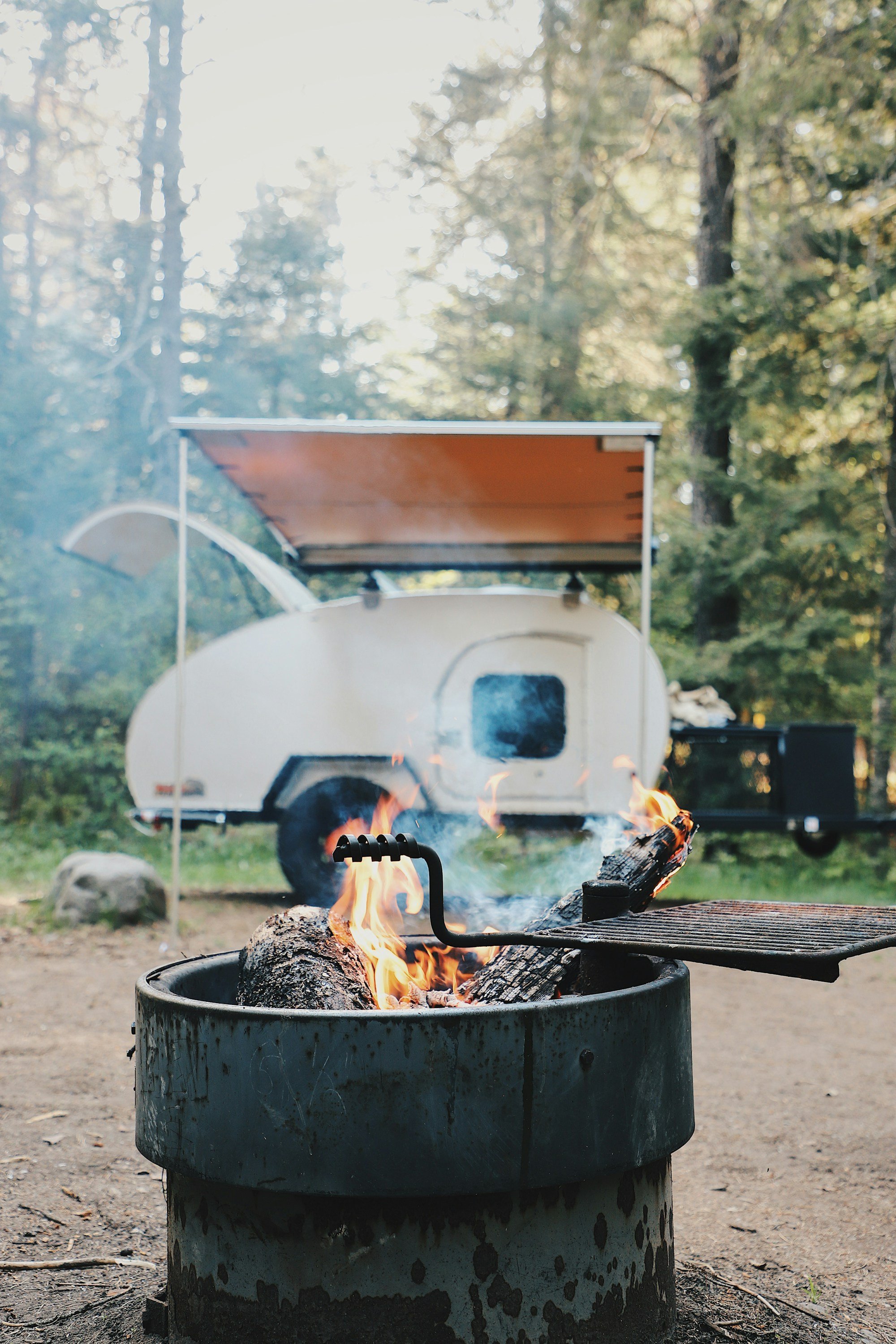
Kelly Park has its own campground, with RV sites, tent camping, a dump station, a campfire area and an after-hours camper gate.
Kelly Park’s Campground
You book on OCPORTAL.net, the same place as day tickets, and camping reservations can be viewed up to 45 days out.
After hours, the common areas and the waterfront close, and campers stay in the campground.
So a campsite doesn’t buy you a night swim.
The campground has its own campfire area.
And no pets in the campground, except ADA service animals.
For a group campsite or the dorms at Camp Joy, email [email protected] with your name, phone number and dates.
Someone from the parks office will get back to you within 24 hours, sites go first come, first served, and full payment is required.
There are no cabins for rent at Kelly Park.
Camp Joy has dorm-style lodges, with a minimum group size.
Wekiwa Springs State Park, Wekiwa With a W
Wekiwa Springs State Park has 60 campsites in sandhill country with longleaf pine.
Each site has water and electric hookups, a fire ring with a grill and a picnic table.
Some have sewer hookups too, and there’s a dump station.
You can request an accessible campsite when you reserve, and there are two accessible restrooms with showers in the camping area.
Firewood is available at the ranger station.
Well-behaved pets are allowed in the campground under the park’s pet policy, so if the dog’s coming along, look here first.
Florida black bears are native to the park, so read up on bear safety before your trip.
Reservations go through the Florida State Parks reservations website or 800-326-3521.
A campsite is $24 a night plus tax, plus a nonrefundable $6.70 reservation fee.
RVs add a $7 nightly utility fee for water and electricity, and tent camping doesn’t pay it.
Florida residents who are 65 or older, or who hold a Social Security disability award certificate or a 100% disability award certificate from the federal government, get 50% off the base campsite fee with proof.
Getting in after sunset?
Call the park on the day you arrive, at 407-553-4383, for the gate combination.
Day trips need a reservation too.
Since September 2, 2025, Wekiwa Springs has required reservations for day-use entry, and it’s $6 per vehicle.
Hike-In and Paddle-In Camps at Wekiwa
If you’d rather have quiet and don’t mind carrying your stuff, Wekiwa has two hike-in primitive sites: Camp Cozy, about 3 miles out, and Big Fork, about 1 mile.
Each takes up to 8 people and has a fire pit with a grill, plus benches and a picnic table.
Big Fork takes horses too, and it’s the only spot in the park with water for them.
Otter Camp and Big Buck Camp sit on Rock Springs Run and can only be reached by canoe or kayak.
Each takes up to 10 people and has a fire ring, and they’re $5 per person per night, plus tax.
You reserve the paddle-in sites no more than 60 days ahead by calling 407-553-4383, and you have to be at your site at least two hours before the park closes, or you don’t get to camp.
Rock Springs Run State Reserve
The reserve’s two canoe campsites, Indian Mound and Buffalo Tram, sit on the reserve’s waterways, and you can only reach them by canoe or kayak.
They’re primitive, with fire rings, and each takes up to 10 people.
You book those through Wekiwa Springs State Park too, at 407-553-4383, no more than 60 days ahead.
Same rule: be at the site at least two hours before the park closes.
There’s primitive equestrian camping as well, and its bathhouse is accessible.
If your group wants walls and a kitchen, the Historic Hammock House is a 4-bedroom, 4-bathroom ranch-style house right on the Wekiva River, for groups of up to 16.
Rock Springs Guest Ranch handles it, at 844-779-7625.
The reserve’s entrance is via Rock Springs Reserve Road and Wekiva River Road in Sorrento, but the two canoe sites are still reached only by water.
It opens at 8 a.m., so plan to be out by 6 p.m., or by sundown if that comes first.
Entry is $3 per vehicle.
Some fall and winter weekends are hunt weekends, and parts of the trail system close on those.
To check before you go, call Wekiwa Springs State Park at 407-553-4383.
For the bigger picture, here’s our take on camping in Florida.
How Much Does Camping Cost Near Kelly Park?

For Kelly Park’s exact price on your dates, pick Kelly Park on OCPORTAL.net.
Orange County’s camping rates, effective October 1, 2026: a site with power and water, for 6 people and 2 vehicles, is $18 a night for county residents and $23 for everyone else.
Extra people are $2 a night each, and extra vehicles $3.
A primitive site, with no power or water, is $15 a night.
Group tent camping is $3 per person per night with a 20-person minimum, and that includes entry, but it isn’t refundable.
Camp Joy’s lodges are $5 per person per night, with a $60 minimum per bunkroom.
Cancel less than three days out and you pay one night.
Cancel earlier and you still pay a processing fee.
At Wekiwa Springs, a campsite is $24 a night plus tax and the $6.70 reservation fee, plus $7 a night for an RV.
Its primitive and paddle-in sites are $5 per person per night, plus tax.
Pay full price, though, and a Kelly Park site with power and water is the cheaper night, even at the non-resident rate.
For a family with a tent, that’s a pretty good deal.
Still, check OCPORTAL for your dates before you plan the whole weekend around it.
🗼 I Wrote a Book About My Japan Travel Catastrophes!
Before I landed in Tokyo, I thought I was the “Final Boss” of international travel. Spoiler alert: I WASN’T. 😅
🚅 I boarded the wrong Shinkansen and ended up in THE WRONG CITY. I confused locals with my “expert” bowing that was more awkward than accurate. I accidentally stumbled into a high-stakes Kendo practice thinking it was a tourist show. Sound like something you’d do?
“Things I Wish I Knew Before Going to Japan” is your shortcut to avoiding ALL my cringe-worthy mistakes. ✨ Inside, you’ll find practical, LIFE-SAVING tips on etiquette, transport, money, and hidden gems that will save you time, money, and a whole lot of confusion.
Can You Bring Your Dog to Kelly Park?

Nope.
Pets aren’t allowed in Kelly Park or in its campground, and ADA service animals are the only exception.
No pets at the Camp Joy launch either.
If the dog is coming on the trip, go with Wekiwa Springs State Park, which allows well-behaved pets in its campground under its pet policy.
And Rock Springs Run State Reserve welcomes pets on its trails, on a six-foot handheld leash.
Is Alcohol Allowed at Kelly Park?

No. Orange County ordinances don’t allow alcohol on park property, and breaking that rule can get you expelled from the park.
The Camp Joy launch is no-alcohol too, and glass containers, polystyrene foam and fireworks are banned there as well, so pack the cooler with that in mind.
Over at Wekiwa Springs State Park, alcohol is prohibited in the picnic area too.
Do You Need Your Own Tube at Kelly Park?

Yes.
Kelly Park doesn’t rent tubes, so you rent one from a local business outside the park or bring your own.
Rent it before you go in, because there’s no re-entry.
Forget the tube, and leaving to get one means you’re not getting back in that day.
Your own tube can’t be more than 5 feet in any direction, and pool noodles and floats have to be under five feet in length or width.
There’s no air pump at the park either, so bring a small one of your own.
The Camp Joy launch doesn’t take inflatable tubes or rafts at all.
It’s for canoes and kayaks.
Before You Go

Buy your ticket on OCPORTAL.net before you leave.
There are 280 a day, and the gate doesn’t take cash.
Get the ticket first, before the tube or the cooler.
Rent or pack a tube (5 feet max), and bring a small pump.
Leave the dog and the beer at home.
Be out of the water an hour before closing: 7 p.m. from March to early November, 5 p.m. from November to March.
Staying the night?
Kelly Park has tent and RV sites, Wekiwa Springs State Park has 60 campsites, and both Wekiwa and Rock Springs Run State Reserve have canoe-in sites.
Still choosing a spring?
Our Florida springs finder helps you find a spring to swim, tube or dive near you, and if you’re up north, here are the best natural springs in the Florida Panhandle.
Sources
- Kelly Park/Rock Springs, Orange County Parks and Recreation
- Kelly Park map (PDF), Orange County Parks and Recreation
- Orange County Fee Directory, effective October 1, 2026 (PDF)
- Wekiwa Springs State Park, Florida State Parks
- Wekiwa Springs State Park: experiences and amenities
- Wekiwa Springs State Park: hours and fees
- Rock Springs Run State Reserve, Florida State Parks
- Rock Springs Run State Reserve: experiences and amenities