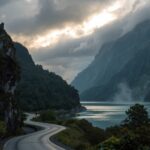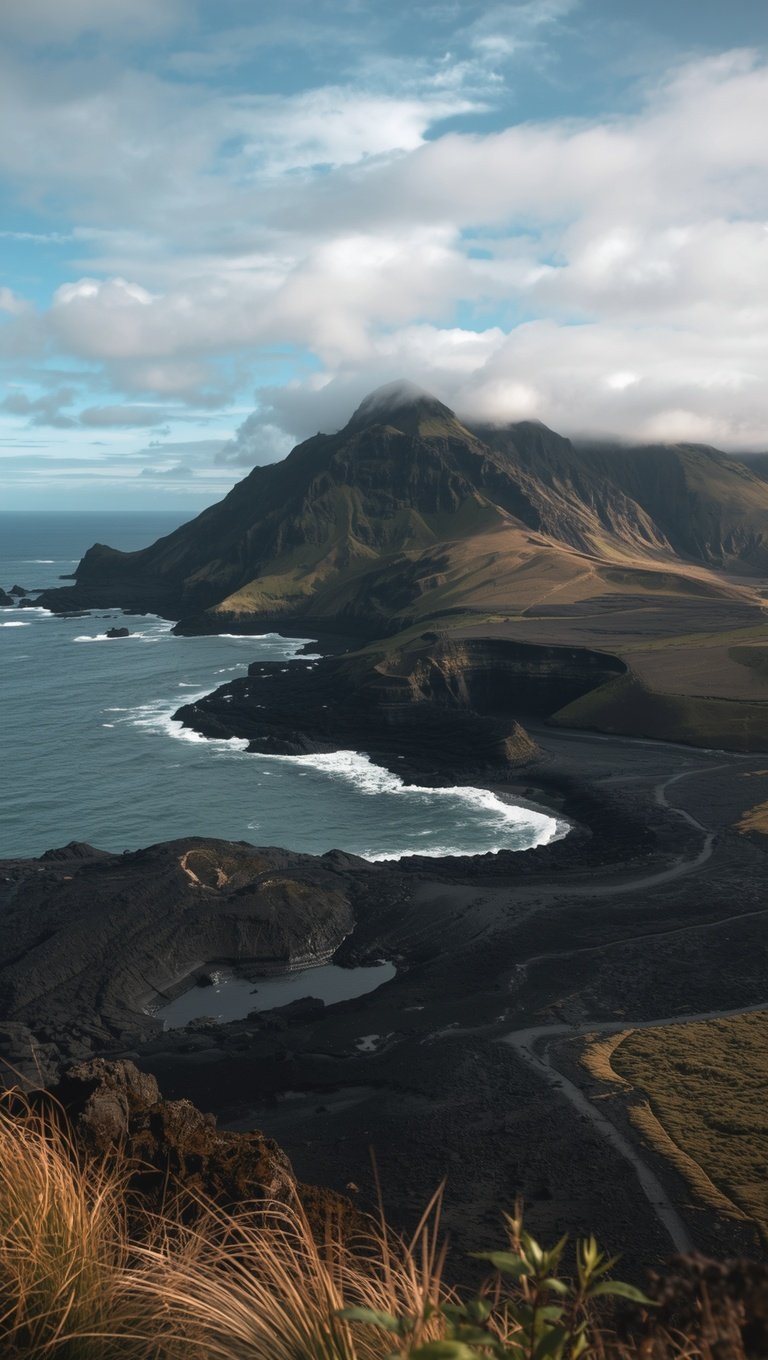
There’s a specific kind of quiet that hits you when you’re driving a campervan down an empty road in New Zealand, and the only thing ahead of you is a mountain so perfectly shaped it looks fake.
The free driving abroad checker covers every country: which side of the road, and the International Driving Permit.
I remember gripping the wheel on a fog-covered road outside Queenstown thinking — nobody told me it would feel this cinematic.
No tour bus schedule.
No alarm.
Just me, a full tank of gas, and two islands worth of jaw-dropping everything.
If you’ve been dreaming about doing New Zealand by road, I want you to know — it’s not just doable, it’s the only way I’d ever go back.
Why a Self-Drive Itinerary Changes Everything

Renting a car (or campervan) in New Zealand is genuinely one of those decisions you’ll look back on and say that was the move.
You’re not locked into anyone else’s pace.
You stop when something catches your eye — and in New Zealand, that happens every twenty minutes, no exaggeration.
I’ve done guided tours in other countries and loved them.
But there’s something about New Zealand’s landscape that feels almost personal, like it was made to be discovered slowly, at your own speed, with the windows down.
The roads are well-maintained, the signage is clear, and people are incredibly friendly if you ever need help.
And honestly, even as a solo traveler, I never felt unsafe or lost.
Just free.
If I had to pick one country in the world where self-driving is the non-negotiable choice — it’s this one, every single time.
Starting Point: Auckland Isn’t Just a Stopover

A lot of road trip guides rush through Auckland like it’s an airport layover.
I did too, the first time.
And I kind of regret it.
Auckland has this cool, coastal energy — coffee shops with harbour views, volcanic crater hikes right inside the city, and a food scene that surprised me completely.
Give yourself two full days here before you hit the road.
Walk up One Tree Hill at golden hour.
Grab breakfast somewhere local near Ponsonby Road and just soak in the pace.
It also gives you time to get comfortable with driving on the left side of the road before you’re out on a winding mountain pass somewhere.
Trust me, you want that practice time before the dramatic stuff starts.
Auckland sets the tone — relaxed, beautiful, a little underrated.
Start there and let the city ease you in.
North Island: The Volcanic Heart of New Zealand

Once you leave Auckland and head south through the North Island, things get weird in the best possible way.
I mean that as the highest compliment.
The Waikato region feels lush and green and almost impossibly soft.
Then Rotorua hits you — literally, with the smell of sulphur — and suddenly you’re watching geysers shoot up from the earth like it’s completely normal.
The geothermal activity here is unlike anywhere I’ve ever been.
Mud pools that bubble.
Ground that hisses.
I stood at a geothermal park and genuinely couldn’t believe this was just… a road trip stop.
From Rotorua, push south toward Taupo and Lake Taupo itself — the largest lake in New Zealand — where you can see the snow-capped Tongariro volcanic range in the distance.
It’s one of those views that makes you put your phone down.
Just for a second.
Just to actually feel it.
🗼 I Wrote a Book About My Japan Travel Catastrophes!
Before I landed in Tokyo, I thought I was the “Final Boss” of international travel. Spoiler alert: I WASN’T. 😅
🚅 I boarded the wrong Shinkansen and ended up in THE WRONG CITY. I confused locals with my “expert” bowing that was more awkward than accurate. I accidentally stumbled into a high-stakes Kendo practice thinking it was a tourist show. Sound like something you’d do?
“Things I Wish I Knew Before Going to Japan” is your shortcut to avoiding ALL my cringe-worthy mistakes. ✨ Inside, you’ll find practical, LIFE-SAVING tips on etiquette, transport, money, and hidden gems that will save you time, money, and a whole lot of confusion.
The Tongariro Alpine Crossing: Worth Every Early Alarm

If you do one hike on this entire road trip — make it the Tongariro Alpine Crossing.
It’s about 19 kilometres across active volcanic terrain, and it is stunning in a way that photos honestly fail to capture.
I woke up at 4am to get a shuttle to the trailhead.
Grumpy, cold, questioning my life choices.
Then the sun started to rise over the crater rim and I got very quiet very fast.
The emerald lakes — those impossibly blue-green volcanic pools — look photoshopped in real life.
They are not photoshopped.
That’s just what they look like.
Wear proper hiking shoes, layer up because the weather shifts fast, and bring more snacks than you think you need.
It’s a full-day effort but one of those experiences that sort of rewires something in your brain.
One of the best days of my life, honestly.
Wellington: The Cool Little Capital You’ll Want to Linger In

Wellington is tiny, walkable, and wildly underrated.
I expected to spend one night there on my way to the ferry.
I ended up staying three.
The coffee culture here is serious — people in Wellington care deeply about their espresso and I respect that completely.
The waterfront is lovely for an evening walk, the Te Papa national museum is genuinely fascinating and free to enter, and the neighbourhoods like Cuba Street have this creative, gritty energy that feels nothing like what you’ve seen in the rest of the country.
There’s also a cable car that takes you up to the Botanic Garden for a view over the harbour that I keep thinking about.
Don’t skip Wellington trying to save time.
It’s one of those cities that gives back exactly as much as you’re willing to give it.
Plan your Interislander ferry from Wellington to Picton ahead of time — especially in peak season, because spots do fill up.
The ferry crossing itself is beautiful, by the way.
Three hours through the Marlborough Sounds.
Pack a snack and sit on the top deck.
The Ferry Crossing: One of the Most Scenic Transitions I’ve Ever Done

There’s something dramatic and special about leaving one island by boat and arriving at another.
It felt like a real chapter break.
The Interislander ferry winds through the Marlborough Sounds — these narrow, fjord-like channels lined with deep green hills that come right down to the water.
I stood outside on the deck the entire time.
It was cold and I didn’t care.
You pull into Picton feeling like something has shifted.
The South Island has a different energy — more raw, more wild, more cinematic.
And you feel that immediately.
Take the crossing in daylight if you can plan it that way.
The views are worth it and it sets you up to drive straight into the Marlborough wine region — one of my favourite surprises of the whole trip.
Marlborough Wine Region: Yes, You Have to Stop Here

I’m not a huge wine person, actually.
But Marlborough made me reconsider my whole position on that.
This region produces some of the most celebrated Sauvignon Blanc in the world, and the landscape it grows in is stunning — long flat valleys surrounded by hills, with row after row of perfectly manicured vines.
Several wineries are open for tastings and lunches that are surprisingly affordable.
I did a self-drive wine tour (responsibly — one glass, lots of water, full lunch) and it was one of the most pleasant afternoons of the entire trip.
There’s a softness to this part of the South Island that I didn’t expect.
It’s warm and golden and a little dreamy.
Spend a night in Blenheim or nearby.
Have dinner at a vineyard restaurant if you can swing it.
And yes, bring a bottle home.
You’ll thank yourself later.
Kaikoura: Where the Mountains Meet the Sea

Kaikoura is the kind of place that sounds almost made up.
A small coastal town where the Kaikoura mountain range drops almost directly into the Pacific Ocean.
The scenery is so dramatic it’s almost aggressive.
I stopped here for one night and spent a morning driving the coastal road with the windows down, mountains to my left, ocean to my right, a seal colony just casually hanging out on the rocks below.
Kaikoura is known for whale watching boat tours and swimming with dolphins.
I did the whale watching.
Saw a sperm whale surface about 50 metres from the boat.
Did not speak for about two full minutes.
The town itself is small and sweet with good seafood and a real local feel.
It’s a perfect stop to break up the drive between Marlborough and Christchurch.
Don’t skip it trying to make time.
You won’t forgive yourself.
Christchurch: A City in Beautiful Rebirth

Christchurch surprised me deeply.
I knew it had been through a lot — significant earthquakes changed the city’s face — but what I found was a place actively and beautifully reinventing itself.
There are street art murals everywhere.
Innovative architecture fills in the gaps where old buildings once stood.
The Avon River winds gently through the city and there are punting tours that are quietly magical.
The Botanic Gardens are enormous and gorgeous and perfect for a slow morning walk.
I had one of the best flat whites of my life in a cafe that was essentially a converted shipping container, and it felt totally normal because that’s just Christchurch now.
There’s a resilience and creativity to this city that I found genuinely moving.
Give it two days minimum.
It earns them.
🗼 I Wrote a Book About My Japan Travel Catastrophes!
Before I landed in Tokyo, I thought I was the “Final Boss” of international travel. Spoiler alert: I WASN’T. 😅
🚅 I boarded the wrong Shinkansen and ended up in THE WRONG CITY. I confused locals with my “expert” bowing that was more awkward than accurate. I accidentally stumbled into a high-stakes Kendo practice thinking it was a tourist show. Sound like something you’d do?
“Things I Wish I Knew Before Going to Japan” is your shortcut to avoiding ALL my cringe-worthy mistakes. ✨ Inside, you’ll find practical, LIFE-SAVING tips on etiquette, transport, money, and hidden gems that will save you time, money, and a whole lot of confusion.
Queenstown: The Adrenaline Capital That Also Has Great Wine

Queenstown has a reputation as an adventure sports mecca — bungee jumping, skydiving, jet boating — and that reputation is completely earned.
But I want you to know it also has a beautiful, calm side that I maybe liked even more.
Lake Wakatipu is one of the most stunning lakes I’ve ever seen.
The Remarkables mountain range reflected in that dark blue water on a clear morning is the kind of view that makes you understand why people move countries.
I didn’t bungee jump.
I did take a gondola up to the ridge above the town at sunset and had a glass of Central Otago Pinot Noir looking out over the lake and mountains.
Probably the most content I’ve felt in years.
Queenstown can get expensive and touristy in the centre — stay slightly outside of town and you’ll find better prices and a quieter vibe.
It’s worth at least three nights.
Two if you’re tight on time.
Te Anau and Milford Sound: The Fiordland That Ends You (In the Best Way)

I saved this section for almost last because it’s the emotional climax of the whole road trip, and I want you to go in with full attention.
Milford Sound — technically Milford Fiord — is about a two-and-a-half hour drive from Queenstown through Fiordland National Park.
The drive itself is outrageous.
Glacial lakes, beech forests, mountain tunnels, valleys so deep and quiet you feel like the first person to ever drive through them.
Then Milford opens up in front of you and Mitre Peak rises out of the water like something ancient and impossible.
Take a boat cruise on the fiord.
Non-negotiable.
The waterfalls come down at you from 160 metres above.
It was raining the day I went — softly — and the whole fiord was wrapped in low mist and I cried a little, honestly.
Stay in Te Anau the night before and get to Milford early to beat the coaches.
Practical Road Trip Notes I Wish Someone Had Told Me

Drive times in New Zealand are longer than maps suggest — the roads are winding and scenic and you will stop constantly for photos.
Always factor in extra hours.
Campervans are incredible for this trip if you’re comfortable with the lifestyle — freedom to park, sleep, and move on your own terms.
If you prefer accommodation, book ahead especially in Queenstown, Milford, and Kaikoura because they fill up fast.
Petrol stations can be spread out on the South Island’s West Coast — fill up whenever you see one.
New Zealand drives on the left and roundabouts are everywhere.
Give yourself the first full day to adjust.
The weather can change extremely fast, especially in the South Island highlands.
Always carry layers even in summer.
And download offline maps before you go — cell service in Fiordland and the West Coast is genuinely limited.
The WiFi situation away from cities is patchy.
Plan accordingly and honestly — enjoy it.
Being unreachable in Milford Sound is kind of the whole point.