I’d been to a lot of places before Cape Town, and I thought I had a pretty solid idea of what a “stunning destination” looked like.
I was wrong.
Cape Town doesn’t just look good — it feels good.
It’s got this energy that’s hard to explain until you’re actually in it.
Whether you’re the kind of guy who wants to hike at sunrise or the kind who wants to sip wine and watch the ocean for three hours straight, this city has something for you.
Here’s everything I did — and everything I’d do again in a heartbeat.
Table Mountain Is Non-Negotiable — Do It First

I’m going to be straight with you: Table Mountain is not optional.
It’s the centerpiece of the whole Cape Town experience.
I took the aerial cableway up on my second morning, and I still think about it regularly.
The views from the top are genuinely hard to process.
You can see the Atlantic Ocean on one side, the city below you, and on clear days, you can even spot Robben Island sitting quietly in the water.
Give yourself at least two hours up there.
Don’t rush it.
Walk the trails across the flat top, find a quiet rock to sit on, and just… breathe.
If you’re feeling adventurous, you can hike up instead of taking the cable car.
The Platteklip Gorge trail is the most popular route — it’s a solid workout but totally doable.
I did the hike down after riding up, and it was one of the best decisions I made the whole trip.
One tip: go early in the morning.
The clouds roll in fast in the afternoon, and trust me, you don’t want to miss those views because of bad timing.
Check the weather the night before and be flexible with your schedule.
Table Mountain rewards the patient traveler.
Tap to Explore These Beauties
See my ideas in action 👇 Tap any image to explore full details.
The V&A Waterfront Is More Than Just a Tourist Spot

I’ll be honest — I almost skipped the V&A Waterfront because it sounded too touristy.
Big mistake almost made.
The Waterfront is genuinely one of the most vibrant, alive places I’ve ever walked through.
It’s got this mix of local life and international energy that just works somehow.
You’ve got the harbor right there, boats bobbing, the mountain in the background — it’s absurdly scenic.
I spent an afternoon just wandering around, ducking into shops, grabbing a coffee, watching street performers.
There’s a craft market inside where local artists sell everything from jewelry to ceramics to hand-painted prints.
I picked up a small piece of art there and it’s now one of my favorite souvenirs from any trip I’ve ever taken.
The food options are also seriously good.
I had some of the freshest seafood of my life at a restaurant right on the water’s edge.
The kind of meal where you’re kind of just staring out at the harbor between bites, not quite believing your life.
Come here for lunch, stay for the sunset.
The light hits the water in the late afternoon in a way that’s almost unfair.
It’s also completely walkable from the city center, which I appreciated.
Boulders Beach and the Penguin Colony Will Short-Circuit Your Brain

Nobody told me there were penguins.
Wild, waddling, absolutely unbothered African penguins just… living their best lives on a beach outside Cape Town.
I drove down to Boulders Beach on a whim one morning and genuinely could not believe what I was seeing.
These guys are small, round, and completely unintimidated by humans.
They’ll walk right past you.
They’ll stare you down.
One of them sat about two feet from me for a solid ten minutes while I just sat there kind of laughing to myself.
The beach itself is also beautiful — smooth boulders (hence the name), calm turquoise water, and soft sand.
You can actually swim here, which felt surreal with penguins nearby.
It’s about a 45-minute drive from Cape Town, down through the Cape Peninsula.
The drive alone is worth it.
You’re hugging the coastline the whole way, cliffs on one side, ocean on the other.
Bring a light jacket because the wind can pick up.
And bring snacks for the road because there’s not much along the way.
I’d give yourself a half-day for this one — don’t rush the drive back either.
Stop at one of the viewpoints and just sit with it for a minute.
🗼 I Wrote a Book About My Japan Travel Catastrophes!
Before I landed in Tokyo, I thought I was the “Final Boss” of international travel. Spoiler alert: I WASN’T. 😅
🚅 I boarded the wrong Shinkansen and ended up in THE WRONG CITY. I confused locals with my “expert” bowing that was more awkward than accurate. I accidentally stumbled into a high-stakes Kendo practice thinking it was a tourist show. Sound like something you’d do?
“Things I Wish I Knew Before Going to Japan” is your shortcut to avoiding ALL my cringe-worthy mistakes. ✨ Inside, you’ll find practical, LIFE-SAVING tips on etiquette, transport, money, and hidden gems that will save you time, money, and a whole lot of confusion.
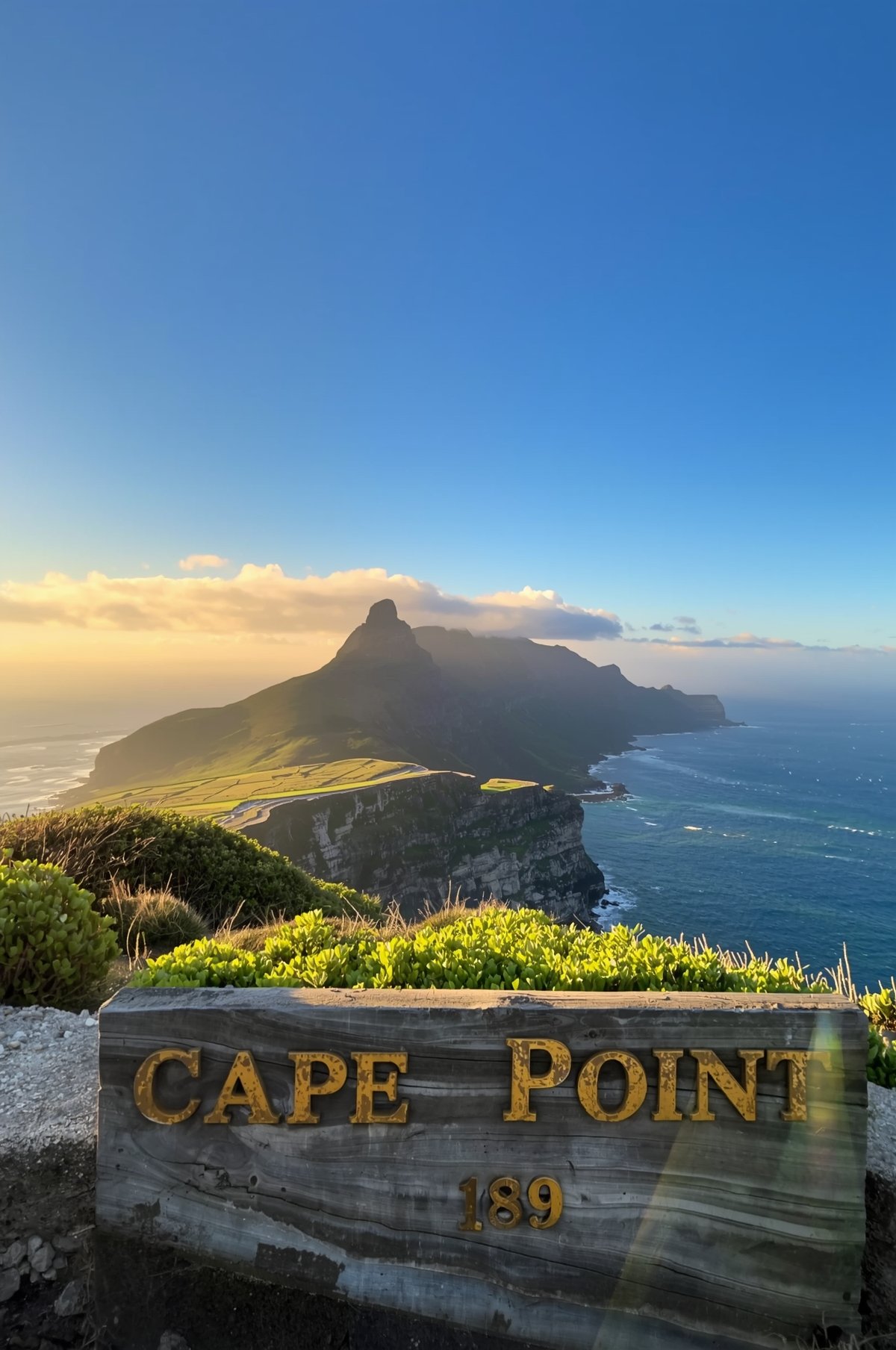
Cape Point and the Cape of Good Hope Will Make You Feel Small (Gloriously So)

Cape Point sort of breaks your brain in the best way.
You stand at the edge of this dramatic rocky peninsula and look out at the ocean and feel the full weight of how enormous the world is.
It’s the kind of place that makes you quiet without even trying.
I visited Cape Point as part of the Cape Peninsula drive, and it was easily one of the most dramatic landscapes I’ve ever stood in.
The cliffs are steep and wild, the waves crash hard against the rocks far below, and the wind is relentless.
There’s a funicular that takes you up to the old lighthouse if you don’t want to climb the path — though the path isn’t bad at all.
I climbed it.
Worth every step.
The Cape of Good Hope is technically a separate stop just nearby, and yes, you should get the photo at the famous sign.
No shame in that.
It’s one of those iconic travel moments that earns its reputation.
Keep your eyes open for baboons along the road.
They’re wild animals and they will absolutely investigate your car if you leave the window down.
I learned this secondhand from a very stressed couple in the parking lot.
Don’t be them.
Camps Bay Is Where You Go To Feel Like You’re Living the Dream

Camps Bay hit me in a way I wasn’t expecting.
I drove there on my third afternoon with no real plan, just following the coast road, and when I rounded the bend and saw that stretch of beach backed by the Twelve Apostles mountain range… I pulled over immediately.
The beach is white, wide, and soft.
The water is cold — genuinely cold, Atlantic Ocean cold — but people are in it anyway, because the vibe demands it.
The strip of restaurants and bars along the beachfront is the kind of place where you order one drink and end up staying for three hours.
I sat outside at a spot right on the promenade, watched the sun drop behind the mountains, and felt genuinely, completely at peace.
If I had to pick one sunset spot in Cape Town, this would be it.
The color that hits those mountains as the light fades is something I’m still trying to describe to people back home.
I kindda gave up trying.
You just have to see it.
Camps Bay is also a great area to base yourself if you’re looking for that coastal, laid-back feel.
It’s a short drive from the city center but feels like a different world.
The Winelands Are Only an Hour Away and Totally Worth the Drive

I almost didn’t do the Winelands.
I told myself I’d focus on Cape Town itself and save a wine region for another trip.
Then a guy at my guesthouse basically looked at me like I’d said something crazy, and I reconsidered.
He was right.
Stellenbosch and Franschhoek are both about an hour from Cape Town, and they are absolutely stunning.
Rolling vineyards, Cape Dutch architecture, mountain backdrops — it looks like someone described Tuscany to a South African painter and they just ran with it.
I spent a full day in Franschhoek specifically, and I’d do it again tomorrow.
The main street is lined with restaurants that take food seriously.
Not in a pretentious way — in a “we genuinely care about what we’re putting on your plate” way.
I did a wine tasting at a small estate off the main road and ended up buying two bottles to bring home.
One didn’t make it past the hotel room that evening.
The drive between vineyards is part of the joy.
Windows down, good music, mountain views on every side.
If you’re not renting a car, there are day tours from Cape Town that cover the highlights.
But I’d recommend the car if you can swing it.
Bo-Kaap Is a Neighborhood That Demands to Be Walked Slowly

Bo-Kaap stopped me in my tracks.
I was walking through the city center, turned a corner, and suddenly I was in a street full of brightly colored houses climbing up the hillside — cobblestones underfoot, the smell of spices in the air, and this warm, layered history hanging over everything.
Bo-Kaap is one of Cape Town’s oldest neighborhoods, and it’s home to the Cape Malay community, whose food and culture have shaped this city in ways that run deep.
Don’t just take a photo and leave.
Walk slowly.
Explore the small streets.
Find one of the local restaurants and order Bo-Kaap koesisters — these fried, syrup-soaked dough treats that are sort of like a donut but completely their own thing.
I had them with tea on a quiet morning and it’s one of those small travel memories that somehow sticks better than the big ones.
The neighborhood is also uphill, which means the views back down over the city and harbor are genuinely great from the upper streets.
I spent about two hours here and felt like I only scratched the surface.
Go in the morning when the light is soft and the streets are still quiet.
It photographs beautifully but more importantly, it feels beautiful.
A Braai on the Beach Is The Cape Town Experience You Didn’t Know You Needed

If you have the chance to go to a braai — do it.
Full stop.
A braai is South Africa’s version of a barbecue, but calling it that sort of undersells it.
It’s more of a ritual, a social event, a reason to gather.
I got invited to a casual beach braai by some locals I met through my guesthouse, and it turned into one of the highlights of the entire trip.
We had meat on the grill, someone had brought koeksisters and bread, there was cold beer, and the sun was going down over the Atlantic while everyone just… talked.
Simple.
Perfect.
If you don’t get a personal invite, some local tour companies offer braai experiences where you can participate in a proper one.
I’d seek that out intentionally.
It’s a window into everyday South African life that you won’t get from a restaurant menu.
The food itself is incredible — boerewors (a coiled sausage with spices that smell incredible on the grill), lamb chops, chicken, corn.
Everything cooked over wood, which gives it this deep, smoky flavor.
Eating outside, fire nearby, ocean in the background.
That’s Cape Town at its most honest.
Sea Point Promenade Is Perfect For a Low-Key Morning

Sea Point is my kind of morning.
I’m not always a “structured itinerary” traveler.
Some days I just want to walk somewhere pretty and let the day unfold.
Sea Point Promenade is exactly that kind of place.
It’s a long, flat walkway running along the Atlantic coast, and on any given morning, it’s full of locals running, walking dogs, pushing strollers, sitting on benches with coffee.
It felt real.
Not curated for tourists, just… a neighborhood living its life by the ocean.
I walked the whole length one morning before breakfast and felt completely calm and clear-headed by the time I turned back.
The ocean here is rough and wild — not a swimming beach, more of a “stand here and feel the scale of the ocean” kind of spot.
There are tidal pools along the route where you can watch fish, crabs, and sea anemones if you get close enough.
I spent way longer than planned crouching over a rock pool.
No regrets.
There’s a public swimming pool right on the seafront too — the Sea Point Pools — which is a Cape Town institution.
If you want a swim with a view of the ocean without dealing with cold Atlantic waves, that’s your spot.
It’s a calm, unhurried part of the Cape Town experience that I think a lot of visitors miss.
🗼 I Wrote a Book About My Japan Travel Catastrophes!
Before I landed in Tokyo, I thought I was the “Final Boss” of international travel. Spoiler alert: I WASN’T. 😅
🚅 I boarded the wrong Shinkansen and ended up in THE WRONG CITY. I confused locals with my “expert” bowing that was more awkward than accurate. I accidentally stumbled into a high-stakes Kendo practice thinking it was a tourist show. Sound like something you’d do?
“Things I Wish I Knew Before Going to Japan” is your shortcut to avoiding ALL my cringe-worthy mistakes. ✨ Inside, you’ll find practical, LIFE-SAVING tips on etiquette, transport, money, and hidden gems that will save you time, money, and a whole lot of confusion.
Robben Island Carries a Weight You’ll Feel Long After You Leave

I want to be real with you here.
Robben Island is not a fun excursion in the traditional sense.
But it’s important.
Profoundly, undeniably important.
The island sits in Table Bay, visible from the Waterfront, and it’s where Nelson Mandela and many other political prisoners were held during apartheid.
You take a ferry over, and a guide — often a former political prisoner themselves — walks you through the history.
I was shown around by a man who had been incarcerated there himself.
He stood in the doorway of the cell where Mandela lived and spoke about it with a steadiness that I found deeply moving.
I had to take a minute.
The limestone quarry where prisoners were forced to work in blinding sunlight, the isolation, the silence of the island — it’s heavy in the way that important places should be.
You leave understanding something about human resilience that’s hard to put into words.
Give yourself a full half-day for this one.
The ferry ride alone is about 30 minutes each way, and the tour on the island runs a couple of hours.
Book in advance.
It fills up, especially in peak season.
This is one of those experiences that changes how you see a place and, sort of, how you see the world.
Why Cape Town Stays With You After You’ve Left

I’ve been back home for a while now, and Cape Town still lives in me somewhere.
That’s the only way I can describe it.
It’s in the way I think about what a city can feel like when geography and culture and history all pile on top of each other in the right way.
It’s not a perfect place.
No place is.
But it’s a place that pushes back a little — that asks something of you, that rewards attention and slowness and curiosity.
The mountain is always there in the background.
The ocean is always close.
The food is always an adventure.
And the people I met — locals, other travelers, the woman at the guesthouse who gave me restaurant recommendations like she was giving me family secrets — they made it feel like more than a destination.
If you haven’t been, start planning.
If you have been, you already know exactly what I’m talking about.
Cape Town is the kind of place that earns its reputation not through hype, but through the specific, quiet moments that add up to something you can’t fully explain to someone who wasn’t there.
And somehow, that makes it even better.