Someone asked me once: “Is Tahiti really worth the hype?”
I laughed because I’d wondered the exact same thing before I went.
Like, could anywhere actually live up to those glossy magazine photos and honeymoon brochures?
Honestly, I thought I’d show up and find some overpriced resort island with crowded beaches and disappointing reality.
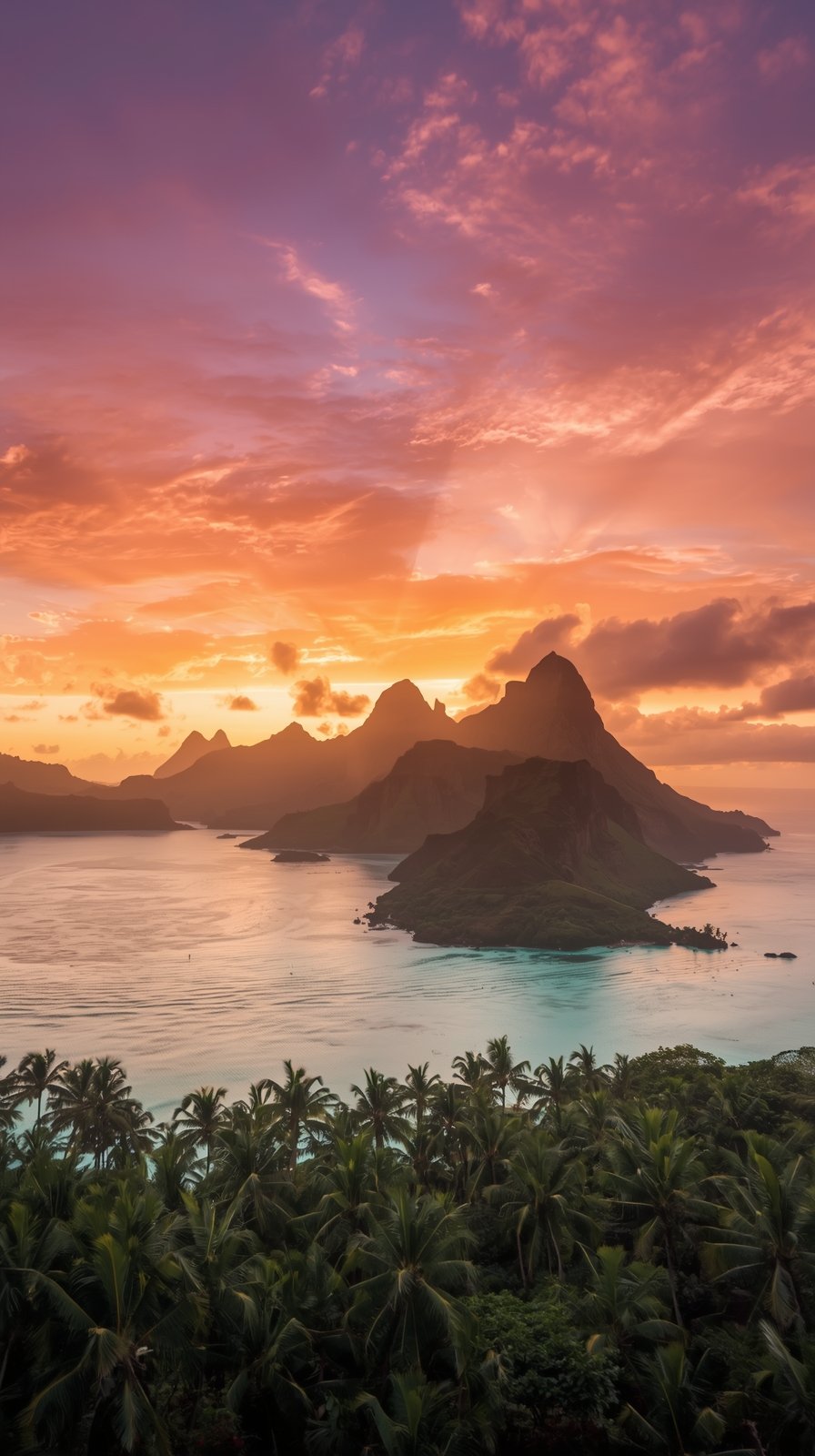
But here’s the thing—about 30 minutes into my first morning there, I was standing waist-deep in bathwater-warm turquoise water, watching a sea turtle swim past my legs, with these insane green mountains rising up behind me.
And I just thought: “Oh.
This is actually real.”
Tahiti isn’t hyped up—if anything, photos don’t do it justice.
After exploring the islands for a couple weeks, I realized it’s not just one thing that makes this place legendary.
It’s this perfect combination of natural beauty, culture, adventure, and a vibe that’s impossible to find anywhere else.
So what’s Tahiti really known for?
Those Overwater Bungalows That Everyone Dreams About

Okay, let’s start with the obvious one.
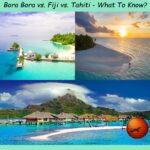
Tahiti and French Polynesia basically invented the overwater bungalow.
I’m talking about those dreamy huts on stilts with glass floor panels where you can watch fish swim underneath your bed.
My first time staying in one was on Moorea, and I spent an embarrassing amount of time just staring down through that floor panel.
The whole concept sounds bougie, and yeah, it’s definitely a splurge, but there’s something about waking up and jumping directly into crystal-clear lagoon water that feels borderline magical.
You get complete privacy, incredible views, and this connection to the ocean that you just can’t get anywhere else.
Some have ladders that drop right into the water, others have outdoor showers where you can rinse off while watching the sunset.
The islands around Tahiti—Bora Bora, Moorea, Taha’a—have perfected this style of accommodation.
It’s become so iconic that resorts all over the world try to copy it, but trust me, the original is still the best.
If you’ve ever seen a travel Instagram shot that made you want to quit your job, it was probably taken from one of these.
Tap to Explore These Beauties
See my ideas in action 👇 Tap any image to explore full details.
Jaw-Dropping Lagoons and Water Colors You Won’t Believe Are Real

The lagoons in Tahiti are on another level.
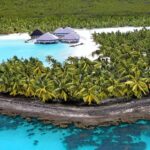
I’m talking about water that shifts between about 47 different shades of blue and turquoise depending on the depth and light.
When I first saw Bora Bora’s lagoon from above, I honestly thought someone had Photoshopped it.
But nope, it’s actually that ridiculously beautiful.
The reason the water looks so unreal is because of the volcanic islands surrounded by these protective barrier reefs.
The shallow lagoons create this gradient effect that you just don’t see in many other places.
You’ll see deep navy blue where the ocean drops off, bright turquoise in the shallows, and almost neon aqua over the white sand patches.
I spent hours just floating in these lagoons, and the visibility is insane—sometimes up to 100 feet.
You can literally see every detail of the coral below you.
The calmness of the water is another thing.
Because the reefs protect the lagoons from big waves, you get this serene, almost pool-like environment that’s perfect for swimming, snorkeling, or just floating around like a human pool toy.
The Polynesian Culture That’s Still Very Much Alive

Tahiti isn’t just a pretty face—there’s real culture here.
The Polynesian people have kept their traditions alive in a way that feels authentic, not like some tourist performance.
I remember watching a traditional dance show in Papeete and being completely mesmerized.
The drumming was so intense I could feel it in my chest, and the dancers moved with this power and grace that gave me chills.
Traditional Polynesian culture is everywhere—from the tattoos (which have deep spiritual meaning) to the music, the language, and the way people treat guests.
The concept of “mana” (spiritual power) is still central to how Tahitians view the world.
You’ll hear Tahitian spoken everywhere, see traditional tapa cloth art, and taste foods that have been prepared the same way for centuries.
The locals are incredibly proud of their heritage, and unlike some tourist-heavy destinations, they’ve managed to preserve their identity.
Visiting a marae (ancient stone temple) or watching a himene (traditional choir singing) gives you this connection to something ancient and powerful.
It’s easy to just focus on the beaches, but the cultural side of Tahiti is what makes it feel like a real place, not just a resort destination.
🗼 I Wrote a Book About My Japan Travel Catastrophes!
Before I landed in Tokyo, I thought I was the “Final Boss” of international travel. Spoiler alert: I WASN’T. 😅
🚅 I boarded the wrong Shinkansen and ended up in THE WRONG CITY. I confused locals with my “expert” bowing that was more awkward than accurate. I accidentally stumbled into a high-stakes Kendo practice thinking it was a tourist show. Sound like something you’d do?
“Things I Wish I Knew Before Going to Japan” is your shortcut to avoiding ALL my cringe-worthy mistakes. ✨ Inside, you’ll find practical, LIFE-SAVING tips on etiquette, transport, money, and hidden gems that will save you time, money, and a whole lot of confusion.
Black Sand Beaches That Look Like They’re From Another Planet

Most people picture white sand when they think of Tahiti.
But some of the coolest beaches I found were actually jet black.
These black sand beaches are created by volcanic activity, and they give the coastline this dramatic, almost otherworldly vibe.
The contrast between the black sand, the bright blue water, and the lush green mountains behind is absolutely striking.
I spent an afternoon at Plage de la Pointe Vénus on the northern tip of Tahiti, and it felt like I’d landed on a different planet.
The sand gets hot as hell under the midday sun (wear shoes!), but the visual effect is worth it.
Black sand beaches aren’t as common as the white ones, so when you find one, it feels special.
They’re also usually less crowded, which is a bonus if you want some peace.
The volcanic origin of Tahiti is visible everywhere—in the dramatic mountain peaks, the black sand, and even in the mineral-rich soil that makes everything grow like crazy.
These beaches remind you that Tahiti isn’t just a tropical paradise—it’s a geologically active, young volcanic landscape that’s constantly evolving.
World-Class Surfing Waves (Including the Legendary Teahupo’o)

If you surf, or even if you just respect the sport, you’ve heard of Teahupo’o.
It’s one of the heaviest, most dangerous waves on the planet, and it breaks in Tahiti.
I’m not a pro surfer—not even close—but watching the waves at Teahupo’o from a boat is an experience I’ll never forget.
The wave breaks over a shallow reef, creating this thick, barreling tube that looks like it could crush a car.
Only the best surfers in the world dare to ride it, and even they get hurt regularly.
It’s so gnarly that it’s hosting surfing competitions for the Olympics.
But Tahiti isn’t just about expert-level waves.
There are beginner-friendly breaks all over the islands where you can rent a board and paddle out without risking your life.
The consistent swells and warm water make it a surfer’s paradise at every level.
I tried surfing at Papenoo Beach on Tahiti’s north coast, and even though I spent more time underwater than on my board, it was incredible.
The surf culture here is laid-back and welcoming, and locals are usually cool about sharing waves as long as you respect the lineup.
That Exotic French-Polynesian Fusion Vibe

Tahiti has this unique cultural mashup that you won’t find anywhere else.
It’s French territory, so you get fresh croissants, excellent wine, and people speaking French everywhere.
But it’s also deeply Polynesian, with its own language, traditions, and way of life.
This fusion creates something totally unique.
You’ll find yourself eating poisson cru (raw fish in coconut milk—basically Tahitian ceviche) with a side of baguette.
You’ll sip espresso in a cafe while listening to ukulele music.
The currency is the French Pacific Franc, but the rhythm of life is pure island time.
I loved this combo because it meant I could have world-class French cuisine one night and authentic Polynesian ma’a tahiti (traditional feast) the next.
The architecture blends French colonial style with traditional Polynesian fare (open-air structures).
Even the fashion reflects this—you’ll see people in pareos (traditional wraparound cloth) shopping at boutiques selling French designer goods.
It’s a weird, wonderful mix that somehow works perfectly.
For travelers, it means great infrastructure, delicious food, and a level of sophistication you might not expect on a remote Pacific island.
Marine Life That’ll Make You Want to Live Underwater

The underwater world around Tahiti is ridiculously diverse.
I’m talking hundreds of species of fish, coral gardens that look hand-painted, sea turtles, rays, dolphins, sharks, and even whales depending on the season.
My first snorkel in Moorea’s lagoon, I saw blacktip reef sharks just cruising around like it was no big deal.
They’re totally harmless and used to people, but seeing a shark five feet away is still a rush.
The coral reefs here are healthier than in many other popular tropical destinations.
You’ll see table corals, brain corals, staghorn formations in colors ranging from neon purple to orange to electric blue.
The fish life is insane—butterfly fish, parrotfish, triggerfish, wrasses, angelfish—all darting around in schools.
I did a dive off Rangiroa, which is one of the largest atolls in the world, and encountered a pod of dolphins mid-dive.
They were just playing around, spinning and diving with us like we were part of their crew.
Between July and October, humpback whales migrate through Tahiti’s waters to breed and give birth.
You can actually swim with them if you’re lucky (and respectful).
The marine biodiversity here is protected by several reserves, so it feels pristine and abundant.
Vanilla That’s Actually From Here (and Smells Insane)

Tahiti produces some of the world’s finest vanilla.
I’m not talking about that artificial extract in a bottle—I mean actual vanilla beans that smell so good you want to eat them straight.
Tahitian vanilla is different from the Madagascar variety most people know.
It has a more floral, fruity aroma with notes of cherry and anise.
When I visited a vanilla plantation on Taha’a (nicknamed the “Vanilla Island”), the smell was overwhelming in the best way possible.
The whole island smells like vanilla when the beans are being cured.
The farmers hand-pollinate each flower, then cure and dry the beans for months using traditional methods passed down through generations.
You can buy pure vanilla beans, extract, and vanilla-infused products all over the islands.
I brought home a bundle of beans that made my entire suitcase smell amazing for weeks.
Tahitian vanilla is expensive—it’s labor-intensive to produce and highly sought after by chefs worldwide.
But when you smell and taste the real thing, you understand why.
It’s become one of Tahiti’s signature exports, and experiencing it fresh from the source is something special.
Epic Mountain Hikes With Views That’ll Wreck You

Tahiti isn’t just about beaches—the interior is wild and mountainous.
The volcanic peaks create these dramatic landscapes perfect for hiking.
I did the hike up Mount Aorai on the main island, and holy hell, it was tough.
But the views from up there—looking down at the lagoons, the reefs, the neighboring islands—were absolutely worth the suffering.
The trails take you through thick jungle, past waterfalls, across ridges where you can see both coasts at once.
The vegetation is insane—you’re hiking through ferns the size of small trees, under canopies of tropical forest, past wild hibiscus and orchids.
For something less intense, the Fautaua Waterfall hike near Papeete is stunning and way more manageable.
You hike through the valley, following a river, until you reach this massive waterfall dropping down the cliff face.
The Three Coconuts hike on Moorea is another favorite—you climb up through pineapple plantations to a viewpoint overlooking both bays.
The landscape up there feels ancient and untouched, like you’ve stepped back thousands of years.
These mountains are what give Tahiti its dramatic silhouette, and getting up into them gives you a completely different perspective on the islands.
🗼 I Wrote a Book About My Japan Travel Catastrophes!
Before I landed in Tokyo, I thought I was the “Final Boss” of international travel. Spoiler alert: I WASN’T. 😅
🚅 I boarded the wrong Shinkansen and ended up in THE WRONG CITY. I confused locals with my “expert” bowing that was more awkward than accurate. I accidentally stumbled into a high-stakes Kendo practice thinking it was a tourist show. Sound like something you’d do?
“Things I Wish I Knew Before Going to Japan” is your shortcut to avoiding ALL my cringe-worthy mistakes. ✨ Inside, you’ll find practical, LIFE-SAVING tips on etiquette, transport, money, and hidden gems that will save you time, money, and a whole lot of confusion.
Pearls That Are Actually Worth the Hype

Tahitian black pearls are legendary, and for good reason.
These aren’t your grandma’s white pearls—they’re dark, lustrous gems that range from charcoal gray to deep green to purple-black.
The color comes from the black-lipped oyster found in Tahiti’s lagoons.
I visited a pearl farm on Manihi Atoll and watched the whole cultivation process.
It takes years to grow a single pearl, and only a small percentage come out with that perfect shape and color.
The farmers carefully implant a nucleus into the oyster, then wait 18-24 months for the pearl to form.
The resulting pearls have this almost metallic sheen that catches the light in an incredible way.
You’ll see them for sale everywhere in Tahiti, but buying from an actual farm ensures you’re getting the real deal.
Prices vary wildly depending on size, shape, and color, but even smaller pearls are stunning.
I’m not usually a jewelry guy, but I bought a pearl for someone special, and even I was impressed by how unique it looked.
These pearls have become synonymous with Tahiti—they’re one of the few truly indigenous luxury products from the region.
If you’re going to splurge on a souvenir, this is the one.
Sunsets That Literally Stop You in Your Tracks

I’ve seen sunsets all over the world, but Tahiti’s are different.
Maybe it’s the clarity of the air, or the way the light bounces off the lagoons, or the dramatic mountain silhouettes in the background.
Whatever it is, these sunsets will make you stop whatever you’re doing.
I remember sitting at a beach bar on Moorea, and everyone—locals, tourists, staff—just stopped talking when the sun started dropping toward the horizon.
The sky turned these shades of orange, pink, purple, and gold that looked photoshopped, but it was all real.
The reflection on the perfectly calm lagoon doubled the effect, creating this mirror image that was almost too beautiful to process.
On some islands, you can watch the sun sink directly into the ocean with nothing but water between you and the horizon.
Other places, it drops behind the jagged mountain peaks, creating this dramatic backlighting effect.
The light during golden hour (that last hour before sunset) makes everything look magical—the water glows, the palm trees turn golden, even your skin looks better.
I took about 400 photos of sunsets during my trip, and every single one was different.
It sounds cheesy, but watching the sun go down over a Tahitian lagoon is genuinely a spiritual experience.
The Slow, Peaceful Island Rhythm That Changes You

This last one is harder to describe, but it might be the most important.
Tahiti has a pace, a rhythm, a vibe that just slows you down.
Everything operates on “island time,” which means things happen when they happen, not when some schedule says they should.
At first, this drove me a little crazy—I’m used to rushing, optimizing, maximizing every minute.
But after a few days, I started to feel my whole body relax.
People here aren’t in a hurry.
They’ll stop to chat with neighbors, they’ll take breaks to swim or just sit in the shade, they’ll prioritize being present over being productive.
The culture values connection, family, and enjoyment over hustle and achievement.
I found myself waking up without an alarm, spending hours just floating in the lagoon, eating slowly, talking to strangers.
The stress that I carried in my shoulders for years just kind of melted away.
There’s this Tahitian concept called “aita pea pea” which basically means “no worries” or “take it easy.”
You hear it constantly, and it becomes your mantra.
By the time I left, I was moving slower, smiling more, and feeling more at peace than I had in years.
That’s what Tahiti is really known for—not just beautiful scenery, but a way of living that reminds you what actually matters.
So yeah, Tahiti is known for a lot of things.
But the real magic is how all these elements combine to create something that stays with you long after you leave.