I didn’t expect much from Montevideo.
Another South American capital, another few days of ticking boxes before moving on to the beaches.
But then I walked the Rambla at sunrise, watched locals sipping mate on benches like time didn’t exist, and ate the best steak of my life in a century-old market that smelled like wood smoke and history.
Montevideo got under my skin in a way Buenos Aires never did.
It’s quieter, sure.
Less flashy.
But there’s something about this city that makes you want to slow down, breathe deep, and actually feel where you are.
If you’re heading to Uruguay, don’t sleep on Montevideo.
Here are my most significant experiences in this seriously underrated capital.
Walk The Entire Rambla (Or At Least Try)

At nearly 14 miles, Montevideo’s riverfront Rambla is the longest continuous sidewalk in the world.
And trust me, it’s not just some random fact—it’s the soul of this city.
The avenue snakes along the coast and is popular for cycling and rollerblading.
I rented a bike my first morning and just…went.
Past joggers, couples holding hands, old guys fishing off the rocks.
The thing about the Rambla is that it never feels touristy.
It’s where locals actually live their lives.
You’ll see people of all ages drinking mate, kids playing soccer, and the most gorgeous views of the Río de la Plata stretching out forever.
I didn’t make it the whole 14 miles in one go, but breaking it into sections over a few days?
That became my favorite ritual.
Start early, grab some tortas fritas from a street vendor, and just soak it all in.
Tap to Explore These Beauties
See my ideas in action 👇 Tap any image to explore full details.
Get Lost In Ciudad Vieja’s Streets

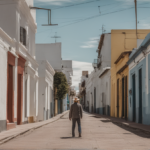
Once a fortified citadel, the Ciudad Vieja (old city) is today surrounded by traces of the city walls, first erected in 1741.
This neighborhood is where Montevideo’s history lives and breathes.
I’m talking cobblestone streets, fading colonial facades, street art that’ll stop you in your tracks.
The Old Town is a place full of history and attractions, and the ideal starting point is the Plaza Independencia, Montevideo’s main square, where visitors get to see the remains of the city walls and town gate.
But here’s the thing—don’t just hit the main square and call it done.
Wander the side streets.
Pop into tiny cafes that look like they haven’t changed in 50 years.
Check out the antique shops and secondhand bookstores.
Ciudad Vieja has this beautiful, melancholic vibe that I’m kinda obsessed with.
It feels lived-in, not staged for Instagram.
And that’s exactly why I loved it.
Your Ultimate Caribbean Adventure Awaits!
Discover hidden coves, secret beaches, and the best rum punches in the islands. Your insider’s guide to Caribbean paradise.
Get Your Guide Now$15.99Feast At Mercado del Puerto

If you only eat one meal in Montevideo, make it here.
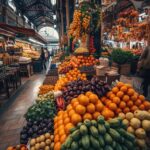
The ‘Port Market’ is not actually so much of a market anymore, but more of a giant space with restaurants and shops in it—an amazing place to immerse yourself in Uruguayan culture.
The moment you walk in, you’re hit with the smell of grilling meat.
Wood fires, massive parrillas loaded with chorizo, ribs, and cuts of beef you’ve never heard of.
I sat at a communal table, ordered way too much food, and watched the cooks work their magic over open flames.
The energy in this place is electric—locals, travelers, everyone just vibing over incredible food.
Mercado del Puerto is an enormous food market and the best place in town to enjoy the traditional Uruguayan barbecue.
Pro tip: Go hungry.
Like, really hungry.
And don’t skip the tannat wine—it’s Uruguay’s national grape and pairs perfectly with all that smoky, charred goodness.
Catch A Fútbol Match (Or Visit Estadio Centenario)

The first World Cup was held in Uruguay in 1930 at Estadio Centenario – and the Uruguayan squad (naturally) won the title.
Even if you’re not a huge soccer fan, this stadium is legendary.
This is the biggest football stadium in the country, and was built in 1930 for the first-ever World Cup.
I took a tour of the stadium and visited the Museo del Fútbol inside, which is packed with trophies, old jerseys, and black-and-white photos that make you feel the weight of history.
But if you can swing it, go to an actual match.
The two most prominent teams in fútbol-mad Montevideo are Peñarol and Nacional—Peñarol dons yellow and black, while Nacional wears red, white and blue.
The atmosphere is insane.
Chanting, smoke bombs, passion pouring out of every fan.
You don’t need to understand the game perfectly to feel that energy.
Just pick a side, grab a beer, and let yourself get swept up in it.
Spend An Afternoon At Pocitos Beach

Surrounded by the wide Río de la Plata, Montevideo is a rare capital that’s also a beach town through and through—the most popular beach is Playa de Los Pocitos, which offers soft sand and volleyball courts.
I wasn’t expecting beach vibes in a capital city, but Pocitos totally delivered.
It’s not a tropical postcard or anything—the water’s calm, the sand’s golden, and the whole scene is super chill.
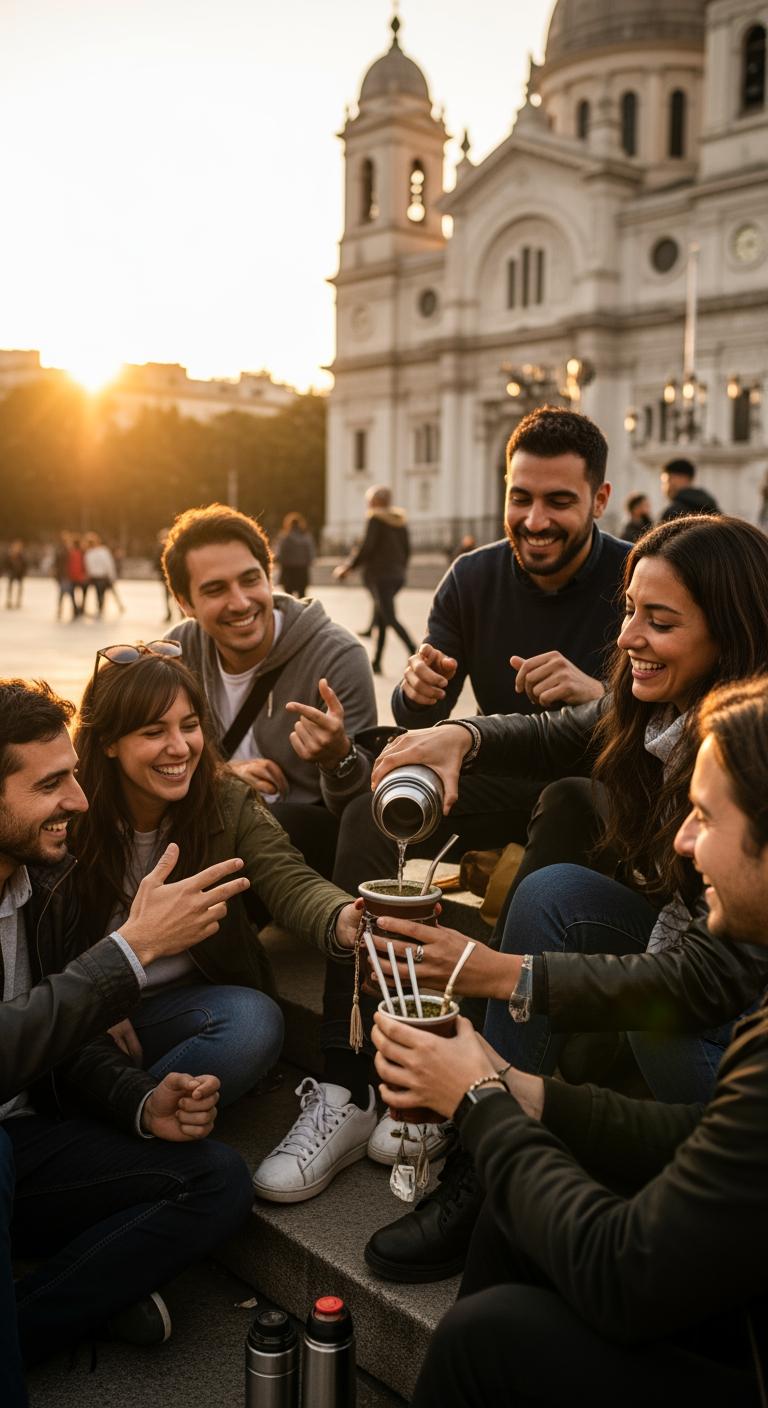
Families set up for the day, friends play volleyball, and you’ll see so many people with their mate thermoses.
I spent a lazy afternoon here just people-watching and reading.
The Pocitos neighborhood itself is gorgeous too—tree-lined streets, cute cafes, and some seriously fancy apartment buildings overlooking the water.
If you want a break from sightseeing, this is your spot.
Caribbean Paradise Unlocked
From pristine beaches to vibrant local culture, discover the Caribbean’s best-kept secrets with my comprehensive travel guide.
- 120+ Hidden Beach Secrets
- Local Cuisine Guide
- Budget Travel Tips
- Island Hopping Routes
Drink Mate With Locals (Seriously)

It’s also popular for sipping yerba mate.
Mate isn’t just a drink in Uruguay—it’s a way of life.
Everywhere you go, people are walking around with their mate cup in one hand and a thermos tucked under their arm.
At first, I felt kinda awkward about it as a tourist.
Like, how do you even participate in this ritual without looking like a total poser?
But then I booked a mate experience through a local guide, and it changed everything.
I learned how to prep it, how to drink it (don’t say “gracias” until you’re done!), and why it’s such a huge part of Uruguayan identity.
Now?
I can’t walk past someone drinking mate without smiling.
It’s community in a cup, and honestly, one of the most authentic cultural experiences I’ve had anywhere.
Explore The Museo del Carnaval

The tiny, colorful Museo del Carnaval showcases spectacular drums, costumes and masks from over 100 years of carnival celebrations, as well as video and audio recordings of February’s parades, Las Llamadas.
I had no idea Uruguay has one of the longest carnival celebrations in the world.
And this little museum?
It’s bursting with color, rhythm, and energy.
The costumes are incredible—feathers, sequins, wild designs that make you wish you could’ve seen them in action.
There are also recordings of the drum parades, which gave me chills.
It’s next door to Mercado del Puerto, so try stopping by for an hour before lunch.
That’s exactly what I did, and it was the perfect pairing.
A little culture, a little history, then a whole lot of grilled meat.
Can’t beat that combo.
Visit Plaza Independencia And Artigas Mausoleum

José Gervasio Artigas is Uruguay’s national hero—he fought to free the territory from the Spanish crown in the early 1800s, and his remains were brought to Uruguay and put in his mausoleum in Plaza Independencia.
This plaza is the heart of Montevideo, and it’s where the old city meets the new.
You can literally see the gate that once marked the edge of the fortified city.
The Artigas statue stands tall in the center, and underneath it is his mausoleum—you can go down and pay your respects for free.
There’s something powerful about standing in that space, knowing how much this guy meant to Uruguay’s independence.
Around the plaza, you’ll also spot the iconic Palacio Salvo, this wild, eclectic building that dominates the skyline.
It’s quirky, it’s beautiful, and it’s so Montevideo.
Your Ultimate Caribbean Adventure Awaits!
Discover hidden coves, secret beaches, and the best rum punches in the islands. Your insider’s guide to Caribbean paradise.
Get Your Guide Now$15.99Stroll Through Parque Rodó

Rodó Park, with its little castle and lake set very close to the sea, is the perfect place for a Sunday market—additionally, there are pedal boats for rental to enjoy a 30-minute tour of the lake.
This park has a fairy-tale vibe that I wasn’t expecting.
There’s a small castle, a peaceful lake, and tons of green space to just chill.
On weekends, there’s usually a market happening with artisan crafts and clothes.
I grabbed an empanada from a vendor and rented a pedal boat, which felt ridiculously wholesome.
But also?
Totally fun.
If you’re traveling with kids, this is a great spot.
And even if you’re solo, it’s a nice escape from the urban buzz.