I didn’t even have my backpack fully off my shoulders when the wind slammed into me like a wall.
Not a breeze.
Not a gust.
A full, chest-expanding, humbling wall of Patagonian air that basically said: you’re not in control here.
And honestly?
That feeling — that exact feeling of being completely small against something enormous and wild — is the reason I’ve been recommending Patagonia to every single person I know ever since.
It’s not a destination you visit.
It’s a place that sort of rearranges you.
I’m going to walk you through everything I wish someone had told me before I boarded that first flight south, because this place deserves more than a quick highlights reel.
Why Patagonia Is Unlike Any Place I’ve Ever Been

Look, I’ve traveled a lot.
And I say this with full humility — nothing prepared me for Patagonia.
It sits at the southern tip of South America, split between Chile and Argentina, and it covers a stretch of land so massive and so raw that it genuinely doesn’t feel real when you’re standing inside it.
Think jagged granite towers punching through clouds.
Think turquoise glacial lakes so still and perfect they look photoshopped.
Think condors circling above your head while you eat a granola bar on a ridge.
It’s the kind of place that makes your daily stress feel genuinely absurd.
The landscapes shift constantly — from forests to desert steppe to ice fields to ocean, sometimes all within a single day of driving.
You get two Patagonias, technically: Chilean Patagonia, anchored by Torres del Paine National Park, and Argentine Patagonia, centered around El Chaltén and El Calafate.
Both are absolutely worth your time.
Both will wreck you emotionally in the best way possible.
When I’d Actually Recommend Going

Timing matters here more than almost anywhere else I’ve traveled.
Patagonia is not a year-round destination for most people, and I want to be honest about that.
The prime window runs from late October through late March — that’s the Southern Hemisphere summer.
I went in late November and the conditions were near-perfect.
Long days, manageable temperatures during the day, and trails that were fully accessible.
That said — the weather is wildly unpredictable no matter when you go.
I mean wildly.
I had four seasons in one afternoon once.
Sunshine, then hail, then sun again, then fog so thick I couldn’t see ten feet ahead.
December and January are peak season, which means more crowds on the trails and higher prices at lodges.
If you want that sweet spot of good weather and fewer people?
Go in November or late February.
March is also stunning — the autumn colors that creep into the beech forests are genuinely gorgeous, and the crowds thin out fast.
Avoid June through August unless you’re very experienced in winter backcountry conditions.
The trails can close, the cold gets serious, and a lot of smaller accommodations shut down entirely.
Torres del Paine: The Crown Jewel of Chilean Patagonia

I’ll just say it straight — Torres del Paine National Park is one of the most beautiful places on this planet.
I know everyone says that.
But standing at the base of the Torres at sunrise, watching the granite towers turn from grey to gold to fire?
I actually had to sit down.
The park is anchored by the famous Torres del Paine massif — three towering granite spires that shoot almost straight up from the earth.
Surrounding them are glaciers, rivers, lakes in every shade of blue you can think of, and more wildlife than I expected.
I spotted guanacos (think wild llamas) almost every single day.
Pumas are in the park too — I didn’t see one, but a couple I met on the trail did, and they could barely speak they were so amazed.
You access the park through either Puerto Natales (the main gateway town) or sometimes directly from Punta Arenas.
The park requires a reservation system now for camping and certain popular viewpoints — you must book in advance.
I cannot stress that enough.
I met people who showed up without reservations and had to completely reroute their plans.
Don’t be that person.
🗼 I Wrote a Book About My Japan Travel Catastrophes!
Before I landed in Tokyo, I thought I was the “Final Boss” of international travel. Spoiler alert: I WASN’T. 😅
🚅 I boarded the wrong Shinkansen and ended up in THE WRONG CITY. I confused locals with my “expert” bowing that was more awkward than accurate. I accidentally stumbled into a high-stakes Kendo practice thinking it was a tourist show. Sound like something you’d do?
“Things I Wish I Knew Before Going to Japan” is your shortcut to avoiding ALL my cringe-worthy mistakes. ✨ Inside, you’ll find practical, LIFE-SAVING tips on etiquette, transport, money, and hidden gems that will save you time, money, and a whole lot of confusion.
The W Trek vs. The Full O Circuit — My Honest Take

This is the question every Patagonia traveler wrestles with, and I want to give you my real answer.
It’s called the W because the hiking route traces that shape through the park, hitting the main highlights: the Torres base, the French Valley, and the Grey Glacier.
Most people complete it in four to five days.
It’s challenging but very doable for someone who is reasonably fit.
The O Circuit is the W plus an extension that loops around the full back side of the massif.
It adds roughly three to four more days and takes you through some of the most remote, least-visited terrain in the entire park.
Here’s my personal take: if you have the time and the fitness, do the O.
The back side of the circuit is quieter, more wild-feeling, and honestly more emotionally powerful.
You go longer stretches without seeing anyone, and the landscape back there has this untouched quality that the busier W sections don’t quite have.
But if you only have five to six days, the W delivers everything.
You will not feel like you missed out.
Both are unforgettable.
What I Packed — And What I Wish I’d Left Behind

Packing for Patagonia is genuinely a skill.
And I got it wrong the first day.
My biggest mistake?
I over-packed clothes and under-packed layers.
The system that works best is a solid layering setup: a moisture-wicking base layer, a mid-layer fleece or down, and then a serious wind and waterproof shell on top.
The shell is non-negotiable.
That Patagonian wind is no joke, and the rain comes sideways sometimes.
A cheap rain jacket is not going to cut it.
For footwear, waterproof hiking boots with ankle support are what you want.
I wore mine every single day of the trip.
Trekking poles are also worth it — the trails get muddy and steep, and your knees will thank you on the descents.
Things I packed that I never used: dress clothes, more than two pairs of pants, and a book (I was too tired every night to read more than a page).
Things I wish I’d packed more of: high-energy snacks, blister balm, and a small dry bag for my camera.
Oh — and a buff/neck gaiter.
I ended up buying one in Puerto Natales because the wind on exposed ridges was relentless.
Where to Sleep: My Accommodation Tips

Accommodation in Patagonia runs the full spectrum.
From ultra-luxury eco-lodges perched above glaciers to basic refugios on the trail where you share a bunk room with fourteen strangers.
I did a mix of both and honestly loved it.
The refugios inside Torres del Paine — run by companies like Vertice and Fantastico Sur — are functional and cozy in that shared-adventure way.
You get a bunk, dinner, and breakfast included, which is a huge deal when you’re deep in the park and carrying everything on your back.
The food at the refugios is way better than you’d expect, by the way.
Hot soup, fresh bread, a proper hot meal at the end of the day — I looked forward to it every night.
If budget is tight, camping is a real option and the campsites are well-equipped.
Bring a solid four-season tent though, because those overnight temperatures drop hard.
If you want to splurge, there are some genuinely jaw-dropping lodge options — think floor-to-ceiling windows overlooking the peaks, a glass of wine in hand while a storm rolls in outside.
I stayed one night at a nicer lodge mid-trip as a sort of reset day, and it was worth every penny.
Book everything months in advance.
I can’t say that strongly enough.
The Food Situation — Fueling Up in Patagonia

Let me be real: Patagonia is not a food destination.
But it’s also way better than people expect, especially in the towns.
Puerto Natales is small but has some genuinely good restaurants — lamb is the thing to eat here.
Patagonian lamb, slow-roasted on a cross over an open fire, is one of the best things I’ve ever eaten.
It’s called cordero al palo and if you see it on a menu, you order it.
No debate.
In El Calafate on the Argentine side, the food scene is a bit more developed — good steakhouses, solid local wine, and a handful of cafés worth sitting in for an hour.
On the trail, you’re mostly working with what you bring in or what the refugios serve.
I’d recommend packing more calorie-dense trail food than you think you need.
Hiking in Patagonian wind burns energy faster than you’d expect.
Nuts, jerky, chocolate, instant oatmeal packets, and those little peanut butter packets — all lifesavers.
Also: coffee.
I brought a small camping coffee kit and it became my favorite part of every morning, sitting outside a tent with a cup while the mountains turned pink.
Simple stuff hits different out there.
Getting to Patagonia — The Logistics Breakdown

Getting to Patagonia takes commitment.
I won’t sugarcoat it — this is not a quick weekend hop.
Most international travelers fly into Santiago, Chile, and then connect down to Punta Arenas.
From Punta Arenas, it’s a roughly three-hour bus ride to Puerto Natales, which is your base for Torres del Paine.
Alternatively, you can fly into El Calafate on the Argentine side if you’re focusing on Argentine Patagonia first.
Some travelers also start in Buenos Aires and fly south from there.
The flights within Patagonia are short but can be weather-delayed, so always build buffer days into your itinerary.
I lost half a day once to a fog delay and it threw off my whole first-day plan.
Once you’re in the region, buses, rental cars, and organized transfer shuttles are your main options.
Renting a car is amazing if you’re planning to explore the Carretera Austral or drive between multiple destinations.
The roads are a mix of paved and gravel, and the gravel ones are bumpy but manageable.
Just go slow and watch for wildlife on the road.
I had to stop for a family of guanacos twice, which sounds inconvenient and was actually one of my favorite moments of the whole trip.
The Carretera Austral — Chile’s Secret Road

If you have extra time — and I mean extra time, like a week or more beyond Torres del Paine — drive the Carretera Austral.
I’m obsessed with this road and I think about it constantly.
It’s one of the most dramatic, remote, and jaw-dropping drives on earth.
The Carretera Austral is a roughly 770-mile gravel and paved highway that cuts through Chilean Patagonia from Puerto Montt down toward Villa O’Higgins in the south.
It passes through rainforests, fjords, volcanoes, hanging glaciers, and tiny villages that feel like they exist in their own world.
You need a rental car (a 4×4 ideally), a solid offline map, and a flexible mindset because road conditions can change fast.
Some of my favorite stops along the route: the Marble Caves near Puerto Río Tranquilo, the Queulat Hanging Glacier, and the little town of Futaleufú, which is also one of the world’s best whitewater rafting destinations.
Cell service is minimal for long stretches.
That’s kind of the point.
There’s something deeply satisfying about driving a gravel road through mountains with no signal, no notifications, and nothing demanding your attention except the view in front of you.
🗼 I Wrote a Book About My Japan Travel Catastrophes!
Before I landed in Tokyo, I thought I was the “Final Boss” of international travel. Spoiler alert: I WASN’T. 😅
🚅 I boarded the wrong Shinkansen and ended up in THE WRONG CITY. I confused locals with my “expert” bowing that was more awkward than accurate. I accidentally stumbled into a high-stakes Kendo practice thinking it was a tourist show. Sound like something you’d do?
“Things I Wish I Knew Before Going to Japan” is your shortcut to avoiding ALL my cringe-worthy mistakes. ✨ Inside, you’ll find practical, LIFE-SAVING tips on etiquette, transport, money, and hidden gems that will save you time, money, and a whole lot of confusion.
Argentine Patagonia: El Chaltén and El Calafate

El Chaltén is a small mountain village and it is absolutely my kind of place.
It’s known as Argentina’s trekking capital, and for good reason.
The hiking here is free — no park entrance fees, no reservations required, just show up and walk.
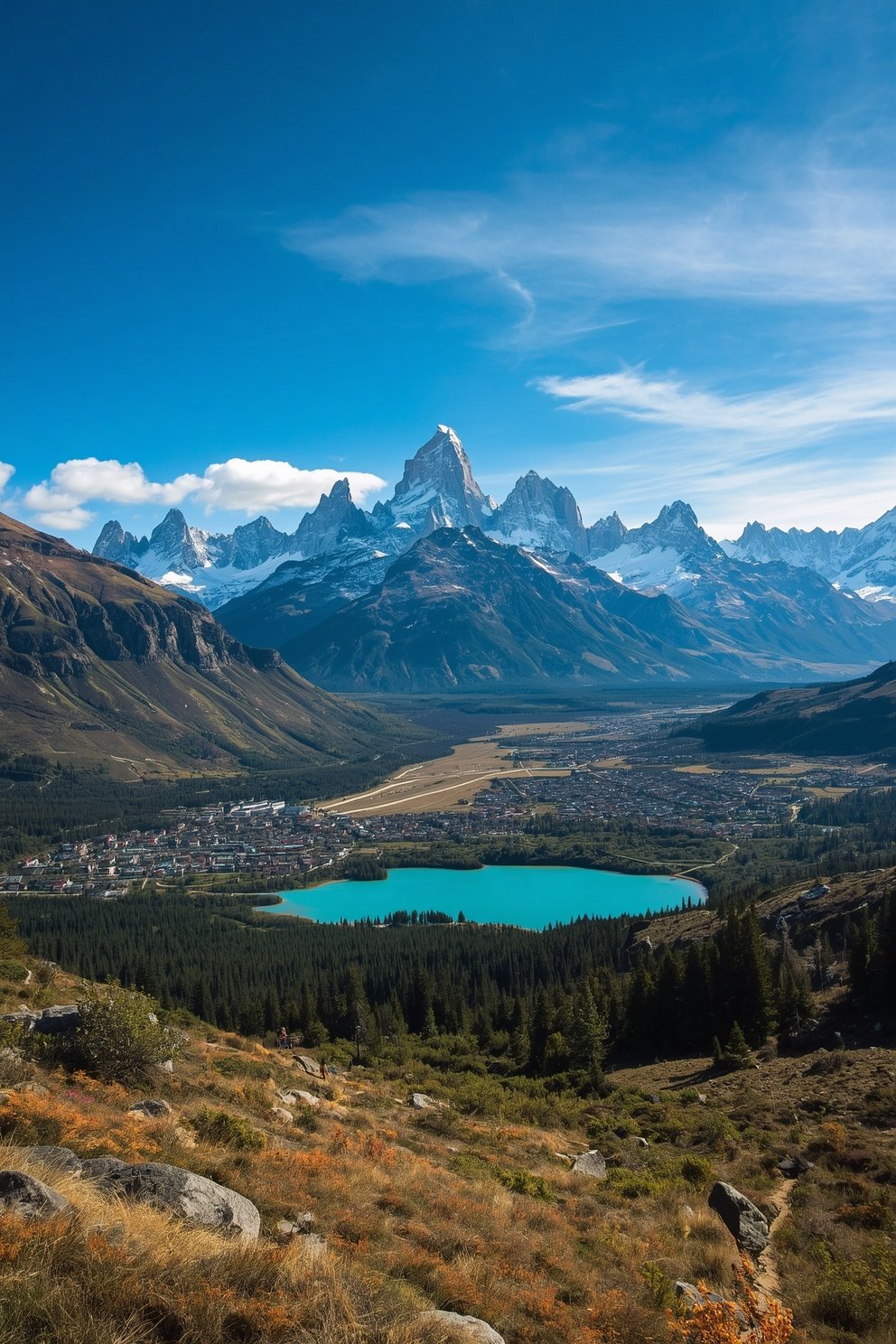
The star of the show is Fitz Roy, a jagged granite peak that looks almost cartoon-dramatic against the sky.
The hike to the Laguna de los Tres viewpoint at the base of Fitz Roy is one of the hardest and most rewarding days I’ve ever had on a trail.
It’s steep and the final push is brutal.
But when you pop over the ridge and the lake and mountain just appear in front of you, the air kind of goes out of your lungs.
El Calafate, about three hours away by bus, is the gateway to Perito Moreno Glacier.
And Perito Moreno is something else entirely.
It’s one of the few advancing glaciers in the world, and you can walk on it.
Standing on a glacier the size of a city, hearing it groan and crack beneath you, watching chunks the size of buildings calve into the lake — I had no words for it.
None.
It’s the kind of thing that makes you feel genuinely grateful to be alive.
Budget, Costs, and What to Actually Expect to Spend

Patagonia is not cheap.
I’m going to be straight with you because I hate when travel blogs gloss over this.
The remoteness of the region means everything costs more — food, accommodation, gear rentals, transfers.
That said, there’s a real range depending on how you travel.
Budget travelers who camp, cook their own meals, and use public buses can make it work on a tighter spend.
Mid-range travelers staying in refugios or guesthouses, eating out for dinner, and using organized transfers will spend more but still have a very accessible experience.
High-end travelers who want luxury lodges and guided experiences — Patagonia can absolutely go premium.
My biggest cost was accommodation inside the park.
The refugios aren’t cheap, but they include meals and you’re literally inside one of the most spectacular places on earth, so I made peace with it fast.
Tips on saving money: buy groceries and snacks in Puerto Natales before entering the park.
Everything inside the park is marked up significantly.
Also, the Chilean peso and Argentine peso exchange rates can work in your favor — check current rates before you go and plan accordingly.
Travel insurance is not optional here.
If weather closes the park or you twist an ankle three days into the circuit, you want to be covered.
The Moments Nobody Actually Warns You About

Nobody told me I’d cry at a glacier.
And yet, there I was.
Patagonia does something to you that’s hard to explain until you’re in it.
It’s not just the scenery — it’s the silence, the scale, the sense that this place has existed for millions of years and will keep existing long after you’re gone.
It makes you feel small in a way that somehow feels good.
Nobody warned me how social the refugios would be — you end up sharing dinner with strangers from everywhere, swapping stories and tips and laughing about how wrecked your legs are.
I made genuine friends on that trip.
The kind you still text.
Nobody warned me about the emotional rollercoaster of a summit day — the exhaustion, the self-doubt on the climb, and then the absolute euphoria when you get there.
Nobody warned me that going back home would feel genuinely hard.
That I’d sit at my desk the week after and feel this low-grade restlessness that took a while to shake.
Patagonia gets into you.
And I think that’s actually the whole point.
Some places are nice to visit.
This one changes something.