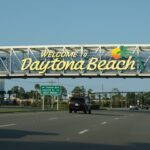
Every single person I know who’s been to Daytona Beach says the same thing on the way home.
“It was fine.”
Fine.
That word should never follow a week in Florida.
I said it too, after my first trip — sitting in bumper-to-bumper traffic on the way back, sunburned, slightly disappointed, trying to figure out why it hadn’t hit the way I wanted it to.
Then a local changed everything with about four sentences and zero interest in being my tour guide.
He just looked at me across the bait shop counter and said, “You went to the tourist version.”
I didn’t even know there was another version.
But there is.
And it’s quieter, more beautiful, more interesting, and about two blocks away from everywhere the crowds are standing.
Here’s exactly what I found when I stopped following the obvious path.
Want me to try a different angle or tone for the intro?
Ponce Inlet Is a Whole Different World

Most people drive past Ponce Inlet without even registering it.
And I genuinely don’t understand why, because it is stunning.
It sits just south of Daytona proper, and the second you cross into it, the energy shifts completely.
The crowds thin out.
The architecture gets older and more interesting.
The pace just… drops.
The Ponce de Leon Inlet Lighthouse is there, and it’s the tallest lighthouse in Florida — which sounds like a tourist thing, but it doesn’t feel like one when you’re actually standing at the top looking out over the Atlantic and the Halifax River at the same time.
That view hit differently than I expected.
The surrounding museum is genuinely well done too — old keeper’s cottages, original equipment, real history told without being dry or boring.
But even beyond the lighthouse, Ponce Inlet itself is worth half a day just wandering.
There are quiet residential streets lined with old Florida homes that have this gorgeous weathered charm to them.
There are little restaurants right on the water that feel like they’ve been there forever.
If I had a long weekend in Daytona and I could only pick one area to really sink into, Ponce Inlet would be it.
No question.
Tap to Explore These Beauties
See my ideas in action 👇 Tap any image to explore full details.
The Halifax River Is Completely Underrated

Everyone goes straight to the ocean side.
And look, the beach is great — I’m not arguing with you on that.
But the Halifax River, which runs along the western edge of the barrier island Daytona sits on, is this whole other scene that most visitors never even look at.
I rented a kayak one morning — it was early, the water was flat, the light was this warm gold-orange color — and I paddled south for about an hour.
I saw osprey.
I saw dolphins about twenty minutes in, just cutting through the water like they owned the place (which, to be fair, they do).
The riverbanks shift between old Florida neighborhoods, stretches of mangroves, and little dock areas where local boats are tied up.
It’s incredibly peaceful in a way that the beach side, as much as I love it, just isn’t during peak season.
You can rent kayaks or paddleboards at a few spots in the area without much trouble.
I’d suggest going early — like, early early.
The river before 8 a.m.
is a completely different experience than midday.
If you’re the kind of traveler who likes finding quiet pockets of beauty inside busy destinations, the Halifax River is going to be your favorite thing about Daytona.
It was mine.
Tomoka State Park Deserves Way More Hype

I’m sort of baffled by how few people talk about Tomoka State Park.
It’s sitting right there — about six miles north of Ormond Beach, which itself is right next to Daytona — and it’s genuinely one of the most beautiful state parks I’ve been to in Florida.
The park sits at the confluence of the Tomoka and Halifax rivers, and the landscape is this gorgeous mix of ancient oaks draped in Spanish moss, open marshes, and river bends that look almost cinematic.
There’s paddling, there’s hiking, there’s fishing.
There’s a museum on-site about the Timucua people who lived in the area long before anyone else showed up.
I did the canoe trail on a cloudy morning and it was one of those rare travel experiences that just stays with you.
The way the Spanish moss hung over the water.
The sound of birds I couldn’t identify.
The complete absence of any crowd noise.
It was the kind of quiet that actually feels like something, you know?
If you’re traveling with kids, this is a phenomenal stop — there’s enough to keep everyone engaged without it feeling like a forced educational field trip.
And if you’re solo or with a partner, pack a lunch and spend the whole morning there.
You will not regret it.
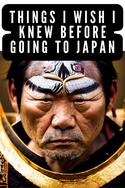
🗼 I Wrote a Book About My Japan Travel Catastrophes!
Before I landed in Tokyo, I thought I was the “Final Boss” of international travel. Spoiler alert: I WASN’T. 😅
🚅 I boarded the wrong Shinkansen and ended up in THE WRONG CITY. I confused locals with my “expert” bowing that was more awkward than accurate. I accidentally stumbled into a high-stakes Kendo practice thinking it was a tourist show. Sound like something you’d do?
“Things I Wish I Knew Before Going to Japan” is your shortcut to avoiding ALL my cringe-worthy mistakes. ✨ Inside, you’ll find practical, LIFE-SAVING tips on etiquette, transport, money, and hidden gems that will save you time, money, and a whole lot of confusion.
Ormond Beach Has a Different Personality Entirely

People sort of lump Ormond Beach in with Daytona, and I get it — they’re right next to each other.
But spending time in Ormond Beach feels noticeably different, and in the best way.
It’s quieter.
The beach is less crowded even in busy seasons.
The town itself has this relaxed, local-focused energy that I find really appealing after a day or two in the louder parts of Daytona.
The Ormond Scenic Loop and Trail is something I’d specifically recommend putting on your list.
It’s a driving and biking loop that winds through some of the most beautiful old Florida landscape you’ll find in this region — canopied roads, the Tomoka River, wetlands, palm hammocks.
I drove it in the late afternoon when the light was coming through the oak canopies, and it was genuinely one of the most visually beautiful drives I’ve done in the state.
There’s also a growing food scene in downtown Ormond that leans more local than tourist, which is always a good sign.
Small breweries, independent restaurants, coffee spots that feel lived-in rather than posed.
Ormond Beach is the kind of place where you accidentally end up staying longer than you planned.
And honestly?
That’s the best thing a place can do to you.
Flagler Avenue in New Smyrna Beach Is Worth the Drive

New Smyrna Beach is about thirty minutes south of Daytona, and I’m including it here because almost nobody staying in Daytona makes the trip — which is a real shame.
Flagler Avenue specifically is this charming little stretch of surf shops, independent restaurants, art galleries, and coffee spots that has a totally different personality than anything you’ll find on the main Daytona strip.
It feels like a beach town that grew up organically rather than one that was built around tourism.
The beach in NSB is also significantly less crowded, which during any kind of busy season is a meaningful quality-of-life upgrade.
I went on a Thursday morning, grabbed coffee from a small shop right off Flagler, walked to the beach, and just… sat there for an hour with almost no one around me.
It was exactly the kind of morning that makes you feel like traveling was the right call.
The art scene in NSB is also worth noting — there’s a genuine community of artists based there, and you’ll find galleries showing interesting work rather than the mass-produced coastal art you see everywhere else.
If you’ve got a day with no agenda, the Daytona-to-NSB run — maybe stopping at Ponce Inlet on the way — makes for a nearly perfect Florida day.
Trust me on this one.
Sugar Mill Botanical Gardens Is a Legit Hidden Gem

This one genuinely surprised me.
The Sugar Mill Botanical Gardens in Port Orange — which is right next to Daytona — is one of those places that sounds mildly interesting on paper and then completely wins you over in person.
The gardens are built around the ruins of an actual 18th-century sugar mill, which gives the whole place this incredible, slightly eerie atmosphere that I wasn’t expecting.
Old stone walls covered in moss and vines.
Enormous live oaks creating this cathedral-like canopy overhead.
Pathways that wind through dense tropical plantings with these little pockets of open space that catch the light beautifully.
There’s also a set of life-size concrete dinosaurs on the property, which is a very Florida detail that I love completely.
It sounds random.
It is random.
It’s also somehow perfect.
The gardens are low-key, not heavily trafficked, and genuinely beautiful — especially in the morning when the light filters through the tree canopy.
Admission is inexpensive, the vibe is completely relaxed, and you can easily spend ninety minutes just wandering without covering the same ground twice.
This is one of those spots that I’d call an underdog — the kind of place that doesn’t look like much in photos but delivers something real when you’re actually standing in it.
One of my personal favorites from the whole trip.
The Sunrise Ritual Nobody Tells You About

This isn’t a specific place.
It’s more of a practice, and it might be the single most valuable thing I can pass along about Daytona Beach.
Wake up early.
Like, before-the-sun-is-fully-up early.
Walk to the beach.
And just be there for that first hour.
I know that sounds simple to the point of being obvious, but the difference between the beach at 6:45 a.m.
and the beach at 10 a.m.
is genuinely staggering.
In the early morning, Daytona Beach is a completely different animal.
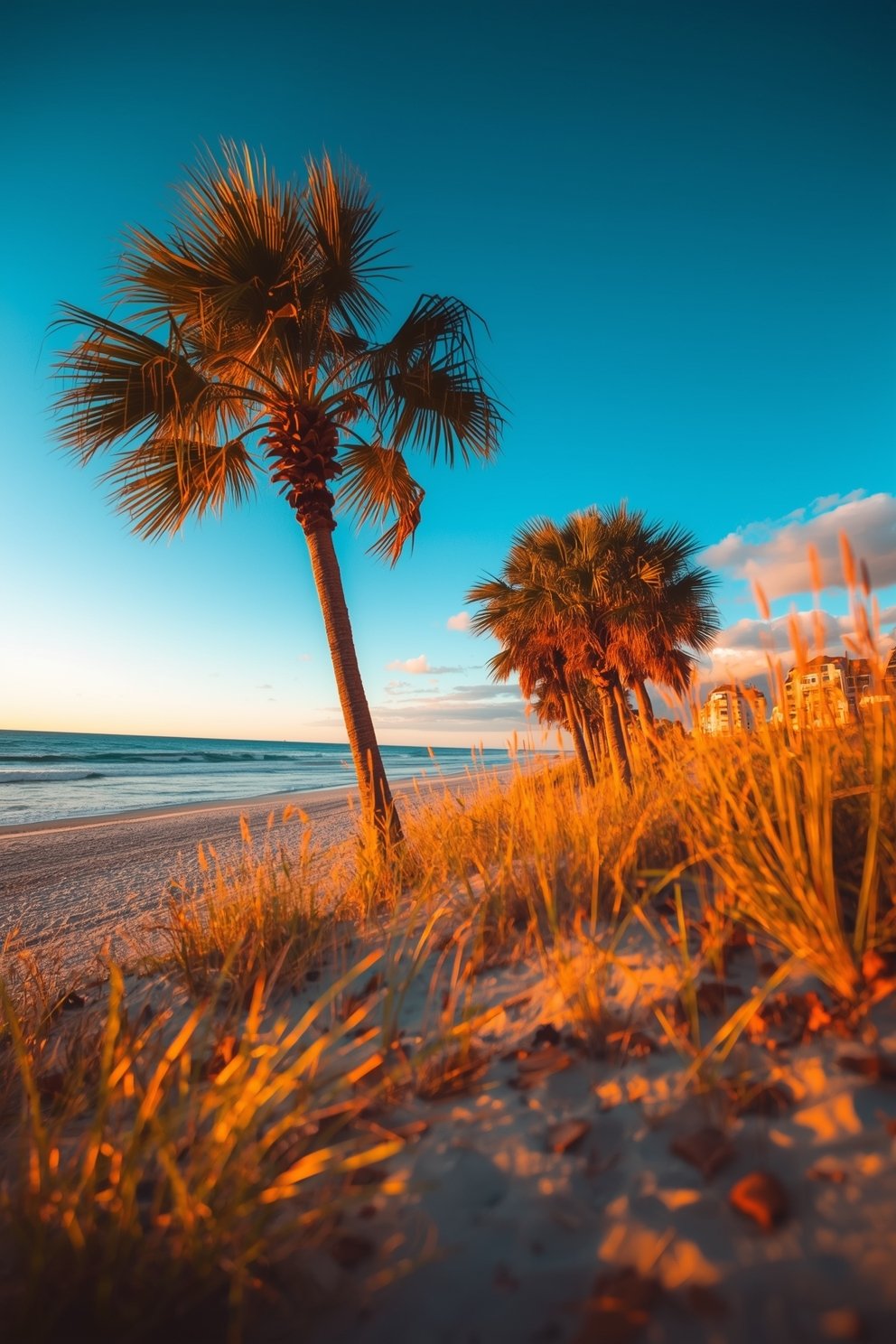
The light is this extraordinary pink-orange-gold that reflects off the wet sand in a way that looks almost unreal.
There are surfers out.
There are people walking dogs, fishing at the shore break, just sitting and watching the horizon.
It’s quiet and warm and it smells like salt and possibility.
I’m sort of obsessed with beach sunrises in general, but the ones I caught in Daytona were particularly good.
There’s something about the flatness of the horizon there, the way the sky opens up over the Atlantic, that makes the whole thing feel enormous.
Make this a non-negotiable part of your Daytona itinerary.
Set the alarm.
It will be worth it every single time.
Eating Like a Local (Not Like a Tourist)

The restaurant situation in Daytona is actually really solid if you know where to look.
And “where to look” basically means: off the main strip.
The places right on the boardwalk area are fine.
Nothing wrong with them.
But the spots that locals actually frequent are a few blocks back, tucked into neighborhoods, sitting in strip malls that don’t look like much from the outside.
I have a personal rule when I travel: if the parking lot has trucks in it and the menu is handwritten or laminated, I’m going in.
It has never failed me.
In Daytona, I found a breakfast spot that way — small, crowded, fast service, portions that were honestly a little overwhelming, coffee that tasted like someone actually cared about it.
I went back twice.
Seafood is obviously a strength here, and if you’re open to eating somewhere that doesn’t have a ocean view and $30 appetizers, you can find really good fresh fish at prices that don’t feel punishing.
Ask your hotel staff — not the concierge desk, the actual front desk people — where they eat when they’re not working.
That question gets you honest answers almost every time.
Eating well on a Daytona trip is very doable.
You just have to be willing to drive two blocks past the obvious options.
The Quiet Stretches of Beach You’re Not Finding on the Map

Here’s something that took me a full trip to figure out.
Daytona Beach — the main, famous beach — is long.
Really long.
And the further you get from the main concentration of hotels and the boardwalk, the calmer it gets.
Like, dramatically calmer.
On my second visit, I drove south along the beach road until things started thinning out, parked, and walked down to the water.
There were maybe a dozen people in both directions as far as I could see.
Same beach.
Same water.
Just… nobody there.
The sand was firm, the waves were good, and I had this huge stretch of coastline essentially to myself on a weekend in peak season.
It’s not a secret in any dramatic sense.
Nobody’s hiding it.
It’s just that most people don’t walk more than fifty yards from where they parked, and the tourist infrastructure is concentrated in a specific area.
So the further you get from that area, the more the beach returns to just being a beach.
If you’re driving to Daytona specifically for the beach experience, do yourself a favor and drive a little further than you think you need to.
The payoff is real.
And sometimes the best version of a famous place is just the version nobody bothered to walk to.
🗼 I Wrote a Book About My Japan Travel Catastrophes!
Before I landed in Tokyo, I thought I was the “Final Boss” of international travel. Spoiler alert: I WASN’T. 😅
🚅 I boarded the wrong Shinkansen and ended up in THE WRONG CITY. I confused locals with my “expert” bowing that was more awkward than accurate. I accidentally stumbled into a high-stakes Kendo practice thinking it was a tourist show. Sound like something you’d do?
“Things I Wish I Knew Before Going to Japan” is your shortcut to avoiding ALL my cringe-worthy mistakes. ✨ Inside, you’ll find practical, LIFE-SAVING tips on etiquette, transport, money, and hidden gems that will save you time, money, and a whole lot of confusion.
What I’d Do Differently (And What I’d Do the Same)

I’ve done Daytona twice now, and the second trip was dramatically better than the first — entirely because I stopped trying to do it the “right” way.
First trip: stuck to the main drag, ate where the signs were biggest, felt vaguely underwhelmed.
Second trip: got up early, drove to Ponce Inlet, paddled the Halifax, found that breakfast spot, sat in Tomoka State Park for two hours doing nothing important.
Felt completely different.
If I were going again — and honestly, I think I will — I’d build the whole trip around mornings spent at less-obvious spots and evenings eating somewhere local.
I’d skip the big souvenir shops entirely.
I’d rent a kayak at least once.
I’d drive the Ormond Scenic Loop at golden hour with the windows down and no particular destination in mind.
I’d talk to more locals, ask more dumb questions, follow more random tips from people who actually live there.
The version of Daytona Beach that I think most tourists miss is the one that exists just a little bit off the beaten path.
It’s not far.
It’s not difficult to access.
It just requires a small willingness to look up from the obvious and ask: what else is here?
That question — more than any list or guide — is the best travel tool I know.