Acadia National Park isn’t just another pretty face in the crowd of America’s natural treasures.
This rugged Maine coastline paradise serves up experiences that’ll stick with you long after you’ve headed home, from sunrise spectacles that’ll make you question everything you thought you knew about mornings to hidden trails that reveal secrets most visitors never discover.
Wake Up Before Dawn for Cadillac Mountain’s Life-Changing Sunrise


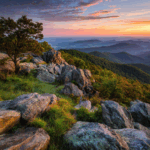
You’ll be the first person in the United States to witness the sunrise when you climb Cadillac Mountain before dawn.
The 3.5-mile Summit Loop Road winds its way to the top, but the real magic happens when you park and walk those final steps to the summit while stars still twinkle overhead.
Your legs might protest the early wake-up call, but your soul will thank you when those first golden rays paint the Atlantic Ocean in shades of amber and rose.
The granite peak rises 1,530 feet above sea level, giving you a front-row seat to one of nature’s most spectacular daily performances.
Other early risers gather quietly around you, but somehow the vastness makes everyone feel like they’re experiencing something completely personal.
Bring layers because Maine mornings can bite, even in summer, and the wind up there has a way of cutting right through your confidence.
The moment the sun breaks the horizon, you’ll understand why people drive hundreds of miles just for this experience.
Colors explode across the sky in ways that make your phone camera seem utterly useless, though you’ll try to capture it anyway.
Below you, the Porcupine Islands dot Frenchman Bay like sleeping giants, and the coastline stretches endlessly in both directions.
You’ll watch fishing boats heading out for their daily catch, tiny specks moving across the water with purpose and determination.
The temperature difference between the shadowed valleys and the sun-kissed peak creates layers of mist that dance between the mountains.
Your perspective on time shifts when you realize you’re witnessing the same phenomenon that’s happened every single day for millions of years.
Tap to Explore These Beauties
See my ideas in action 👇 Tap any image to explore full details.
Cross the Ocean Floor to Bar Island During Low Tide

You can literally walk across the ocean floor to reach Bar Island when the tide cooperates with your sense of adventure.
This isn’t some tourist gimmick or man-made walkway – you’re stepping on ancient sand and gravel that spends most of its time underwater.
The gravel bar connecting Bar Harbor to Bar Island emerges for just a few hours during each low tide cycle, creating a temporary bridge across Frenchman Bay.
Your timing needs to be perfect because the ocean doesn’t wait for anyone, and getting stranded on the island means a very cold swim back or an expensive water taxi ride.
Check the tide charts religiously and plan to start your walk at least two hours before low tide to give yourself plenty of exploration time.
The exposed seafloor reveals treasures that most people never get to see: shells, seaweed, small crabs scurrying for deeper water, and smooth stones polished by countless tides.
Each step squishes slightly under your feet, and you’ll notice how the texture changes from soft sand near shore to firmer gravel as you get deeper into the bay.
Bar Island itself offers hiking trails and rocky shores perfect for quiet contemplation, but the real thrill is the journey across the temporary land bridge.
You’ll feel like Moses parting the Red Sea, except in reverse – the ocean has parted for you to pass through safely.
Local wildlife seems just as surprised as you are by this twice-daily transformation, with seabirds following the receding water to snack on newly exposed marine life.
The walk back becomes even more thrilling as you notice the water starting to reclaim its territory, gentle waves lapping at the edges of your temporary highway.
Photography opportunities abound, but you’ll find yourself putting the camera down just to fully experience the surreal sensation of walking where fish swim.
Discover the Magic of Jordan Pond Path and Its Famous Popovers


You’ll fall in love with the most photographed spot in Acadia when you stroll the peaceful Jordan Pond Path.
This 3.3-mile loop trail circles the pristine glacial pond, offering mirror-like reflections of the Bubbles mountains that’ll make you stop dead in your tracks.
The path stays relatively flat and easy, making it perfect for families or anyone who wants stunning scenery without the lung-burning climbs.
Massive granite boulders line sections of the trail, creating natural benches where you can sit and absorb the tranquility that seems to radiate from the crystal-clear water.
The pond formed thousands of years ago when glacial ice carved out this perfect bowl in the granite landscape, and you can still feel that ancient power in the silence.
Boardwalks carry you over marshy sections where you might spot great blue herons standing motionless as they hunt for their next meal.
The trail takes you through diverse ecosystems, from dense forests where sunlight filters through pine needles to open meadows where wildflowers paint the landscape in summer.
Your loop isn’t complete without stopping at the historic Jordan Pond House, where you can indulge in their legendary popovers and jam.
These aren’t just any popovers – they’re enormous, airy pastries that puff up like golden balloons and arrive at your table still steaming from the oven.
The tradition dates back to the 1890s when the original Jordan Pond House served these treats to wealthy visitors who arrived by horse and carriage.
Sitting on the lawn with your popover and tea, gazing across Jordan Pond toward the Bubbles, you’ll understand why this spot has been enchanting visitors for over a century.
The combination of easy hiking, stunning scenery, and culinary tradition makes this experience uniquely Acadia – you can’t find this exact magic anywhere else in the world.

🗼 I Wrote a Book About My Japan Travel Catastrophes!
Before I landed in Tokyo, I thought I was the “Final Boss” of international travel. Spoiler alert: I WASN’T. 😅
🚅 I boarded the wrong Shinkansen and ended up in THE WRONG CITY. I confused locals with my “expert” bowing that was more awkward than accurate. I accidentally stumbled into a high-stakes Kendo practice thinking it was a tourist show. Sound like something you’d do?
“Things I Wish I Knew Before Going to Japan” is your shortcut to avoiding ALL my cringe-worthy mistakes. ✨ Inside, you’ll find practical, LIFE-SAVING tips on etiquette, transport, money, and hidden gems that will save you time, money, and a whole lot of confusion.
Feel the Power of Thunder Hole’s Explosive Wave Action

You’ll witness one of nature’s most dramatic percussion performances when you visit Thunder Hole during incoming tides.
This narrow inlet carved into the granite coastline creates a natural amplification chamber that turns ordinary waves into thunderous explosions.
The Atlantic Ocean crashes into the 20-foot-deep chasm with such force that water and air compress together, creating sounds that can be heard from hundreds of yards away.
Your timing makes all the difference – arrive during high tide with decent wave action, and you’ll experience the full fury of Thunder Hole’s namesake phenomenon.
The best viewing spot puts you safely behind a stone barrier while giving you front-row seats to the aquatic fireworks happening just feet away.
Each wave builds suspense as it approaches the inlet, gathering speed and power before disappearing into the narrow channel.
The compression happens in a split second, but the resulting explosion sends spray shooting 40 feet into the air while the thunderclap echoes off the surrounding cliffs.
You’ll feel the vibrations through your feet as thousands of gallons of seawater get forced through the tight space, creating pressure that rivals a steam engine.
The granite walls show centuries of wear from this daily pounding, smooth and polished by countless waves that have tested their strength against the unyielding rock.
Spray often reaches the viewing area, so dress appropriately and protect your camera gear – the ocean doesn’t apologize for getting you a little wet.
Between the major explosions, you can peer into the churning cauldron and watch smaller waves building toward their moment of glory.
The hypnotic rhythm of Thunder Hole creates a meditation all its own, as you find yourself timing your breathing to match the ocean’s powerful heartbeat.
Conquer Your Fears on the Heart-Pounding Beehive Trail


You’ll question your sanity about halfway up the Beehive Trail when you’re clinging to iron rungs bolted into vertical cliff faces.
This isn’t your typical nature walk – it’s a 1.5-mile adventure that combines hiking with rock scrambling and just enough exposure to make your palms sweat.
The trail starts innocently enough through pine forests, but quickly transforms into a vertical puzzle that requires both physical strength and mental determination.
Iron rungs and handholds mark the steepest sections, guiding you up granite faces that would be impossible to climb otherwise.
Your heart rate will spike not just from the physical exertion, but from the adrenaline rush of realizing how high above the forest floor you’ve climbed.
The exposure factor makes this trail legendary among hikers – there are sections where a slip could result in serious injury, demanding complete focus and respect for the mountain.
Each handhold becomes a small victory as you work your way up the cliff face, using techniques that blur the line between hiking and rock climbing.
The granite provides excellent grip when dry, but rain or morning dew can make the iron rungs slippery, so check conditions before attempting this adventure.
Views open up dramatically as you gain elevation, with Frenchman Bay spreading out below you like a blue carpet dotted with islands.
The summit rewards your courage with 360-degree panoramas that make every scary moment worth the temporary terror you experienced getting there.
Other hikers you meet on the trail share an instant bond – you’ve all faced the same challenge and emerged victorious, creating a camaraderie that’s hard to find elsewhere.
Descending requires just as much caution as the ascent, but you’ll feel like you can tackle anything after conquering the Beehive’s granite challenges.
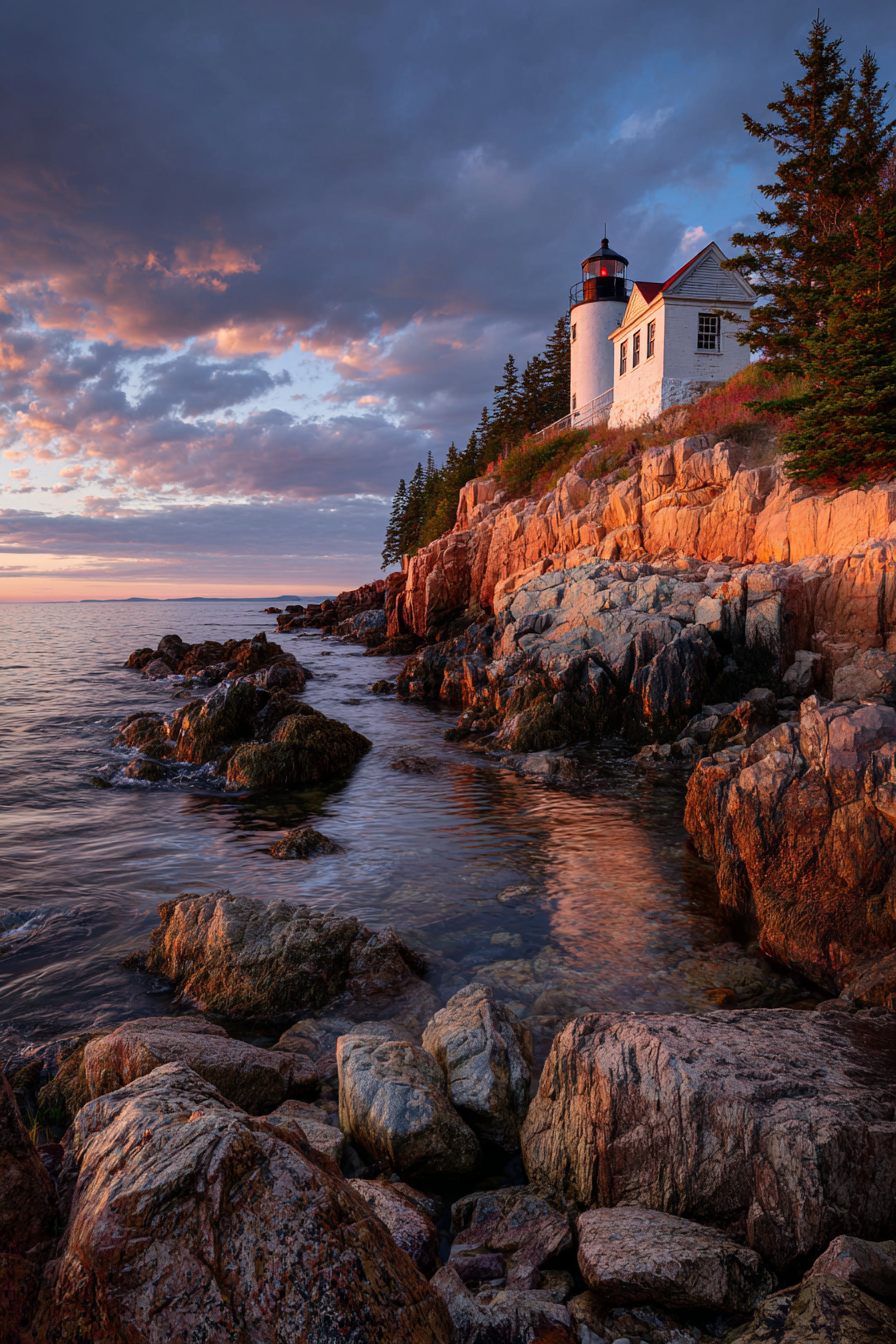
Capture Perfect Photos at Bass Harbor Head Lighthouse

You’ll discover one of Maine’s most iconic lighthouse settings when you venture to Bass Harbor Head Lighthouse on the quieter western side of Mount Desert Island.
This picturesque beacon has been guiding mariners safely through treacherous waters since 1858, and its dramatic clifftop location creates photography opportunities that’ll fill your memory card.
The lighthouse perches on rugged granite cliffs that drop directly into the churning Atlantic, creating natural leading lines that draw your eye straight to the charming white tower and red roof.
Evening light transforms this scene into pure magic, with golden hour illumination painting the lighthouse and surrounding cliffs in warm, honeyed tones.
Your best shots come from the rocky shoreline below the lighthouse, accessible via a short but steep trail that winds down through spruce and fir trees.
The granite ledges provide multiple vantage points for composing your perfect shot, whether you want the lighthouse framed by evergreen branches or standing bold against the open ocean.
Incoming waves crash against the rocks with enough force to send spray high into the air, adding dynamic elements to your photographs that bring the scene to life.
The lighthouse’s automated beacon still operates every night, sweeping its protective beam across the dark waters just as it has for over 160 years.
Tide pools nestled among the granite formations offer additional photographic subjects, filled with colorful sea anemones, periwinkles, and hermit crabs.
Local lobster boats often pass by offshore, adding authentic Maine character to your compositions and reminding you that this is still a working waterfront.
The area remains relatively uncrowded compared to other Acadia destinations, giving you space to work without fighting crowds for the perfect angle.
Sunset timing varies seasonally, but the western exposure ensures that Bass Harbor Head Lighthouse enjoys beautiful evening light throughout the visitor season.
Bike the Historic Carriage Roads Through Pristine Wilderness

You’ll pedal through 45 miles of car-free carriage roads that represent one of America’s most thoughtful approaches to wilderness preservation.
These meticulously engineered gravel paths were commissioned by philanthropist John D.
Rockefeller Jr.
in the early 1900s, designed to provide access to Acadia’s beauty without destroying its character.
Your bicycle becomes a time machine as you follow the same routes that horse-drawn carriages traveled a century ago, experiencing the landscape exactly as Rockefeller intended.
The roads wind through diverse ecosystems with gentle grades that make cycling accessible for families while still providing challenging routes for serious riders.
Seventeen historic stone bridges span streams and valleys along the carriage roads, each one unique in design and perfectly integrated into the natural landscape.
Your route planning can include easy loops around Jordan Pond or more challenging climbs toward Cadillac Mountain, depending on your fitness level and time constraints.
The crushed stone surface provides excellent traction for bicycle tires while remaining soft enough to minimize environmental impact on the surrounding forest.
Wildlife sightings become more frequent on the carriage roads because motor vehicle noise doesn’t disrupt the natural patterns of deer, foxes, and countless bird species.
Fall foliage transforms the carriage roads into tunnels of blazing color, with maples, birches, and oaks creating a canopy that filters sunlight into golden beams.
Your pedaling rhythm syncs naturally with the peaceful pace of the carriage roads, encouraging you to slow down and notice details that drivers rushing by on motor roads miss entirely.
The engineering marvels become apparent as you notice how the roads curve naturally around obstacles rather than blasting through them, following the landscape’s contours with respect and artistry.
Rest areas positioned at scenic overlooks provide perfect spots to catch your breath while taking in panoramic views of mountains, lakes, and distant ocean vistas.
Hunt for Wild Blueberries on Schoodic Peninsula


You’ll taste the sweetest wild blueberries of your life when you explore the granite barrens of Schoodic Peninsula in late summer.
These aren’t the cultivated berries you find in grocery stores – they’re tiny, intensely flavored wild berries that grow in low bushes across the peninsula’s exposed granite landscapes.
The Schoodic section of Acadia National Park offers a quieter alternative to Mount Desert Island, with fewer crowds and more opportunities for solitary berry hunting adventures.
Your timing needs to align with the brief harvest season, typically running from late July through August, when the berries ripen to deep purple perfection.
The granite barrens create unique growing conditions that stress the blueberry plants just enough to concentrate their flavors into explosions of sweet-tart intensity.
Low-growing bushes spread across the open landscape like nature’s own carpet, dotted with clusters of berries that range from deep blue to almost black when fully ripe.
Your berry hunting becomes a meditative practice as you move slowly across the barrens, learning to spot the telltale color of ripe berries among the green foliage.
The peninsula’s dramatic coastline provides spectacular scenery between berry patches, with granite cliffs dropping into the Atlantic and offshore islands creating a rugged seascape.
Park regulations allow personal consumption while you’re in the park, but commercial harvesting requires special permits that protect this resource for future generations.
Local wildlife depends on these berries too, so you’ll often share the harvest with chipmunks, birds, and black bears who know exactly when the berries reach peak ripeness.
The flavor intensity of wild blueberries comes from their smaller size and the harsh growing conditions, creating concentrated bursts of Maine’s signature taste.
Your berry hunting expedition combines gentle exercise, natural food gathering, and scenic exploration into one uniquely satisfying Acadia experience.
Explore Mysterious Tide Pools at Sand Beach

You’ll enter an alien world of colorful sea creatures when you explore the tide pools that form in the rocky areas flanking Sand Beach.
This unique pocket beach sits nestled between granite headlands, creating protected areas where marine life thrives in shallow pools left behind by receding tides.
The sand itself tells an interesting story – it’s composed primarily of crushed shells and fragments of sea urchins rather than traditional quartz sand, giving it a distinctive appearance.
Your exploration timing depends on the tide cycles, with the best tide pooling opportunities occurring during low tide when the most pools remain exposed.
Each tide pool functions as a complete miniature ecosystem, harboring creatures that have adapted to survive the harsh conditions of alternating wet and dry periods.
Bright green sea anemones wave their tentacles gently in the current, while hermit crabs scuttle between shells looking for larger homes to accommodate their growing bodies.
Purple sea urchins cluster in rocky crevices, their spines creating natural defensive formations that protect them from predators and crashing waves.
Your observations require patience and careful looking – many tide pool creatures are masters of camouflage, blending seamlessly with their rocky surroundings.
Periwinkles graze on algae covering the rocks, while blue mussels cluster together in dense communities that filter nutrients from the surrounding water.
The incoming tide transforms these peaceful pools into turbulent washing machines, demonstrating the incredible resilience of creatures that call this harsh environment home.
Temperature variations between pools create different microclimates, allowing you to observe how marine life adapts to slightly different conditions just feet apart.
Your tide pool exploration follows Leave No Trace principles – observe and photograph the creatures, but leave everything exactly as you found it for future visitors to discover.
🗼 I Wrote a Book About My Japan Travel Catastrophes!
Before I landed in Tokyo, I thought I was the “Final Boss” of international travel. Spoiler alert: I WASN’T. 😅
🚅 I boarded the wrong Shinkansen and ended up in THE WRONG CITY. I confused locals with my “expert” bowing that was more awkward than accurate. I accidentally stumbled into a high-stakes Kendo practice thinking it was a tourist show. Sound like something you’d do?
“Things I Wish I Knew Before Going to Japan” is your shortcut to avoiding ALL my cringe-worthy mistakes. ✨ Inside, you’ll find practical, LIFE-SAVING tips on etiquette, transport, money, and hidden gems that will save you time, money, and a whole lot of confusion.
Experience Celestial Magic Through Dark Sky Stargazing

You’ll rediscover the night sky in ways that urban living has stolen from you when you experience Acadia’s exceptional dark sky conditions.
The park’s location on the Maine coast, combined with strict light pollution controls, creates some of the best stargazing opportunities on the East Coast.
Your naked eye can detect thousands of stars that remain invisible in light-polluted cities, revealing the true majesty of the Milky Way stretching across the heavens.
Cadillac Mountain’s summit provides the ultimate stargazing platform, elevated above most ground-level light sources and offering unobstructed views in all directions.
The contrast between Acadia’s dark skies and the distant glow of coastal cities emphasizes just how much artificial light interferes with our connection to the cosmos.
Your smartphone’s red-filter flashlight app helps preserve your night vision while allowing you to navigate safely between viewing spots and reference star charts.
Seasonal changes bring different constellations into prominence, with summer offering views of Scorpius and Sagittarius, while winter showcases Orion and the brilliant star Sirius.
Meteor showers become spectacular events under Acadia’s dark skies, with shooting stars visible every few minutes during peak activity periods like the Perseids in August.
The International Space Station passes overhead regularly, appearing as a bright, fast-moving star that crosses the entire sky in just a few minutes.
Your perspective on Earth’s place in the universe shifts dramatically when you can actually see the spiral structure of our own galaxy stretching overhead like a cosmic river.
Park rangers occasionally host astronomy programs that provide telescopes and expert guidance, helping you identify planets, star clusters, and distant galaxies invisible to the naked eye.
The silence that accompanies dark sky viewing amplifies the experience, creating a sense of cosmic solitude that connects you directly to the infinite universe above.
These experiences represent just the beginning of what Acadia National Park offers to visitors who arrive with open hearts and adventurous spirits.
Each idea provides a different lens through which to view this remarkable landscape, from the adrenaline rush of cliff climbing to the peaceful meditation of tide pool exploration.
Your perfect Acadia adventure might combine several of these experiences or focus deeply on just one that speaks to your soul.