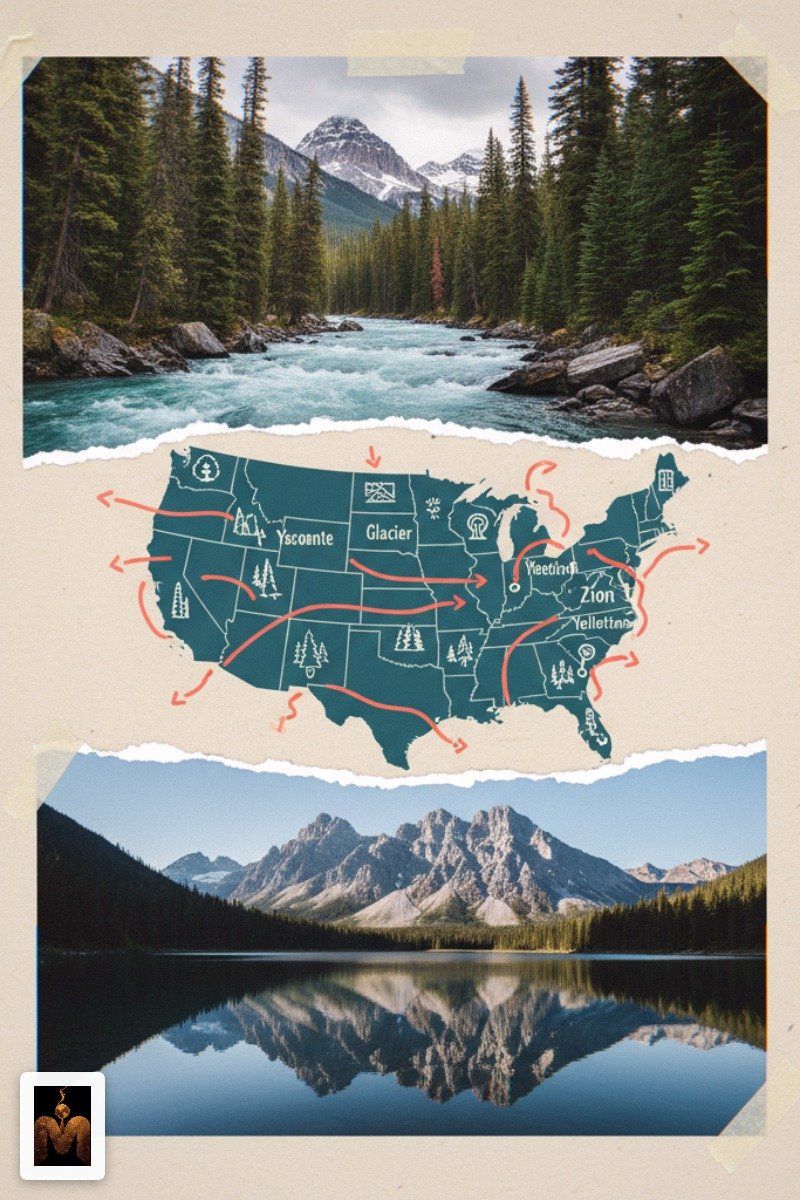

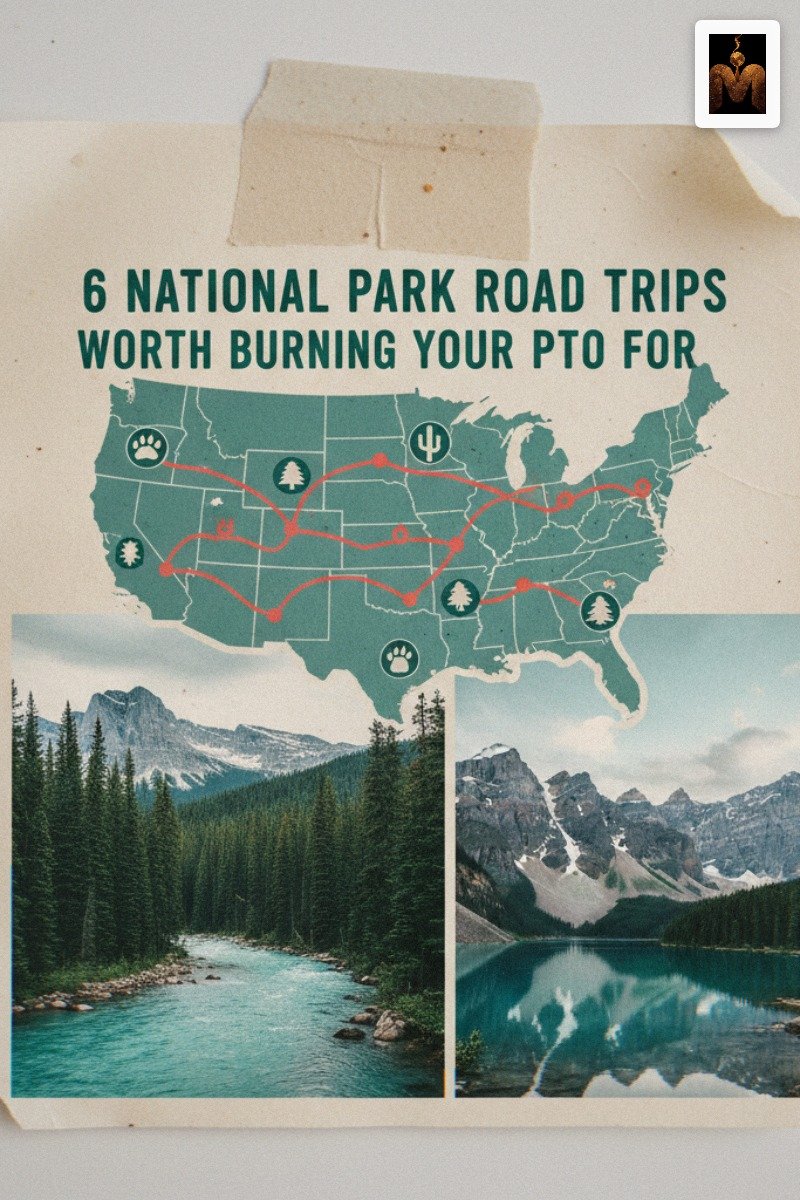
Six Road Trips, One Honest Ranking — Here’s the Order
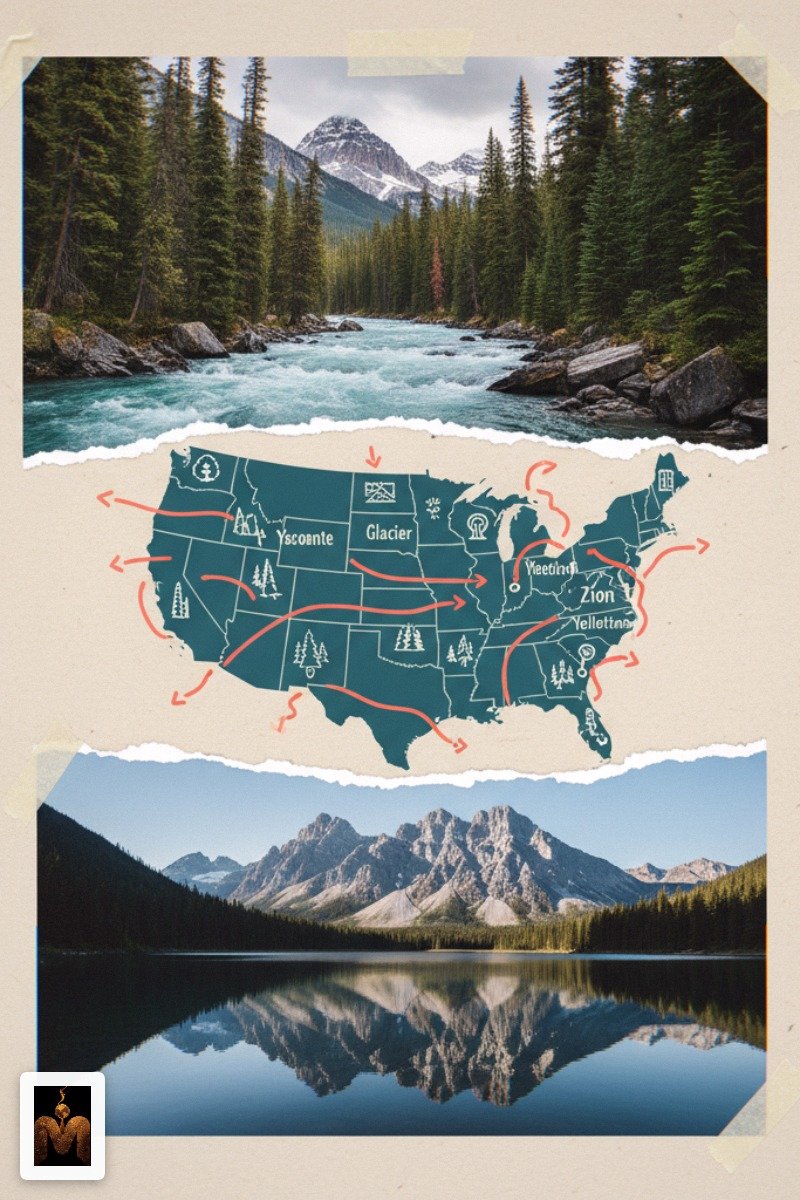
Most lists rank these trips by how many times the park has been photographed.
I’m ranking them by whether the drive actually earns its keep: logistics, corridor quality, and what happens when things go sideways.
1.
Glacier’s Going-to-the-Sun Road corridor — 280 miles minimum, 5 days.
The single best pavement in the lower 48.
No argument.
2.
Zion to Bryce Canyon — 86 miles between parks, 3 days minimum (and that’s pushing it).
Dense payoff per mile.
3.
Desert Southwest loop — Grand Canyon, Sedona, Monument Valley — ~500 miles, 7 days.
More variety than any other route here.
4.
Acadia and Maine coast — 160 miles Portland to Bar Harbor, 5 days if you do it right.
The corridor is the trip.
5.
PCH to Crater Lake — 300-plus miles, 6 days.
Crater Lake alone justifies the fuel.
6.
Great Smoky Mountains — not because the park is bad, but because 12.9 million other people had the same idea in 2023.
And no — none of these can be done in a weekend.
Anyone who tells you otherwise is describing a drive-by, not a trip.
You’ll spend more time in shuttle lines and parking lots than anywhere worth remembering.
Yellowstone and Grand Teton are off this ranking because they shouldn’t be separate entries.
More on that below.
Zion to Bryce Canyon: Best Route or Most Overhyped Corridor?
The ranger at Zion’s east entrance told me I’d wasted my best three hours sitting in the park shuttle line when the Kolob Canyons section — forty-five minutes away and nearly empty — was right there the whole time.
I wanted to be annoyed at him.
Couldn’t be, because he was right.
Here’s the honest version of this 86-mile corridor: Zion is genuinely one of the most beautiful places in America.
The Narrows, the Watchman, the way the canyon walls go orange and pink in low morning light.
It’s real.
But showing up in July without a pre-dawn start means you’re standing in the shuttle line for 90-plus minutes before you’ve seen a single rock.
Peak season, May through September, it grinds to a crawl.
The park is just too popular for a relaxed experience unless you’re on the trail before 7am.
Kolob Canyons fixes this.
Same park, different entrance off I-15, a fraction of the people.
Go there first.
Then do the main canyon early the next morning.
North to Bryce Canyon, the drive passes through Kodachrome Basin State Park.
Costs $20 per vehicle and gets skipped on every itinerary I’ve ever read.
Don’t skip it.
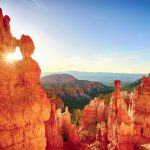
Those sandstone spires look like something that should have a two-hour queue in front of them.
They don’t.
You can walk right up.
Bryce sits at 8,000 feet on the rim.
Altitude hits you faster than you expect, especially coming from sea level.
Early morning on the rim trail, before the tour buses arrive, is the version of this trip people are actually trying to describe when they say it changed their life.
Budget 3 days minimum.
Two is a highlight reel, not a trip.
Glacier National Park’s Going-to-the-Sun Road: Timing Is Everything

I’ll just say it: Going-to-the-Sun Road is the best paved drive in the continental US.
Fifty miles of two-lane alpine road with drop-offs that’ll make your passenger grip the door handle.
Logan Pass at 6,646 feet, mountain goats standing in the road like they own it, snowfields in July.
Nothing else is close.
But.
Fully open roughly ten weeks a year, typically mid-July to mid-September.
Show up in June because “summer started” and you may find the central section still closed and half the reason you came just not there.
I’ve watched people drive fourteen hours to Glacier and arrive to a gate with a “road closed ahead” sign.
That’s a bad day.
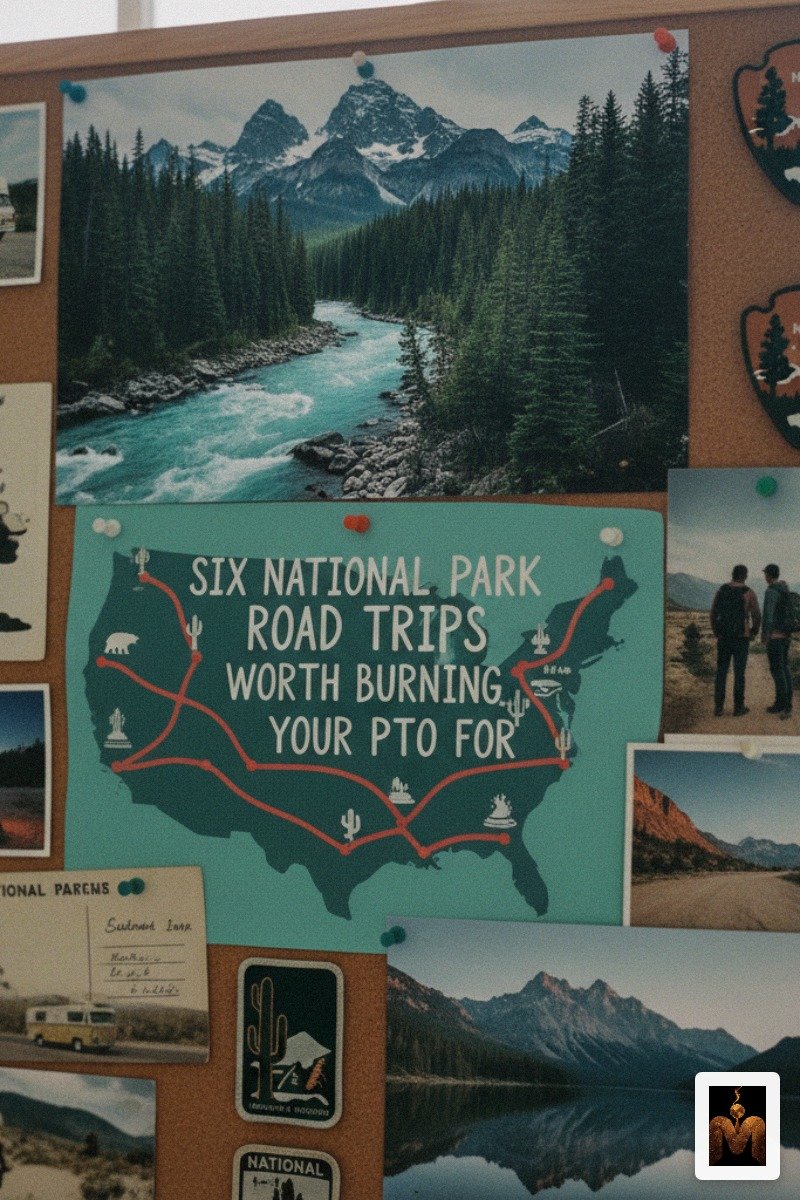
Also, if you’re driving anything over 21 feet including the tow hitch, you’re prohibited from the central section.
A lot of people with camper vans and trailers end up having to shuttle in.
Not a dealbreaker, but plan for it — I’ve seen people find this out at the gate with a fully loaded rig and nowhere obvious to go.
Two Medicine is thirty miles from the Many Glacier area and sees a fraction of the visitors.
Near-empty trailheads on a Saturday in August.
The lake is cold and clear and the mountains above it are just as dramatic as anything on the main corridor.
It’s the kind of place where you sit down, eat your lunch, and hear actual quiet.
Five days minimum here.
Seven if you want to hike properly.
Don’t let the road be the whole trip.

🗼 I Wrote a Book About My Japan Travel Catastrophes!
Before I landed in Tokyo, I thought I was the “Final Boss” of international travel. Spoiler alert: I WASN’T. 😅
🚅 I boarded the wrong Shinkansen and ended up in THE WRONG CITY. I confused locals with my “expert” bowing that was more awkward than accurate. I accidentally stumbled into a high-stakes Kendo practice thinking it was a tourist show. Sound like something you’d do?
“Things I Wish I Knew Before Going to Japan” is your shortcut to avoiding ALL my cringe-worthy mistakes. ✨ Inside, you’ll find practical, LIFE-SAVING tips on etiquette, transport, money, and hidden gems that will save you time, money, and a whole lot of confusion.
Acadia and Maine’s Coast: Why This Trip Requires Two Extra Days
Acadia alone does not justify a cross-country flight.
I know that’s not what you want to hear.
But if you’re flying into Portland and treating the 160-mile drive north as just the commute to the real destination, you’re doing this wrong.
The coast is the trip.
Acadia is the finale.
Pemaquid Point Lighthouse is $4 to walk in.
Sitting on a ledge of swirling metamorphic rock above the Atlantic, the formation under your feet is more interesting than most of what’s behind glass in geology museums.
About 30 minutes south of Rockland.
Most people blow past it on US-1 because they’re trying to get to Bar Harbor before dinner.
Camden Hills State Park charges $8 per adult for day use.
The view from the summit over Penobscot Bay is the kind of thing that makes you briefly understand why people retire to Maine.
Worth the stop.
Don’t overthink it.
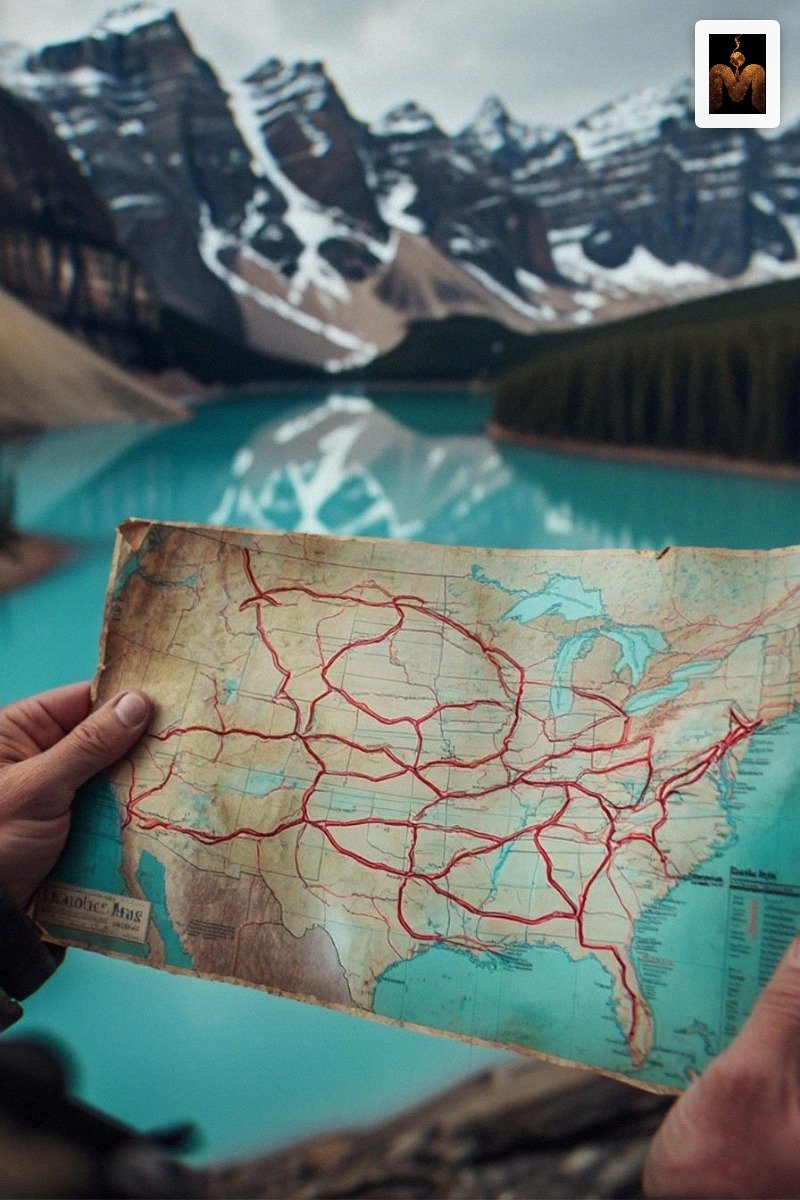
What will genuinely hurt your feelings is Bar Harbor lodging pricing.
Average motel in July runs $280 to $380 a night, and that’s not waterfront.
That’s “fine, has parking.”
I stayed in Ellsworth one night off-season and paid less than half that — threw my carry-on in a room that cost , drove in for the sunrise, and honestly couldn’t tell the difference by 7am.
Cadillac Mountain sunrise reservations cost $6 and are required April through October.
Not optional, and they fill fast.
Book it the same day your recreation.gov window opens, because it goes.
Add two days to whatever you planned.
This coastal drive rewards slowness and punishes schedules.
Great Smoky Mountains Without the Traffic Nightmare: A Realistic Itinerary
12.9 million visitors in 2023.
More than any other national park in the country.
More than Yellowstone and Zion combined.
A huge percentage of those people funnel in through Gatlinburg, which is a strip of fudge shops and pancake houses with 45 to 75 minute restaurant waits on summer weekends.
Gatlinburg is not the Smokies.
It’s a theme park that borrowed the view.
Do not enter via the Gatlinburg side on a summer Friday.
You’ll add two hours of gridlock and arrive at the park already irritated.
Use the Townsend entrance or come from the North Carolina side through Cherokee instead.
Road quality is similar.
The experience is not.
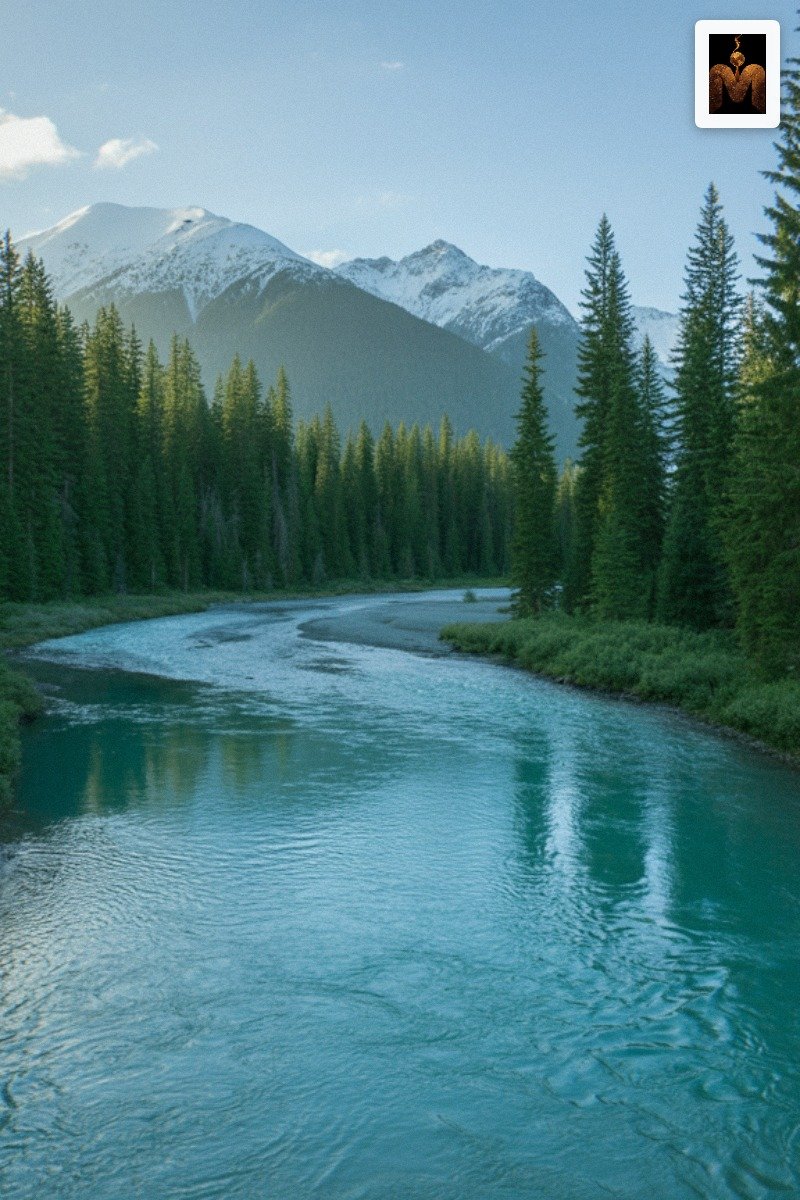
Nobody uses the Cherohala Skyway because it doesn’t connect to anything Instagram-famous.
Forty-three miles of scenic byway along the Tennessee-North Carolina border through hardwood forest, rarely congested even on holiday weekends.
Legitimately better driving than most of the in-park roads.
Go there on the day everyone else is stuck in Clingmans Dome parking lot.
Speaking of Clingmans Dome — that road closes December through March.
Don’t assume it’s open just because the park is technically accessible year-round.
Yellowstone to Grand Teton: Stop Treating These as Two Separate Trips
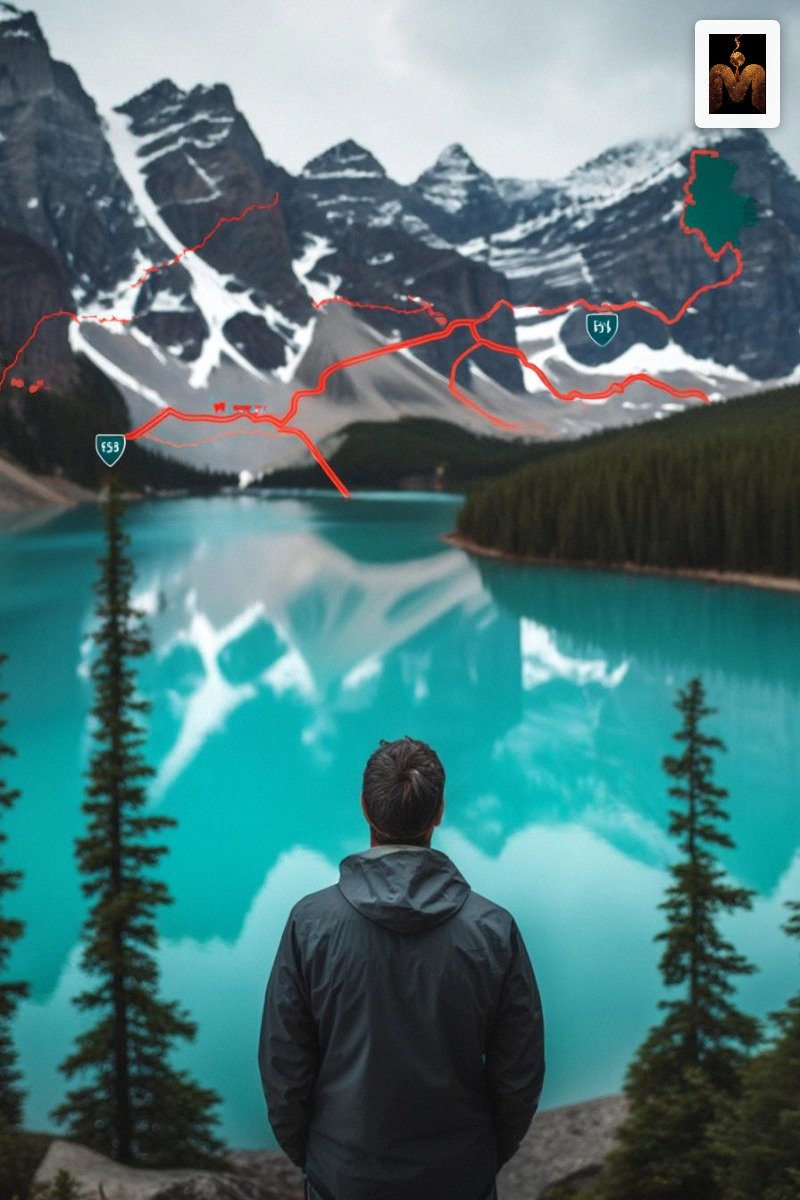
Yellowstone’s south entrance to Grand Teton’s north entrance is 57 miles.
Most people drive it in one direction, spend 20 minutes at the Teton overlook, take the photo, and spend three days watching geysers.
That ratio is backwards.
Grand Teton is the better photography park.
Stronger vertical relief, cleaner sightlines, the Snake River bend in the morning light.
It consistently produces more interesting images than Yellowstone’s relatively flat thermal basin.
Grand Prismatic Spring is spectacular in person — the boardwalk is 1.6 miles round trip, worth every step — but famously better from above than at ground level, and the crowds in August are relentless.
Jackson runs $350 to $500 a night for a median hotel room in peak season, which means people try to rush both parks to feel like they got their money’s worth.
You don’t.
Slow down in the Tetons.
A better ratio is 1:1 or at most 2:1 in favor of Yellowstone.
Three days Yellowstone, a half-day Teton is the mistake most people make and most itineraries actively encourage.
One logistical note: Yellowstone has five entrance gates and only the north gate, at Gardiner, Montana, stays open year-round.
Planning a shoulder-season trip, that matters.
Desert Southwest Loop: Grand Canyon, Sedona, Monument Valley in One Shot
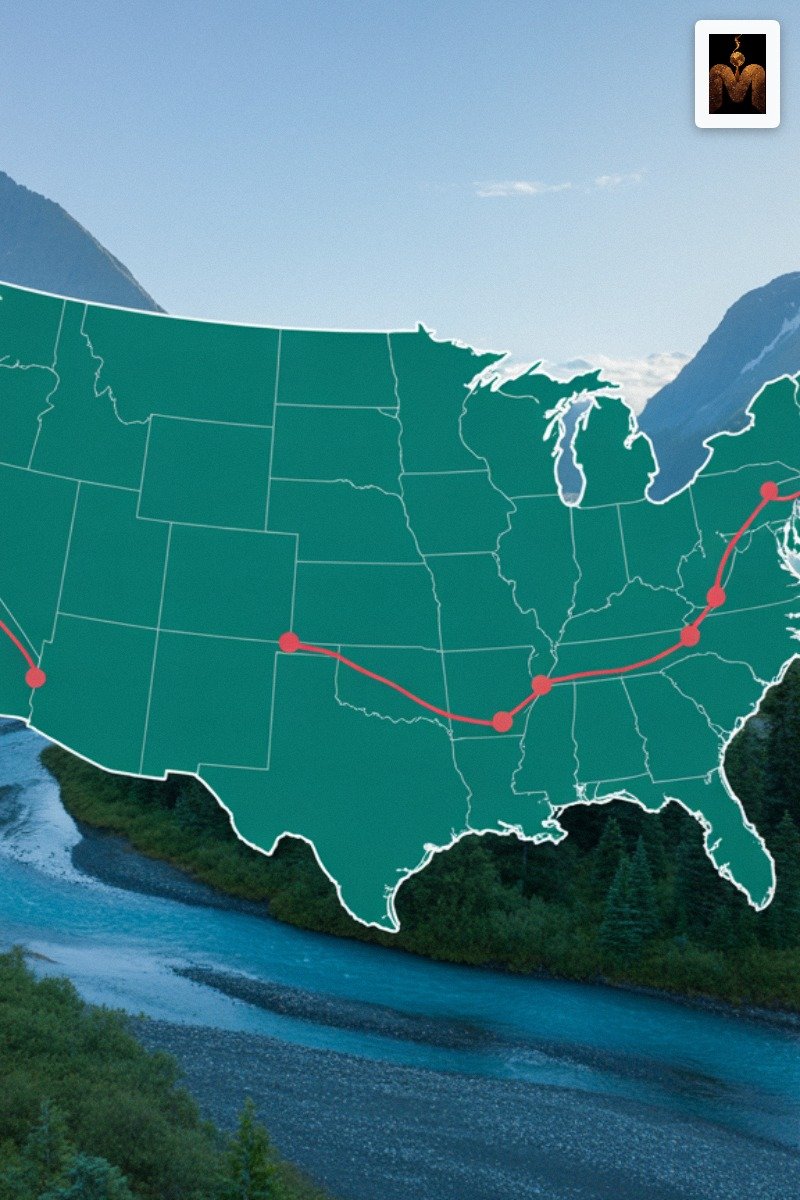
Grand Canyon South Rim gets 5 to 6 million visitors a year.
On a July afternoon it’s a parking lot with a view, and I mean that fairly literally.
Crowds flatten the scale of what you’re looking at.
North Rim or an actual rim-to-rim hike is the real Grand Canyon.
South Rim is the postcard version.
Sedona is more interesting for most road trippers than the South Rim and I’ll stand behind that.
All four main vortex sites are free to walk, the red rock formations are right at eye level instead of a mile below your feet, and the light in the late afternoon goes colors that seem like they should be illegal.
The town itself is overpriced and spiritually exhausting, but the landscape around it earns the stop.
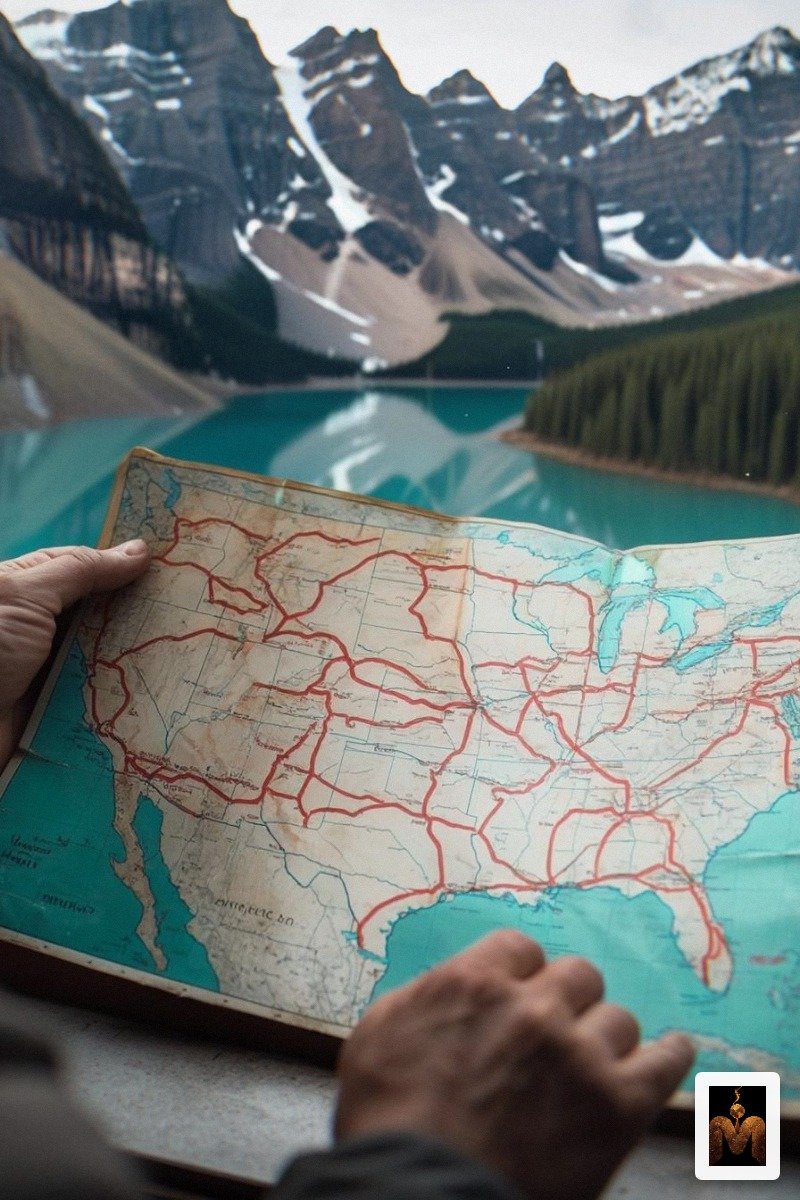
Monument Valley is not inside a national park.
That surprises people.
Tribally managed Navajo land, entry fee $20 per vehicle plus $20 per person for the tour permit.
Separate payment, different rules, and that’s completely appropriate.
You’re a guest on sovereign land.
From Grand Canyon’s South Rim to Monument Valley is roughly 180 miles and the landscape shifts three times on the way.
Budget 7 days minimum.
Five leaves you skipping something real.
Pacific Coast Highway as a National Park Connector: Redwoods to Crater Lake
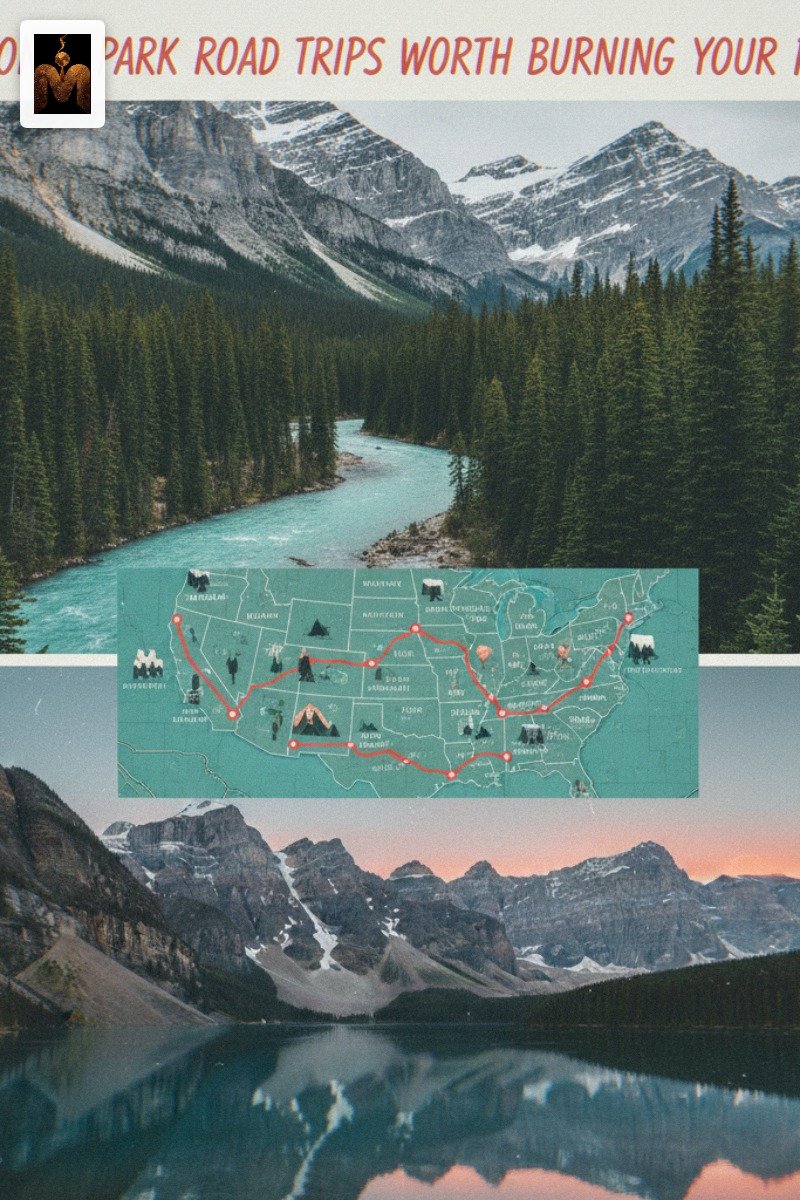
Crater Lake is the most underrated national park in the American West.
Not saying that loosely.
1,943 feet of average depth — deepest lake in the country — a blue so saturated it looks color-corrected, a 33-mile Rim Drive fully accessible July through October, and lines that are genuinely manageable compared to anything in Utah.
No Yellowstone-sized PR machine.
Doesn’t need one.
Better than people expect every single time.
Running about 300 miles from Redwood National Park via US-101 and OR-138, the northern leg of this route includes Avenue of the Giants.
Roughly 45 minutes added for 31 miles of old-growth redwoods, trees wide enough that they carved a car tunnel through one of them in 1936.
Skipping it to save 45 minutes is the move of someone who went on a road trip but forgot to travel.
Don’t do it.
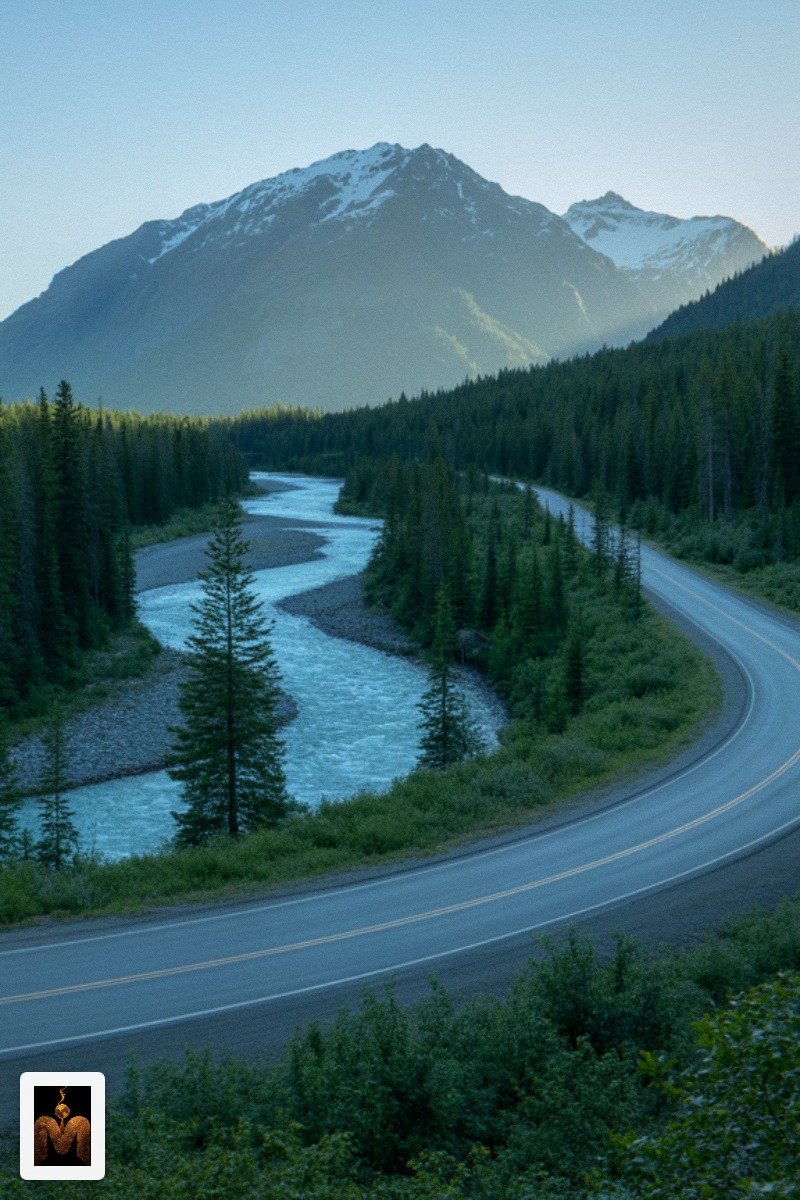
Road conditions on US-101 can be genuinely rough in spots, especially north of Eureka.
I got behind a logging truck for twenty minutes somewhere past Orick and there was simply nowhere to go.
Don’t assume highway speed the whole way.
Patience is required here, and the views pay you back for it.
Budgeting Honestly: What These Trips Actually Cost Per Day
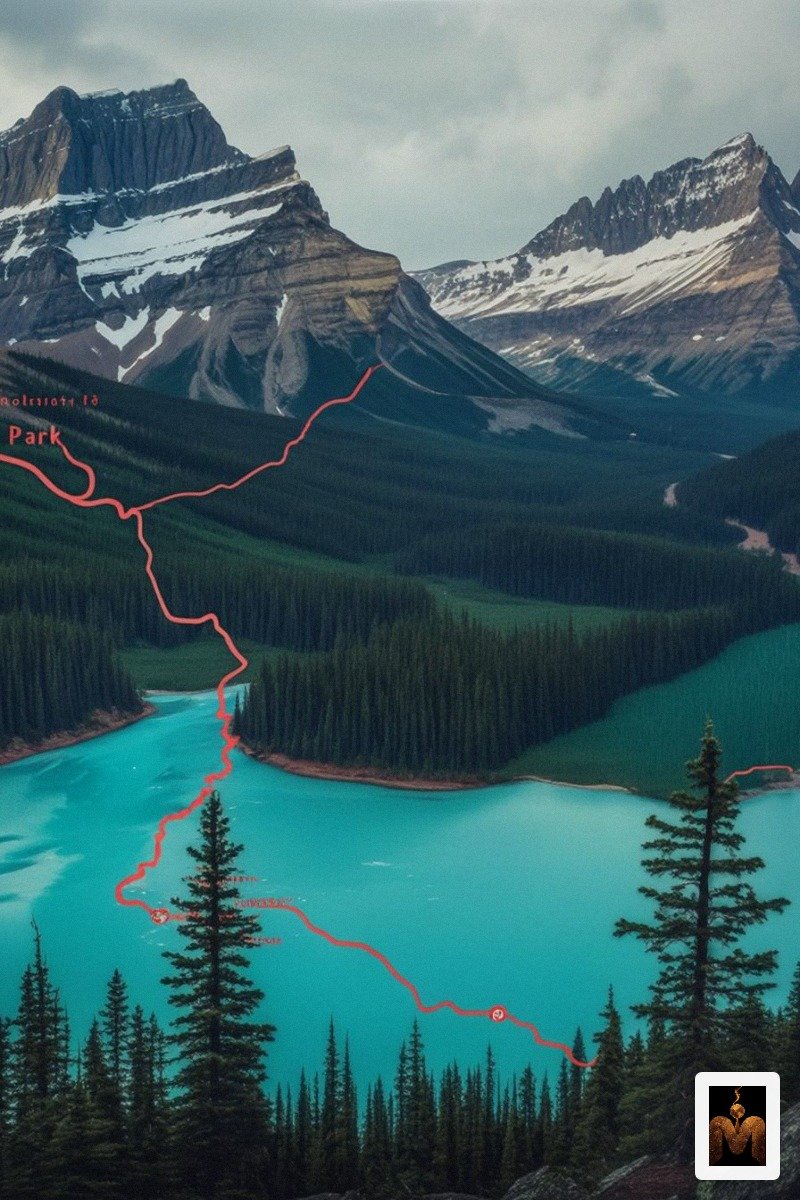
An $80 America the Beautiful annual pass covers entrance to all federal lands.
On almost every route here, you’ll hit two or three parks minimum.
Pays for itself on day two.
Not buying it is honestly the most expensive single mistake road trippers make — I’ve watched people hand over $35 in cash at entrance gates for no reason at all.
Gas math for a 1,000-mile trip at $3.50 a gallon in a car getting 30 mpg runs about $117.
Easy number.
Hard number is lodging.
Gateway town hotels in peak season average $200 to $450 a night — not resorts, just whatever’s left when you didn’t book three months out.
Food for two people on a road trip runs $80 to $130 a day if you’re mixing grocery stops with actual meals.
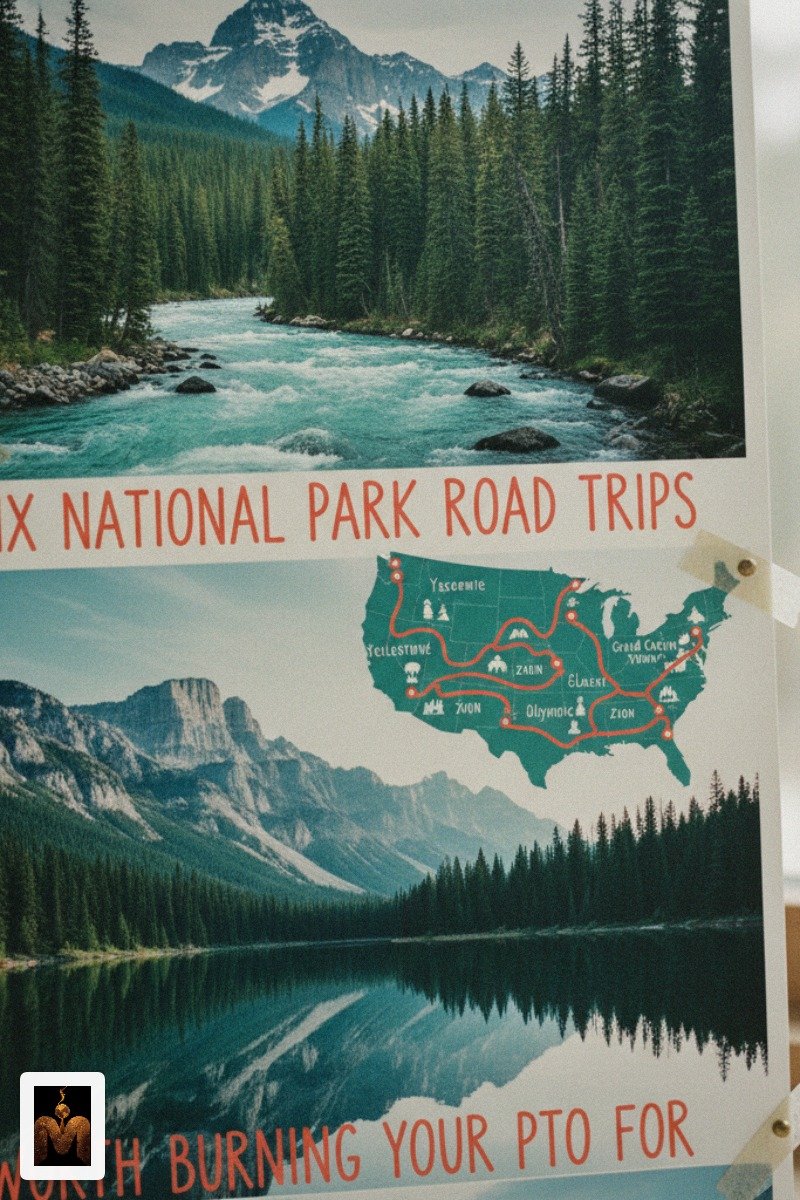
What most trip budgets skip entirely is the gateway town markup.
Coffee is $9.
A mediocre burger is $22.
Everything near a famous park entrance runs on different pricing logic.
Budget for it or get surprised by it.
Those are the options.
🗼 I Wrote a Book About My Japan Travel Catastrophes!
Before I landed in Tokyo, I thought I was the “Final Boss” of international travel. Spoiler alert: I WASN’T. 😅
🚅 I boarded the wrong Shinkansen and ended up in THE WRONG CITY. I confused locals with my “expert” bowing that was more awkward than accurate. I accidentally stumbled into a high-stakes Kendo practice thinking it was a tourist show. Sound like something you’d do?
“Things I Wish I Knew Before Going to Japan” is your shortcut to avoiding ALL my cringe-worthy mistakes. ✨ Inside, you’ll find practical, LIFE-SAVING tips on etiquette, transport, money, and hidden gems that will save you time, money, and a whole lot of confusion.
Crowd Calendars Nobody Shows You: Best and Worst Weeks by Park
Memorial Day weekend spikes visitation 40 to 60 percent at most major parks.
July 4th is worse.
Labor Day is slightly better but still bad.
Spring break now rivals summer at Zion and the Smokies — that shift happened over the last five years and most crowd calendars online haven’t caught up.
Mid-September is the correct answer for almost every route on this list.
Yellowstone’s least-crowded month with full road access is September.
Zion, Glacier, and the Smokies all see 30 to 50 percent crowd drops from late September into mid-October.
Weather is still reliable.
Fall color adds something that summer’s uniform green never offers.
Acadia’s worst window is the last two weeks of July and the first week of August.
Bar Harbor is genuinely hard to move through during that stretch.
Go off-season by even three weeks — early September — and the coast gets its light back, the parking situation becomes human again, and the lobster roll lines get down to a manageable length.
Camping vs. Lodging: Which One Actually Makes Sense Per Route
Yellowstone’s in-park lodging books 12 to 13 months in advance.
Didn’t plan that far ahead?
Already gone.
Glacier’s Many Glacier Hotel runs $200 to $400 a night depending on room type and books nearly as fast.
Neither is a realistic option for most people planning a trip in a normal timeframe.
Zion Canyon Campground is $35 a night, reservable six months out on recreation.gov. Acadia’s Blackwoods Campground is $30 a night and fills within minutes of the reservation window opening.
Both are worth trying, but go in with a backup plan.
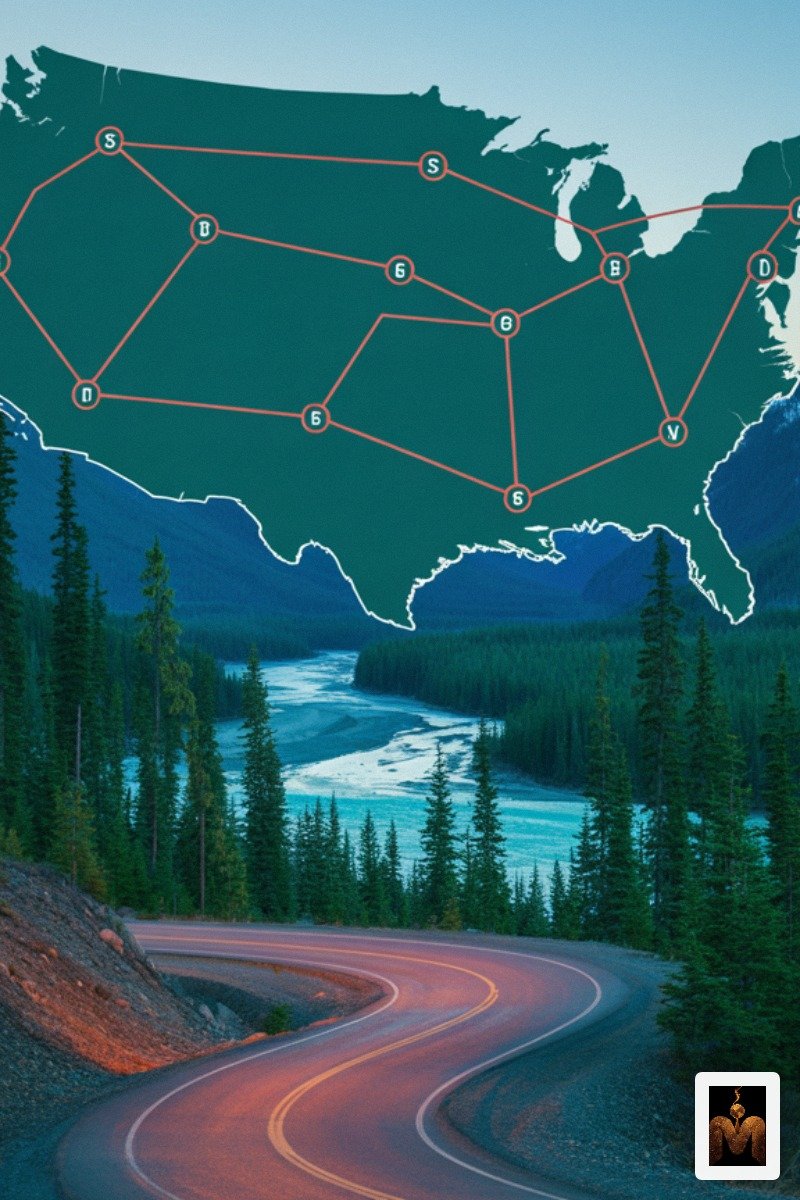
Here’s the opinion that’ll annoy some people: camping is not automatically cheaper.
Once you factor in gear, reservation fees, and the reality that a lot of in-park campsites are gravel patches near a loud road, a $90 budget motel twenty miles out often wins.
Especially if you’re not backpacking.
Car camping near a busy national park in peak season is a specific experience with specific trade-offs, and “cheaper” isn’t always one of them.
Underrated Stops Every Itinerary Leaves Off the Map
Kolob Canyons, Zion’s northwest section off I-15.
45 minutes from the main entrance, rarely has wait times even in July.
Canyon walls just as red and just as vertical.
Go here.
Two Medicine in Glacier.
30 miles from Many Glacier, a fraction of the visitors, a full trailhead with actual parking.
The main corridor gets the press.
This area gets the solitude.
Pemaquid Point Lighthouse on the Maine coast. $4 entry, 30 minutes south of Rockland, and the geology underfoot is legitimately worth looking at.
One of those stops that takes 45 minutes and earns more goodwill than something you waited two hours for.
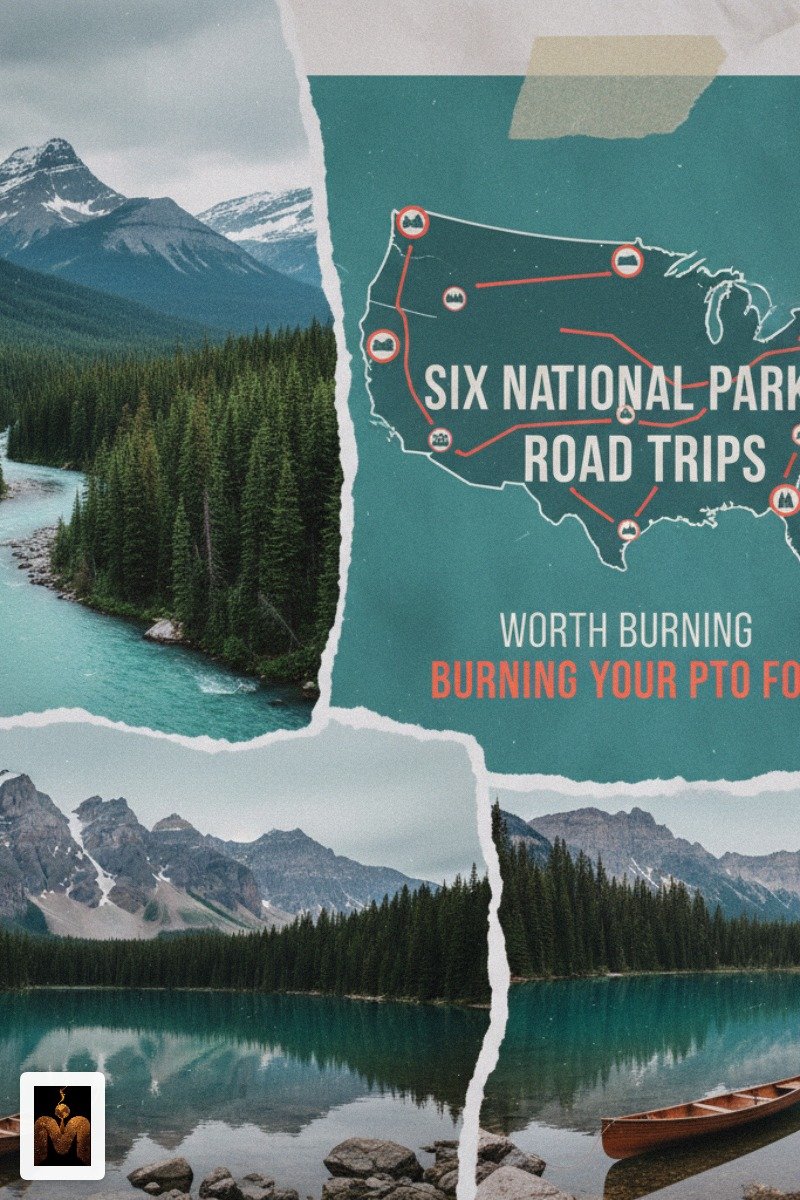
Wupatki National Monument, 35 miles north of Flagstaff on the Desert Southwest loop.
Free with the America the Beautiful pass, ancestral Puebloan ruins on a high desert plain with almost nobody else around.
Not a detour.
On the way to Monument Valley and better than half the things on the official itinerary.
Parks have done an excellent job marketing their front doors.
That’s also kind of the problem.
Every one of these stops is more memorable per hour than the crowded main attraction it sits near, and they’re all just sitting there, signed and accessible, waiting for the people who actually read past the first paragraph.
Pick Your Route: A 60-Second Decision Framework
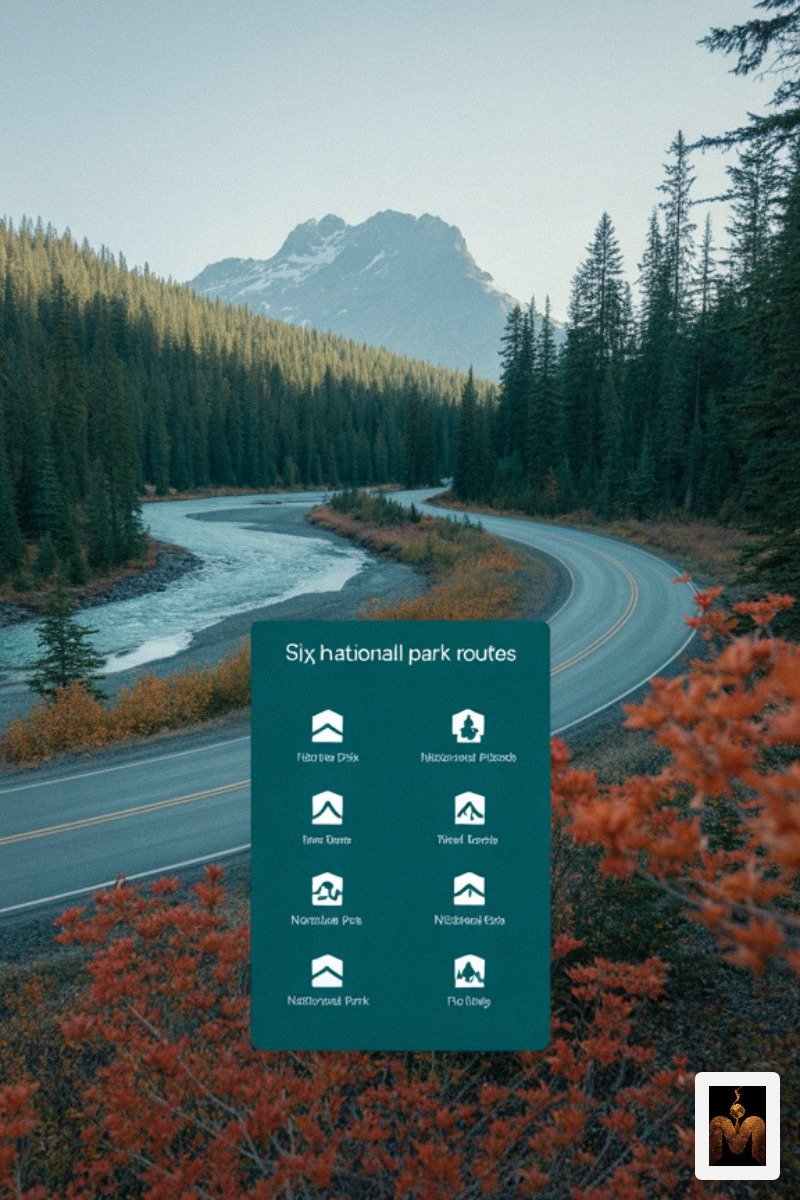
Hate long driving days?
Do Acadia.
Bar Harbor to Portland is 160 miles, shortest max single-day drive on this list.
Two hours between major stops.
You’re never trapped in the car.
Budget is the real constraint?
Smokies corridor averages $140 to $180 a day for two people.
No park entrance fee at the gate, camping is accessible, roads are free.
One route where money isn’t the stressor.
Traffic is.
Solo travelers should look hard at Glacier.
Around 80 percent of visitors arrive as couples or families, so solo hikers genuinely find more solitude on the trails there than almost anywhere else on this list.
Scale of the park rewards going at your own pace without negotiating another person’s comfort zone.
Five days, first trip, haven’t done any of these.
Book Zion to Bryce.
Not because it’s the best route — Glacier is — but because 86 miles between two iconic parks, a state park nobody talks about in the middle, and manageable logistics makes it the most efficient concentration of payoff per mile driven.
Start before sunrise, skip the shuttle line, go to Kolob first.
You’ll leave with more than you came for.