

Wisconsin Dells in January sounds like a bad joke until you walk out of an 8-degree parking lot into a waterpark that’s 84 degrees inside.
Then it makes a weird kind of sense.
The town bills itself as the waterpark capital of the world.
In summer that’s half marketing.
In winter it’s just accurate, because almost everything outdoors shuts down and the indoor parks carry the whole place on their backs.
So go midweek, book early, and bring a hat for the walk back to the car with wet hair.
What Shuts Down Once the Leaves Are Gone

Let’s get the bad news over with.
The things people picture when they hear “the Dells” are mostly summer things.
The Dells Boat Company’s Upper and Lower Dells tours run from April through October.
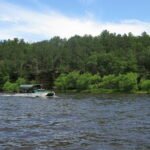
The Original Wisconsin Ducks, the old amphibious trucks that splash into the river, go from about mid-March to mid-November.
The big outdoor waterparks follow the school calendar, roughly Memorial Day to Labor Day.
By December, the river is just a river and the outdoor slides are sitting under snow.
A fair chunk of the souvenir strip on Broadway thins out too.
Not all of it.
The fudge shops and arcades hang on, and so do a good number of restaurants, but plenty of places run winter hours or close for weeks at a time.
Check the hours before you drive somewhere specific, because “open daily” on a summer flyer means nothing in February.
The Indoor Waterparks Are the Real Reason to Come

There are a lot of indoor parks here.
Three do most of the heavy lifting, and they’re pretty different from each other.
Kalahari is the one you’ve seen billboards for since Illinois.
It has Wisconsin’s largest indoor waterpark, plus an indoor theme park with rides and arcades bolted on.
It’s big, it’s loud, and on a Saturday it’s packed.
Wilderness is less a resort than a small city.
It has four indoor and four outdoor waterparks, nearly 500,000 square feet in total, spread across several hotels.
In winter only the indoor ones matter.
The 70,000-square-foot Wild WaterDome is open again after a renovation, with a tan-through roof, a raft ride called Volcano Vortex and Coral Cove, a zero-depth play area for little kids.
If your kid has their heart set on one slide, make sure it’s running the week you’re booked.
Great Wolf Lodge is the smallest of the three, a 76,000-square-foot park kept at 84 degrees all year.
Smaller isn’t a knock.
With little kids, smaller means you can actually see them.
A kid under eight is thrilled with a swim ring, a beach ball and shallow water.
The giant parks are built for teenagers who want to ride the scariest thing twelve times, so for little kids the smallest park with a decent toddler area is plenty.
A Day Pass Beats a Room, If You Book It Early
You don’t have to stay at a waterpark resort to swim at one.

Great Wolf Lodge sells a full-day pass and a half-day pass from 4 p.m. Kalahari sells a limited number online.
Wilderness has an All-Day Waterpark Pass, sold online or at its Daily Adventures desk.
The catch is the same everywhere.
They cap how many passes they sell, so a Saturday in January or any day around Christmas can sell out.
Book it the moment you know your date.
Do the math before you book anything.
Price a cheap motel on the strip in the off-season, plus day passes for one big park day, against one night in a themed suite.
Count a pass for everybody: at Great Wolf even the grown-up who won’t get wet needs one (only kids 2 and under get in free).
Where staying over does pay off: two or more swim days in a row, or a family that wants to swim at 8 a.m. in pajamas and nap at noon.
Then the room’s doing real work.
Just look at what’s included before you book, because waterpark access, the indoor rides and the arcade are often three separate things with three separate prices.
🗼 I Wrote a Book About My Japan Travel Catastrophes!
Before I landed in Tokyo, I thought I was the “Final Boss” of international travel. Spoiler alert: I WASN’T. 😅
🚅 I boarded the wrong Shinkansen and ended up in THE WRONG CITY. I confused locals with my “expert” bowing that was more awkward than accurate. I accidentally stumbled into a high-stakes Kendo practice thinking it was a tourist show. Sound like something you’d do?
“Things I Wish I Knew Before Going to Japan” is your shortcut to avoiding ALL my cringe-worthy mistakes. ✨ Inside, you’ll find practical, LIFE-SAVING tips on etiquette, transport, money, and hidden gems that will save you time, money, and a whole lot of confusion.
Snow Tubing on Real Snow, or on a Hill With None

After two days of chlorine, everybody needs some cold air.
Christmas Mountain Village, right in the Dells, runs skiing, snowboarding and a snow tubing hill in the winter season.
Cascade Mountain, near Portage, has ski runs and a tubing area, and kids 12 and under ski free with a paid adult.
For a family of four that’s not a small deal.
Then there’s Bigfoot Snow Tubing, which runs all year on a hill that needs no snow at all and says rides hit up to 35 mph.
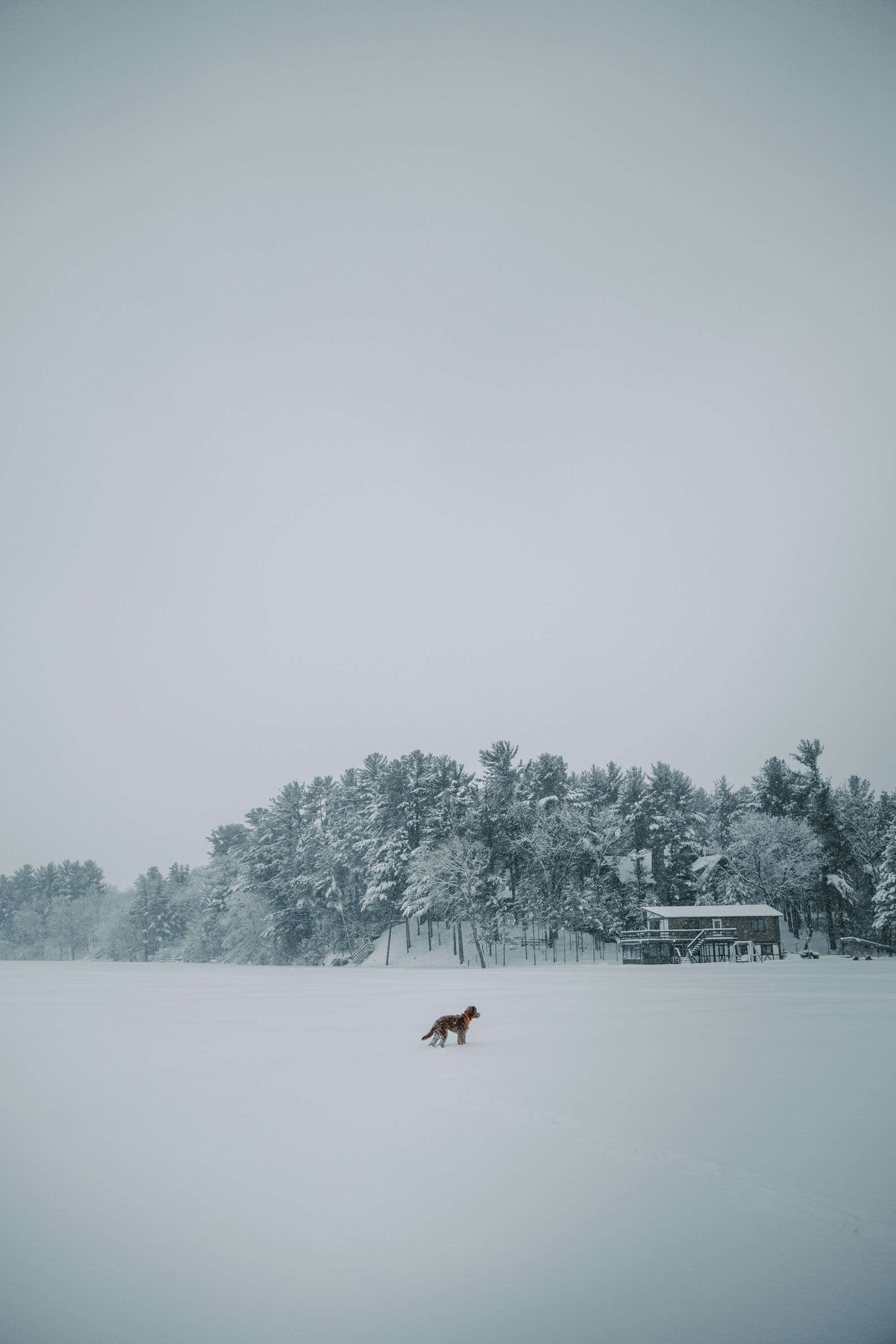
It’s a good backup for the winters when the Midwest decides to be brown and gray instead of white.
Some Decembers it is.
Tubing tickets are usually sold by the session, an hour or two at a time.
Go when the session opens.
By the end the lift line gets long and the kids get cold, and those two things together end a lot of family outings.
Devil’s Lake With Nobody Else On the Trail

Devil’s Lake State Park, a short drive south near Baraboo, is worth the trip, kids or not.
It has 500-foot bluffs over the lake.
In winter the trails aren’t kept up but stay open, and you can snowshoe or ski anywhere (nothing’s groomed for skiing, though).
Ice fishermen go out too, but the park doesn’t measure the ice.
You’ll need a vehicle pass.
A daily pass is $13 for a car with Wisconsin plates and $16 for out-of-state plates.
If you’re coming back a few times in a year, the 12-month pass is $28 for residents and $50 for everyone else.
Mirror Lake State Park is closer, right outside town, with trails through the pines and sandstone.
But in the snow season most of its trails are groomed for skiing, and you can’t hike on those (skiers 16 and older need a state trail pass).
And if you only have twenty minutes, the Scenic River Walk downtown is a quarter-mile paved path along the river.
It’s free and open all year.
Devil’s Doorway, the stacked rock arch, is a short spur off the East Bluff Trail that the DNR rates most difficult.
Bluff trails can ice over.
Wear boots with real tread, or slip-on traction cleats if you’ve got them, and skip the steep rock stairs when they’re glazed.
Nobody needs a broken wrist on a waterpark trip.
How Cold It Gets, and What That Means for Packing

Wisconsin Dells averages a high of 26 degrees and a low of 8 in January.
Some days are worse.
A wind off the river can make 20 feel like single digits.
That gap, 84 inside and 8 outside, is the whole packing problem.
You’re dressing for two different planets.
Here’s what to pack:
- A dry hat and a towel just for the walk to the car. Wet hair at 8 degrees is miserable.
- Flip-flops or water shoes for the park, real boots for everything else.
- A big zip bag for wet suits, so the rest of your bag stays dry on the drive home.
- Snow pants for tubing. Jeans get wet and stay wet.
If you’re flying in, all of that fits in a carry-on as long as the snow pants are the thin kind.
The puffy ones get checked.
Take the Train and Skip the Interstate

Most people drive.
From Chicago it’s about three hours on I-90/94 when the roads are clear, a little over an hour from Madison.
Winter adds time, and a whiteout near Portage adds a lot of it.
Here’s the option almost nobody uses.
Amtrak stops in Wisconsin Dells.
Two trains, the Borealis and the Empire Builder, each make a daily round trip through town, and the Borealis runs between Chicago and St. Paul with stops in Milwaukee and Portage on the way.
The station is right downtown.
One heads-up: there’s no ticket counter.
The waiting room is open from noon to 7:45 p.m., but nobody sells tickets or checks bags, so buy online and keep the luggage to what you can lift.
And you’ll need a ride from the station to most resorts.
Taxis and the resorts’ own shuttles are the usual answer, so ask your hotel before you book.
When to Actually Go

Midweek in January or February, outside school breaks.
That’s it.
That’s the trick.
The week between Christmas and New Year’s is the worst value of the whole winter.
Every family in three states has the same idea, the day passes sell out, and the resorts charge their top rates.
Long weekends like MLK Day and Presidents’ Day are close behind.
A Monday-to-Wednesday trip in mid-January is the sweet spot.
The parks are quieter, the rooms are cheaper, and if it snowed the weekend before, the tubing hills are in good shape.
Also check the forecast for the tubing day before you lock in a hotel.
Real snow on Christmas Mountain beats a rainy 34 degrees by a mile.
If summer’s more your speed, our guide to fun things to do in Wisconsin Dells covers the boats and the outdoor parks.
Want another winter road trip where the cold is half the point?
Gatlinburg in winter is a good one.
And if you’re coming up from the south, a night in Milwaukee breaks up the drive nicely.