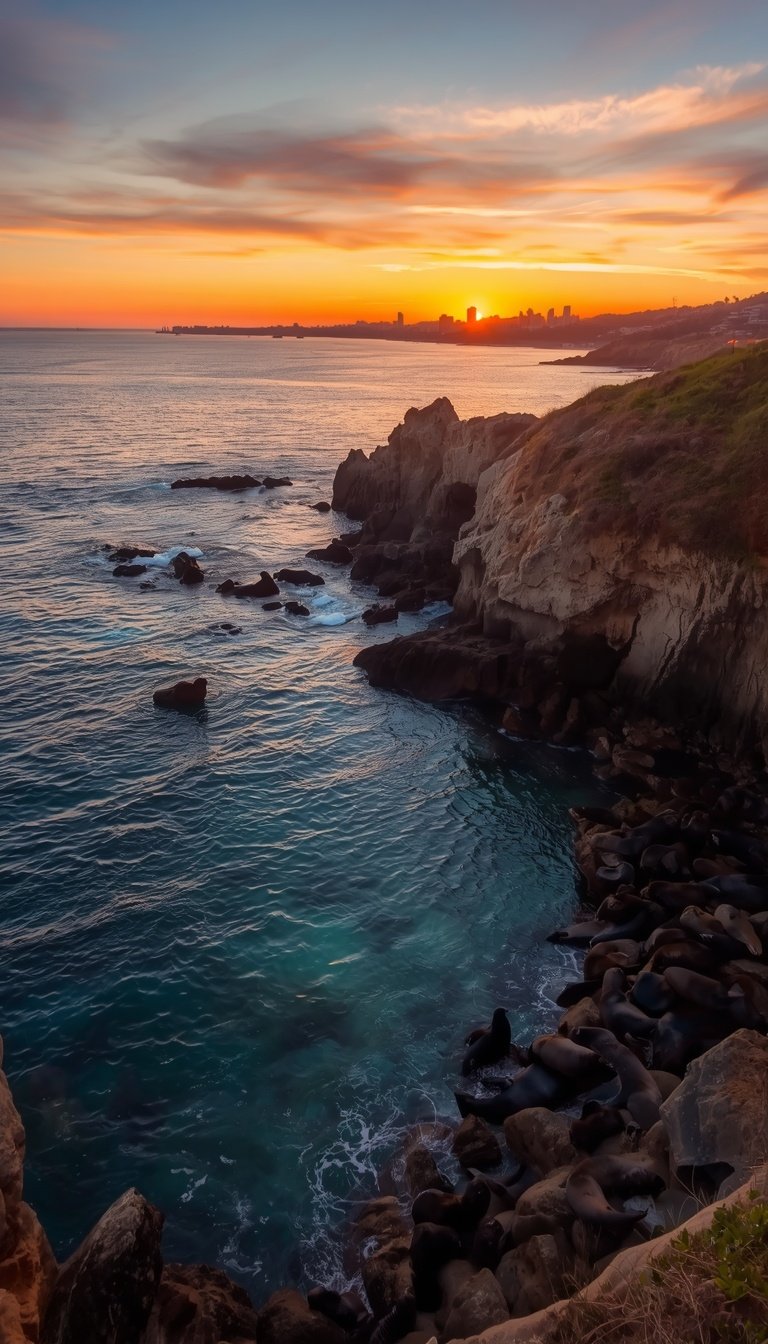
I still remember the exact turn on Highway 1 where I had to pull over because the view actually took my breath away.
Not the “wow, nice” kind of took my breath away.
The kind where you sit in your car with the engine off and just stare for ten minutes, saying nothing.
Long drive with kids? Print a set of cards from the free road trip bingo generator before you leave.
That was somewhere south of Half Moon Bay, and I hadn’t even hit Big Sur yet.
You know that feeling when a place just quiets your brain down?
That’s this drive.
I’ve done San Francisco to San Diego three times now, and every single time it humbles me a little.
So if you’re thinking about doing this coastal run, I want to walk you through it the way I’d tell my buddy over a beer, not some polished travel brochure version.
Grab a coffee.
This one’s long, but so is the drive, and it’s worth every mile.
San Francisco to Half Moon Bay: Easing Into It

This first leg is your warm-up, and I mean that in the best way.
It’s short, it’s easy, and it eases you out of city mode.
I always leave San Francisco in the late morning, never at the crack of dawn.
There’s no rush here.
The road hugs cliffs almost immediately once you’re out of the city, and the fog rolling off the water feels almost cinematic.
I’m obsessed with this particular stretch because it doesn’t ask much of you yet.
You’re still getting used to the rhythm of the drive.
Roll the windows down.
Let the cold ocean air hit you.
When I did this leg last spring, I stopped at a random pullout just to watch surfers paddle out in what looked like freezing water.
I didn’t even know the spot’s name.
I just knew I needed five minutes there.
That’s my real tip for this section.
Don’t plan every stop.
Leave room for the ones you stumble into.
Pack a warm layer too, because the coastal wind here is no joke even when the sun’s out.
And grab something to eat before you leave the city, because your options thin out fast once you’re on the coast.
Big Sur: The Stretch That Breaks You Open
Okay, this is the one everyone talks about, and it deserves it.

Big Sur is not just pretty.
It’s overwhelming in a way that’s hard to explain until you’re in it.
The cliffs drop straight into the Pacific, and the road curves so much you’ll forget what a straight line feels like.
Slow down here, seriously.
Not just for safety, but because speeding through Big Sur is like flipping through a good book without reading it.
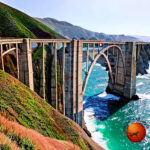
My personal favorite moment is crossing Bixby Bridge early enough that there’s barely any traffic.
There’s something about that bridge that gets me every time, and I’ve crossed it more than once now.
If you only stop for one thing on this whole trip, make it here.
A small tip from experience: gas up before you enter Big Sur, because stations are sparse and pricey once you’re in.
I made that mistake on trip number one and paid the price, literally.
Bring snacks and water too.
Cell service disappears for long stretches, so download your playlists ahead of time.
This section of road asks for patience, but it gives back tenfold.
If I had to pick a single reason to do this whole road trip, honestly, it might just be this one stretch.
Where to Stop for the Best Coffee and Views
I’m a coffee guy, so this section matters to me more than it probably should.

There’s something about a good cup of coffee with an ocean view that just resets you mid-drive.
My hack is to always look for the small, local spots instead of chains.
They’re usually run by someone who actually loves the coast, and you can feel it in how they treat the space.
I’ve had conversations with baristas in these little towns that ended up being the highlight of my whole day.
One guy in a tiny coastal town told me about a hidden overlook just up the road, and it ended up being better than anything in my notes.
That’s the magic of this drive.
The best moments aren’t always the ones you planned.
My personal tip is to build in an extra fifteen minutes at every coffee stop, no matter how tight your schedule feels.
Rushing through these moments defeats the whole purpose of a road trip like this.
And honestly, a warm cup in your hands while looking at cliffs and waves just hits different.
If you’re a tea person instead, no worries, most of these little spots have you covered too.
Either way, slow down and actually enjoy it.
🗼 I Wrote a Book About My Japan Travel Catastrophes!
Before I landed in Tokyo, I thought I was the “Final Boss” of international travel. Spoiler alert: I WASN’T. 😅
🚅 I boarded the wrong Shinkansen and ended up in THE WRONG CITY. I confused locals with my “expert” bowing that was more awkward than accurate. I accidentally stumbled into a high-stakes Kendo practice thinking it was a tourist show. Sound like something you’d do?
“Things I Wish I Knew Before Going to Japan” is your shortcut to avoiding ALL my cringe-worthy mistakes. ✨ Inside, you’ll find practical, LIFE-SAVING tips on etiquette, transport, money, and hidden gems that will save you time, money, and a whole lot of confusion.
Hearst Castle Detour: Worth It or Skip It

This one gets asked a lot, so let me give you my honest take.
Hearst Castle is impressive, no doubt about that.
The scale of it is almost hard to process, especially after miles of quiet coastline.
But here’s my real opinion.
If you’re tight on time, I’d actually skip it.
I know that’s controversial for a road trip guide to say.
The tour eats up a good chunk of your day, and this drive already has so much to offer outside of it.
That said, if it’s your first time in California and you’ve got the extra hours, it’s a genuinely cool stop.
I did the tour once and enjoyed it, but I haven’t gone back on later trips.
My tip if you do go is to book your tickets ahead of time, because walk-up availability can be unpredictable, especially in busier months.
And wear comfortable shoes, because there’s more walking involved than people expect.
If you do skip it, don’t feel guilty.
There’s no rule that says you have to see everything.
This trip rewards the people who protect their time and energy for the stretches that matter most to them personally.
Morro Bay and the Slow Coastal Towns

After the intensity of Big Sur, Morro Bay feels like exhaling.
The giant rock just sitting in the bay is oddly calming to look at.
I don’t know why, but I could sit and stare at it for way longer than makes sense.
This is where I usually slow my whole trip down.
Grab fish and chips at a spot near the water, and just watch the boats come in.
There’s a laid-back, unbothered energy in these small coastal towns that’s honestly good for the soul.
My personal recommendation is to spend a night here instead of pushing further south.
I made the mistake once of just driving through, and I regretted it almost immediately.
The town rewards people who stick around a little.
Walk the embarcadero in the evening when the light turns that soft golden color.
It’s one of those quiet, unglamorous moments that ends up sticking with you longer than the big landmarks do.
A small hack here is to check for kayak rentals if you’ve got the extra hour.
Paddling near that rock at sunset is something I still think about.
Don’t rush this part of the trip.
Santa Barbara: My Favorite Overnight Stop

If you ask me where to spend a night on this whole route, I’ll say Santa Barbara every single time.
It’s got this warm, polished, easy charm that feels different from the wilder stretches up north.
The architecture alone makes we want to just walk around for hours doing nothing in particular.
I always book somewhere close enough to walk to State Street, because parking downtown can be a hassle.
My favorite thing to do here is grab an early dinner outside, order something local, and just people watch for a while.
There’s a version of me that could live in Santa Barbara, honestly.
It’s got beach energy and city energy at the same time, which is a hard balance to pull off.
My tip is to wake up early and hit the beach before the crowds show up.
The morning light here is soft and a little hazy, and it makes everything look like a postcard.
If you’re into wine, this is also a great spot to detour slightly inland for a tasting.
I did that once on a whim and ended up staying an extra half day because I liked it so much.
Give yourself permission to linger here.
Malibu and the LA Coastline Chaos

Alright, let’s talk about the shift in energy once you hit the LA coastline.
Malibu is beautiful, but it’s a different kind of beautiful, more polished, more crowded, more traffic.
I always brace myself mentally before this stretch because it’s a change of pace from the quiet towns up north.
My honest tip is to time this section carefully.
Avoid rush hour like it’s your job, because LA traffic does not care about your road trip vibes.
I got stuck here once for almost two extra hours, and it genuinely soured my mood for the day.
That said, the beaches themselves are still gorgeous, and I always stop for a quick walk just to reset.
Grab tacos from a spot near the water if you can, because it just fits the whole California road trip feeling.
My personal recommendation is to treat this section as a shorter stop rather than a place to linger.
Save your energy for what’s coming further south.
If you’re someone who likes people watching, though, this is honestly a fun stretch for that alone.
Just keep your expectations realistic about the pace of things here compared to the quieter coastal towns.
Orange County’s Underrated Beach Towns

This section doesn’t get nearly enough credit, and it’s one of my favorite parts of the whole drive now.
Places like Laguna Beach have this artsy, relaxed feel that caught me off guard the first time I drove through.
I’m a big fan of the little coves tucked between the cliffs here.
You can pull off, walk down a few steps, and suddenly you’ve got a beach almost to yourself.
My tip is to actually get out of the car more in this section than you think you need to.
It’s easy to just drive past these towns on your way to San Diego, but that would be a mistake.
I stopped randomly in Laguna one afternoon and ended up spending three hours just wandering galleries and grabbing ice cream.
That wasn’t planned at all, and it turned into one of my favorite memories from the whole trip.
If you like a slower pace with a bit of polish, this stretch delivers that nicely.
My personal hack is to time your drive through here around golden hour if you can swing it.
The light hitting the cliffs and water in Orange County during that window is something else.
Don’t skip this section just because it’s not as famous as Big Sur.
La Jolla and Rolling Into San Diego

By the time you hit La Jolla, you can feel the trip winding down, and honestly, it’s a bittersweet moment.
The cliffs here are dramatic in their own way, different from Big Sur but still stunning.
I always make time to watch the sea lions near the cove, even though I’ve seen them multiple times now.
There’s something grounding about ending the trip somewhere this laid-back and sunny.
My favorite move is to grab a sunset dinner overlooking the water on that final evening.
It feels like a proper close to everything you just drove through.
San Diego itself has this easy, no-pressure energy that’s a nice contrast to the intensity of the northern stretches.
My tip is to give yourself at least one full day here before heading home or flying out.
Don’t treat it as just the finish line.
I made that mistake once, rushing straight to the airport, and I regretted not slowing down for the ending.
This drive deserves a proper close, not just an abrupt stop.
🗼 I Wrote a Book About My Japan Travel Catastrophes!
Before I landed in Tokyo, I thought I was the “Final Boss” of international travel. Spoiler alert: I WASN’T. 😅
🚅 I boarded the wrong Shinkansen and ended up in THE WRONG CITY. I confused locals with my “expert” bowing that was more awkward than accurate. I accidentally stumbled into a high-stakes Kendo practice thinking it was a tourist show. Sound like something you’d do?
“Things I Wish I Knew Before Going to Japan” is your shortcut to avoiding ALL my cringe-worthy mistakes. ✨ Inside, you’ll find practical, LIFE-SAVING tips on etiquette, transport, money, and hidden gems that will save you time, money, and a whole lot of confusion.
Timing It Right: Best Season and Best Time of Day

People ask me constantly when the best time to do this drive is, so here’s my honest answer.
Late spring and early fall are my personal favorites, and I say that from experience.
Summer is beautiful too, but the crowds and traffic can wear you down a bit.
My tip is to start each driving day a little later than you’d expect, since the coastal fog often burns off by mid-morning.
I’ve made the mistake of leaving too early and missing views because everything was still socked in with fog.
Sunset timing matters a lot too, especially for certain stretches like Big Sur and La Jolla.
I always try to plan my drive so I’m somewhere scenic right around golden hour.
That single choice has made some of my favorite memories from this trip.
Weekdays are also noticeably calmer than weekends, especially through the LA and Orange County stretches.
If your schedule allows any flexibility at all, use it here.
This drive rewards patience with timing more than almost anything else I can tell you.
Budget Tips and Hacks I Learned the Hard Way
Alright, let’s talk money, because this trip can get expensive if you’re not careful.

Gas is one of the biggest costs, especially through pricier stretches like Big Sur.
My tip is to fill up before entering those remote areas instead of paying premium prices once you’re already there.
Lodging adds up fast too if you’re booking last minute in popular towns like Santa Barbara.
I always book a few key nights in advance, even if I keep the rest of the trip flexible.
Food is where I actually save the most, honestly.
I pack breakfast and snacks myself, then treat lunch or dinner as the one meal I splurge on each day.
My personal hack is choosing one “special” experience per stop instead of trying to do everything, which keeps both your wallet and your energy intact.
I also track my stops loosely in a notes app so I don’t accidentally double up on paid attractions.
Free options like beach walks, coastal overlooks, and small-town wandering give you just as much of the experience as anything you’d pay for.
This trip doesn’t have to break the bank if you’re intentional about where your money actually goes.