

Gatlinburg in winter is two different trips stacked on top of each other.
Downtown, it’s a lit-up mountain town where the sidewalks stay busy and the restaurants have a line.
Where the Parkway leaves town, it’s a national park with gates across some of its best drives and snow you might not see from your cabin porch.
Most winter guides blend those two together and promise you snowy trails, twinkling lights and a cozy cabin, all on the same afternoon.
You can get all of it.
You just have to know which part of the map gives you which one, and what’s closed while you’re there.
So here’s what I’d want to know before booking: what the weather actually does, which roads you can drive, what the parking tag costs, and where the lights, the tubing hill and the cabin days fit in.
What Winter Weather Really Looks Like in Gatlinburg

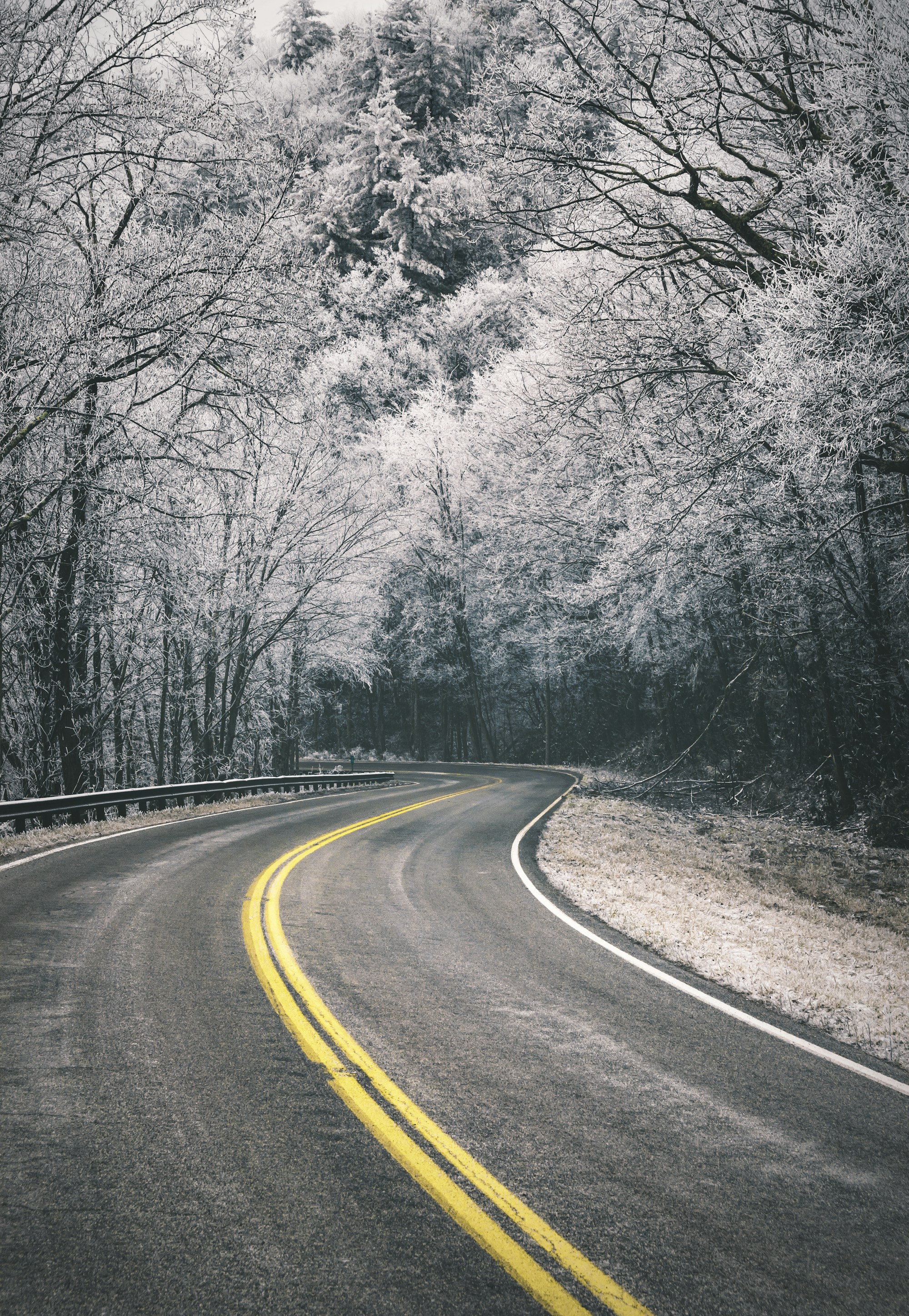
That frosted ridge is Max Patch, over on the North Carolina side of the range, and it’s what the high country can look like on a cold morning while the far valleys stay dark.
Honestly, that gap is the whole story of a winter trip here, and the National Park Service keeps two sets of averages that show it.
In Gatlinburg itself, the low-elevation table, December averages a high of 52°F and a low of 28°F, with about 1.0 inch of snow for the month.
January runs 51 and 28 with 2.3 inches.
February is 54 and 29 with 2.9 inches.
Up at Kuwohi (the peak formerly called Clingmans Dome), the high-elevation table looks like another state.
December averages 37 and 21 with 8 inches of snow.
January drops to 35 and 19 with 18 inches.
February is 35 and 18 with 20 inches.
Park staff are blunt about it.
Temperatures can differ by 10 to 20 degrees between the base and the top.
About half of winter days have highs of 50 degrees or more, and lows of -20°F are possible at high elevations.
In the low elevations, snows of an inch or more happen only one to five times a year, while a storm higher up can drop up to two feet.
Snow is most likely in January and February, according to the park.
So pack for both.
A town day can feel like a light-jacket afternoon, and the overlook an hour later can be well below freezing with wind.
I wouldn’t overpack for that.
I’d bring one warm layer that fits in a daypack instead of a carry-on full of sweaters.
The Winter Magic Lights and the Fantasy of Lights Parade

Gatlinburg’s Winter Magic is the town’s big lights season.
Its own blog puts it at late November to February, with millions of LED lights strung through downtown, so the show stays up well past New Year’s.
It’s the reason a lot of people come in December, and I’ll admit it’s genuinely pretty once the sun goes down.
To be upfront about the photo: that glowing tree isn’t Gatlinburg.
It’s a cone of LED strands at the North Carolina Arboretum in Asheville, over on the North Carolina side of the mountains, where Winter Lights is the big holiday walk.
I couldn’t find a good night shot of Gatlinburg’s own lights to show you, and it’s the same all-LED look.
Parade night is the Fantasy of Lights Christmas Parade, held on the first Friday in December.
For 2026 that’s Friday, December 4, stepping off at 7:30 PM.
It starts at the Baskins Creek Bypass, comes down to Traffic Light #3, then runs along the Parkway to Traffic Light #10.
The town bills it as 50 years of holiday magic and says it carries over 1 million LED Christmas lights.
Heads up: all traffic along the route shuts down that night.
A fun bit of trivia from the town’s sustainability page: Gatlinburg finished converting its Winter Magic lights to all-LED bulbs in 2008, and says that cut electricity costs for the four-month program by 85%.
My practical advice for parade night is to stop thinking about parking near the Parkway.
Park early and walk.
Or ride the town trolley if it’s running your route that evening.
I’ve written about how walkable Gatlinburg is if you want the details.
Turns out the worst part of any big holiday night here is the car, not the crowd.

Your Ultimate Caribbean Adventure Awaits!
Discover hidden coves, secret beaches, and the best rum punches in the islands. Your insider’s guide to Caribbean paradise.
Get Your Guide Now$15.99The Park Roads That Close for Winter, and the Ones That Don’t

Here’s where the cozy winter listicles go wrong.
That road threading up the valley is the kind of drive you get in winter: open most days, weather permitting, with a gate that can close when it ices.
Two of the park’s best-known drives are seasonal.
The NPS lists Kuwohi Road as open April 1 through November 29, and the Roaring Fork Motor Nature Trail as open April 17 through November 29.
Outside those dates, they’re closed.
Gatlinburg’s own winter blog still suggests a snowy drive on the Roaring Fork Motor Nature Trail, so I’d trust the park’s road page over any travel article, including this one, and check it the week you go.
So what stays open all year?
Newfound Gap Road (US 441), Little River Road and the Cades Cove Loop Road, weather permitting, with Cades Cove open sunrise to sunset.
“Weather permitting” is doing real work in that sentence.
Several park roads are subject to closures for snow and ice, and US 441 over the mountain is the one that matters most if you’re crossing to the North Carolina side.
Roaring Fork, when it is open, is one-way and very steep.
Anything longer than 25 feet, from motorhomes to vans, is banned on it, and so are passenger vehicles towing trailers.
Useful for a spring trip, and a pretty good hint of what that road is like with ice on it.
Want a broader list of what to see once the roads open back up?
My guide to the must-see spots in the Great Smoky Mountains covers the seasonal drives too.
Parking Tags: $5 a Day, With One Rental Car Catch

The NPS is careful to say its parking tag is not an entrance fee.
Call it what you like, you need one if you park anywhere in Great Smoky Mountains National Park for more than 15 minutes.
There are three: daily for $5, weekly for $15 and annual for $40.
A stop at Cades Cove, that open field at the edge of the loop, easily runs past 15 minutes on its own, so I’d plan on a tag for any day you spend in the park.
A few rules that trip people up:
- The tag has to be physically displayed in the car.
- America the Beautiful passes don’t count here. They aren’t accepted for the parking tag.
- Each tag is good for one vehicle and has to carry the license plate number of the car it’s displayed in.
- You can buy one up to six months ahead.
That plate rule is the catch for anyone flying in.
If you’ve booked a rental car, you won’t know the plate number until you pick it up, so the NPS says to wait and buy the tag in person at a Parking Tag Machine or in a store.
Not a big deal.
Just don’t stand in line at the rental counter trying to buy one on your phone.
Snowy Trails: What’s Open and How to Hike Them Without Slipping

Snowy-trail shots from the Smokies are real, like that rocky path through a white forest in the park, but most of them come from the high country, and those are the days you have to watch the forecast for.
In town, you might get a couple of good snows a winter.
That’s what the park’s numbers say, anyway.
Also check the trail you want is open at all.
Laurel Falls Trail, a name you’ll see on plenty of first-timer lists, is closed, and the park expects to reopen it sometime in 2027.
Its closures page also says staff are still assessing trail conditions after Hurricane Helene, especially on the eastern end of the park.
Most trails are open, but look before you drive.
Gatlinburg’s winter guide adds the obvious warning that the trails can get icy and that you should wear proper footwear.
I’d go further: a cheap pair of slip-on traction cleats weighs almost nothing in a daypack, and they’re the difference between a nice winter walk and a sore tailbone on a north-facing stretch of packed snow.
Add shoes with real tread and a headlamp, because the light goes early in December.
Pick a short, popular trail on your first icy day.
More people means the path is packed down, and somebody will notice if you’re sitting on it.
Caribbean Paradise Unlocked
From pristine beaches to vibrant local culture, discover the Caribbean’s best-kept secrets with my comprehensive travel guide.
- 120+ Hidden Beach Secrets
- Local Cuisine Guide
- Budget Travel Tips
- Island Hopping Routes
Ober Mountain: The Tram, Snow Tubing and Tennessee’s Only Ski Area

Came for snow and the town doesn’t have any?
Ober Mountain is where you go.
Ober calls itself home to Tennessee’s only ski area in winter, and the park’s numbers tell you why you’d want one: the town itself rarely holds snow for long.
Getting there is half the fun.
The Gatlinburg Tram has run since 1973, and Ober describes a 2.1-mile ride from downtown up to 2,813 feet above sea level.
Gatlinburg’s winter guide calls it a scenic 8-minute ride.
It’s one of the few tourist-heavy things here I’d actually recommend, because the view is the product.
Snow tubing is the big winter draw.
No, that photo isn’t Ober.
It’s Whistler, because nobody has put a decent shot of Ober’s hill on Unsplash, but the drill looks the same: grab a tube, walk up the lane, slide down.
Ober describes its own hill as 350 feet long with a 50-foot drop.
Riders have to be at least 42 inches tall and 6 or older to ride alone, and kids ages 3 to 5 or under 42 inches ride with a ticketed adult.
There’s also Cosmic Tubing at night, with music and lights, in a 6 to 8 PM session and a late-night one after that.
Now the important part.
Ober says tubing has limited slots each day and recommends booking ahead.
Its anticipated winter opening this season is Friday, November 20, and tickets for November and December are already on sale.
If tubing is the point of your trip, I’d book it before you book dinner.
Cozy Cabin Days and What to Do When It Rains

A cabin is half the appeal of a winter trip here, and it’s also where a lot of trips go sideways.
Plenty of rentals sit up steep, winding roads above town, like that house with its driveway pitched down the hill.
Before you book, ask the host how steep the driveway is and whether the road gets plowed or treated.
Then ask what guests do when it ices over.
A cabin you can’t drive out of is a cozy prison.
My take on the cozy part: plan at least one day with nothing on it.
A fire, a pot of chili, the porch if it’s dry.
People come here and try to do the parade, the tram, a hike and Dollywood in a weekend, and they end up seeing the inside of their car.
I’d rather do half of that and actually enjoy the fireplace you’re paying for.
Rainy days happen in winter too.
Great Smoky Arts & Crafts Community runs along a loop the town describes as eight miles long, with galleries of paintings and pottery and carved woodwork.
It’s indoors, it’s local, and frankly it’s a better rainy afternoon than standing in the line for another pancake house.
Thinking about a cabin weekend somewhere else?
My list of cozy cabin trip ideas has more places that do this well.
When to Go, and My One Hot Take
For lights, go from late November through December.
For a real chance at snow in the mountains, the park says January and February.
Want both with fewer people?
I’d aim for a weekday in January, when the lights are still up and the holiday weekends are over.
That’s pretty much the closest thing to an off-season this town has.
And the hot take, since you made it this far: any “hidden gem” list that sends you to Gatlinburg in December is describing a place with a two-hour queue.
That’s fine.
Winter Magic is fun precisely because everyone is out in it.
Just go in knowing it’s a busy mountain town with great lights, not a secret.
Check the NPS road page the week you leave, buy your parking tag once you know your plate, book tubing early, and bring traction for your boots.
Do those four things and the rest of the trip mostly takes care of itself.