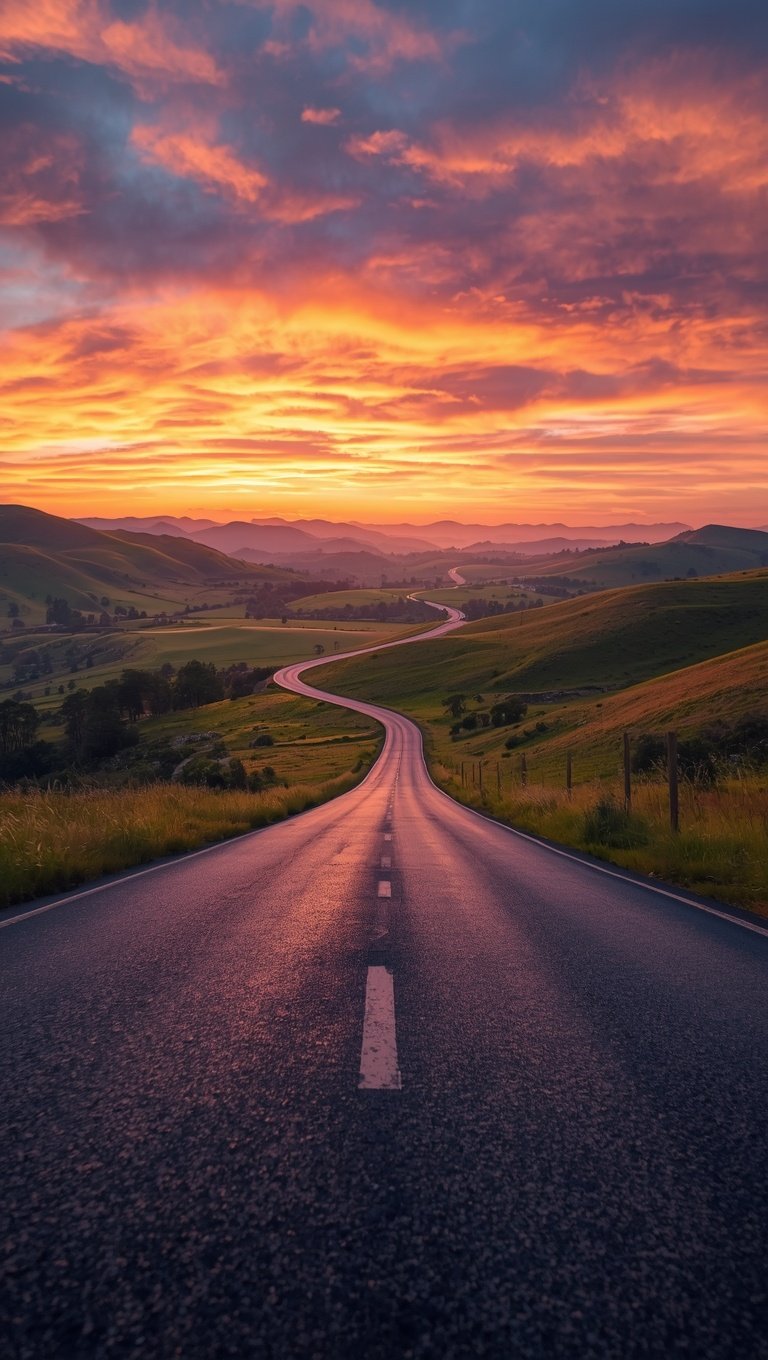

There’s something about driving with the ocean on one side that just resets your whole nervous system.
I don’t know the science behind it.
I just know it works.
The best coastal roads aren’t built for speed, and honestly, that’s the whole point.
You’ve got the switchbacks, the narrow shoulders, the spots where you have to actually slow down whether you want to or not.
And that forced patience is a gift, not an inconvenience.
I always tell people to roll the windows down even if it’s a little cold.
The salt air hitting your face while you’re winding along a cliff is a completely different experience than watching the coast go by through glass.
My personal tip: fill up your tank before you start, because gas stations get sparse and overpriced along these stretches.
And pack a light jacket even in summer, since coastal temps drop fast once you’re near the water.
If I had to pick one type of scenic drive to recommend first to anyone, it’d be this one.
It’s the easiest way to fall in love with the idea of driving for the sake of driving.
Once that clicks, everything else on this list starts making sense.
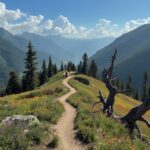
Mountain Passes Where the Switchbacks Become the Whole Point


Mountain driving intimidated me for a long time.
All those hairpin turns looked stressful from a distance.
But once I actually did my first real mountain pass, I realized the switchbacks aren’t an obstacle between you and the good part.
They ARE the good part.
Each turn opens up a slightly different view, like the mountain is revealing itself to you one angle at a time.
I remember pulling my truck over at an overlook halfway up a pass in the Rockies, just standing there for ten minutes doing absolutely nothing.
No photos, no phone.
Just looking.
That kind of quiet doesn’t happen by accident, and it definitely doesn’t happen on a highway.
My hack for mountain passes: check elevation and weather separately from the valley forecast, because conditions up top can be completely different.
I’ve been sunny at the base and driving through fog thirty minutes later.
Also, brake early and often on the way down.
Riding your brakes the whole descent isn’t just uncomfortable, it’s genuinely rough on your car.
If you’re nervous about the driving itself, start with a shorter pass before attempting one of the big, all-day ones.
Build the confidence gradually and the reward gets bigger every time.
Backroads Through Small Towns You’d Never Find on the Interstate

Interstates are designed to bypass towns, not introduce you to them.
That’s efficient, but it’s also kind of a shame.
Some of my favorite memories come from backroads that happen to cut straight through a town’s Main Street.
You slow down for the speed limit change, and suddenly you’re looking at a hardware store that’s been open since before your grandfather was born.
I stopped in a town like that in Ohio once, just because I needed coffee.
Ended up talking to the shop owner for twenty minutes about the history of the building.
Never would’ve happened on the highway.
These towns aren’t trying to impress anyone, and that’s exactly why they do.
There’s a kind of honesty in a place that isn’t performing for tourists.
My tip here: keep some cash on you, because a lot of these small-town spots are old-school and don’t always take cards.
And don’t rush through even if there’s “nothing to see.”
Sometimes the whole point is a five-minute walk around a courthouse square.
I love these drives for the same reason I love a good diner: unpretentious, a little worn in, and better than the flashy version every time.
Desert Routes That Teach You to Love the Empty Miles
Desert driving is not for everyone, I’ll be honest.

It’s long, it’s quiet, and for a lot of people it looks like a whole lot of nothing.
But that emptiness does something to your head after a while.
The first hour, you’re checking your phone.
By hour three, you’re just watching the horizon shift color as the sun moves.
I drove through a stretch of Utah desert a couple summers ago and went almost ninety minutes without seeing another car.
It was unsettling at first, then oddly peaceful.
There’s a stillness out there that you can’t fake anywhere else.
My honest advice: bring more water than you think you need, and I mean way more.
Desert routes are gorgeous but unforgiving if something goes wrong with your car or your body.
Fill your tank whenever you see a station, even if you’re not close to empty, because the next one might be further than the map suggests.
And time your drive around sunrise or sunset if you can.
Midday desert light is flat and harsh, but that golden hour glow on red rock is a whole different world.
It’s my personal favorite kind of scenic drive precisely because it asks something of you first.

🗼 I Wrote a Book About My Japan Travel Catastrophes!
Before I landed in Tokyo, I thought I was the “Final Boss” of international travel. Spoiler alert: I WASN’T. 😅
🚅 I boarded the wrong Shinkansen and ended up in THE WRONG CITY. I confused locals with my “expert” bowing that was more awkward than accurate. I accidentally stumbled into a high-stakes Kendo practice thinking it was a tourist show. Sound like something you’d do?
“Things I Wish I Knew Before Going to Japan” is your shortcut to avoiding ALL my cringe-worthy mistakes. ✨ Inside, you’ll find practical, LIFE-SAVING tips on etiquette, transport, money, and hidden gems that will save you time, money, and a whole lot of confusion.
Forest Drives Where the Canopy Feels Like a Green Tunnel

There’s a particular kind of quiet that happens when trees close in over the road.
The light gets filtered and soft.
Sound gets muffled, almost like the forest is holding its breath.
I took a forest route through the Pacific Northwest last fall and had to pull over just to stand under the canopy for a minute.
It smelled like rain and pine and something I can’t quite describe.
Cozy isn’t usually a word you’d use for a drive, but that’s genuinely what it felt like.
Wrapped up, protected, a little bit magical.
These roads tend to be narrower and windier than you expect, so they’re not the ones to rush.
My tip: go slow enough to actually notice the light changing through the leaves.
Fall is the obvious pick for color, but don’t sleep on early spring either, when everything is that bright new green.
Bring a flannel even if it’s warm out, since the shade under heavy canopy runs colder than the open road.
If you’re someone who finds comfort in small, enclosed spaces, this type of drive might end up being your favorite of all of them.
It certainly became one of mine.
Sunset Timing: Why I Plan My Longer Routes Around Golden Hour

I didn’t used to think about lighting when I planned a drive.
Now it’s basically the first thing I consider.
The same road can look completely ordinary at noon and absolutely stunning an hour before sunset.
Golden hour softens everything, warms up the colors, and throws long shadows that make even flat landscapes feel dramatic.
I’ve rearranged entire trip schedules just to hit a particular overlook during that window.
Worth it every time.
My approach is simple: I check sunset time for the area, then work backward to figure out when I need to leave.
I build in extra buffer too, because road stops and detours always eat more time than planned.
If you only get one shot at timing a drive right, aim for the last hour of daylight.
That’s when a good scenic route turns into an unforgettable one.
And if you can, pick a stretch that faces west, so you’re driving straight into that color instead of watching it in your mirror.
It’s a small planning trick, but it makes a bigger difference than almost anything else on this list.
The Best Pit Stops Along the Way (Diners, Overlooks, Roadside Stands)

A scenic drive lives or dies by its stops, honestly.
You could have the prettiest road in the country, but if you never pull over, you’re just watching it through a windshield.
I make it a rule to stop at anything that looks even a little bit interesting.
A weird roadside fruit stand.
An overlook with three cars already parked there.
A diner with a hand-painted sign.
Some of my best travel stories came from stops I almost skipped.
There was this tiny stand in rural Georgia selling boiled peanuts out of a cooler, and I still think about that snack.
My hack: build extra time into your schedule specifically for unplanned stops, not just the ones you researched ahead of time.
The unplanned ones are usually the best ones anyway.
And don’t be afraid to ask locals at a gas station where they’d stop if they had the afternoon free.
People love sharing that kind of thing, and you’ll get recommendations no app would ever surface.
Packing for a Long Scenic Drive: What I Never Leave Home Without

Packing right makes the difference between a drive that feels like an adventure and one that feels like a chore.
I keep a small bag in my truck at all times now, just for these trips.
A physical paper map, because cell service disappears more often than you’d think.
A phone charger and a backup battery pack.
Snacks that aren’t going to melt or crumble everywhere.
A reusable water bottle I can refill.
And a light blanket, because I’ve gotten cold at random overlooks more times than I can count.
My personal tip: pack a small trash bag too, so your car doesn’t turn into a disaster zone by hour four.
Sounds unglamorous, but future-you will be grateful.
I also always bring a real camera, not just my phone, because something about a scenic drive makes me want to slow down and actually compose a shot instead of snapping and moving on.
Doesn’t need to be fancy.
Just something that makes you pause a little longer at each view.
Music and Podcasts That Match the Mood of a Long Drive

The right soundtrack changes everything about a long drive.
I’ve got different playlists depending on the type of road I’m on.
Coastal drives get something mellow, a little nostalgic.
Mountain passes get instrumental stuff, nothing with lyrics competing for my attention on the tight turns.
Desert roads get the widest, most spacious music I own, because the landscape deserves it.
I’m kind of obsessed with matching the mood of the music to the mood of the road, and once you start doing it, you can’t really go back.
A great scenic drive with the wrong music playing just feels off somehow.
My hack: download everything ahead of time instead of streaming, since you’ll lose signal in the exact places with the best views.
Nothing worse than a buffering song right as you round a perfect curve.
And every once in a while, turn it all off completely and just drive in silence.
It sounds strange, but the quiet has its own kind of soundtrack once you let yourself notice it.
Driving With Someone vs Driving Solo: Two Very Different Kinds of Magic

Solo drives and drives with someone else scratch two completely different itches.
Alone, I get in my own head in the best way.
I think through things I’ve been avoiding, I sing badly with no judgment, I stop wherever I want without checking with anyone.
There’s a freedom in that, a little bit of therapy built into the miles.
But driving with someone I care about is its own kind of good.
Conversation flows differently in a car than anywhere else, probably because you’re both facing forward instead of at each other.
Some of the most honest talks I’ve had with my brother happened on long drives, not over dinner, not on the phone.
Something about the road makes people open up.
My tip if you’re driving with someone: let silence happen sometimes.
Not every mile needs to be filled with talking.
And if you’re solo, don’t treat it like a lonely thing.
Treat it like time that’s fully, unapologetically yours.
🗼 I Wrote a Book About My Japan Travel Catastrophes!
Before I landed in Tokyo, I thought I was the “Final Boss” of international travel. Spoiler alert: I WASN’T. 😅
🚅 I boarded the wrong Shinkansen and ended up in THE WRONG CITY. I confused locals with my “expert” bowing that was more awkward than accurate. I accidentally stumbled into a high-stakes Kendo practice thinking it was a tourist show. Sound like something you’d do?
“Things I Wish I Knew Before Going to Japan” is your shortcut to avoiding ALL my cringe-worthy mistakes. ✨ Inside, you’ll find practical, LIFE-SAVING tips on etiquette, transport, money, and hidden gems that will save you time, money, and a whole lot of confusion.
Seasonal Scenic Drives: How Fall, Winter, Spring, and Summer Change Everything

The same exact road can feel like four completely different drives depending on the season.
Fall gets all the attention, and fair enough, that color show is hard to beat.
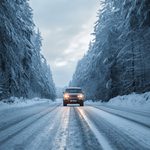
But winter drives have this stark, quiet beauty that fall can’t touch, especially with a little snow dusting the trees.
Spring brings that bright, almost electric green everywhere, plus wildflowers if you time it right.
And summer gives you the longest daylight window, which means more time to actually explore before you lose the light.
I used to only think about scenic drives as a fall activity.
Now I plan at least one every season, because each one hits differently.
My tip: research which season actually suits a specific route best, since not every road peaks in autumn.
Some coastal drives are honestly better in winter when the crowds thin out and the light gets that moody, dramatic quality.
Don’t let one great fall photo convince you that’s the only time worth going.
Common Mistakes I Made on My First Long Scenic Drives

I’ve made just about every rookie mistake there is on these drives.
Left too late in the day and lost the light I was chasing.
Didn’t check gas until the needle was uncomfortably low in an area with zero stations.
Packed snacks that melted into a mess by hour two.
Rushed through a town because I was worried about “making good time,” which, again, was never really the point.
Underestimated how tiring winding roads are, and pushed through fatigue instead of just pulling over for fifteen minutes.
That one especially, learn from my mistake there.
A short break resets you way more than pushing through ever will.
I also used to over-plan every single stop, which killed the spontaneity that makes these drives special in the first place.
Now I plan the big anchors, maybe two or three must-see spots, and leave the rest open.
That balance took me a while to find, but it’s made every drive since so much better.
How I Decide When a Longer Route Is Actually Worth It

Not every longer route is automatically worth the extra time, and I think that’s an important thing to say.
I ask myself a few questions before choosing the scenic option over the fast one.
Do I actually have the time today, or am I going to be stressed the whole drive checking the clock.
Is the weather going to cooperate, since fog or heavy rain can ruin a view-dependent route.
Am I doing this drive for the destination or for the drive itself, because that changes everything about how I should choose.
If I’m rushing to something important, I take the fast way, no shame in that.
But if I’ve got the time and the mindset for it, I take the long way almost every time now.
That shift, more than any specific road, is honestly the biggest travel lesson I’ve picked up over the years.
The destination will still be there either way.
The drive won’t wait for you twice.