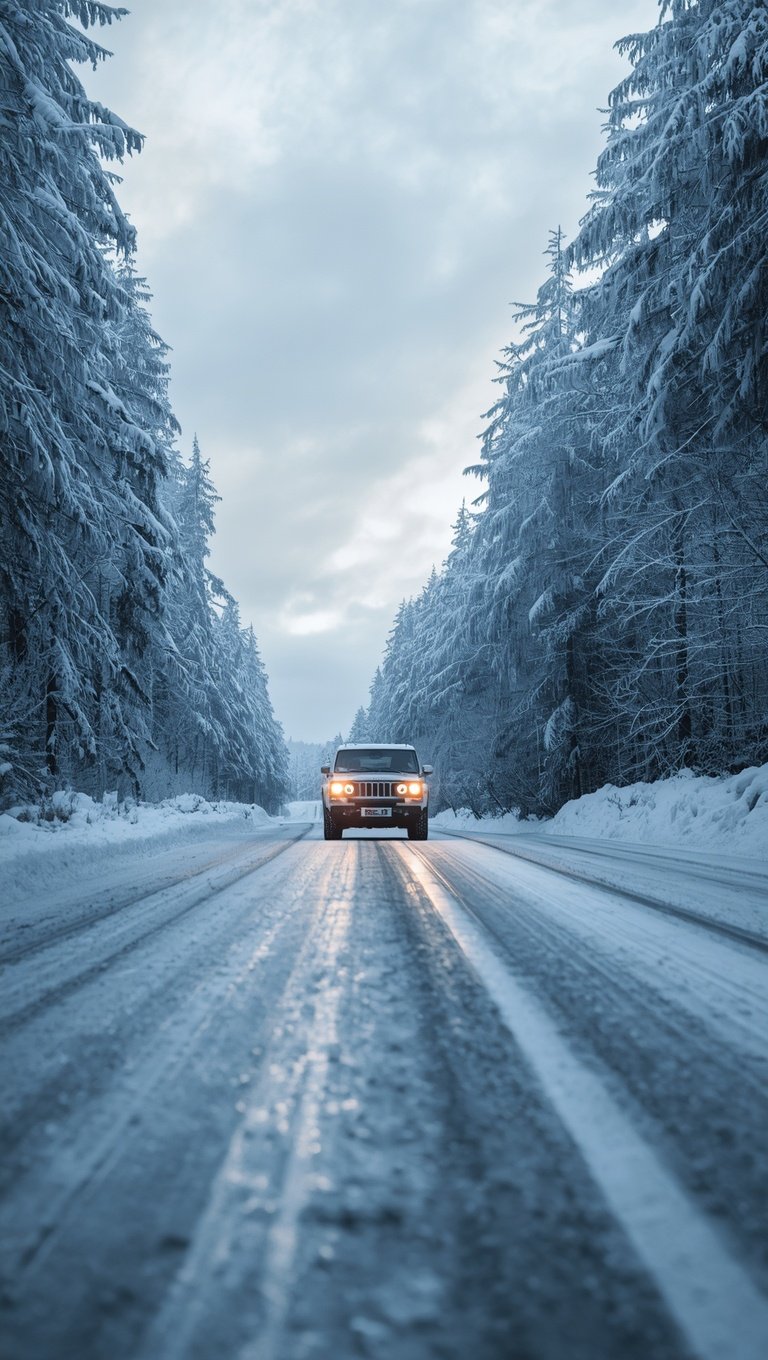

There’s a specific kind of quiet that hits you when your car stops moving on a snowy backroad and the engine won’t turn over.
I know that quiet.
It happened to me outside a tiny town in Colorado, temperature dropping fast, cell signal down to one flickering bar.
That night taught me more about winter driving than any manual ever could.
So I started building a system, gear I trust, habits I don’t skip, the whole thing.
And I’m handing it to you exactly the way I wish someone had handed it to me.
Not a checklist you’ll forget in a drawer.
A real setup, built from a real scare.
Tires Are Not The Place To Save Money
I used to think tires were just tires.

Then I drove through a snowstorm on all-season treads and felt my back end slide sideways on a curve.
That feeling never leaves you.
Winter tires are built with a softer rubber compound that stays flexible in freezing temps, so they actually grip instead of skating.
All-seasons harden up in the cold and basically turn into hockey pucks.
I switch mine every November now, no exceptions.
If a full tire swap isn’t in the budget this year, a solid set of tire chains lives in my trunk as backup.
They’re not glamorous.
But they’ve pulled me out of two situations I genuinely thought I’d be spending the night in.
My tip: practice putting the chains on in your driveway before you ever need them in the dark.
Doing it for the first time on the side of a highway, hands numb, headlights blinding you, is a special kind of misery.
Trust me on this one.
A five minute driveway trial run saves you so much stress later.
And honestly, once you’ve felt what real winter traction feels like, you’ll wonder how you ever drove without it.
The Emergency Kit That Lives In My Trunk Year Round

I resisted building an emergency kit for years because it felt like overkill.
Then I needed one and had nothing.
Now mine never comes out of the car, even in summer, because winter storms don’t always wait for winter.
Inside it: a wool blanket, a headlamp, extra batteries, a multi-tool, road flares, and a small folding shovel.
I also keep a whistle in there, which sounds dramatic until you’re the one trying to get a stranger’s attention in blowing snow.
The blanket alone has saved me twice, once during that Colorado breakdown and once just waiting on a tow truck in a gas station lot.
Wool over fleece, always, because it still holds warmth even if it gets a little damp.
I like keeping everything in one duffel instead of scattered loose items rolling around the trunk.
Makes it easy to grab in a hurry and easy to check before a trip.
My honest opinion.
This kit is the cheapest peace of mind you’ll ever buy for a road trip.
Optional add, a small tarp or ground cover if you need to kneel down and deal with tires or chains in slush.
Your knees will thank you.

Your Ultimate Caribbean Adventure Awaits!
Discover hidden coves, secret beaches, and the best rum punches in the islands. Your insider’s guide to Caribbean paradise.
Get Your Guide Now$15.99Keep Your Battery Honest Before You Leave

Cold weather is brutal on car batteries, way more than most people realize.
A battery that seemed totally fine in October can die without warning once temps drop into the teens.
I learned this the hard way outside a diner in Wyoming, turning the key and hearing nothing but a sad little click.
Now I get my battery tested every fall before any long drive, no exceptions, it takes ten minutes at most auto shops.
I also keep a portable jump starter pack in the glovebox, the kind that doesn’t need another car to help you.
It’s small, it charges off a USB port, and it has saved a stranger’s day more than once, not just mine.
If your battery is already three or four years old, honestly just plan on replacing it before winter hits.
It’s cheaper than a tow truck at 2am, I promise you that.
Little hack I use, keep the battery terminals clean and free of corrosion, since buildup there can mimic a dead battery even when it isn’t.
A wire brush and five minutes does the trick.
I do this every single year now and it’s become one of those small rituals that makes me feel like I actually have my life together, at least for one afternoon.
Visibility Is Everything When The Roads Turn White

Nothing rattles me faster than driving through snow with wipers that can’t keep up.
I replace mine every fall now, without waiting for them to fail first.
Winter-specific wiper blades have a rubber boot over the metal frame so they don’t ice up and skip across the glass.
Regular blades freeze solid and basically become useless right when you need them most.
I also top off my washer fluid with a winter-rated formula, the kind rated well below freezing, because regular fluid can actually freeze on your windshield.
Learned that one the hard way, watching my own washer fluid turn to a thin sheet of ice mid-drive.
Not fun.
Headlights matter too, so I clean mine before every long trip since road grime and salt film can dim them more than you’d expect.
My personal habit, I keep a small microfiber cloth in the door pocket just for headlights and mirrors.
Takes thirty seconds and makes a real difference once the sun goes down and everything turns to grey static outside the windshield.
Small thing, big payoff.
Dress Like You Might Actually Be Stuck

I used to drive in whatever I was wearing that day, cute boots, thin jacket, the whole thing.
Then I sat in a dead car for ninety minutes in near-freezing temps and realized how unprepared I was.
Now I keep a full change of warm layers in the car, not just a jacket, an actual base layer, wool socks, and real snow boots.
Cotton is the enemy here, it holds moisture and makes you colder, so I stick to wool or synthetic blends for anything that touches skin.
I also throw an extra pair of gloves in the glovebox because the ones on your hands always seem to get wet first.
My honest hack, keep a spare hat too, since so much body heat escapes through your head and it’s the first thing people forget.
If I’m heading somewhere remote, I’ll toss in actual snow pants, even if I feel a little ridiculous packing them.
Better ridiculous than freezing.
There’s something about being dressed for the worst case that actually makes the whole drive feel calmer.
You stop white-knuckling the wheel because you know, even if something goes wrong, you’re not in danger from the cold itself.
That mental shift is worth more than people give it credit for.
Caribbean Paradise Unlocked
From pristine beaches to vibrant local culture, discover the Caribbean’s best-kept secrets with my comprehensive travel guide.
- 120+ Hidden Beach Secrets
- Local Cuisine Guide
- Budget Travel Tips
- Island Hopping Routes
Food and Water, Because Waiting Games Happen

Getting stuck in snow, even for an hour, hits different when you’re hungry and thirsty.
I keep a small cooler bag with protein bars, nuts, and a few bottles of water in the trunk on any winter drive.
Nothing fancy, just enough to hold me over if a road closes or traffic backs up for hours behind an accident.
I’ve sat through both.
Water matters more than people think, since dehydration actually makes you feel colder and more fatigued.
My tip, freeze a couple bottles partway before a trip so they don’t burst in freezing trunk temps, and they’ll slowly thaw if you need them.
I also keep a small backpacking stove and instant coffee packets in my bag for longer trips, mostly because a warm drink does wonders for morale when you’re stuck somewhere cold.
It’s a small comfort, but it matters more than you’d expect.
Optional variation, pack shelf-stable soup cups if you have any way to heat water, since something warm in your stomach changes your whole mood in a stalled-out situation.
I’ve handed these out to other stranded drivers too, and watching someone’s shoulders drop with relief over a cup of instant soup is honestly one of my favorite road trip memories.
Power For Your Phone Is Non-Negotiable

Your phone becomes your lifeline the second something goes wrong out there.
I carry two portable battery packs now, fully charged before I ever leave the driveway.
One lives in the glovebox, one stays in my bag, because I learned not to trust myself to remember just one spot.
Cold weather drains phone batteries faster than you’d expect, sometimes cutting your usable charge in half.
I keep my phone in an inside jacket pocket when I’m outside the car for this reason, body heat helps it hold a charge longer.
I also download offline maps before any winter trip, since signal dies fast in mountain passes and rural stretches.
That one habit alone has saved me from a wrong turn onto an unplowed forest road, which is an experience I do not recommend.
My tip, screenshot your route and any confirmation numbers too, hotel bookings, roadside assistance numbers, anything you might need without signal.
It sounds excessive until you’re the one standing on a shoulder with zero bars, wishing you’d done exactly this.
A charged phone with offline info is honestly worth more out there than most people realize until they need it.
The Shovel And Scraper Combo I Actually Use

A flimsy plastic scraper from a gas station is not going to save you.
I keep a real ice scraper with a solid brush attachment, the kind with a long handle so you can actually reach across a windshield without contorting yourself.
I also carry a small folding shovel, compact enough to fit in the trunk without taking up much space.
Snow builds up around tires fast, especially after you’ve been parked somewhere for a while, and digging it out by hand is miserable and slow.
My honest tip, keep a bag of sand or cat litter in the trunk too, since pouring it under a stuck tire gives you traction when you’re spinning in place on ice.
I’ve used this trick more times than I’d like to admit, usually in a parking lot at some ungodly hour.
There’s something satisfying about having exactly the right tool ready to go instead of scrambling and improvising with whatever’s nearby.
It changes your whole mindset from panic to just handling it.
Optional variation, some people swear by traction mats instead of sand, and honestly both work, it just comes down to what fits your trunk space and your budget.
Either way, having something is what matters most here.
Your Ultimate Caribbean Adventure Awaits!
Discover hidden coves, secret beaches, and the best rum punches in the islands. Your insider’s guide to Caribbean paradise.
Get Your Guide Now$15.99First Aid Kept Simple But Real

I’m not talking about a tiny kit with two bandages and a packet of aspirin.
Mine has actual gauze, antiseptic wipes, medical tape, a thermal blanket, and basic pain relievers.
I added hand warmers to mine too, the kind you crack and shake, since they’re small, cheap, and genuinely useful for more than just cold hands.
I’ve used them tucked into boots during a long wait on a closed highway, and it made a real difference.
My honest take, a first aid kit feels unnecessary until the one time it isn’t, and that one time is not worth gambling on.
I check mine every fall, replace anything expired, restock what’s low.
Takes fifteen minutes and it’s become part of my whole pre-winter routine now, right alongside checking my tires and battery.
Small tip, keep a printed list of any medications you or your passengers take regularly, tucked inside the kit.
In an emergency, that little detail can matter more than people expect, especially if you’re not the one able to explain it yourself.
It’s a quiet kind of preparation, the stuff you hope you never need but feel so much calmer having anyway.
Check The Road Before You Trust It

I used to just plug in a destination and go, no second thought.
Now I check road conditions the morning of any winter drive, every single time.
State transportation websites and local weather alerts have saved me from driving straight into closures more than once.
I also call ahead to my destination if it’s remote, just to ask locals how the roads have actually been that week, since apps don’t always catch fast-moving storms.
My tip, build in extra time, way more than you think you need, because winter driving is slower and conditions change without warning.
I plan for at least double my normal drive time on anything through mountain or rural terrain.
It feels excessive until a sudden squall drops visibility to nothing and you’re grateful you’re not racing a clock.
I also pick a backup route ahead of time, just in case the main road closes mid-trip.
Having that mental map ready keeps panic from creeping in if plans change last minute.
This one habit, more than almost any piece of gear, has kept me out of the worst situations I’ve heard about from other drivers.
Let Someone Know Where You’re Headed

This one isn’t gear, but it might be the most important thing on this whole list.
I tell someone my route and expected arrival time before every winter trip, no matter how short the drive feels.
A quick text, an actual phone call, whatever works, just so someone knows where to start looking if things go sideways.
After my Colorado breakdown, this became non-negotiable for me.
Nobody knew where I was that night, and the hours waiting for a tow felt so much longer because of it.
Now I share my location through my phone with someone I trust, along with a rough itinerary if the trip spans multiple days.
My honest opinion, this costs you nothing and takes thirty seconds, yet it’s the one habit most people skip entirely.
I also set a check-in time, a simple text once I’ve arrived, so if that message never comes, someone already has enough information to act.
It’s such a small thing.
But it’s the difference between someone realizing something’s wrong in an hour versus a full day.
I think about that a lot.
Caribbean Paradise Unlocked
From pristine beaches to vibrant local culture, discover the Caribbean’s best-kept secrets with my comprehensive travel guide.
- 120+ Hidden Beach Secrets
- Local Cuisine Guide
- Budget Travel Tips
- Island Hopping Routes
The One Habit That Changed Everything For Me

After that night in Colorado, I started doing a full walk-around of my car before any winter trip, every time, no shortcuts.
Tires, lights, fluid levels, wipers, trunk contents, all of it, takes maybe ten minutes total.
It became this quiet little ritual, almost calming actually, standing in the cold checking everything by hand instead of just trusting it’ll be fine.
I bring my coffee out with me while I do it now, which probably says something about how normal this has become for me.
My honest take, most winter breakdowns come from small things people meant to check and just didn’t get around to.
A loose cap, low tread, a dim headlight, nothing dramatic, just overlooked.
This walk-around habit catches almost all of it before you’re ever on the road.
I’ve caught a nearly bald tire this way, a cracked wiper blade, even a trunk light left on that had been slowly draining my battery for days.
My tip for you, tie this habit to something you already do, like your morning coffee or loading the car, so it actually sticks instead of becoming one more thing you mean to do and forget.
It’s such a small shift.
But it’s genuinely changed how safe I feel every time I pull out of the driveway into winter roads.