Most people land in Rome or Florence and call it Italy.
And look — those places are incredible.
But northern Italy operates on a completely different frequency.
It’s slower.
It’s cooler, literally, with mountain air that smells like pine and rainfall even in summer.
The food changes every thirty minutes you drive.
You’ll go from risotto country to dumpling territory before you’ve even finished your espresso.
When I first crossed from Milan into the Lombardy countryside, I genuinely pulled my car over just to stand there and take it in.
It didn’t feel like the Italy I’d seen in movies.
It felt older, quieter, and somehow more real.
If you’ve been telling yourself that Italy is overcrowded and overhyped, I get it.
But you haven’t seen this part yet.
Lake Orta: The Lake District’s Best Kept Secret

Everyone talks about Lake Como.
And yes, Lake Como is stunning — I’m not going to lie to you.
But Lake Orta?
Lake Orta is what Como looked like before the influencers found it.
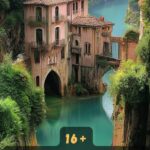
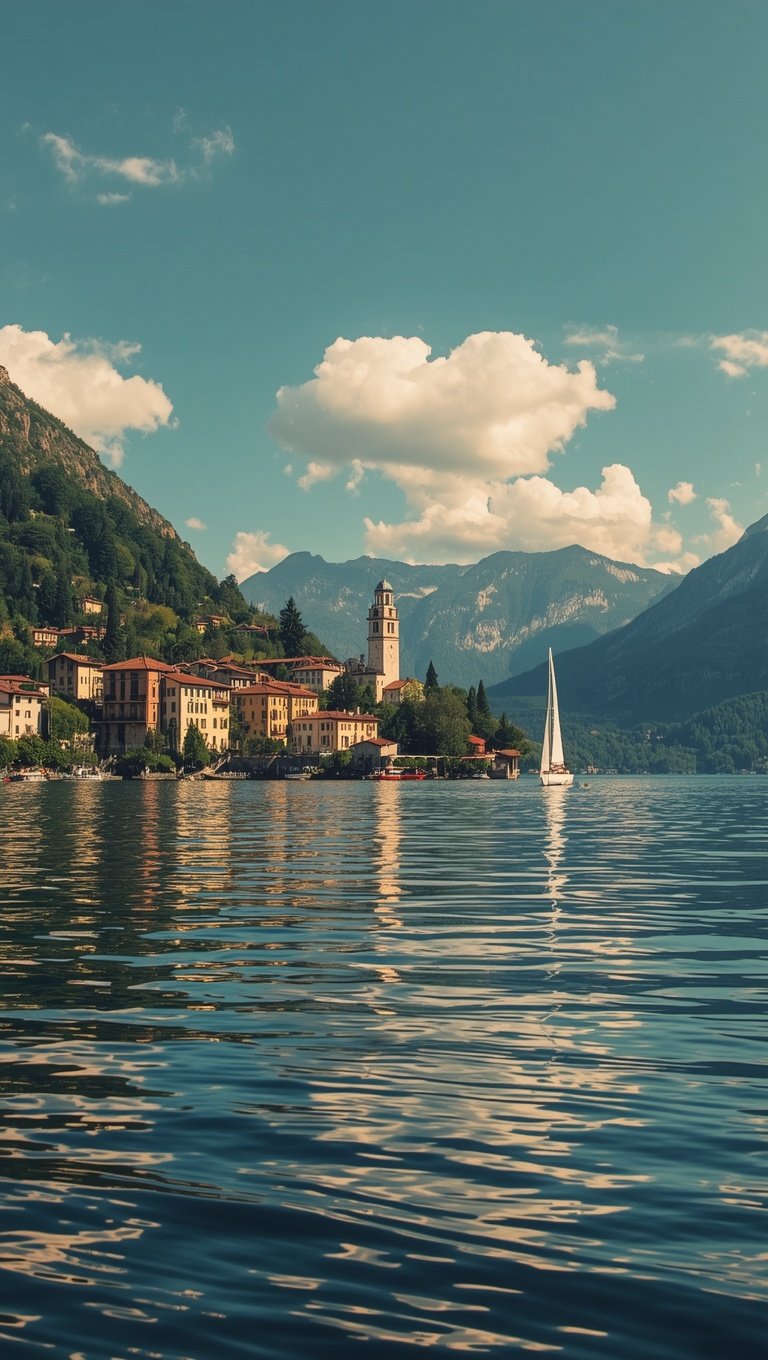
It’s smaller, more intimate, and the village of Orta San Giulio wraps around its edge like something out of a storybook.
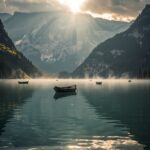
There’s a tiny island in the middle — Isola di San Giulio — that you can reach by rowing boat.
I sat on that boat in near-total silence and genuinely forgot what month it was.
The streets in the village are so narrow that cars can’t fit through most of them.
Which means it’s just you, cobblestones, geranium-covered balconies, and the sound of your own footsteps.
If I could go back to one place in all of northern Italy, it would be here.
Arrive early morning before the day-trippers show up.
Grab a coffee at one of the lakeside cafés and just… sit.
You’ll understand within twenty minutes why I’m still thinking about it.
The Dolomites: Mountains That Don’t Feel Real

I’m going to be honest with you — I wasn’t a mountain person before the Dolomites.
Now I’m not sure I can go back to regular mountains.
These peaks are jagged and pale and almost pink at sunset, rising out of green meadows in a way that makes your brain short-circuit a little.
The Val Gardena valley is where I’d recommend starting.
It sits right in the heart of the Dolomites and has this perfect mix of hiking trails, alpine huts, and villages that look like they were carved by someone who really loved their job.
The huts — called rifugios — are everything.
You hike up a trail for an hour or two, and then you find a wooden cabin perched on a cliff serving fresh pasta and local wine.
I’m not kidding.
Pasta.
On a mountain.
With a view.
If you’re not a hardcore hiker, don’t worry.
Many of the valleys are accessible by cable car, and there are gentle meadow walks that even I — a guy who packed way too many books for this trip — could handle comfortably.
Bergamo Alta: The Hilltop City Nobody Mentions

Bergamo is about an hour east of Milan.
Most people fly through its airport and never actually visit the city itself.
That is a genuine tragedy.
The lower city is fine — modern, functional, busy.
But take the funicular up to Bergamo Alta, the upper old town, and you step into a completely different century.
The walls around the city are UNESCO-listed Venetian fortifications and they’re massive, beautiful, and largely empty of tourists.
Inside the walls, there are piazzas, medieval towers, churches with frescoes that aren’t roped off or charging admission.
You can just walk in and look up.
When I tackled this city on a foggy Tuesday morning last spring, I had an entire piazza to myself for almost an hour.
Just me, some pigeons, and one very old man reading a newspaper.
Eat the polenta and casoncelli pasta here — they’re local specialties and they will absolutely ruin you for lesser pasta forever.
Stay in the upper city if you can.
Waking up inside those walls is worth every extra euro.
🗼 I Wrote a Book About My Japan Travel Catastrophes!
Before I landed in Tokyo, I thought I was the “Final Boss” of international travel. Spoiler alert: I WASN’T. 😅
🚅 I boarded the wrong Shinkansen and ended up in THE WRONG CITY. I confused locals with my “expert” bowing that was more awkward than accurate. I accidentally stumbled into a high-stakes Kendo practice thinking it was a tourist show. Sound like something you’d do?
“Things I Wish I Knew Before Going to Japan” is your shortcut to avoiding ALL my cringe-worthy mistakes. ✨ Inside, you’ll find practical, LIFE-SAVING tips on etiquette, transport, money, and hidden gems that will save you time, money, and a whole lot of confusion.
The Franciacorta Wine Region: Italy’s Champagne Answer

Most people don’t know that Italy makes sparkling wine that rivals French Champagne.
The locals in Franciacorta know.
And they’d like to keep it that way, I think.
This wine region sits just south of Lake Iseo — another underrated lake, by the way — and it’s all rolling hills, vineyard estates, and absolutely nobody pushing you through a tour on a schedule.
I showed up at a small family winery with basically no plan and ended up spending three hours tasting wine in someone’s actual living room.
The Franciacorta DOCG sparkling wines are made using the same method as Champagne — second fermentation in the bottle — and the results are genuinely world-class.
Crisp, toasty, with tiny perfect bubbles.
If you’re a wine person, carve out a full day for this region.
If you’re not really a wine person, come anyway.
The landscape alone is worth it.
And you might become a wine person by accident, which is sort of the best way.
Lake Iseo and the Island of Monte Isola

Right, so about Lake Iseo.
It’s the fourth largest lake in Italy and has somehow avoided the tourist surge that hit Como and Garda.
And sitting right in the middle of it is Monte Isola — a lake island so large it has villages, olive groves, and its own little internal roads.
No cars are allowed on the island except for residents.
Which makes wandering it on foot or bicycle one of the most peaceful things I’ve done anywhere in the world.
I rented a bike at the ferry landing and rode the perimeter path with the lake on one side and terraced hillsides on the other.
The fishing nets still hang outside some of the old houses.
The boats bob at little wooden docks.
It feels genuinely untouched in a way that’s increasingly hard to find in Europe.
Grab the local sardine dish — missoltino — if you see it on a menu.
Dried lake fish, served with polenta.
I know that sounds like a gamble, but trust me on this one.
Valchiavenna: The Alpine Valley That Feeds You Ridiculously Well

Valchiavenna is the kind of place that doesn’t make it onto lists.
It’s a narrow valley that runs north of Lake Como toward the Swiss border, and it’s honestly stunning in that understated, take-your-breath-away way.
But here’s the thing I didn’t expect — the food is extraordinary.
The local specialty is bresaola, air-dried beef that’s been a tradition in this valley for centuries.
You can visit crotti — these ancient stone caves built into the rockface that stay naturally cool and have been used for centuries to cure meats and store wine.
Some of them are now restaurants.
Yes, you can eat inside a cave.
A very stylish, very delicious cave.
I had a plate of bresaola with arugula and parmesan in one of these crotti, and I’m pretty sure it was the best thing I ate in all of Italy.
The valley is also easy hiking territory — the kind where the trail follows a river and you don’t need special gear.
Just solid shoes and a willingness to get slightly lost.
Mantua: A Renaissance City Sitting in a Swamp

Mantua — or Mantova — is one of those places where you arrive and immediately feel like you’ve stumbled onto a secret.
It sits on three artificial lakes, surrounded by water on most sides, and on a grey morning it has this moody, almost mysterious atmosphere.
The Gonzaga family ruled here for centuries and they had absolutely unhinged levels of taste.
The Ducal Palace complex is enormous — one of the largest in Europe — and you can wander it for hours.
The Palazzo Te on the edge of the city has frescoes that are legitimately disorienting in scale and detail.
I stood in the Room of the Giants — a room where every inch of wall and ceiling is painted with falling giants — and felt a very specific kind of dizzy.
The city also has one of the best street food snacks in northern Italy: tortelli di zucca, little pumpkin-filled pasta parcels with a hint of mustard fruit.
They sell them at little shops all over the center.
Buy a box and eat them walking.
Nobody will judge you.
The Langhe Hills: Truffles, Barolo & Quiet Roads

Technically in Piedmont, which is very much northern Italy.
And the Langhe hills might be the most quietly sophisticated corner of the entire country.
This is Barolo country — big, tannic, serious red wine that people age for decades.
And in autumn, it’s also white truffle country, centered around the town of Alba.
I went in the shoulder season — not quite truffle time, but the harvest was beginning — and the whole region smelled like earth and leaves and something faintly animal that I’m going to call expensive.
The villages here — Barolo, La Morra, Barbaresco — are tiny and beautiful and covered in fog in the morning.
Driving through the hills with the window down and no particular destination is genuinely one of life’s great pleasures.
If you can arrange a private tasting at a small producer — not a big name, just a family winery — do it.
They’re usually happy to show you around if you call ahead.
And the wines cost a fraction of what they would anywhere else.
Varenna on Lake Como: The Village That’s Worth Fighting the Crowds For

Okay, I said we were going beyond the obvious.
But Varenna on Lake Como is the exception I’ll always make.
Because while the lake itself gets crowded, Varenna stays slightly quieter than Bellagio across the water.
It’s all steep stone stairways, yellow and orange houses stacked against the cliff, and a tiny harbor with fishing boats.
The Passeggiata degli Innamorati — the Walk of the Lovers — is a narrow lakeside path that hugs the water between two villages.
I walked it at dusk with the Alps reflected perfectly in the water and honestly, it was almost too beautiful.
The kind of beautiful that makes you feel slightly dramatic and you just have to roll with it.
Stay in a lakeside hotel if your budget allows even one night.
The morning light on the lake at 7am, before the ferries start running — there’s nothing like it.
🗼 I Wrote a Book About My Japan Travel Catastrophes!
Before I landed in Tokyo, I thought I was the “Final Boss” of international travel. Spoiler alert: I WASN’T. 😅
🚅 I boarded the wrong Shinkansen and ended up in THE WRONG CITY. I confused locals with my “expert” bowing that was more awkward than accurate. I accidentally stumbled into a high-stakes Kendo practice thinking it was a tourist show. Sound like something you’d do?
“Things I Wish I Knew Before Going to Japan” is your shortcut to avoiding ALL my cringe-worthy mistakes. ✨ Inside, you’ll find practical, LIFE-SAVING tips on etiquette, transport, money, and hidden gems that will save you time, money, and a whole lot of confusion.
Practical Things I Learned the Hard Way

Northern Italy rewards slow travel.
Don’t try to hit five lakes in three days — you’ll exhaust yourself and miss the whole point.
Trains are good for city-to-city, but the real magic of this region is in the smaller roads.
The GPS will take you through passes and valleys you’d never find any other way.
Book accommodations in the smaller towns early — inventory is genuinely limited.
And those limited options often mean family-run guesthouses that are infinitely better than any chain hotel.
Bring layers.
The weather in the north shifts fast, especially near the Dolomites and the lakes.
A morning can start in heavy mist and turn blazing hot by noon.
The best meals I had were always in places with handwritten menus, no photos on the menu, and maybe one guy running the whole front of house.
That’s your signal.
Eat there.
My Honest Take on When to Go

The shoulder seasons are everything here.
Late spring — before the summer crowds and heat hit — and early autumn are genuinely perfect.
The light in September in the Langhe hills is this warm amber gold that I’m still thinking about.
The lakes are still warm enough to swim in early September.
The Dolomites get busy in peak summer but quiet down beautifully by early October, when the larch trees turn gold and the hiking crowds thin.
Winter has its own magic — the Dolomites become a ski destination, and the lakeside towns go quiet and slightly melancholy in the most beautiful way.
If you can handle cold and reduced hours at restaurants and attractions, an off-season trip to places like Mantua or Bergamo is genuinely special.
You’ll have the piazzas almost to yourself.
And that feeling — standing in a centuries-old square in the fog with no one around — is the kind of thing you’ll tell people about for years.