

I used to brag about how many countries I could hit in ten days.
Three flights, four hotels, and a suitcase that never fully got unpacked.
By the last stop, I couldn’t tell you a single specific detail about any of them.
Somewhere around my fifth “highlight reel” trip, I realized I wasn’t traveling, I was just running a route.
So I slowed way down, and honestly, it changed everything.
Now when I plan a multi-city trip, I build it like a good meal, not a scavenger hunt.
Fewer stops, more time, way less stress.
Here’s exactly how I do it now, mistakes and all.
Why I Stopped Trying to See Everything

For years my itineraries looked like a dare I made to myself.
Six cities in nine days, because more felt like winning.
I remember standing in a gorgeous old square somewhere in southern Europe, checking my watch instead of looking up.
That was the moment it hit me, hard.
I wasn’t there.
My body was, sure, but my head was already three cities ahead, worrying about a train connection.
So I started asking myself a different question before every trip.
Not “what can I fit in,” but “what do I actually want to remember.”
That single shift changed my whole approach to planning.
Now I pick fewer places on purpose.
And every single time, I come home with better stories, not more stamps.
The friends who used to tease me for my “twelve countries” trips are now asking me how I plan things now, because they can see it on my face in photos.
There’s a specific kind of tired that comes from rushing, and it doesn’t leave your body for days.
There’s a totally different kind of tired that comes from a full, slow day of real experiences.
I chase that second kind now.
It’s the whole reason this method exists.
Pick One Anchor City and Build Around It

Every good multi-city trip I’ve taken has one city that anchors the whole thing.
It’s usually the place I’m most excited about, the one I’d be happy staying in the whole time if I had to.
I book that city first, and I give it the most nights, no question.
Everything else gets built as a side trip from there, not the other way around.
When I planned a recent trip through northern Italy, I anchored in Florence and treated the smaller towns as day trips or quick overnights.
That meant I never had to fully repack and haul my bag through three train stations in one week.
It also meant I had a home base, a place where the barista knew my order by the third morning.
That familiarity does something for your nervous system that no landmark ever will.
So my tip is simple.
Pick the city you’re most drawn to, and let it anchor everything.
Don’t spread your excitement thin across five places.
Let one place hold most of the weight, and let the rest orbit around it.
Your trip will feel like it has a center instead of just a shape.
And that center is usually where your favorite memories end up living anyway.
The Two-Night Minimum Rule
I have one non-negotiable rule now, and it’s saved every trip since I started using it.
No city gets less than two nights, ever.
One night in a city means you spend half your visit checking in and out, and the other half just trying to catch your breath.

Two nights gives you an actual full day in between with nothing hanging over your head.
I learned this the hard way on a whirlwind Central Europe trip where I did four one-night stops in a row.
I couldn’t tell you which city had which cathedral by the end, they all blurred together into one exhausted memory.
Now, if a place doesn’t earn at least two nights on my calendar, I cut it from the list entirely.
It’s a little painful sometimes, saying no to a spot you’re curious about.
But a shorter list with real time in each place beats a long list of blurs.
So when you’re building your route, count backwards from your total nights.
Divide by two, and that’s your real maximum number of stops.
It’s a little restrictive, and that’s exactly the point.
Restriction here is what buys you the actual experience.

🗼 I Wrote a Book About My Japan Travel Catastrophes!
Before I landed in Tokyo, I thought I was the “Final Boss” of international travel. Spoiler alert: I WASN’T. 😅
🚅 I boarded the wrong Shinkansen and ended up in THE WRONG CITY. I confused locals with my “expert” bowing that was more awkward than accurate. I accidentally stumbled into a high-stakes Kendo practice thinking it was a tourist show. Sound like something you’d do?
“Things I Wish I Knew Before Going to Japan” is your shortcut to avoiding ALL my cringe-worthy mistakes. ✨ Inside, you’ll find practical, LIFE-SAVING tips on etiquette, transport, money, and hidden gems that will save you time, money, and a whole lot of confusion.
How I Plan Travel Days

I treat the day I move between cities as its own kind of day, not a throwaway.
For years I’d schedule a full sightseeing morning and then rush to catch an afternoon train, sweaty and stressed.
Now I build travel days as light days, on purpose.
Maybe one small activity in the morning, then a slow lunch, then the journey itself.
I actually enjoy train travel now because I stopped fighting it.
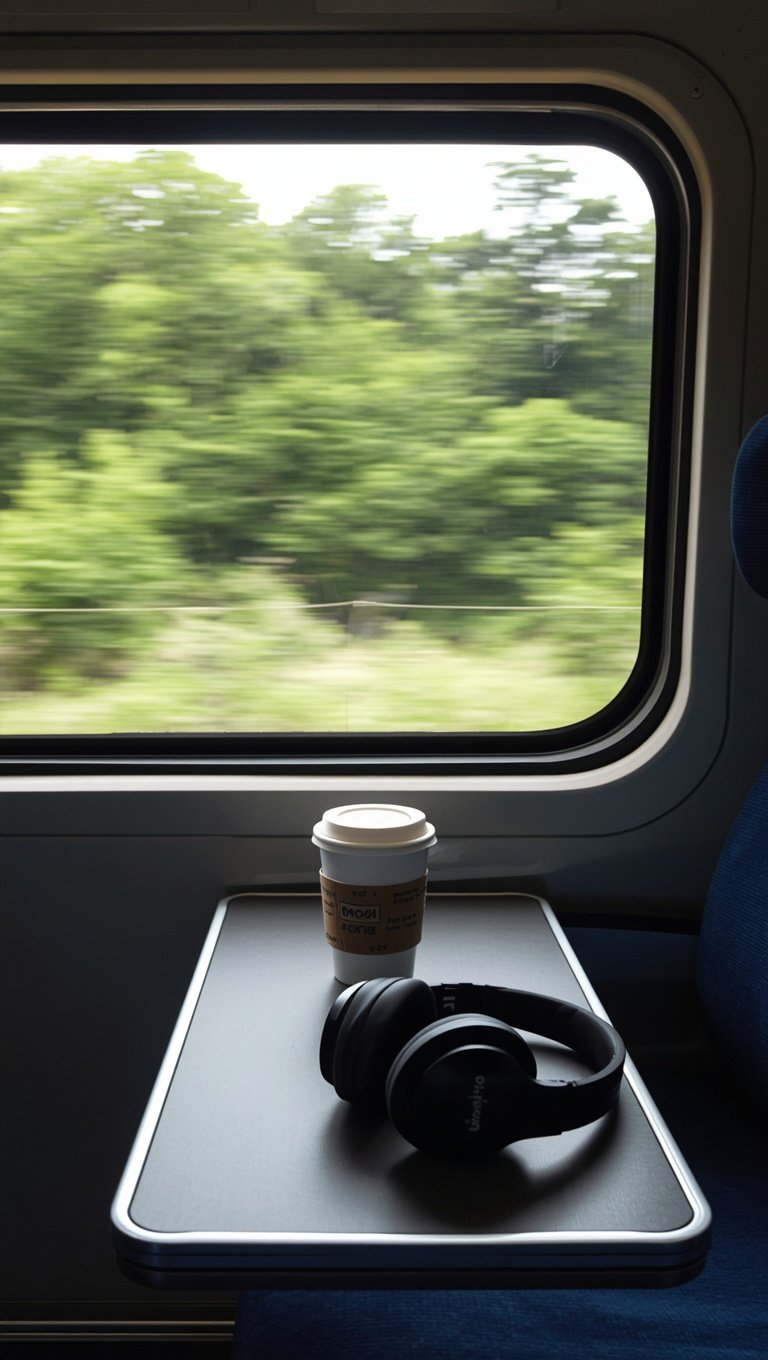
A window seat, a coffee, some music, and watching the landscape shift is part of the trip, not a break from it.
My personal hack is booking travel for early afternoon instead of first thing in the morning.
That gives me a relaxed final morning in the city I’m leaving instead of a frantic packing scramble.
It also means I arrive at the new city in daylight, which makes checking in and finding dinner so much less stressful.
Arriving somewhere new after dark, exhausted, hungry, and disoriented is a recipe for a bad first impression of a place that probably deserves better.
So build in a buffer day, or at least a buffer afternoon, around every transition.
Your future self will thank you the second you walk into your new hotel room calm instead of frazzled.
Leaving Room for Nothing

This one sounds strange, but hear me out.
My favorite moments from any trip almost never come from the planned stuff.
They come from the empty pockets of time I almost didn’t leave myself.
A wrong turn that led to a tiny wine bar, a bench where I just sat and people-watched for an hour.
None of that happens if every hour of every day is already claimed by an itinerary.
So now I build in at least a few unscheduled hours in every city, sometimes a whole afternoon.
No plan, no reservation, no agenda.
Just me, a good pair of shoes, and permission to wander.
It feels almost uncomfortable at first if you’re a planner like me.
But that discomfort fades fast once you find yourself somewhere you never would have booked in advance.
My tip here is to resist the urge to fill every gap the moment you see it on your calendar.
Let a little white space breathe.
That empty afternoon is where the trip actually becomes yours instead of a copy of someone else’s.
The Packing Trick That Saves My Mornings

Multi-city trips live or die by how fast you can pack and move.
My biggest hack is packing in what I call zones instead of piles.
One packing cube for tops, one for bottoms, one for anything electronic, one for toiletries.
When it’s time to move cities, I’m not digging through a mess, I’m just zipping cubes back into my bag.
It sounds small, but it’s saved me probably an hour of stress across a typical week-long trip.
I also do a version of the “outfit per day” method, laid out loosely so nothing wrinkles, rather than packing by category and figuring it out later at 7am.
Another trick, I always keep one “city-hop day” outfit that’s comfortable enough for trains but presentable enough for an early dinner on arrival.
That way I’m not scrambling to figure out what to wear on transition days, which somehow always used to be my most stressful mornings.
If you’re someone who overpacks like I used to, multi-city trips will humble you fast.
Fewer items, worn more than once, always wins over a suitcase full of “just in case.”
Your back will thank you every single time you’re the one climbing station stairs without a struggle.
Booking Trains Instead of Flights Between Cities

Whenever it’s an option, I choose trains over short flights between cities now.
No security lines, no arriving two hours early, no gate changes.
Just walk in, find your seat, and watch the world go by.
I remember a stretch through Spain where I swapped what would’ve been three short flights for train rides instead, and the whole trip felt calmer instantly.
There’s something about watching the actual landscape change, city to countryside to city, that a plane window at thirty thousand feet just can’t give you.
It also tends to drop you right in the center of a new city instead of forty minutes away at an airport.
My tip is to check train routes before you even start pricing flights.
In a lot of regions, it ends up cheaper too, which is a nice bonus on top of the lower stress.
If you’re someone who gets a little anxious flying, this alone might change how much you enjoy multi-city travel.
And if trains aren’t an option where you’re headed, at least try to book flights with some breathing room on either end.
The goal is always the same, protect your energy for the destination, not the transit.
My Favorite Way to Split a Week

If I’ve got seven or eight days, my favorite split is three nights, two nights, two nights.
One slightly longer anchor stay, then two shorter but still comfortable stops.
That gives you a real home base plus two proper visits, not two rushed drive-bys.
For a ten to twelve day trip, I’ll do four, three, three, which still keeps every stop above that two-night minimum I mentioned earlier.
I avoid anything that averages out to less than two nights per city, no matter how tempting a longer list looks on paper.
It’s easy to get greedy when you’re staring at a map full of pretty names.
I get it, I’ve been there, circling six cities like I could actually enjoy all of them properly in one trip.
But I promise, the version of you standing in city four, exhausted, will wish past-you had cut the list down.
My honest recommendation is to write your dream list first, then cut it in half.
Whatever’s left is probably close to the right amount.
It stings a little in the planning stage, and then it feels like a gift every single day of the actual trip.
The One Meal a Day I Never Rush

Out of everything on a multi-city trip, there’s one meal I protect no matter what.
Usually dinner, sometimes a long lunch if the schedule calls for it.
I book it, or at least plan for it, before I plan anything else that day.
No standing at a counter, no eating while walking to the next thing.
An actual table, an actual menu, and enough time to not think about the clock.
This has become the emotional anchor of every single day for me.
It’s where I process what I saw, where I write in the little notebook I always bring, where the day actually settles into a memory instead of a blur.
On a recent trip through the Pacific Northwest, that unhurried dinner became the thing I looked forward to most, even more than the scenery earlier that day.
My tip is simple, protect one meal like it’s a meeting you can’t cancel.
Skip a museum before you skip that dinner.
Order the thing you’ve never tried, and don’t check your phone while you eat it.
That one habit alone has made every trip since feel more like living and less like touring.
🗼 I Wrote a Book About My Japan Travel Catastrophes!
Before I landed in Tokyo, I thought I was the “Final Boss” of international travel. Spoiler alert: I WASN’T. 😅
🚅 I boarded the wrong Shinkansen and ended up in THE WRONG CITY. I confused locals with my “expert” bowing that was more awkward than accurate. I accidentally stumbled into a high-stakes Kendo practice thinking it was a tourist show. Sound like something you’d do?
“Things I Wish I Knew Before Going to Japan” is your shortcut to avoiding ALL my cringe-worthy mistakes. ✨ Inside, you’ll find practical, LIFE-SAVING tips on etiquette, transport, money, and hidden gems that will save you time, money, and a whole lot of confusion.
Choosing Neighborhoods Over Landmarks

I used to plan around landmarks, a checklist of must-sees I’d cross off one by one.
Now I plan around neighborhoods instead, and it’s a completely different kind of trip.
I’ll pick one area and just exist in it for a few hours, no destination in mind.
The landmarks tend to show up anyway, since most of them sit inside interesting neighborhoods to begin with.
But you also get the coffee shop with the good light, the little bookstore, the corner where a street musician plays every afternoon.
That’s the texture that actually makes a place feel real instead of like a postcard.
On a trip to Lisbon, I spent an entire morning in one hillside neighborhood without a single “attraction” on my list, and it’s still one of my favorite memories from that whole year of travel.
My recommendation is to pick one neighborhood per city and give it real, unhurried time.
Walk it slowly, sit somewhere for longer than feels efficient, let yourself get a little lost.
You’ll leave with a feel for the place, not just a photo of it.
And honestly, that feeling is the thing you’ll actually remember five years from now.